
Reviewed · ACCRA
Experience the Culture of Ashanti Kingdom in 5days
Ghana’s royal heart rewards curious visitors. This five-day private tour links Accra, Kumasi, Ashanti villages, Lake Bosomtwe, and Ghana’s capital in one practical route. You get museums, markets, textile workshops, sacred sites, and time with local guides instead of seeing only the usual city sights.
I like the visit to Manhyia Palace Museum, which gives the Ashanti Kingdom a clear human and political story, and I like the hands-on work at Ntonso and Adanwomase. Printing Adinkra symbols and watching Kente being woven gives you something more lasting than a quick photograph. The main consideration is the pace: several days involve roughly eight hours of touring, and the route between Accra and Kumasi makes this a busy introduction rather than a slow holiday.
In This Review
- What Makes This Five-Day Tour Worth Considering
- From Kotoka Airport to Ghana’s Ashanti Capital
- Manhyia Palace Museum and the Story of Ashanti Rule
- Kejetia Market: Kumasi at Full Volume
- Ntonso and the Meaning Behind Adinkra Symbols
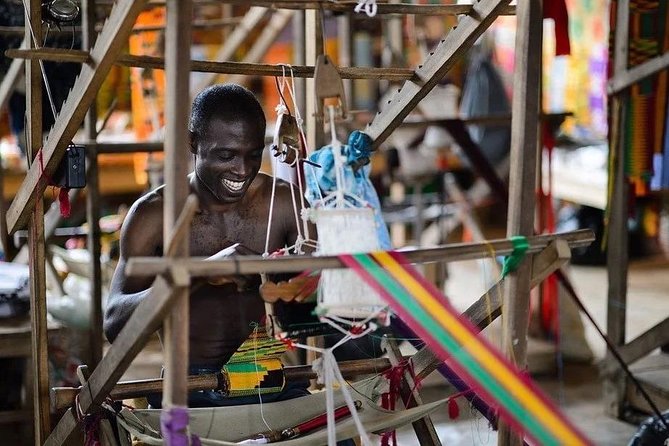
- Adanwomase Kente Weaving Village
- Okomfo Anokye and the Sword That Would Not Move
- Abono Village and Lake Bosomtwe
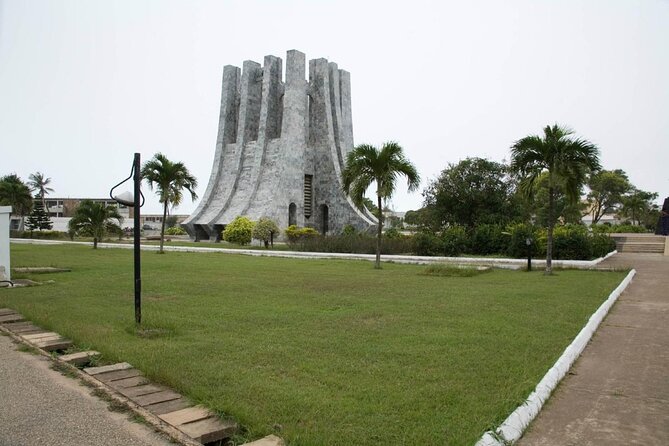
- Returning to Accra and Visiting Kwame Nkrumah Memorial Park
- What the $1,350 Price Covers
- Who Will Enjoy This Route Most
- Should You Book the Ashanti Kingdom Experience?
- FAQ
- How long is the Ashanti Kingdom tour?
- Where does the tour begin?
- What time does the tour start?
- Is this a private tour?
- What is included in the $1,350 price?
- What is not included?
- Can I cancel for a full refund?
What Makes This Five-Day Tour Worth Considering
- Kumasi begins the cultural story: Visit Manhyia Palace Museum, the Prempeh II Jubilee Museum, and Kejetia Market.
- Adinkra becomes personal: At Ntonso, you can learn the meaning behind symbols and print them on local textiles.
- Kente is shown at its source: Adanwomase offers a weaving workshop and the chance to buy Kente products.
- Ashanti beliefs come into focus: The Okomfo Anokye Sword Site connects royal tradition, spiritual authority, and the famous Golden Stool.
- Lake Bosomtwe adds a change of pace: Abono Village and the lake bring nature into a culture-focused trip.
- Accra closes the journey: The Kwame Nkrumah Memorial Park and a city tour provide a final look at modern Ghana.
From Kotoka Airport to Ghana’s Ashanti Capital
Your first day is deliberately simple. At Terminal 3 of Kotoka International Airport in Accra, a staff member meets you and takes you to your hotel. There is no sightseeing listed for this arrival day, which is sensible after an international flight.
The short airport transfer is about ten minutes, and the official tour begins at 7:30 a.m. You should treat Day 1 as time to settle in, rest, and prepare for the early start. Accommodation is provided in an air-conditioned room, and breakfast is included on four mornings.
The following day takes you to Kumasi, the capital of the Ashanti Kingdom. The route matters because this is not just a collection of disconnected attractions. The tour begins in Ghana’s capital, moves into the historic center of Ashanti power, visits nearby craft communities, then returns to Accra.
You travel in an air-conditioned vehicle with fuel and insurance included. Since this is a private activity for your group alone, the guide can usually keep the day focused on your interests within the planned schedule. Still, eight-hour touring days are substantial. I would wear light clothing, carry water, and keep some flexibility for traffic and time spent at workshops.
A few more Accra trips worth weighing up
- 5 Days Adventurous Wildlife Safari
★ 4.5 · 49 reviews
Manhyia Palace Museum and the Story of Ashanti Rule
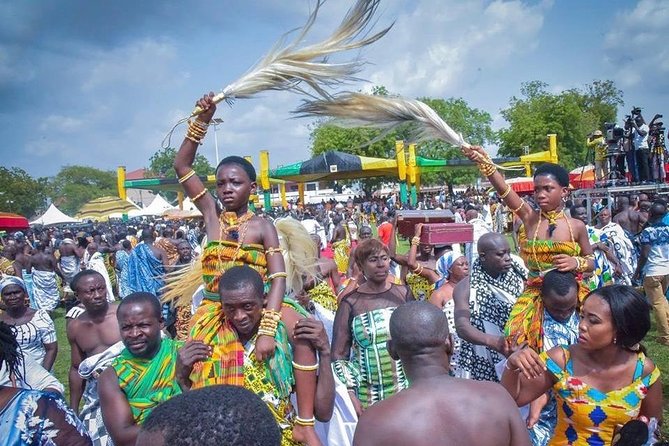
The first major Kumasi stop is Manhyia Palace Museum, located on the grounds of Manhyia Palace, the residence of the Asantehene, the King of the Ashanti Kingdom. This setting gives the museum particular weight. You are not simply reading about royal life in a detached building. You are visiting a place connected to the institution itself.
The museum explains Ashanti culture and Ghana’s cultural experience during the colonial period. That makes it a useful opening stop, especially if you are new to Ghanaian history. A guide can help connect the objects and displays to the larger story of the kingdom.
I appreciate this part of the route because it gives context before you reach the markets and villages. Without that background, the symbols, textiles, and royal references later in the tour may feel attractive but unclear. With it, you begin to understand why the Ashanti Kingdom remains central to Ghana’s identity.
The tour continues to the Prempeh II Jubilee Museum at the Kumasi Cultural Center. This second museum adds another layer to the story of Ashanti leadership and tradition. You should expect the two museum visits to complement each other rather than provide completely separate worlds.
Kejetia Market: Kumasi at Full Volume
Kejetia Market is one of the largest open-air markets in West Africa, and it gives you a very different view of Kumasi. Museums explain the past. Kejetia shows commerce, movement, and daily life in the present.
This is not a polished shopping center. It is a working market, and that is exactly its value. You may see a wide range of goods and local trade activity while moving through one of the city’s key public spaces. The market can feel intense, particularly after a quiet museum visit, so stay close to your guide and keep your belongings secure.
The market is also a useful place to understand Kumasi as more than a royal capital. The Ashanti story continues through business, craft, food, and ordinary city life. If you want a photograph or a purchase, ask your guide before stopping. The schedule is full, and a few unplanned pauses can quickly add up.
This first full touring day lasts about eight hours. It combines indoor exhibits with a busy public market, so the mix helps, but you should not expect a relaxed morning followed by a short afternoon. The private format is helpful here because your guide can explain what you are seeing without forcing you to follow a large group.
Ntonso and the Meaning Behind Adinkra Symbols
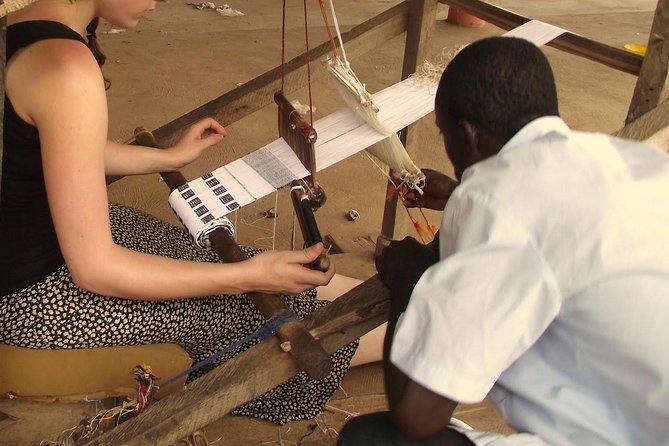
Day 3 moves from royal museums to village craft. At Ntonso Adinkra Village, you learn about Adinkra symbols and their proverbial meanings. The important point is that these designs are not merely decoration. Each symbol carries an idea or message.
The workshop lets you choose symbols and print them onto local textile material. That hands-on step changes the experience. Instead of simply buying a finished cloth, you take part in a traditional process and learn why the mark looks the way it does.
I would ask the guide to explain several symbols before choosing one. The meaning is the heart of the activity, and a printed design becomes more memorable when you understand the idea behind it. You may also want to leave room in your luggage for Adinkra products.
The tour has also included special cultural experiences such as an Ashanti naming ceremony and Adinkra sash making for some clients. These are not described as fixed stops for every booking, so ask Tripafrica Tours before departure if you want one of these included. That small check can prevent disappointment and may help shape the day around your interests.
A completely different sort of day out of Accra:
- The Cape Coast Day Tour
★ 5.0 · 525 reviews - Experience the Beauty, History and the Culture Of Accra in a Day
★ 5.0 · 323 reviews - The Cape Coast Tour
★ 5.0 · 177 reviews - From Accra: Cape Coast, Elmina Castle & Kakum Park Day Tour
★ 4.6 · 144 reviews
Adanwomase Kente Weaving Village
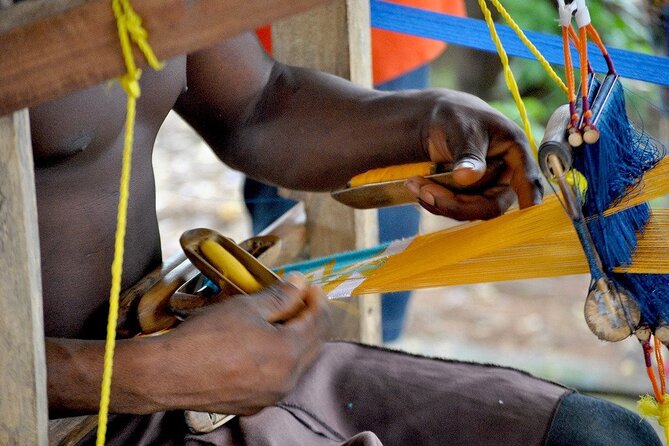
The next village visit is Adanwomase, known for Kente weaving. Kente is made from interwoven strips of silk and cotton and is strongly associated with Akan communities and special occasions in Ghana.
A weaving workshop gives you a close look at the patience and skill behind the fabric. You can also buy Kente products. This is a better setting for shopping than a rushed stop at a general market because you have a clearer connection to the people and process behind the work.
Kente can be expensive compared with ordinary cloth, and the tour description does not give set prices. I would ask about the material, size, and whether a piece is handmade before buying. Your guide can help with basic questions, but the final choice should be yours.
The two villages make Day 3 one of the strongest parts of the experience. Ntonso focuses on symbols and meaning. Adanwomase focuses on weaving and ceremony. Together, they show how culture is carried through clothing, design, and skilled work rather than only through museums.
Okomfo Anokye and the Sword That Would Not Move

Day 4 begins at the Okomfo Anokye Sword Site in Kumasi. The site is on the grounds of Okomfo Anokye Teaching Hospital and centers on a sword said to be more than 300 years old.
According to the tradition explained at the site, the famous priest Okomfo Anokye planted the sword in the ground, and attempts to remove it have failed. The place is also connected with the story of the Golden Stool, which Okomfo Anokye is said to have conjured for the Ashanti Kingdom.
You do not need to treat every part of the story as a modern historical claim to understand why the site matters. It offers a direct look at the spiritual beliefs and symbols that helped shape Ashanti political life. The Golden Stool, in particular, is more than a royal object. It represents the unity and authority of the Ashanti people.
This stop works best if you listen carefully to the guide and allow room for questions. The physical site may not take a full morning on its own, but its importance comes from the story connected to it. It is one of those places where a short visit can prompt a long conversation.
Abono Village and Lake Bosomtwe
After the sword site, the tour continues toward Abono Village and Lake Bosomtwe. This changes the mood from urban Kumasi and sacred tradition to open scenery and lakeside life.
Lake Bosomtwe is a natural stop within an otherwise culture-heavy program. You get a chance to look beyond museums and workshops and see part of Ghana’s countryside. The exact activities at Abono are not specified, so you should ask what the day’s visit includes when you book.
I like this change of setting because five days of museums and city streets could become tiring. The lake offers visual relief and gives the guide another setting in which to explain local life. At the same time, do not expect a full nature holiday. The main focus of the trip remains Ashanti culture, history, and community visits.
Day 4 is again planned as an eight-hour touring day. If you prefer long lunches or extended time at one place, tell the guide early. The private format gives you more control than a large group tour, but the route still has several planned elements.
Returning to Accra and Visiting Kwame Nkrumah Memorial Park
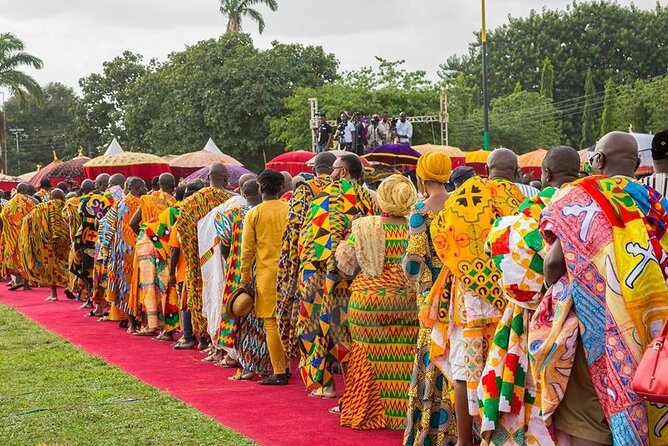
On Day 5, you return to Accra after breakfast. The tour ends with a city visit and a stop at Kwame Nkrumah Memorial Park before your airport transfer.
This final day gives the trip a useful national frame. Kumasi focuses on the Ashanti Kingdom, while the memorial park connects you with Ghana’s modern political story and the country’s capital. It is a fitting way to finish because you see Ghana through both regional and national lenses.
The schedule is listed as about eight hours, including the journey back to Accra, the city tour, and the airport transfer. You should check your departure time carefully before booking. The supplied details do not promise a particular airport departure buffer, so give Tripafrica Tours your flight information and confirm the timing.
What the $1,350 Price Covers
The price is $1,350 per person. That is a serious amount, but it includes several costs that can add up quickly on a private five-day trip.
You receive an air-conditioned vehicle, fuel, insurance, accommodation, four breakfasts, attraction and activity fees, taxes, a private tour guide, and ongoing 24-hour support. Airport pickup is offered, and the vehicle is reserved for your group rather than shared with strangers.
The value depends on how much you want structure. If you arranged separate transport, hotels, museum admission, workshops, and a guide yourself, the costs and planning would be spread across many bookings. Here, the price buys one coordinated cultural route and support throughout the trip.
Lunches and dinners are not included, nor are international airfare and visa fees. A separate line also lists private tour guide as not included, despite the inclusions naming a private tour guide. I would clarify this apparent contradiction before paying. Ask exactly who guides the tour, which meals are covered, and whether every listed activity fee is included in your final price.
The program has received a perfect overall rating from three published ratings, with particular praise for the hospitality, hotels, restaurants, museums, scenery, and personal care provided by Nuru-Deen, Eazi, and Maxwell. That is a small sample, so I would treat it as encouraging rather than conclusive. Still, the repeated attention to service is important for a private, multi-day trip.
Who Will Enjoy This Route Most
I would choose this tour if you want a strong first look at Ghana and prefer having transport, hotels, guide services, and entry fees arranged together. It suits anyone interested in Ashanti royal tradition, textiles, village craft, spiritual sites, and Ghana’s modern capital.
It also suits visitors with a personal connection to Ghana or the wider African diaspora. One client described the experience as a powerful reconnection with family roots, and the provider has helped make such visits meaningful. You should tell the company in advance if ancestry or family history is central to your trip.
The tour is less suitable if you want a slow beach break, independent wandering, or long unscheduled stretches. The days are full, the route covers a lot of ground, and the final return to Accra must fit around your flight.
Tripafrica Tours offers free cancellation up to 24 hours before the experience begins. Canceling within 24 hours does not qualify for a refund, and late changes are not accepted. Cut-off times use local time, so keep that detail in mind when making plans.
Should You Book the Ashanti Kingdom Experience?
Book it if you want culture with practical support. The best parts are the combination of royal museums, Kejetia Market, Adinkra printing, Kente weaving, the Okomfo Anokye Sword Site, and Lake Bosomtwe. Few short tours connect those subjects so directly.
Before booking, confirm the guide arrangement, the exact hotel names, the meals beyond breakfast, the activities planned at Abono, and the timing of your Day 5 airport transfer. If those details suit you, $1,350 can be reasonable for a private five-day program with transport and admission costs included.
If you prefer a gentler pace, consider using the same destinations over a longer stay. If five days is your limit, this route gives you a lively and meaningful introduction to the Ashanti Kingdom, with enough variety to keep the journey moving.
FAQ
How long is the Ashanti Kingdom tour?
The experience lasts approximately five days. The main sightseeing days are generally planned for about eight hours.
Where does the tour begin?
The tour begins with pickup at Terminal 3 of Kotoka International Airport in Accra. A staff member meets you and takes you to your hotel.
What time does the tour start?
The listed start time is 7:30 a.m. Confirm the exact pickup time with Tripafrica Tours before departure.
Is this a private tour?
Yes. It is described as a private activity for your group only. The included services also list a private tour guide, although the booking information separately lists private tour guide under items not included. Confirm this point before booking.
What is included in the $1,350 price?
The price includes an air-conditioned vehicle with fuel and insurance, air-conditioned accommodation, taxes and fees, attraction and activity fees, 24-hour support, a private tour guide, and four breakfasts.
What is not included?
International airfare, visa fees, and meals other than the included breakfasts are not included. The booking information also lists private tour guide as not included, so you should clarify that apparent conflict with the provider.
Can I cancel for a full refund?
Yes, if you cancel at least 24 hours before the experience begins. Cancellations or changes made within 24 hours are not accepted for a refund.
Just added around Accra
- Experience Cape Coast Castle and Kakum National Park★ 4.5 · 3 reviews
- Experience Northern Ghana In 10-Days★ 5.0 · 3 reviews
- Discover Ghana – Wli Waterfalls, Mountain Afadjato, Monkey Sanctuary & Akosombo.★ 4.5 · 3 reviews
- Cultural Tour Of Ghana And South Africa 12 Days★ 5.0 · 3 reviews
- Accra: City Highlights Half-day Guided Tour with Transfers★ 4.1 · 3 reviews
- Accra: Half day private safari with pick up★ 3.5 · 3 reviews
- Full Day Accra Guided Tour★ 5.0 · 3 reviews
- Experience Aburi Botanical Gardens And Boti Water Falls In A Day.★ 5.0 · 3 reviews