
Reviewed · CAPE COAST & ELMINA CASTLE TOURS
10 Days Trip to Cape Coast and Elmina Castles from Accra
Ghana tells its story face to face. This 10-day journey links Accra’s Ga communities, Kumasi’s Ashanti traditions, the castles of Elmina and Cape Coast, Kakum National Park, and PANAFEST. I like the strong mix of history and living culture, especially the visits to Jamestown, the craft villages near Kumasi, and the solemn memorial events along the former slave route. I also like the small maximum group size of 10, which should make questions and personal attention easier.
The main consideration is pace. You cover a lot of ground, with long road transfers between Accra, Kumasi, and the Central Region. The $4,695 price is substantial, though it includes private transport, hotels, a guide, airport transfers, daily breakfast, nine dinners, bottled water, and many admissions. You should also be ready for repeated historical themes and some simple, sometimes spicy meals.
In This Review
- Key points to know before booking
- Arrival in Accra and a gentle first evening
- Accra: Pan-African memory and Jamestown streets
- Road to Kumasi and the Ashanti center
- Craft villages and royal memory around Kumasi
- Elmina Township and the first PANAFEST events
- Kakum National Park: canopy height or forest floor
- Elmina Castle and a memorial by the sea
- Assin Manso and the route toward forced captivity
- Emancipation Day and the final celebration
- The return to Accra and what the price covers
- Who should book this Ghana tour?
- FAQ
- Where does the tour begin and end?
- How long does the experience last?
- What is included in the price?
- Is international airfare included?
- Can I choose an activity at Kakum National Park?
- How large is the group?
Key points to know before booking
- Jamestown gives you a close look at Accra’s older coastal communities, including the fishing harbor, lighthouse, Brazil House, and the contrast with modern Accra.
- Kumasi brings Ashanti culture into focus, with royal history, Kente weaving, Adinkra cloth, woodcarving, and the National Centre for Culture.
- Elmina Castle and the Slave River require emotional preparation, since the visits deal directly with forced captivity and the Atlantic slave trade.
- PANAFEST and Emancipation Day are central to the timing, adding music, ceremony, chiefs, dance, and public events to the sightseeing.
- Kakum offers two very different choices, a 1,000-foot canopy walkway high above the forest or a 2-kilometer walk at ground level.
- The private vehicle and guide matter here, since the itinerary includes several road journeys and a steady stream of museums and ceremonial sites.
Arrival in Accra and a gentle first evening
Your trip begins at Kotoka International Airport, where assistance is provided through immigration, luggage collection, customs, and the transfer to your Accra hotel. After check-in, your cultural guide welcomes you with Akwaaba, the Akan word for welcome, and explains the days ahead.
Dinner is included on the first night, while the rest of the evening is free. That pause is useful. An international arrival, airport procedures, heat, and a new time zone can leave you tired, so I would treat this as a recovery evening rather than plan extra sightseeing.
The guide remains with you for the full journey. That continuity is one of the tour’s strongest features. You do not have to keep introducing yourself to a new local escort at each stop, and you have one person to ask about customs, safety, food, and the historical background of each place.
More Cape Coast and Elmina castle days:
- The Cape Coast Day Tour
★ 5.0 · 525 reviews - The Cape Coast Tour
★ 5.0 · 177 reviews - From Accra: Cape Coast, Elmina Castle & Kakum Park Day Tour
★ 4.6 · 144 reviews
Accra: Pan-African memory and Jamestown streets
Day two begins with breakfast, followed by an orientation covering Ghanaian history, customs, health, and safety. That briefing is practical rather than decorative. It helps you understand how the different communities and traditions fit together before the visits begin.
The first major stop is the W.E.B. Du Bois Centre, dedicated to the Pan-African thinker who spent his final years in Ghana. The visit gives the wider trip an important frame, since this is not only a tour of monuments. It is also a look at Ghana’s role in Pan-African thought and the return-to-Africa movement.
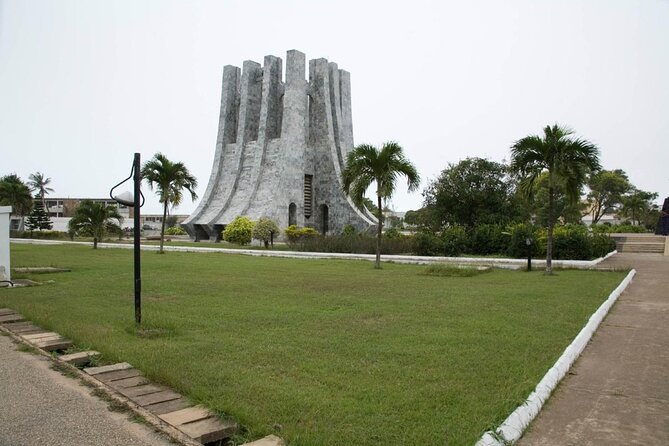
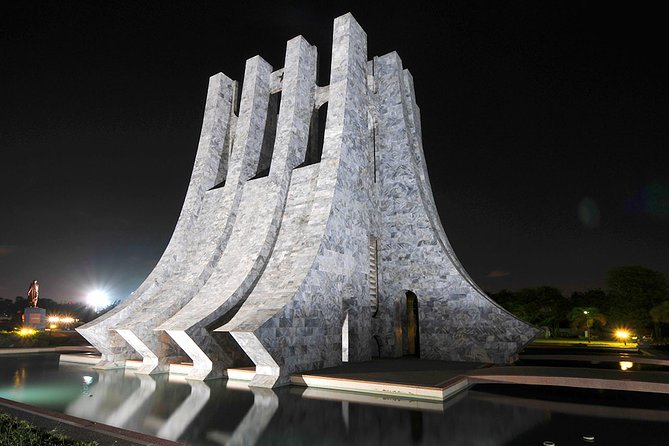
At Independence Square, you see the enclosed flame of African Liberation, lit by Kwame Nkrumah in 1961. The nearby Black Star Square is tied to Ghana’s independence and national identity. The Kwame Nkrumah Memorial Park, where Ghana’s first president is buried, continues that story with a more personal focus.
The Jamestown visit changes the tone. You move from formal national monuments into one of Accra’s older coastal communities, with its fishing activity and working harbor. The lighthouse offers a recognizable landmark, while Brazil House points to the long connections between West Africa and the African diaspora.
I would expect this day to be full but manageable. The listed visit to the memorial park is about two hours, and the other stops add variety. You will see both official Ghana and everyday Accra, which is far more useful than spending the whole day around polished civic sites.
Road to Kumasi and the Ashanti center
On day three, you leave Accra after breakfast and check out for the journey to Kumasi. Kumasi was the seat of the Ashanti Empire and remains the center of Ashanti culture. The Ashanti are the largest Akan ethnic group in Ghana, and the tour uses museums and workshops to explain how their society was organized.
Late in the afternoon, you visit the National Centre for Culture. Its Prempeh II Jubilee Museum is named for a former Asantehene, or Ashanti ruler. The center also includes studios connected with brasswork, pottery, and batik production.
This is a good example of the tour’s approach. You are not only looking at display cases. You also get a chance to see working crafts and consider how royal traditions continue through objects, cloth, and design.
The road trip is the tradeoff. The itinerary does not give exact driving times, so you should ask the operator for current estimates before booking. A private vehicle makes the transfer easier than public transport, but it is still a travel day. Keep water close, wear comfortable clothing, and avoid packing the day with extra plans.
Craft villages and royal memory around Kumasi
Day four is one of the tour’s most appealing cultural days. At Ahwiaa, you learn about woodcarving and see artisans making royal stools, walking sticks, and fertility dolls. Shopping is part of the experience, so leave room in your luggage or ask how larger pieces can be handled.
Ntonso is associated with Adinkra textiles. You watch artisans hand-stamp patterns onto cotton cloth. These symbols carry meanings connected with ideas, values, and social life, making a piece of Adinkra more interesting than a generic souvenir.
At Bonwire, Kente cloth is woven by hand on traditional looms. The slow process helps you understand why Kente is prized. You are seeing a skilled craft passed down over time, not a factory-made fabric presented as local work.
The day also includes Manhyia Palace Museum. This former royal setting gives context to the Ashanti monarchy and helps connect the craft villages with the political culture of the region.
One practical point: shopping can make this day feel longer than the two-hour stop descriptions suggest. If you want to buy woodcarvings, cloth, or other work, set a budget before you start. Bargaining and browsing can be enjoyable, but it can also swallow time if you are trying to keep to the schedule.
More multi day trips around Accra:
- Ghana 8 Day Special
★ 5.0 · 38 reviews - 10 Days Ghana Cultural and Heritage Trip
★ 5.0 · 31 reviews - Explore Ghana Multi Day Tour
★ 5.0 · 29 reviews - 8 Day Cultural, History and Adventure Tour
★ 5.0 · 11 reviews
Elmina Township and the first PANAFEST events
After breakfast and checkout on day five, you finish the Kumasi portion before driving toward Cape Coast. The route includes a drive through Kumasi, with colonial-era buildings, monuments to the Ashanti people, and a view of Kejetia Market, described as one of West Africa’s largest and most active marketplaces.
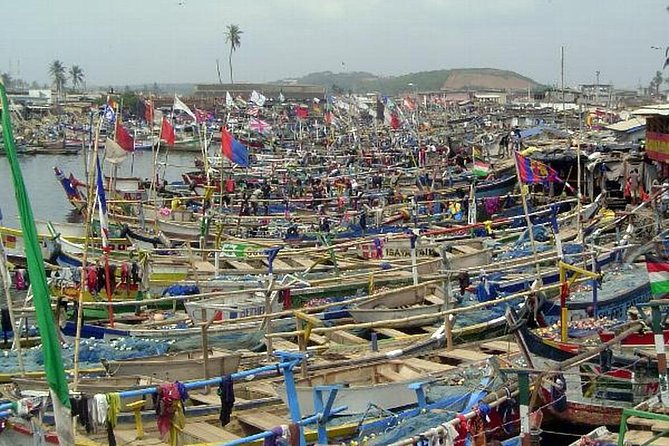
You then reach Elmina. A guided walk through the ancient township leads to the harbor, where brightly painted fishing canoes prepare for another night at sea. This is an important counterweight to the castle visit that follows later. Elmina is not only a site of past suffering. It is also a living coastal town with work, families, faith, and a continuing relationship with the water.
The evening may include scheduled PANAFEST activities. Because festival programming can vary, the exact performance or ceremony is not fixed in the supplied schedule. Your guide accompanies you to whatever event is arranged.
PANAFEST gives the journey a public, contemporary side. Music, performance, and remembrance turn history into something shared by the community rather than locked inside a museum. The festival dates matter greatly, so confirm that your travel dates match the planned events.
Kakum National Park: canopy height or forest floor
Day six offers a real choice. You can stay at the hotel pool or visit Kakum National Park, one of Ghana’s most visited parks and one of the few remaining tropical rain forests in West Africa.
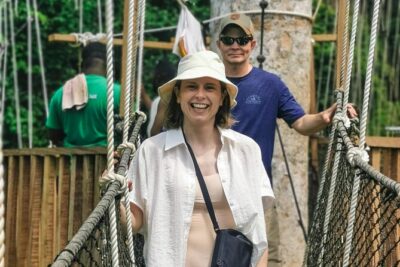
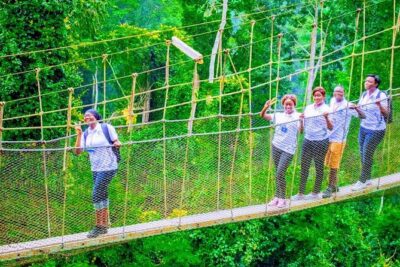
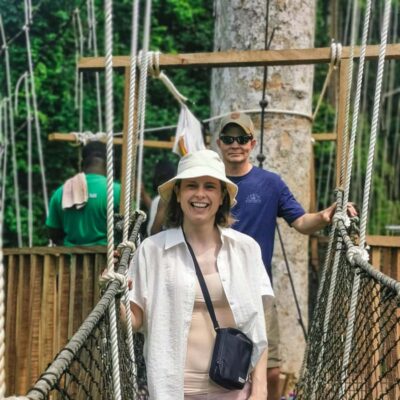
The headline activity is the canopy walkway. It extends about 1,000 feet across seven bridges, with viewing platforms more than 150 feet above the ground. The height gives you a different view of the forest, though anyone uncomfortable with suspended walkways should think carefully before choosing it.
The alternative is a 2-kilometer nature walk. At ground level, you can look for butterflies, birds, unusual plant life, and information about the medicinal uses of forest species. The park is also home to more than 40 species of mammals, including monkeys and the reclusive forest elephant, though no wildlife sighting is promised.
I like that the day does not force everyone into the same activity. You can choose according to your energy and comfort. The forest visit is also a welcome change after several museum and heritage stops.
Dinner is included, and another PANAFEST event may follow. That combination can make the day quite full, so use the morning activity choice wisely. If you choose the canopy walkway, comfortable shoes and a calm approach will serve you better than trying to rush across.
Elmina Castle and a memorial by the sea
Day seven brings one of the trip’s most serious moments: Elmina Castle, also known as St. George’s Castle. It was the first European structure built in Sub-Saharan Africa and later became part of the system used to hold enslaved Africans before shipment across the Atlantic.
You walk through the grounds and rooms, including spaces tied to confinement and the castle’s European administration. This is not light sightseeing. The setting makes the scale and cruelty of the trade harder to keep at a distance, so give yourself time afterward rather than planning a carefree activity immediately.
The memorial ceremony at the beach adds a personal and spiritual element. Participants throw bread into the water in remembrance, while a wreath and candle are sent out to sea. A moment of silence honors those who died during the Middle Passage.
The ceremony may be especially meaningful if you are tracing family or African diaspora connections. It is also appropriate to follow the guide’s instructions and treat the event with restraint. Photography and conversation should never take priority over the ceremony itself.
Another PANAFEST activity is scheduled later. That pairing can feel emotionally complex, but it reflects the way Ghana holds sorrow, memory, art, and present-day identity together.
Assin Manso and the route toward forced captivity
On day eight, you visit Assin Manso Slave River Site. The river was a final transit point for captured Africans before they were taken to the coastal castles and shipped to the Americas and the Caribbean. The site explains that people were washed there before confinement, a detail that makes the route from inland capture to coastal imprisonment painfully clear.
You also see the burial place of two formerly enslaved people from the United States and Jamaica. Their remains were re-interred during Ghana’s first Emancipation Day celebration in 1998.
The power of Assin Manso comes from its place in the sequence. After seeing the castle, you can better understand what came before it. The visit is not an isolated monument. It connects inland movement, the river, the castles, and the Atlantic crossing.
PANAFEST activities continue, with breakfast and dinner included. You may find the repeated focus on slavery and remembrance heavy, especially across several consecutive days. That is not a flaw in the subject matter, but it is a reason to choose this tour only if you want a serious heritage journey rather than a relaxed beach holiday.
Emancipation Day and the final celebration
Day nine returns to Assin Manso for the opening of the Emancipation Day celebration. A Grand Durbar brings together traditional chiefs and people from the Central Region.
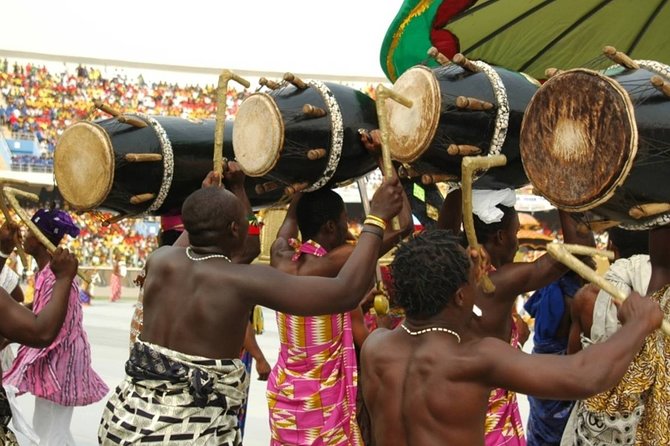
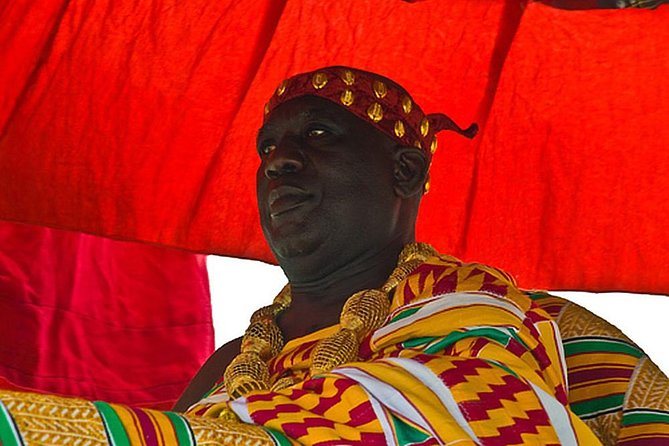
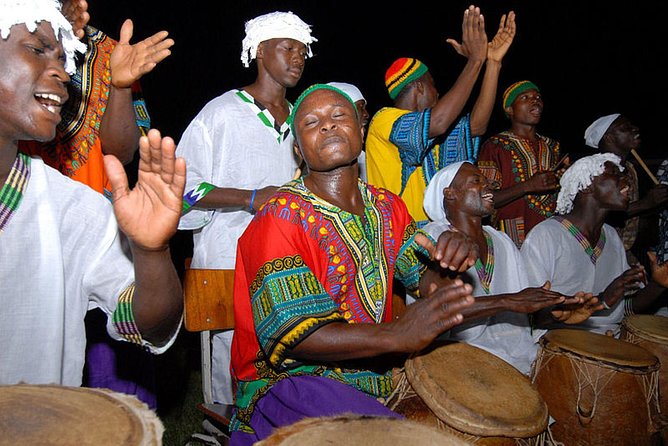
The ceremony is described as colorful and formal, with chiefs wearing ceremonial clothing, gold jewelry, and traditional beads. Fontomfrom drums provide the rhythm, and dancing forms part of the celebration.
This day shifts the focus from the mechanics of enslavement to remembrance, dignity, and cultural continuity. It can be one of the most visually striking parts of the tour, but you should remember that ceremonies are not staged solely for photographs. Follow local guidance, ask before taking close pictures, and watch respectfully.
A farewell dinner at the hotel closes the evening. Since the next day includes the return to Accra and airport preparation, this is a good point to organize purchases, documents, and luggage.
The return to Accra and what the price covers
After breakfast on day ten, you check out and return to Accra, arriving in the early afternoon. The guide and driver help with last-minute shopping, including the collection of custom-made outfits. A day room gives you a place to rest before the airport transfer.
At $4,695 per person, this is not a budget Ghana trip. The value depends on how much support you want. You receive hotel accommodation, private vehicle transport, a guide for the duration, airport transfers, bottled water each day, nine breakfasts, nine dinners, and included admission for many listed sights. The group is capped at 10, which matters on long drives and at sites where you will have many questions.
International flights, visas, insurance, gratuities, personal costs, and unlisted meals are extra. Food deserves particular attention. The included dinners make budgeting easier, but the menu may repeat, and some dishes may be spicy. If you have strong food preferences, tell the operator before departure and confirm what alternatives are available.
The strongest part of the value is the human support. Guides named by past customers include Kwaku, Elvis, George, Joshua, Nee, Henrietta, Solomon, Emanuel, and Anim. Praise centers on careful organization, safety, history, flexibility, and the warm way the crew treats people. Joshua receives especially strong personal praise, while guides such as Kwaku and George are singled out for answering questions and explaining Ghanaian culture clearly.
There is one useful warning in the feedback: the schedule can feel strenuous. This is not a loose collection of optional day trips. You move between cities, visit several museums and historic sites, attend festival events, and make a long return to Accra. People who prefer a slower holiday may want to ask for adjustments.
Who should book this Ghana tour?
I would recommend this experience to you if you want Ghana’s history explained in place, not just presented in a textbook. It suits first-time visitors who value a private vehicle and a continuous guide, as well as people interested in Ashanti traditions, Pan-African history, the African diaspora, and Emancipation Day.
It is also a strong choice if you want both solemn sites and living culture. Jamestown, Kumasi’s craft villages, Kente weaving, fishing canoes, PANAFEST, and the Grand Durbar keep the trip from becoming only a castle tour.
I would hesitate if you want a slow beach break, dislike road transfers, or need a highly predictable schedule. The festival dates and events can shape the days, the food may not suit every palate, and several visits deal with painful material.
Book it if the purpose matters more to you than ease. At its best, this journey gives you context, ceremony, and direct contact with Ghanaian communities, supported by a small group and a dedicated guide. Before paying, confirm hotel names, driving times, PANAFEST dates, dietary options, and which guide will lead your departure.
FAQ
Where does the tour begin and end?
It begins at Kotoka International Airport in Accra and ends back at the same meeting point after the return to Accra and airport transfer.
How long does the experience last?
The trip lasts approximately 10 days, beginning with arrival in Accra and ending with the airport transfer on day ten.
What is included in the price?
The price includes arrival and departure assistance, round-trip airport and hotel transfers, hotel accommodation, private vehicle transport, an experienced guide, daily breakfast, nine dinners, bottled water each day, and listed admission tickets.
Is international airfare included?
No. Visas, round-trip international flights, travel insurance, gratuities, personal expenses, and meals not listed are excluded.
Can I choose an activity at Kakum National Park?
Yes. You can visit Kakum National Park and choose the canopy walkway or a 2-kilometer forest walk. You may also choose to stay at the hotel pool or relax by the ocean.
How large is the group?
The activity has a maximum of 10 participants.
Just added around Accra
- Experience Cape Coast Castle and Kakum National Park★ 4.5 · 3 reviews
- Experience Northern Ghana In 10-Days★ 5.0 · 3 reviews
- Discover Ghana – Wli Waterfalls, Mountain Afadjato, Monkey Sanctuary & Akosombo.★ 4.5 · 3 reviews
- Cultural Tour Of Ghana And South Africa 12 Days★ 5.0 · 3 reviews
- Accra: City Highlights Half-day Guided Tour with Transfers★ 4.1 · 3 reviews
- Accra: Half day private safari with pick up★ 3.5 · 3 reviews
- Full Day Accra Guided Tour★ 5.0 · 3 reviews
- Experience Aburi Botanical Gardens And Boti Water Falls In A Day.★ 5.0 · 3 reviews
Cape Coast & Elmina Castle Tours, compared.
Cape Coast, Elmina Castle & Kakum Park Day Tour
Read our review →
Cape Coast ,Elmina Castle and Kakum Full-Day Tour
Read our review →
The Homecoming Experience To Cape-coast And Elmina.
Read our review →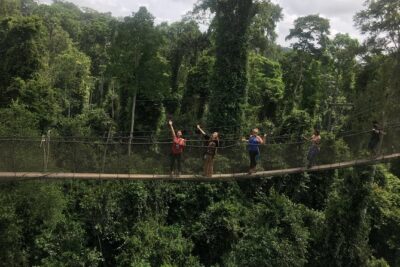
Cape Coast/Elmina Slave Dungeon and Canopy Walkway Private Tour
Read our review →Browse the lists this tour appears in