
Reviewed · MULTI-DAY GHANA ITINERARIES
Ghana 8 Day Special
Ghana rewards curious visitors. This eight-day route links Accra, Kumasi, Cape Coast, and Elmina with craft villages, royal sites, forests, and places tied to the transatlantic slave trade. I like the private air-conditioned vehicle and the steady support of a guide from airport pickup through departure. I also like the mix of city life, Ashanti traditions, coastal history, and hands-on craft stops. The main drawback is the amount of time spent on the road, with several long transfers and only breakfast included.
The strongest part is the human touch. Guides such as George Benson, Emmanuel, Elvis, Naa, Josh, Isaac, and others have been praised for their warmth, humor, and command of Ghanaian history and culture. Food is less consistent, and some meals require paying separately, so you should budget for lunches, dinners, drinks, and tips.
In This Review
- Five things to know before booking
- What the $5,060 price really buys you
- Arrival in Accra and a gentle first afternoon
- Accra’s independence story and Jamestown
- Kumasi and the Ashanti royal past
- Kente, Adinkra, and Kumasi’s working crafts
- Assin Manso and the road to Cape Coast
- Kakum’s canopy walkway and Elmina Castle
- Abandze, shopping, and a final night in Accra
- Your final day and airport transfer
- Guides, transport, and the pace of the trip
- Who should book this Ghana tour?
- FAQ
- Where does the Ghana 8 Day Special begin?
- Where does the tour end?
- How long does the tour last?
- What is included in the price?
- Are international flights and the visa included?
- What cities and regions does the tour visit?
- Is breakfast provided every day?
- How many people can join the tour?
- What is the cancellation policy?
- Should you book it?
Five things to know before booking
- The route covers Ghana’s cultural core: You visit Accra, Kumasi, Assin Manso, Cape Coast, Elmina, Kakum National Park, and several craft villages.
- Private transport keeps the trip simple: A private vehicle, airport transfers, and a guide are included throughout the journey.
- The Ashanti section is especially strong: Manhyia Palace, Okomfo Anokye Sword Site, Bonwire, Ntonso, Ahwiaa, and Kumasi Central Market provide a useful look at royal history and living traditions.
- The coastal sites can be emotionally heavy: Cape Coast Castle, Elmina Castle, and the Slave River connect directly to the history of enslavement and forced migration.
- You need to allow for extra spending: International flights, visas, insurance, gratuities, personal expenses, and unlisted meals are not included.
- The group is intended to stay small: The stated maximum is 10 people, which should allow more direct contact with your guide.
What the $5,060 price really buys you
At $5,060 per person, this is not a budget tour. The price covers about eight days, hotel accommodation, daily breakfast, private transportation, a cultural guide, listed admissions, airport transfers, and help with the visa application. International airfare, the visa itself, insurance, gratuities, and most meals remain your responsibility.
I see the value in the logistics. Ghana is not a place where every long-distance connection is best handled independently, particularly when you are combining Accra, Kumasi, and the Central Region in one week. Having the same guide and private vehicle means less time sorting out transport and more time asking questions.
The price makes more sense for you if you want a prepared cultural trip rather than a loose collection of day tours. It makes less sense if you prefer choosing your own restaurants, hotels, and daily pace. A few dining experiences have been praised less warmly than the guiding, and ordering individual dishes rather than relying on set or buffet arrangements may improve your meals.
The advertised group limit is 10 people. Some past organized groups were larger, so confirm the size for your specific departure. A smaller group matters here because several visits involve questions, local interaction, and movement through historic buildings.
More multi day trips around Accra:
- 10 Days Trip to Cape Coast and Elmina Castles from Accra
★ 5.0 · 31 reviews - 10 Days Ghana Cultural and Heritage Trip
★ 5.0 · 31 reviews - Explore Ghana Multi Day Tour
★ 5.0 · 29 reviews
Arrival in Accra and a gentle first afternoon
Your trip begins at Kotoka International Airport. After immigration, baggage collection, and customs, you meet the cultural guide and transfer to your hotel in a private air-conditioned vehicle.
If your flight arrives early enough, the guide may take you for a short visit to the University of Ghana campus at Legon. This is a useful soft landing after a flight. You get a first look at Accra before settling into the hotel, where the guide briefs you on the days ahead.
The first day is intentionally light, with about 30 minutes listed for the arrival activity. That is sensible. International arrivals can be tiring, and a short orientation is more useful than forcing a packed sightseeing schedule.
Accra’s independence story and Jamestown
Day two introduces several major themes at once: Pan-African thought, Ghana’s independence, colonial-era Accra, and coastal community life. The visit to the W.E.B. Du Bois Centre connects Ghana to the wider Black Atlantic. Du Bois, a major Pan-African thinker, chose to live and work in Ghana, making this more than a standard biographical stop.
At Independence Square, also called Black Square, you see one of Accra’s key civic spaces. The Kwame Nkrumah Memorial Park then shifts the focus to Ghana’s first president and the country’s independence story. Together, these stops give you political context before the tour moves into older neighborhoods.
Jamestown offers a different view of Accra. The fishing community, lighthouse, and Brazil House show a city shaped by the sea, migration, trade, and local enterprise. Do not expect a polished museum district here. The appeal is seeing how historic buildings and working community life exist side by side.
The city tour lasts about four hours, including admissions. That is enough time for a useful introduction, but not enough to cover every corner of Accra. The final day provides spare time for anything missed, which helps compensate for the fairly quick city visit.
Kumasi and the Ashanti royal past
The drive to Kumasi takes you through Ghana’s forest zone and toward the former seat of the Ashanti Empire. The route may include the Aburi Mountains and the Mampong Centre for Scientific Research into Plant Medicine, where research focuses on plant-based treatment for various ailments.
This is a travel day with sightseeing attached, not a quick hop between cities. You arrive in Kumasi late in the afternoon, so you should expect the road portion to shape much of the day.
Manhyia Palace Museum is the key stop. The palace served as the official residence of Ashanti kings, known as the Asantehene, until 1974. It now holds items connected to the Ashanti Kingdom. The museum helps explain why Kumasi is more than Ghana’s second-largest city. It is a center of royal memory, political identity, and ceremony.
The Okomfo Anokye Sword Site adds another layer. The schedule allows time permitting, so do not treat it as guaranteed. The day includes about two hours of listed touring, but the transfer itself is the larger part of the experience.
A completely different sort of day out of Accra:
- The Cape Coast Day Tour
★ 5.0 · 525 reviews - Experience the Beauty, History and the Culture Of Accra in a Day
★ 5.0 · 323 reviews - The Cape Coast Tour
★ 5.0 · 177 reviews - From Accra: Cape Coast, Elmina Castle & Kakum Park Day Tour
★ 4.6 · 144 reviews
Kente, Adinkra, and Kumasi’s working crafts
Day four is one of the most rewarding parts of the trip for anyone who wants to see traditions being made rather than simply displayed. You visit Ahwiaa, Ntonso, and Bonwire in the countryside around Kumasi, followed by Kumasi Central Market.
Bonwire is associated with Kente cloth. You see artisans work the looms and learn how the cloth is produced through a tradition passed down over generations. This is also a shopping stop, so prices and purchases deserve some care. You may be able to pay a courtesy call to the community’s paramount chief, although that should be understood as dependent on local arrangements.
At Ntonso, artisans stamp patterns onto cotton cloth to make Adinkra textiles. The black-on-black and black-on-red cloth described in the program is linked to funerals and mourning. That detail gives the designs a cultural meaning beyond decoration.
Ahwiaa adds another craft village to the route, while Kumasi Central Market brings you back into city commerce. The day is listed at about two hours for the main activity, but shopping and local visits may affect the pace.
I like this section because it puts money and attention directly into Ghanaian creative work. At the same time, you should feel comfortable declining purchases if you are not interested. Craft stops are valuable when you stay curious, not when you feel obliged to buy.
Assin Manso and the road to Cape Coast
On day five, the tour turns toward the Central Region and the most serious historical portion of the journey. Assin Manso Ancestral Slave River Park commemorates the site where captured Africans were washed before being held in coastal castles and shipped across the Atlantic.
The site also includes the burial place of two formerly enslaved people from the United States and Jamaica. Their remains were re-interred in August 1998 during Ghana’s first Emancipation Day celebration. That connection between Ghana and the African diaspora gives the visit particular weight, especially for people tracing family, cultural, or historical ties.
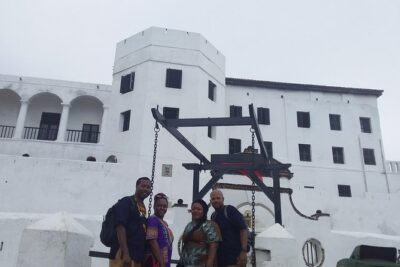
Cape Coast Castle follows. The castle is a UNESCO World Heritage Site and includes the Door of No Return. A guided visit helps you understand the structure as a place of detention, trade, and forced departure rather than treating it as a dramatic old building.
This section can be emotionally difficult. Give yourself time to process what you hear and see. The schedule includes hotel check-in and an evening at leisure, which is helpful after a demanding day.
Kakum’s canopy walkway and Elmina Castle
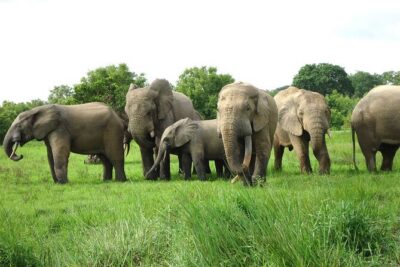
Day six places a natural attraction beside another major historic site. At Kakum National Park, you begin with a short walk on the forest floor. You might see birds, butterflies, monkeys, and perhaps signs of the park’s more than 40 mammal species, including the reclusive forest elephant.
The canopy walkway is the headline activity. It is about 1,000 feet long, crosses seven bridges, and reaches viewing platforms more than 150 feet above the ground. If you are uneasy with height, this is worth considering before booking. The program describes a brief forest walk and the walkway, but it does not promise a particular animal sighting.
In the afternoon, you visit Elmina Castle, built in 1482 and also designated a UNESCO World Heritage Site. It was the first European building of its type on the Gold Coast, and its rooms connect the coastal setting with the trade in enslaved people.
The pairing works well, but it also creates a packed day. Kakum asks for attention to the forest and height, while Elmina demands quiet reflection. You are not getting a relaxed beach day here. You are getting two very different Ghanaian experiences in one schedule.
Abandze, shopping, and a final night in Accra
Day seven begins with checkout and the drive back to Accra. The brief stop at Abandze connects the area to Louis Armstrong, the American jazz musician whose ancestral roots are associated with the village.
After arriving in Accra in the late afternoon, you may have time for shopping on Oxford Street in Osu. Suggested stops include Global Mamas, Woodin, and local stalls selling African clothing, beads, and accessories. Wild Gecko on Airport Road is another option for traditional crafts and artifacts.
The shopping suggestions are useful because the tour already introduces you to textiles and crafts in Kumasi. You can compare village workshops with city retail settings and make final purchases before leaving Ghana.
A farewell dinner at a local restaurant outside the hotel is suggested, but it is not included. Accra nightlife is also presented as an option. Keep your evening flexible, since arrival time from the coast and your own energy will determine how much you want to do.
Your final day and airport transfer
Day eight is left at leisure in Accra. With help from the driver and guide, you can choose sites you missed earlier or simply take a slower final morning.
The open schedule is a welcome feature. The main Accra visit covers several major places, but four hours cannot do everything. The final day gives you room to revisit the city, shop, or rest before the airport transfer.
Breakfast is included, and you are transferred to Kotoka International Airport for your onward flight. Since no departure time is provided, confirm how much free time you will actually have.
Guides, transport, and the pace of the trip
The guiding is the clearest strength of this experience. George Benson is repeatedly praised for explaining Ghana’s history, society, and culture in an engaging way. Emmanuel also received strong praise for an eight-day route that included Accra, Kumasi, Assin Manso, Cape Coast, Takoradi, and Accra.
Elvis, Naa, Josh, Isaac, Jacob, and other team members are also singled out for warmth, care, and useful answers. That range suggests the company has several capable guides, though your exact guide is not guaranteed at booking.
The private vehicle is air-conditioned, and airport transfers are included. That matters during long drives between Accra, Kumasi, and Cape Coast. You are not left to arrange intercity transport, but you should still expect road time and occasional fatigue.
The itinerary is active but not athletic. The main physical consideration is the Kakum canopy walkway, along with walking through historic sites and craft villages. The program says most people can participate, but it does not provide detailed accessibility information.
Who should book this Ghana tour?
I would recommend it to you if you want a first visit organized around Ghanaian culture, the Ashanti Kingdom, craft traditions, Pan-African history, and the legacy of enslavement. It is especially suitable if you value having a guide explain context rather than simply being dropped at monuments.
The tour also fits people with family or diaspora connections to Ghana. Visits to Assin Manso, Cape Coast, Elmina, and Abandze can feel personal, not merely educational.
You may want a different arrangement if you prefer slow travel, independent meals, beach time, or more time in each city. The route covers a lot in eight days, and the long transfers reduce the hours available for wandering. Food is another consideration: breakfast is included daily, but other meals are not, and dining quality may vary.
Cancellation is free if you cancel at least 24 hours before the start time. A cancellation within 24 hours is not refunded, and poor weather may lead to a different date or a full refund.
FAQ
Where does the Ghana 8 Day Special begin?
It begins at Kotoka International Airport in Accra, Ghana.
Where does the tour end?
The experience ends back at the meeting point, with a transfer to Kotoka International Airport for your onward flight.
How long does the tour last?
The tour lasts approximately eight days.
What is included in the price?
The price includes arrival and departure assistance, round-trip airport and hotel transfers, hotel accommodation, private transportation, an experienced cultural tour guide, daily breakfast, admissions to listed sites, and help with the visa application.
Are international flights and the visa included?
No. International flights and the visa are not included. Travel insurance, gratuities, personal expenses, and meals not listed are also excluded.
What cities and regions does the tour visit?
The route includes Accra, Kumasi, Assin Manso, Cape Coast, Elmina, Kakum National Park, Abandze, and craft villages near Kumasi.
Is breakfast provided every day?
Yes. Seven breakfasts are included during the eight-day program.
How many people can join the tour?
The stated maximum is 10 participants.
What is the cancellation policy?
You can cancel at least 24 hours before the experience begins for a full refund. Cancellations or changes made less than 24 hours before the start time are not accepted or refunded. If poor weather cancels the experience, you may be offered another date or a full refund.
Should you book it?
Book this tour if you want Ghana’s major cultural and historical stops connected by private transport and explained by a dedicated guide. The best reasons are the Ashanti craft villages, the thoughtful handling of Cape Coast and Elmina, and the strong personal care provided by guides such as George, Emmanuel, and Elvis.
Skip it if $5,060 feels too high for a breakfast-only package, or if long drives and a fixed schedule will frustrate you. For the right visitor, this is a serious, well-supported introduction to Ghana, with enough variety to show the country beyond Accra.
Just added around Accra
- Experience Cape Coast Castle and Kakum National Park★ 4.5 · 3 reviews
- Experience Northern Ghana In 10-Days★ 5.0 · 3 reviews
- Discover Ghana – Wli Waterfalls, Mountain Afadjato, Monkey Sanctuary & Akosombo.★ 4.5 · 3 reviews
- Cultural Tour Of Ghana And South Africa 12 Days★ 5.0 · 3 reviews
- Accra: City Highlights Half-day Guided Tour with Transfers★ 4.1 · 3 reviews
- Accra: Half day private safari with pick up★ 3.5 · 3 reviews
- Full Day Accra Guided Tour★ 5.0 · 3 reviews
- Experience Aburi Botanical Gardens And Boti Water Falls In A Day.★ 5.0 · 3 reviews
Multi-Day Ghana Itineraries, compared.
10 Days Trip to Cape Coast and Elmina Castles from Accra
Read our review →
Private Multi-Day Ghana Tour about Culture History and Wildlife – 7 Days
Read our review →
9-Day Private Guided Tour of West Africa (Ghana, Togo & Benin)
Read our review →Browse the lists this tour appears in