
Reviewed · MULTI-DAY GHANA ITINERARIES
10 Days Ghana Cultural and Heritage Trip
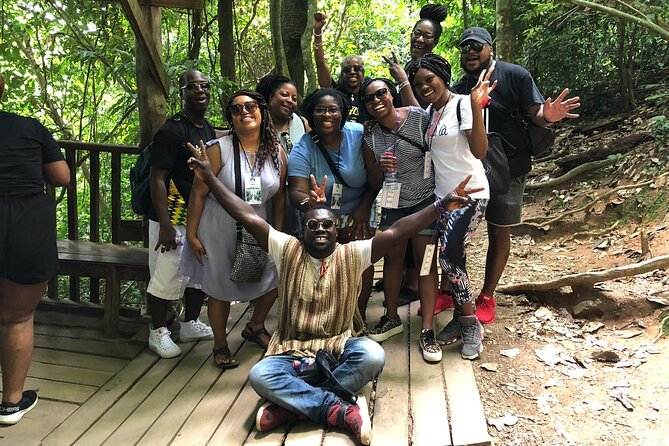
Ghana’s past is impossible to ignore. This ten-day journey links Accra’s independence landmarks with Cape Coast’s slave castles, Kakum’s rainforest walkway, Elmina’s traditions, and the Ashanti center of Kumasi. I like the small maximum group of 10, which should make discussions and city walks more manageable. I also like the way the tour goes beyond museums, adding a naming ceremony, kente weaving, a market visit, and the solemn return walk at Assin Manso. The main consideration is pace: several days cover major sites with limited time at each one.
The tour costs $3,500 per person, with airport pickup, an air-conditioned vehicle, Wi-Fi, breakfast on eight days, four lunches, and a welcome dinner listed among the inclusions. That price can be worthwhile if you value a guided route and a compact group, but you should confirm exactly what lodging, additional meals, and internal travel costs cover before paying. The experience has a 5.0 rating from 31 reviews, with 100 percent recommending it, and the provider’s response identifies Nana as part of the team.
In This Review
- Five things to know before booking
- Why this Ghana route works
- Arrival in Accra and meeting Nana’s team
- Accra: independence, markets, and national identity
- Aburi and W.E.B. Du Bois on day three
- Cape Coast Castle and the Door of No Return
- Kakum’s canopy walk and Elmina’s old town
- A naming ceremony and a slower Elmina morning
- Assin Manso and the barefoot return walk
- Kumasi, Manhyia Palace, and the Ashanti story
- Bonwire kente and final shopping in Accra
- What the $3,500 price really offers
- Who should book this Ghana trip?
- Should you book it?
- FAQ
- Where does the Ghana tour begin?
- How long does the experience last?
- What languages are available?
- How large is the group?
- Is transportation provided?
- Are meals included?
- Does the tour visit Cape Coast Castle and Elmina Castle?
- Can I cancel for a full refund?
Five things to know before booking

- Cape Coast and Elmina are the emotional center: You visit both castles, including dungeons and the Door of No Return.
- Assin Manso adds a personal ritual: The barefoot walk to the slave river is intended as an act of respect and reconnection.
- Kakum brings a change of mood: The canopy walkway offers a forest experience between several serious heritage stops.
- A naming ceremony makes the trip participatory: You receive a Ghanaian name based on your birth day and wear African clothing.
- The group is capped at 10 people: That is a useful size for questions, shared transport, and a more personal feel.
- Languages and transport are practical strengths: The tour is offered in English, Spanish, and French, using an air-conditioned vehicle with Wi-Fi.
Why this Ghana route works
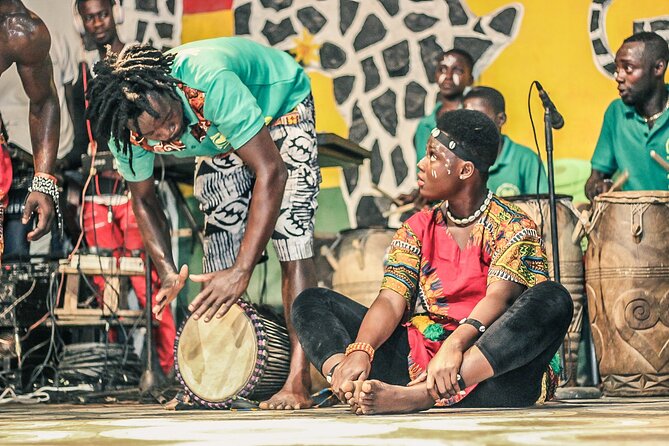
I like the shape of this trip because it does not treat Ghana as only a capital city stop or only a slavery memorial route. Accra introduces national independence and public life. The Central Region then brings the hard history of the Atlantic slave trade into focus. Kumasi adds Asante culture and royal tradition, while Bonwire shows how cloth and symbols carry meaning.
That range matters. You will encounter monuments, markets, forests, palaces, religious sites, craft workshops, and ceremonies. The result is a fuller picture of Ghana than a chain of sightseeing stops alone.
The schedule also has room for different moods. Day six includes a slower morning in Elmina before the chief palace and naming ceremony. That pause is welcome after the castle visits and rainforest walk. Still, this is not a lazy holiday. The itinerary covers long distances and gives many stops only 45 to 60 minutes, so you should be ready for a structured trip.
More roots and heritage tours in Accra:
- Ghana Heritage Tours – Beyond The Return
★ 5.0 · 36 reviews - The Ancestral Naming Ceremony and Home Coming Experience
★ 5.0 · 30 reviews - The Homecoming Experience To Cape-coast And Elmina.
★ 5.0 · 28 reviews
Arrival in Accra and meeting Nana’s team
Your trip begins at Kotoka International Airport in Accra, where pickup is offered. The listed start time is 8:30 am, so check the exact arrival and transfer arrangements carefully if your flight lands later in the day. You are taken to your hotel, then introduced to the group and in-country leaders over dinner and drinks.
This opening meal has real value. It gives you a chance to learn who is traveling with you before the sightseeing begins. It also gives the guides a natural moment to explain the days ahead, local customs, and practical expectations.
The provider’s response to a highly positive review thanks Nana and his team for arranging the journey. That suggests Nana is a name worth noting when you communicate before arrival. With a 10-person limit, you should have better access to the trip leaders than on a large coach tour.
Accra: independence, markets, and national identity
Day two begins at the Kwame Nkrumah Memorial Park. This is the final resting place of Ghana’s first president, and the displays include the smock he wore while declaring independence, personal letters, and photographs with world leaders. The visit lasts about an hour, which is enough for an introduction but may feel short if you enjoy political history.
Next comes Independence Square, also known as Black Star Square. The Independence Arch, Black Star Gate, and Liberation Day Monument mark Ghana’s struggle for independence. The square is used for the country’s Independence Day parade on March 6, giving the site a clear connection to modern national life rather than just a ceremonial look.
You then spend about an hour at Makola Market, Accra’s largest open-air market. This is one of the places where a guide adds genuine value. Narrow lanes, overhead goods, people carrying large bowls, strong scents, and constant movement can make the market hard to read on your own. Your guide can point out useful sections and help you find good places for photographs.
I would not expect a relaxed shopping stroll here. The market is crowded, and the description itself suggests spending much longer if you want to see it properly. The scheduled hour gives you a taste, not a complete visit. Keep your belongings secure and wear comfortable shoes.
The National Museum of Ghana rounds out the day. Its displays cover chiefs’ regalia, instruments, gold weights, beads, textiles, stools, pottery, traditional dance, farming, iron making, and the slave trade. There are also objects from other African cultures, including Senfu masks from Côte d’Ivoire and Zulu figures and beadwork.
Taken together, these four stops explain Accra from several angles: political independence, everyday commerce, national identity, and cultural practice. It is a full day, but each stop is short enough that you should keep your expectations focused.
Aburi and W.E.B. Du Bois on day three
Aburi Botanical Gardens provides a welcome change after Accra’s urban energy. The visit focuses on African herbs and plants, including their origins, ages, medicinal uses, and role in society. The scheduled hour makes this an introduction rather than a specialist botany tour.
The gardens are paired with the W.E.B. Du Bois Center, a Pan-African memorial site. Here you learn about Du Bois, the American sociologist, socialist, and historian whose work connected African American life with wider Pan-African thought.
I like this pairing because the day links the natural world with intellectual and political exchange. The drawback is simple: both visits are listed at about one hour, so the program may feel brisk if you want extended time for reading or quiet reflection.
More multi day trips around Accra:
- Ghana 8 Day Special
★ 5.0 · 38 reviews - 10 Days Trip to Cape Coast and Elmina Castles from Accra
★ 5.0 · 31 reviews - Explore Ghana Multi Day Tour
★ 5.0 · 29 reviews - 8 Day Cultural, History and Adventure Tour
★ 5.0 · 11 reviews
Cape Coast Castle and the Door of No Return
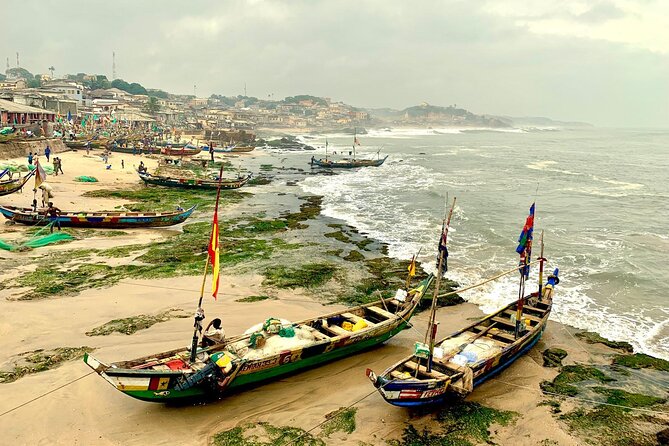
Cape Coast Castle is one of the most serious stops on the route. You see the dungeons where enslaved people were held while awaiting ships, then visit the Door of No Return. The scheduled visit lasts one hour.
This is not a site to rush through emotionally, even if the timetable moves quickly. The value of having a guide here is the historical framing. The stone walls and chambers are powerful, but context helps you understand how the castle functioned within the slave trade.
You should expect difficult subject matter. The itinerary treats this as a central part of Ghana’s heritage, not a side note. Bring patience and respect, and do not expect the day to feel like ordinary sightseeing.
Kakum’s canopy walk and Elmina’s old town
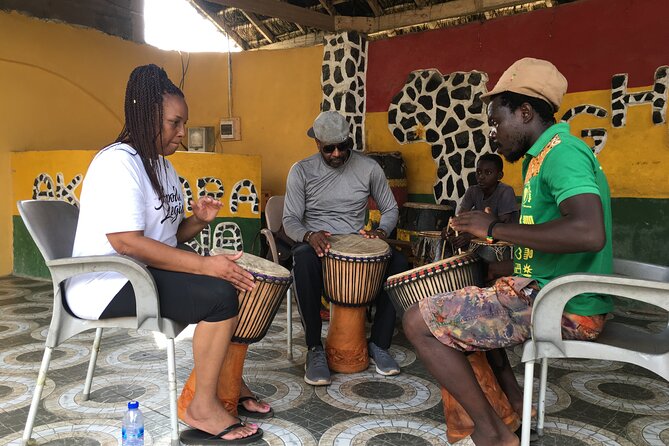
Day five changes the rhythm with Kakum National Park. The main attraction is a canopy walkway high among the trees, and the visit lasts about 90 minutes. It is one of the few canopy walks of its kind, according to the tour description.
This stop gives you a physical experience after several museum and memorial visits. You walk above the forest rather than simply viewing it from ground level. If heights make you uneasy, this is one part of the trip to consider in advance. The description does not provide details about the walkway’s height, length, or accessibility, so ask the operator if those points matter to you.
From Kakum, the program moves to Elmina for a walking tour. You see historic buildings, a 17th-century Dutch cemetery, a Posuban shrine, and an Asafo post. The hour-long visit gives you a quick introduction to the town’s layered African and European past.
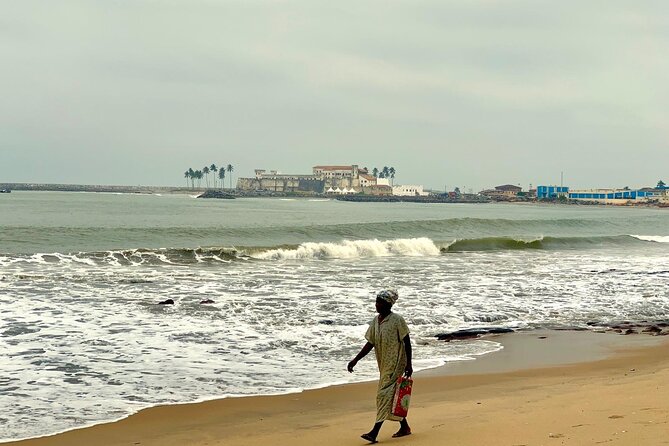
Elmina Castle follows. You visit the slave dungeons, forecourt, and Door of No Return in the oldest and largest European building of its type in sub-Saharan Africa, according to the supplied description. Seeing Cape Coast Castle and Elmina Castle on separate days lets you compare them, but it also means the emotional weight returns quickly.
A naming ceremony and a slower Elmina morning
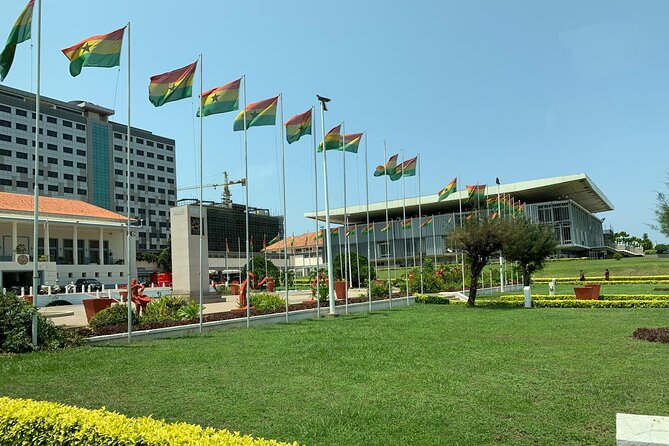
Day six begins with rest and relaxation in the morning. I consider this one of the itinerary’s better choices. After the castle and canopy walk, a slower start gives you time to recover before the afternoon program.
Later, you visit the chief palace and learn about local traditions. The highlight is a traditional naming ceremony. You receive a name based on the day you were born and wear African clothing as part of the custom.
This is more personal than simply observing a performance. You take part in a cultural practice, so your attitude matters. Listen closely, follow the guidance of the local hosts, and treat the ceremony as a meaningful exchange rather than a photo opportunity.
The time listed is two hours, which should allow the ceremony to feel less hurried than some of the museum stops. Still, the exact format may vary, so ask your trip leaders what participation involves.
Assin Manso and the barefoot return walk
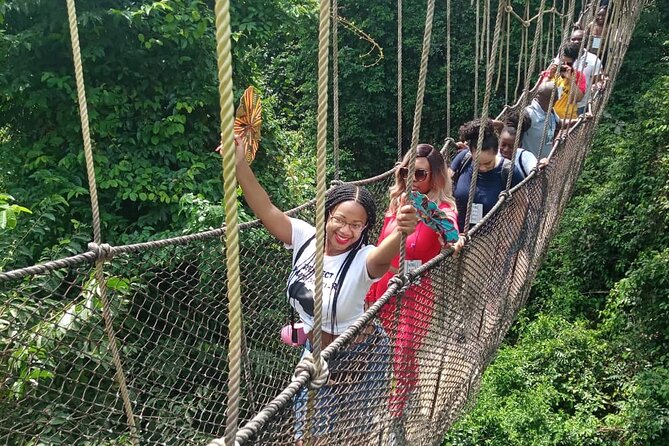
Assin Manso is among the most distinctive parts of the trip. The site is described as the final place where enslaved people took a last bath before being taken to the castles and shipped away. You walk to the slave river, where that final bath is remembered.
The walk is done barefoot. This represents connection to the soil and respect for ancestors and lost lives. You also visit the Memorial Wall of Return, where names are written to symbolize returning home.
I would prepare for this visit emotionally and practically. The bare-foot walk is intentional, but the itinerary does not describe the ground conditions or length in detail. Ask ahead if you need to plan for footwear, mobility, or weather. The experience requires good weather, and poor conditions can lead to a different date or a full refund.
Kumasi, Manhyia Palace, and the Ashanti story
Day eight takes you to Kumasi and Manhyia Palace Museum, the seat of the King of the Ashanti Kingdom. The museum presents the history and traditions of the Asante Empire. This adds a major cultural and political chapter that is quite different from the coastal castle visits.
The day also includes West Africa’s largest and busiest open-air market, although the supplied schedule does not clearly name the market or give a separate duration. Expect noise, movement, and plenty to look at. Ask your guide how much free time is available if shopping matters to you.
At the Okomfo Anokye Sword Site, you see the 400-year-old sword said to be impossible to remove. The visit lasts about 45 minutes and includes the story behind the sword. It is a compact stop, but a memorable one because it connects belief, leadership, and place.
Bonwire kente and final shopping in Accra
Bonwire Kente Weaving Centre is the focus of day nine. You learn about Ghanaian cloth, the symbols woven into it, and their importance in Ghanaian culture. This is a useful stop if you want to buy textiles with some understanding of what their patterns mean.
I would use this visit to think about quality and purpose, not simply price. The schedule does not specify how much shopping time is available, so ask before making a large purchase.
On the final day, you visit the Accra Arts Center for souvenir shopping, then receive an airport transfer timed for your flight. The shopping stop lasts about 45 minutes, so it is best for final purchases rather than a long browse.
What the $3,500 price really offers
At $3,500 per person, this is a substantial trip cost. The value comes from the full route, airport pickup, guided visits, air-conditioned transport, Wi-Fi in the vehicle, a welcome dinner, eight breakfasts, and four lunches. A maximum of 10 people also makes the price easier to justify than a large bus tour if you prefer direct contact with your guides.
The inclusions do not list every meal, hotel cost, or possible extra. Before booking, confirm whether accommodation is included in the quoted price and ask which meals you must pay for yourself. That clarification matters more than a small price comparison.
Group discounts may be available, and the tour is offered in English, Spanish, and French. Free cancellation is available up to 24 hours before the start time. Changes made inside that window are not accepted, and poor weather can result in a new date or full refund.
Who should book this Ghana trip?
I would recommend it to you if you want Ghana’s major heritage sites arranged into one guided journey. It suits people who care about the slave trade’s legacy, independence history, Asante culture, local ceremony, markets, and craft traditions.
It is less suitable if you want long, unstructured stays at each site. Many visits last about an hour, and the route covers Accra, the coast, Assin Manso, Kumasi, and a return to Accra. You should also think carefully about the canopy walk, the barefoot ceremony at Assin Manso, and the emotional intensity of two castle visits.
The 5.0 rating from 31 reviews and 100 percent recommendation are encouraging, with the strongest praise directed toward Nana and his team’s organization of a meaningful pilgrimage-style journey. I would still ask precise questions about hotels, meal coverage, daily driving times, and the practical details of the barefoot walk before committing.
Should you book it?
Book this tour if you want a compact, guided introduction to Ghana that treats history with seriousness while making room for markets, forests, ceremony, royal tradition, and textiles. The small group and broad route are its best features.
Skip it if you prefer to choose your own pace or spend several days in one place. For the right person, though, this is a thoughtful route with real emotional range, and the combination of Cape Coast, Elmina, Assin Manso, Kakum, and Kumasi gives you a much fuller view of Ghana than a short Accra visit could provide.
FAQ
Where does the Ghana tour begin?
The tour begins at Kotoka Airport in Accra, Ghana. Airport pickup is offered, and the listed start time is 8:30 am.
How long does the experience last?
The experience lasts approximately 10 days, ending with a visit to the Accra Arts Center and an airport transfer.
What languages are available?
The experience is offered in English, Spanish, and French.
How large is the group?
The tour has a maximum of 10 travelers.
Is transportation provided?
Yes. The tour uses an air-conditioned vehicle equipped with Wi-Fi.
Are meals included?
The inclusions list dinner, eight breakfasts, and four lunches.
Does the tour visit Cape Coast Castle and Elmina Castle?
Yes. Cape Coast Castle is visited on day four, and Elmina Castle is visited on day five. Both visits include the slave dungeons and the Door of No Return.
Can I cancel for a full refund?
Yes, if you cancel at least 24 hours before the experience start time. Cancellations made less than 24 hours in advance are not refunded.
More History Tours in Accra
- Experience the Beauty, History and the Culture Of Accra in a Day
★ 5.0 · 323 reviews - Cape Coast Historical Day Tour
★ 5.0 · 24 reviews - Full-Day Private Culture and History Tour of Accra
★ 5.0 · 23 reviews - Ghana Private Historic Tour through Castles and Nature
★ 5.0 · 18 reviews
Just added around Accra
- Experience Cape Coast Castle and Kakum National Park★ 4.5 · 3 reviews
- Experience Northern Ghana In 10-Days★ 5.0 · 3 reviews
- Discover Ghana – Wli Waterfalls, Mountain Afadjato, Monkey Sanctuary & Akosombo.★ 4.5 · 3 reviews
- Cultural Tour Of Ghana And South Africa 12 Days★ 5.0 · 3 reviews
- Accra: City Highlights Half-day Guided Tour with Transfers★ 4.1 · 3 reviews
- Accra: Half day private safari with pick up★ 3.5 · 3 reviews
- Full Day Accra Guided Tour★ 5.0 · 3 reviews
- Experience Aburi Botanical Gardens And Boti Water Falls In A Day.★ 5.0 · 3 reviews
Multi-Day Ghana Itineraries, compared.
10 Days Trip to Cape Coast and Elmina Castles from Accra
Read our review →


Private Multi-Day Ghana Tour about Culture History and Wildlife – 7 Days
Read our review →
9-Day Private Guided Tour of West Africa (Ghana, Togo & Benin)
Read our review →Browse the lists this tour appears in