
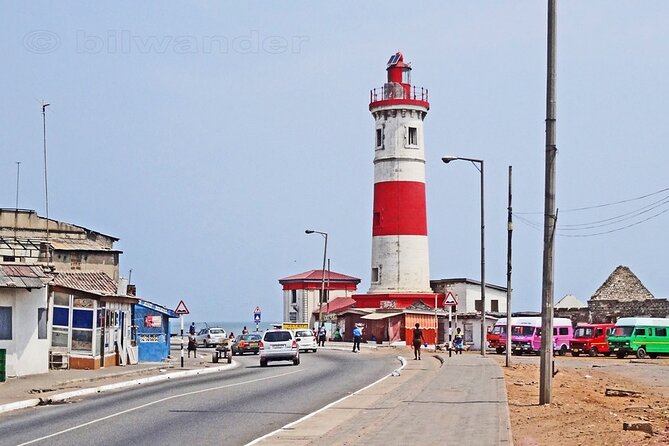
Reviewed · CITY TOURS
Accra Guided City Tour Experience
Accra makes its history impossible to miss. This six-hour city tour links Kwame Nkrumah Memorial Park, Makola Market, Independence Square, the W.E.B. Du Bois Center, the Center for National Culture, and the Ghana National Museum in one well-planned day. I like the mix of major national sights and ordinary city life, and I like having a guide to explain what you are seeing rather than simply pointing at buildings. The main catch is the early 7:00 AM pickup and the packed schedule, with lunch not included.
You pay $45 per person for hotel pickup and drop-off, an air-conditioned vehicle, bottled water, onboard WiFi, an English-speaking guide, and the activities listed. I especially value the help at Makola Market, where guides such as Michael, Eben, Peter, and Thompson have helped visitors handle prices and find their way. Plan to carry cash, wear comfortable shoes, and expect traffic to shape the day.
In This Review
- Key points to know before you go
- Why this is a useful first day in Accra
- Starting at 7:00 AM to beat Accra traffic
- Kwame Nkrumah Memorial Park and Ghana’s independence story
- Makola Market, where Accra gets practical
- Independence Square and the Black Star Gate
- The W.E.B. Du Bois Center and a wider African story
- Center for National Culture and Ghanaian craft
- Ghana National Museum closes the historical loop
- The guides are a major part of the value
- Is $45 good value?
- Who should book this Accra tour?
- Should you book it?
- FAQ
- How long is the Accra Guided City Tour?
- What time is pickup?
- Where does the tour start and finish?
- What language is the tour offered in?
- What sights are included?
- Is transportation included?
- Is lunch included?
- Should I bring cash?
- Can I cancel the tour for a refund?
- Who should not take this tour?
Key points to know before you go
- Six major Accra stops in six hours: You cover national monuments, museums, a market, and an arts center in one outing.
- 7:00 AM is a sensible start: Accra traffic can seriously affect the route, so an early pickup gives the day a fighting chance.
- Guides add real value: Thomas, Emanuel, Michael, Thompson, Eben, Peter, Fred, and others have been praised for clear explanations, patience, photography, and market support.
- Makola is the most hands-on stop: Bring cash and let your guide help with bargaining, prices, and navigating the crowds.
- Comfort comes between the sights: The air-conditioned vehicle, bottled water, hotel transfers, and WiFi matter in Accra’s heat and traffic.
- Lunch is your responsibility: The tour is packed, and several people wished a food stop had been built into the schedule.
Why this is a useful first day in Accra
Accra can feel sprawling when you first arrive. Important places are spread across different parts of the city, and traffic can turn a short drive into a slow crawl. This tour gives you a broad introduction without making you arrange separate taxis, museum visits, and market navigation.
I like the way the day moves between national memory and present-day life. At the memorial park, you learn about Ghana’s independence and first president. At Makola, you see commerce in motion. At the museums and Du Bois Center, the story widens to include archaeology, Pan-African thought, art, and Ghana’s relationship with the wider African diaspora.
That combination is more useful than a tour made only of photo stops. You get a sense of how the country presents its past, how Accra works today, and why the city matters in African political and cultural history.
The six-hour length is efficient, but it is not leisurely. You will see many sites, usually with explanations at each one, yet you should not expect long, unhurried museum visits. If you want to study every display in detail, you may prefer to return to one or two places on another day.
A few more Accra trips worth weighing up
- Accra Guided City Tour Experience
★ 5.0 · 76 reviews - Accra: Guided City Tour with Lunch
★ 4.5 · 40 reviews - Private Aburi Hill Guided Tour
★ 5.0 · 34 reviews
Starting at 7:00 AM to beat Accra traffic
Pickup is scheduled for 7:00 AM because traffic is a serious part of the Accra experience. The exact time can shift according to your hotel, road conditions, weather, and the other pickup locations, so keep your morning flexible and watch for updates.
Hotel pickup and drop-off are included, which is a real convenience. You do not need to find the first museum on your own or work out a late-afternoon taxi after a long day. One person even received an airport drop-off when the route worked that way, but do not treat that as a standard feature.
The vehicle is air-conditioned, and the onboard WiFi lets you share photos during the day. Bottled water is also included. These sound like small extras, but they make a difference when you are moving in and out of a hot vehicle and walking through crowded areas.
Some outings have been small, including one group of four, but the exact group size is not stated. Ask before booking if the size of the vehicle or group matters to you.
Kwame Nkrumah Memorial Park and Ghana’s independence story
Kwame Nkrumah Memorial Park is a strong opening stop because it gives the rest of the day a clear frame. The park honors Dr. Kwame Nkrumah, Ghana’s first president and a central figure in the country’s independence.
You can see his mausoleum, museum displays, bronze statue, and landscaped grounds. The site focuses on Ghana’s path to independence, declared in 1957, and on Nkrumah’s role in that political change.
A guide makes this visit more meaningful. Without context, a mausoleum and statue can become quick photographs. With an explanation of Nkrumah’s place in Ghanaian and Pan-African history, the site becomes an introduction to the political ideas you will encounter again at the W.E.B. Du Bois Center and Independence Square.
The park is also one of the calmer spaces on the route. That gives you a moment to settle into the tour before the market and the busier city roads. Take time for photographs, but listen closely to the political background because it helps connect several later stops.
Makola Market, where Accra gets practical
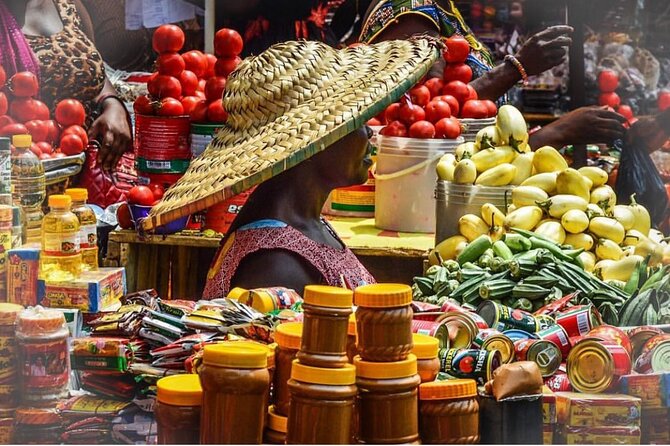
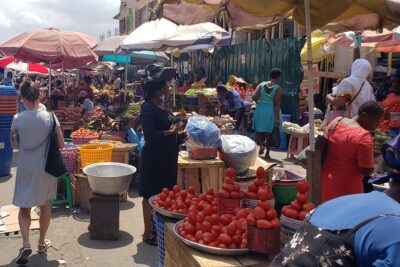
Makola Market is the least formal and most interactive part of the day. It is a major commercial area where you might find textiles, clothes, food, electronics, and many other goods. The point is not only shopping. It is a chance to see how Accra conducts everyday business.
This is where a local guide earns the $45 price. A guide can help you understand how to approach purchases, compare prices, and move through the market with more confidence. Michael and Peter have helped with bargaining, while Eben has been praised for taking care of visitors in the crowded market. That kind of assistance is especially useful if you are shopping alone or visiting Accra for the first time.
Carry Ghanaian cash for purchases. Do not assume every seller accepts cards, and do not spend all your money at the first stall. If you want textiles or small gifts, ask your guide for help before agreeing to a price.
Makola can be intense. It is crowded, noisy, and active, and it is not the place to wander while staring at your phone. Keep your belongings secure and stay close to the guide. The tour rules also prohibit alcohol and drugs, and you must not touch museum exhibits at the other stops.
More city tours in Accra:
- Accra Detailed City Tour
★ 4.5 · 118 reviews - Know Ghana in 4 hrs – Accra City Tour
★ 4.5 · 47 reviews - Escape Accra City to Aburi Gardens and Tetteh Quarshie Cocoa Farms
★ 4.5 · 32 reviews - ACCRA GUIDED CITY TOUR, GHANA
★ 4.7 · 29 reviews
Independence Square and the Black Star Gate
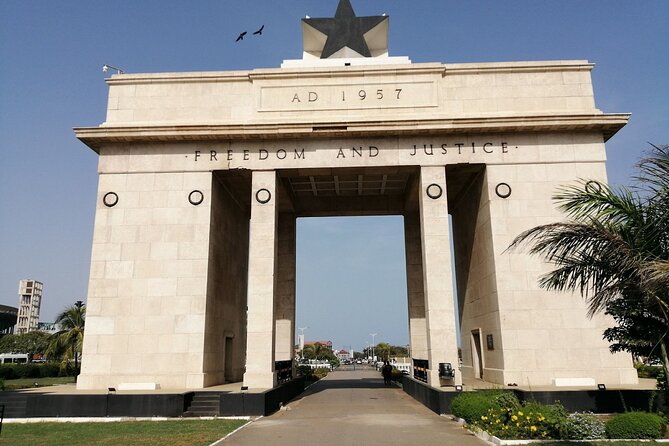
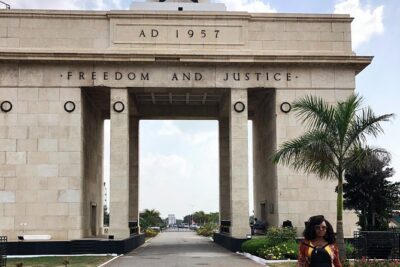
Independence Square, also called Black Star Square, is one of Accra’s most important public spaces. The Black Star Gate and Independence Arch mark Ghana’s independence and national identity, while the square opens toward the Atlantic Ocean.
This stop is more about national symbolism and open space than a long indoor visit. Your guide can explain why the site matters and connect it to the events you learned about at Kwame Nkrumah Memorial Park.
It is a good place for photographs, especially if you want a simple image that says Accra and Ghana. Still, do not expect the same level of detailed display as a museum. The value here comes from the scale, setting, and political meaning.
Because the tour crosses several parts of central Accra, the timing at Independence Square may depend on traffic and the order of the day. The provider notes that schedules can change when road or weather conditions require it.
The W.E.B. Du Bois Center and a wider African story
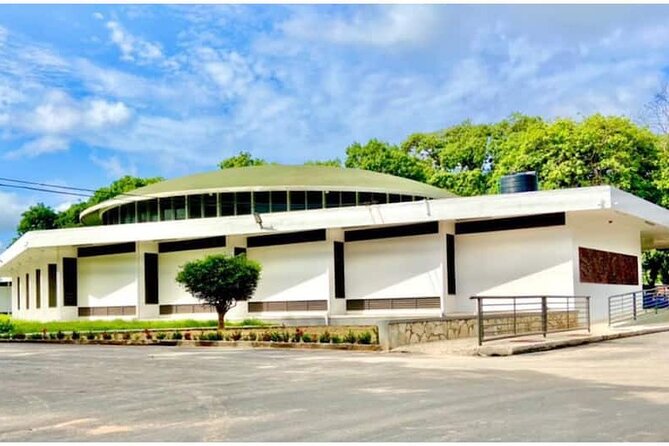
The W.E.B. Du Bois Center adds an international layer to the tour. Du Bois was an American scholar and Pan-African thinker who spent his final years in Ghana. You can visit his mausoleum and museum and learn about his work for African unity and Pan-Africanism.
This stop is valuable because it shows that Ghana’s independence story was part of a larger movement. It also introduces the connection between Ghana and the African diaspora in a direct, personal way.
One particularly memorable point concerns Du Bois receiving Ghanaian nationality under Nkrumah. That detail helps explain why the center belongs on an Accra history tour rather than being treated as a separate academic stop.
The museum is not large enough to replace a full study of Du Bois, but it gives you a focused introduction. Ask questions here. Guides have been praised for answering them carefully, and the subject rewards a little extra attention.
Center for National Culture and Ghanaian craft
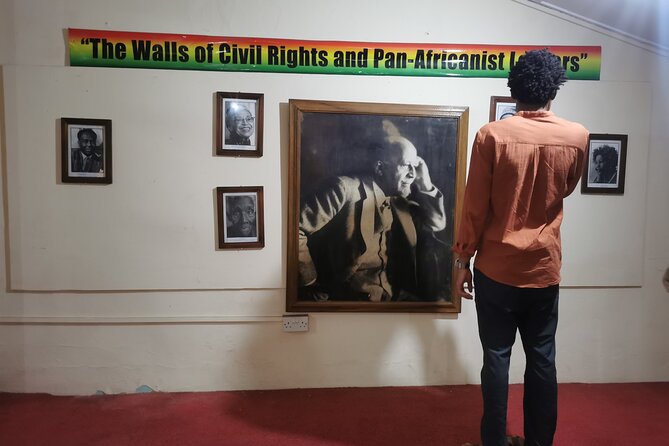
The Center for National Culture shifts the mood from politics and memorials to art, craft, and performance. You can browse sculptures, textiles, and other Ghanaian handmade goods, and there may be cultural performances during your visit.
This is another place where cash is useful. The market setting gives you a chance to look for souvenirs, but keep your budget in mind. A guide can help explain what you are seeing and may assist with prices, though you should still decide what you genuinely want to buy.
I would treat the performance element as a possibility, not a guarantee. The center is worthwhile even without one, because it adds a visual and commercial side of Ghanaian culture that the museums cannot provide.
If you want a small souvenir, this is a sensible place to shop, though the tours do not include a visitor gift. One suggestion was to provide a small token such as a magnet or bracelet. For now, your own market purchase is the more likely memento.
Ghana National Museum closes the historical loop
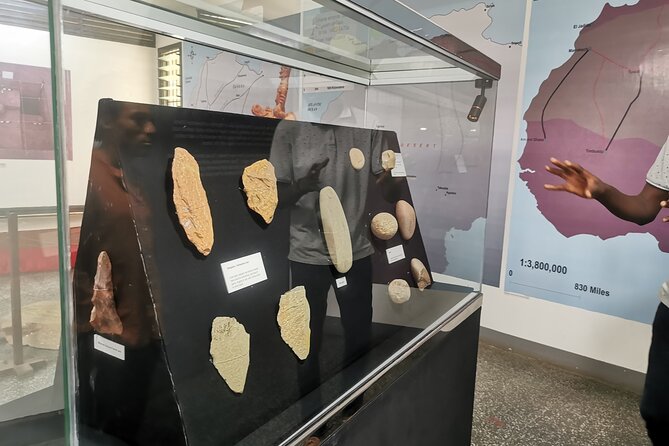
The Ghana National Museum is described as the country’s largest museum and the final stop. Its collections cover cultural history, art, and archaeology, including objects from pre-colonial times.
Ending here makes sense. The earlier stops focus on major people, national independence, and modern public identity. The museum reaches further back and gives you a broader view of Ghanaian society and material culture.
You should expect a guided introduction rather than unlimited time with every exhibit. The full route is ambitious, and museum hours can feel short if you enjoy reading labels. Still, this stop gives the day historical depth and helps prevent your understanding of Ghana from beginning and ending with the twentieth century.
At museums and heritage sites, you may encounter separate local guides or site staff who explain the displays. The main tour guide helps connect those explanations and keeps the schedule moving.
The guides are a major part of the value
The strongest part of this experience is not only the route. It is the quality of the person leading it. Guides named in the feedback include Thomas, Emanuel, Mike, Seth, George, Thompson, Michael, Themessen, Godfred, Fred, Peter, Patricia, Eden, Eben, Moses, and Derrick.
Several qualities appear again and again: clear explanations, good humor, punctual pickups, patience, help with photographs, and care at Makola Market. Emanuel has been praised for being personable and flexible. Thompson has been noted for careful timing and photography. Michael has helped with Twi practice as well as market bargaining. Eben has been praised for both his energy and his camera skills.
Your assigned guide may be different, and you cannot assume a particular person will be available. Still, the repeated attention to guiding suggests that the company treats the human side of the tour seriously.
If you have questions about Ghanaian history, local customs, language, or shopping, ask them. The experience improves when you use the guide as a conversation partner instead of waiting for a standard speech.
Is $45 good value?
At $45, this is good value if you want to see several major sites in one day. The price includes the vehicle, hotel transfers, bottled water, WiFi, a dedicated English-speaking guide, and the activity costs in the scheduled program. Paying separately for transport between six stops would take time and could become expensive, especially if you are not familiar with Accra.
The value is strongest for solo visitors, first-time visitors, and anyone with only one free day. It is also useful at the start of a longer Ghana trip because you get basic historical and cultural bearings quickly.
The price does not include lunch, accommodation, or personal purchases. The lack of a meal stop is the clearest weakness. The day can stretch across the middle of the day, and two people specifically wished food had been included or scheduled around noon.
Bring cash for food and shopping, and ask at the beginning how much time will be available for a meal. Do not count on lunch being part of the package.
Who should book this Accra tour?
I would choose this tour if you want structure, historical context, hotel transport, and a guide who can help you manage Makola Market. It suits solo visitors especially well, since the organized format makes it easier to meet people and avoid handling every detail alone.
It also works for couples, families with older children, and first-time visitors who want a clear introduction before exploring independently. The air-conditioning and pickup service help in Accra’s heat, while the six-hour format leaves room for other plans.
I would think twice if you dislike early starts, crowded markets, or a fairly full schedule. People with back problems, pregnant women, and anyone over 95 are specifically advised not to take the tour. The walking, vehicle transfers, and market conditions may also be tiring for anyone who needs a slower pace.
Free cancellation is available up to 24 hours before the activity, and you can reserve now and pay later. Those options help if your Accra plans are still shifting, but the traffic warning remains important: keep the start and end of the day flexible.
Should you book it?
Book it if you want the main Accra landmarks, museums, and Makola Market handled in one day for $45. The route is broad, the transport is comfortable, and the guides add much more than directions. I especially recommend it for your first day in the city, when context and local help are worth more than wandering without a plan.
Skip it if you want long museum visits, a slow food-focused day, or complete control over every stop. Bring cash, eat before pickup, wear comfortable shoes, and ask questions throughout the route. With those expectations, this is a practical and worthwhile introduction to Accra.
FAQ
How long is the Accra Guided City Tour?
The tour lasts six hours.
What time is pickup?
Pickup is scheduled for 7:00 AM because traffic can affect travel times. The exact pickup time may change based on traffic, weather, road conditions, and your pickup location.
Where does the tour start and finish?
The tour starts in Accra and returns to Accra. Hotel pickup and drop-off are included.
What language is the tour offered in?
The live guided tour is offered in English.
What sights are included?
The route includes Kwame Nkrumah Memorial Park, Makola Market, Independence Square and Black Star Square, the W.E.B. Du Bois Center, the Center for National Culture, and the Ghana National Museum.
Is transportation included?
Yes. The tour includes an air-conditioned vehicle, hotel pickup and drop-off, bottled water, and WiFi onboard.
Is lunch included?
No. Lunch is not included, so bring cash and plan for food during the day.
Should I bring cash?
Yes. Cash is recommended for local purchases at the attractions, especially at Makola Market and the Center for National Culture.
Can I cancel the tour for a refund?
You can cancel up to 24 hours in advance for a full refund.
Who should not take this tour?
The tour is not suitable for pregnant women, people with back problems, or people over 95 years old.
Just added around Accra
- Experience Cape Coast Castle and Kakum National Park★ 4.5 · 3 reviews
- Experience Northern Ghana In 10-Days★ 5.0 · 3 reviews
- Discover Ghana – Wli Waterfalls, Mountain Afadjato, Monkey Sanctuary & Akosombo.★ 4.5 · 3 reviews
- Cultural Tour Of Ghana And South Africa 12 Days★ 5.0 · 3 reviews
- Accra: City Highlights Half-day Guided Tour with Transfers★ 4.1 · 3 reviews
- Accra: Half day private safari with pick up★ 3.5 · 3 reviews
- Full Day Accra Guided Tour★ 5.0 · 3 reviews
- Experience Aburi Botanical Gardens And Boti Water Falls In A Day.★ 5.0 · 3 reviews
City Tours, compared.



Escape Accra City to Aburi Gardens and Tetteh Quarshie Cocoa Farms
Read our review →
Browse the lists this tour appears in