Reviewed · TOURS
Accra Markets Tour
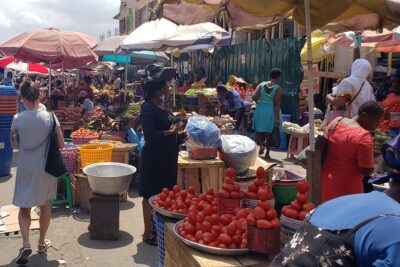
Markets tell you how a city really works. This private Accra walking tour takes you into Makola, Kantamanto, and Agbogbloshie, where you can shop for local goods, watch craftsmen and artists at work, and learn how bargaining works in Ghana. With a guide and driver handling the practical side, you get a closer look at daily commerce than a standard sightseeing drive allows.
I like the private format, which lets your group ask questions and set the pace within the three-and-a-half-hour schedule. I also like the chance to visit the herb market, timber market, and several major shopping areas in one outing. The main drawback is time: one part of the experience has been described as too short at Makola, and the market atmosphere may feel overwhelming if haggling is not your thing.
In This Review
- Key points at a glance
- Why Accra’s markets make a good first stop
- Starting with Makola Market
- Kantamanto and the working side of shopping
- Agbogbloshie and the value of local context
- Arena Accra’s timber market
- The herb market and traditional remedies
- Bargaining without feeling lost
- What the guide and driver add
- Is $135 per person a fair price?
- Who should book this experience?
- Booking details and cancellation
- Final verdict: a strong choice for market-minded visitors
- FAQ
- How long does the Accra Markets Tour last?
- Which markets are included?
- Is this a private tour?
- Is pickup available?
- What is included in the price?
- What is the cancellation policy?
Key points at a glance
- Three major Accra markets: Visit Makola, Kantamanto, and Agbogbloshie in one private outing.
- Local bargaining help: Your guide can show you how to negotiate prices in a respectful, practical way.
- Herbs and traditional remedies: See roots and leaves connected with herbal medicine and voodoo practices.
- Timber at Arena Accra: The route includes a look at craftsmen and the timber trade.
- Guide and driver support: Previous visitors especially praised guide Modesta and the accompanying driver.
- A short, active tour: Expect about three hours and 30 minutes, with a moderate level of physical activity.
Why Accra’s markets make a good first stop

Accra can be hard to understand from the window of a car. The markets put you close to the city’s working life, from handmade goods and food to timber, herbs, clothing, and souvenirs. You are not simply looking at displays. You are seeing buying, selling, making, and bargaining happen around you.
This tour is useful if you want a structured introduction. A first visit to a large market can feel confusing, especially when you do not know where to walk, how prices are set, or how firmly you should bargain. A local guide gives you a way into that system without leaving you to figure it out alone.
The experience is private, so only your own group participates. That matters here. You can pause to ask about a product, spend longer at a particular stall, or admit that you need a quieter moment. A large group would make that harder.
The tour runs on weekdays between 7:00 AM and 6:00 PM, with the activity lasting about three hours and 30 minutes. Pickup is offered, but the exact pickup arrangement should be confirmed when you book. The listed price is $135 per person, and group discounts may be available.
Other Accra trips people book alongside this one:
- The Cape Coast Day Tour
★ 5.0 · 525 reviews - Experience the Beauty, History and the Culture Of Accra in a Day
★ 5.0 · 323 reviews - The Cape Coast Tour
★ 5.0 · 177 reviews
Starting with Makola Market
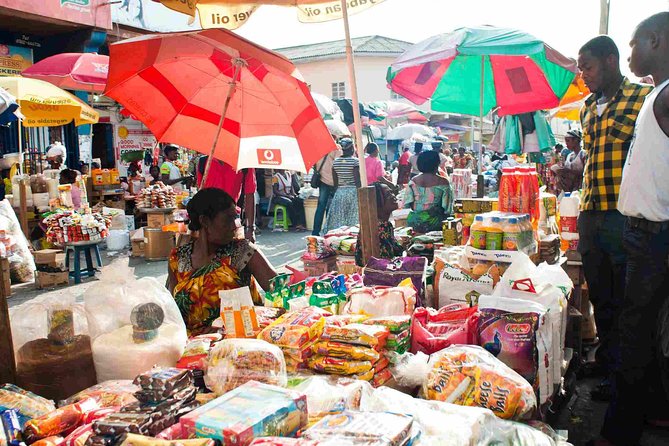
Makola is the market many people will most want to see, and it deserves your attention. It is one of the central shopping areas included in the route, offering a chance to browse local goods, foods, and souvenirs while learning how to approach sellers.
Your guide can help you understand the basic rhythm of bargaining. This is not just a lesson in getting the lowest possible price. It is also about knowing when to ask, when to smile and move on, and when a seller’s price may already be fair. You will likely get more from the experience if you treat bargaining as a social exchange rather than a contest.
Bring a clear idea of what you might actually buy. Small souvenirs and local goods can make the exercise more enjoyable than wandering without a purpose. If you see something you like, ask your guide for help before making an offer. You will learn more by taking part than by watching from the edge.
There is one practical caution. The three-and-a-half-hour schedule covers several markets, and Makola may receive less time than you expect. If Makola is your top priority, say so early in the tour. A private outing gives you a better chance of explaining that preference, though the full route may still require some time at each stop.
Kantamanto and the working side of shopping
Kantamanto adds another view of Accra’s market economy. Here, the focus is not only on what you can purchase. The point is also to see how goods move through a major market and how sellers and buyers interact.
You may find the scale and activity demanding at first. That is part of the value, but it also explains why a guide matters. Stay close to your group, keep your belongings secure, and listen when your guide suggests where to stop or walk. The tour requires moderate physical fitness, so you should be comfortable spending much of the outing on your feet.
Kantamanto can be a better place to observe than to shop, depending on your interests. If you want a very controlled shopping trip, this may feel too intense. If you want a direct look at Accra’s commercial life, it adds depth to the tour.
The experience is not designed as a quiet museum visit. You will be moving through working markets, meeting sellers, and taking in many sights and sounds at once. I would approach it with patience and an open mind, rather than expecting every stop to feel polished or easy.
Agbogbloshie and the value of local context
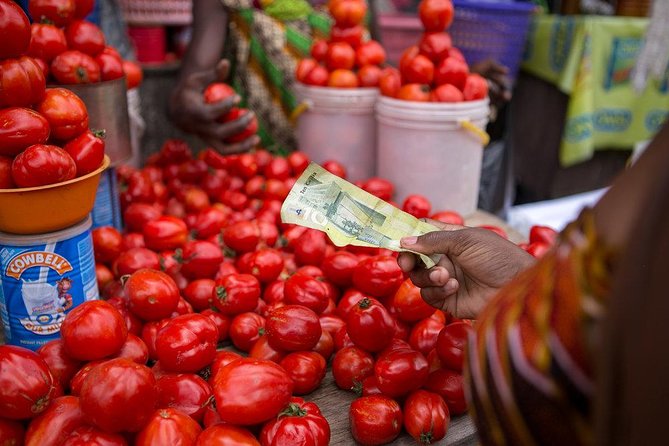
Agbogbloshie is another major market stop on the route. The information provided for the tour does not promise a particular product list or a set length of time here, so your guide’s approach will shape much of the visit.
That flexibility can work in your favor. A local guide can point out what is most relevant on the day, introduce you to the people working nearby, and explain the parts of the market that would be easy to miss alone. It also means you should not expect a fixed shopping checklist.
The tour describes opportunities to see craftsmen and artists in action. That shifts the outing beyond souvenir buying. You can pay attention to how objects are made, how materials are handled, and how skill supports local trade.
Take care with your expectations. This is an active market environment, not a staged cultural show. You may find the surroundings crowded or demanding, and the experience may feel less comfortable than a typical city attraction. The guide and driver are important here, especially if you want to explore with added support.
A completely different sort of day out of Accra:
- From Accra: Cape Coast, Elmina Castle & Kakum Park Day Tour
★ 4.6 · 144 reviews - Accra Detailed City Tour
★ 4.5 · 118 reviews - Accra Guided City Tour Experience
★ 4.7 · 88 reviews - Accra Guided City Tour Experience
★ 5.0 · 76 reviews
Arena Accra’s timber market
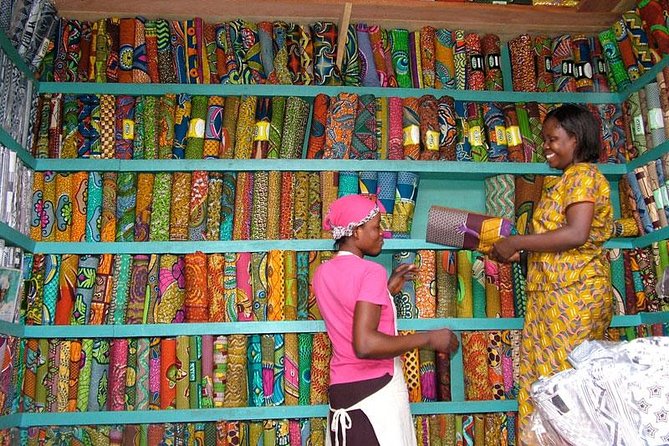
The timber market at Arena Accra gives the tour a more specialized stop. It is a useful contrast to the general shopping areas because the focus is on wood, materials, and the craftsmen who work with them.
The tour description specifically mentions exploring the timber market and seeing craftsmen in action. That makes this stop worthwhile for anyone interested in making, design, construction, or traditional skills. Even if you are not shopping for timber, you can gain a better sense of the work behind finished objects.
Do not expect this part to function like a craft workshop unless your guide says otherwise. You are visiting a market and observing activity. Ask questions as you go, particularly if you want to understand what different woods or tools are used for.
This is also one reason the private setup has value. You can steer the conversation toward craft, materials, or local trade instead of following a one-size-fits-all script.
The herb market and traditional remedies
The herb market may be the most unusual stop. Roots and leaves are presented in connection with traditional remedies and voodoo practices, giving you a look at a side of Ghanaian culture that is rarely covered on a basic city tour.
Approach this part with respect and curiosity. The goal is not to treat traditional medicine as a novelty. Listen to how your guide explains the uses and beliefs connected with the plants, and remember that seeing an herb for sale does not mean it is suitable for you to use.
The stop can be especially valuable if you are interested in local belief systems, healing traditions, or the way knowledge passes between generations. It also adds balance to the shopping portions of the outing. You are not only looking for things to take home. You are learning how people understand health and spiritual practice.
This is a good place to ask questions, but let your guide lead the conversation. The information supplied for the tour does not promise medical advice, product guarantees, or permission to purchase specific remedies. Treat the herb market as a cultural visit, not a substitute for professional healthcare.
Bargaining without feeling lost
Many people enjoy the idea of bargaining until the first seller names a price. Then the fun can disappear quickly. The tour includes instruction in African-style bargaining, which makes the experience more approachable for first-time visitors.
Start by watching how your guide handles an exchange. Notice the tone, pace, and body language. You do not need to bargain over every small item, and you should never feel forced to buy. A polite no is better than an argument.
One family found the markets slightly overwhelming because haggling did not come naturally to them. That is useful advice, not a reason to avoid the tour. Tell your guide if you prefer to observe first, and set a small budget before you begin shopping.
The best purchases are the ones you actually want. Ask about an item, compare prices when practical, and walk away if the amount does not feel right. Your guide can help you read the situation, but you remain in control of your spending.
What the guide and driver add
The guide is central to the experience. A private market tour needs someone who can explain local customs, help with bargaining, and keep the route moving. Guide Modesta received especially warm praise for making the experience feel authentic and safe, while the driver was also singled out as helpful.
The driver matters because the outing includes several market areas and offers pickup. The tour is described as a walking experience, but having transportation support can make moving between areas simpler. Confirm the pickup details when booking, since the supplied information does not specify exact pickup locations.
It is also worth noting that the itinerary may need to change. On one occasion, a route adjustment was handled with a well-planned replacement itinerary that still made for an enjoyable and informative outing. That suggests some flexibility, though it also means you should think of the route as practical rather than fixed in stone.
Is $135 per person a fair price?
At $135 per person, this is not a bargain-basement market walk. The value comes from the private arrangement, guide, driver support, market access, and the amount of local explanation packed into a short visit.
For a couple, the listed price comes to $270 before any group discount. That can be reasonable if you want help navigating the markets and prefer not to join strangers. It is less compelling if you mainly want a quick look at one market or plan to shop independently.
All fees and taxes, along with an experienced tour guide, are included. Your purchases are not included, so set aside extra money if you want food, crafts, herbs, timber-related goods, or souvenirs.
Group discounts may improve the value for families or larger parties. Since only your group participates, you are paying partly for control and attention. I would choose this tour over a cheaper shared outing if bargaining guidance and cultural explanation are priorities.
Who should book this experience?
This tour suits you best if you want a direct, local introduction to Accra and are comfortable with an active market setting. It is a good match for first-time visitors who would rather have guidance than wander through several large markets alone.
It also works well for couples, families, or friends who want a private outing. You can ask questions freely, and the group setting avoids the mixed interests that often slow down shared tours.
You may want to skip it if you dislike crowds, walking, shopping pressure, or uncertain schedules. The tour is not built around quiet streets or polished displays. The markets can feel intense, and haggling may take some practice.
Book with realistic expectations. You are paying for access, context, and support, not for a perfectly controlled shopping trip. If Makola matters most, mention that before setting out so the guide understands your priorities.
Booking details and cancellation
The tour operates Monday through Friday, from 7:00 AM to 6:00 PM, during the stated operating period ending June 18, 2026. Confirmation is provided at booking, and the activity returns to its meeting point at the end.
You can cancel for a full refund up to 24 hours before the start time. Cancellations or changes made within 24 hours are not refunded or accepted. The tour also depends on good weather and a minimum number of participants. If the operator cancels for either reason, you will be offered another date or experience, or a full refund.
Final verdict: a strong choice for market-minded visitors
I would book the Accra Markets Tour if you want to see more than one market and prefer local help with the practical details. The strongest parts are the private format, the guide support, the bargaining lesson, and the unusual herb and timber stops.
Go in ready for noise, movement, and a little uncertainty. Keep your shopping list flexible, wear comfortable shoes, and do not feel obliged to buy. If you want a short, well-supported introduction to Accra’s working markets, this tour offers a worthwhile mix of shopping, craft, commerce, and cultural insight.
FAQ
How long does the Accra Markets Tour last?
The tour lasts approximately three hours and 30 minutes.
Which markets are included?
The route includes Makola, Kantamanto, and Agbogbloshie markets. It also includes the timber market at Arena Accra and an herb market.
Is this a private tour?
Yes. Only your group participates in the activity.
Is pickup available?
Pickup is offered. The tour starts in Accra and ends back at the meeting point.
What is included in the price?
All fees and taxes and an experienced tour guide are included. Items not listed, including personal purchases, are not included.
What is the cancellation policy?
You can receive a full refund if you cancel at least 24 hours before the experience start time. Cancellations or changes made less than 24 hours before the start time are not refunded or accepted.
Just added around Accra
- Experience Cape Coast Castle and Kakum National Park★ 4.5 · 3 reviews
- Experience Northern Ghana In 10-Days★ 5.0 · 3 reviews
- Discover Ghana – Wli Waterfalls, Mountain Afadjato, Monkey Sanctuary & Akosombo.★ 4.5 · 3 reviews
- Cultural Tour Of Ghana And South Africa 12 Days★ 5.0 · 3 reviews
- Accra: City Highlights Half-day Guided Tour with Transfers★ 4.1 · 3 reviews
- Accra: Half day private safari with pick up★ 3.5 · 3 reviews
- Full Day Accra Guided Tour★ 5.0 · 3 reviews
- Experience Aburi Botanical Gardens And Boti Water Falls In A Day.★ 5.0 · 3 reviews
Tours, compared.


Cape Coast, Elmina Castle & Kakum Park Day Tour
Read our review →