
Reviewed · ROOTS & HERITAGE TOURS
Ghana Heritage Tours – Beyond The Return
Ghana meets you with a welcome. This eight-day private journey links Accra, Kumasi, and Cape Coast through museums, markets, royal sites, craft villages, and places tied to the transatlantic slave trade. I especially like the careful mix of major historic sites and hands-on encounters, including Kente weaving, beadmaking, Adinkra printing, and a traditional African naming ceremony. I also like that airport transfers, hotels, meals, water, admission fees, and a private vehicle are included.
The main consideration is the price: $3,595 per person is a serious outlay, even with so much covered. The schedule also asks you to handle long road days, emotional historic sites, lively markets, and several evening outings. Still, a five-star rating from 36 reviews and a 100 percent recommendation rate suggest that the service and personal attention are major strengths. One review specifically praises Alex, Eric, and the wider Ashanti African Tours team for making the trip feel well organized and reassuring.
In This Review
- Five things to know before choosing this Ghana heritage tour
- Landing in Accra and settling into the journey
- Accra’s museums, independence sites, and old coastal quarter
- DuBois, beads, gardens, and handmade goods
- Kumasi, Ashanti power, and the Kejetia Market
- Ashanti buildings, Kente, and Adinkra symbols
- Assin Manso and the road to Cape Coast Castle
- Kakum canopy bridges and your Ghanaian naming ceremony
- Elmina Castle and the final return to Accra
- What the $3,595 price really covers
- Who should book this experience?
- Should you book Ghana Heritage Tours: Beyond The Return?
- FAQ
- How long is Ghana Heritage Tours: Beyond The Return?
- Where does the tour begin?
- Is airport transportation included?
- Is this a private tour?
- What meals are included?
- Are international flights included?
- Is a visa included?
- What drinks are included?
- Does the tour include a naming ceremony?
- What is the cancellation policy?
Five things to know before choosing this Ghana heritage tour
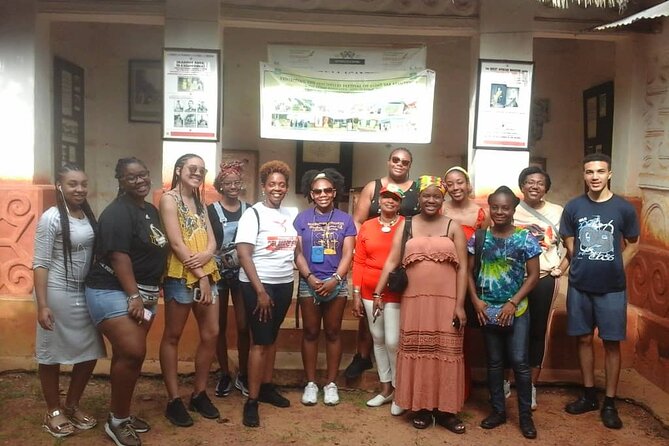
- The naming ceremony is the emotional center: You receive an African name through a formal welcome involving chiefs, queen mothers, elders, libation, drumming, and dancing.
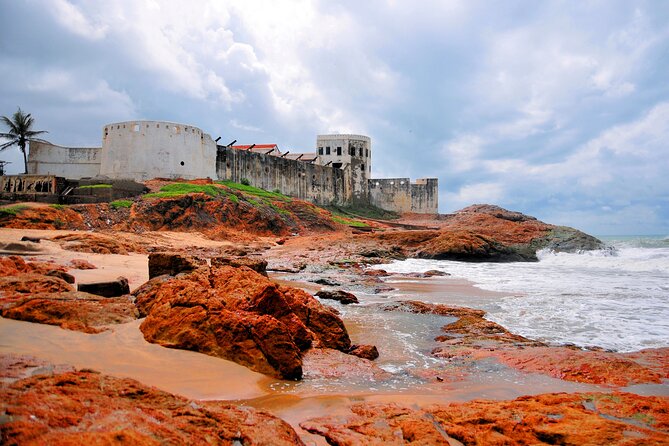
- You visit both Cape Coast Castle and Elmina Castle: These are essential sites for understanding the slave trade and its effect on African communities and the wider Atlantic world.
- The tour is private: Only your group participates, with an air-conditioned vehicle, an experienced driver, and an expert local guide available throughout the trip.
- Craft traditions are part of the route: You can meet beadmakers, Kente weavers, Adinkra printers, tailors, seamstresses, and woodworkers.
- Meals and lodging are built into the cost: Eight dinners, seven lunches, seven breakfasts, accommodation, mineral water, fuel, and excursion fees are included.
- Plan for a full schedule: Accra sightseeing, Kumasi heritage sites, Cape Coast memorials, Kakum National Park, markets, nightlife, and a return to Accra all fit into about eight days.
Landing in Accra and settling into the journey
Your first day is designed to take the edge off arrival. At the airport, you look for the Ashanti African Tours sign after leaving the arrival hall. The team provides an Akwaaba, or welcome, answers questions, and transfers you to your hotel.
That personal airport greeting matters. After an international flight, it is useful to have someone waiting who knows where you are going. You have time to freshen up and settle in before dinner, when the group discusses the days ahead. You can keep the first evening quiet at the hotel or go into Accra for nightlife.
I like this flexible start because it does not force sightseeing onto a tired arrival day. The tradeoff is that the tour describes the first day as roughly 12 hours, so your actual rhythm may depend on flight time, hotel check-in, and energy levels.
More roots and heritage tours in Accra:
- 10 Days Ghana Cultural and Heritage Trip
★ 5.0 · 31 reviews - The Ancestral Naming Ceremony and Home Coming Experience
★ 5.0 · 30 reviews - The Homecoming Experience To Cape-coast And Elmina.
★ 5.0 · 28 reviews
Accra’s museums, independence sites, and old coastal quarter
Day two begins at the National Museum of Ghana, a sensible first stop. Its displays cover Ghana and other parts of West Africa, with a strong focus on culture and daily life. The adjoining garden contains sculptures connected to regional customs and traditions.
This is more than a quick museum tick. It gives you some basic reference points before the tour moves into royal Ashanti history and the slave trade. The nearby markets also offer African fabrics, and you can arrange measurements with a tailor or seamstress for made-to-order clothing. If you want outfits for the naming ceremony celebration, this is the time to start.
Next comes Black Star Gate and Independence Square, the main ceremonial grounds of Ghana. You see the enclosed flame of African liberation, lit by Kwame Nkrumah in 1961, then continue to the Kwame Nkrumah Memorial Park.
Nkrumah led the Gold Coast to independence from Britain in 1957. The park, set in gardens, includes his burial place and a museum with photographs and personal artifacts. This stop gives the journey a clear political frame: Ghana’s modern identity is tied to independence, Pan-African thought, and the effort to define the country on its own terms.
The adjoining National Cultural Center is one of the best places on the tour for shopping. It is an outdoor arts and crafts market with fabrics and handmade goods from Ghana and other parts of West Africa. Your guide can help you navigate purchases and arrange tailoring, though you should leave room in your budget for crafts and clothing.
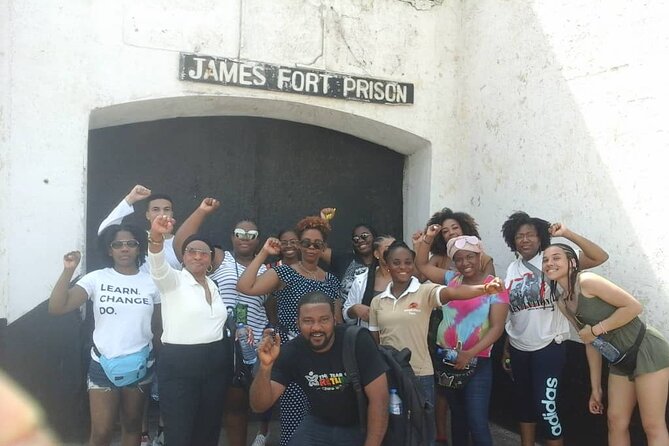
The afternoon walking tour of James Town shifts the mood. This is one of Accra’s oldest suburbs, with historic buildings, colorful fishing boats, and the British lighthouse built in 1871. You also see Fort James, built in 1673 as a British trading post.
James Town is valuable because it places colonial history beside a living neighborhood. You are not looking only at preserved walls. You are walking through a community shaped by fishing, trade, colonial rule, and post-independence life. Wear comfortable shoes and expect the walk to feel more exposed and less polished than a museum visit.
Dinner returns you to the hotel, where you can check on clothing orders. Later, there is another chance to visit Accra nightlife. These evening options add fun, but they are not compulsory. If you prefer early starts and quiet evenings, simply use the hotel time to rest.
DuBois, beads, gardens, and handmade goods
Day three begins at the W.E.B. DuBois Centre. DuBois was an American Pan-Africanist, writer, speaker, and anti-segregationist who led the Pan-African Congress between 1919 and 1927. The Accra center was his home and final burial place, and it now functions as a library and research institute.
This stop connects Ghana to the wider Pan-African movement. It also speaks directly to the tour’s focus on ancestry and return. The visit is fairly short, about an hour, but its importance reaches well beyond the size of the site.
At T.K. Beads, you watch traditional beadmaking and learn how beads have been used as symbols of beauty, wealth, and social standing, especially during important occasions. The on-site shop makes this an easy place to buy a personal keepsake.
The route then climbs toward the Aburi Botanical Gardens in the Akuapem hills. The gardens offer views toward Accra and contain indigenous and imported plants. Your guide identifies trees and explains how some plants are used for medicine in Ghana.
This is a welcome change from city traffic, museums, and markets. The garden visit lasts about 45 minutes, so it is a pleasant pause rather than a full botanical tour.
Nearby Aburi Crafts Village focuses on drums, sculptures, and other handmade goods. You can watch craftspeople at work and shop in a setting described as having some of the lowest prices in Ghana. As with any market, compare pieces and prices before buying, and remember that carrying large items later in the trip can be inconvenient.
Kumasi, Ashanti power, and the Kejetia Market
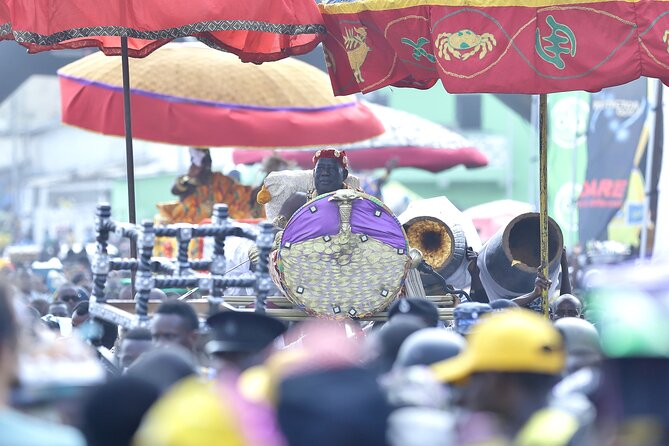
Day four takes you to Kumasi, the center of Ashanti culture on this route. The Manhyia Palace Museum introduces you to the Asantehene, the Ashanti king, and the history of the Asanteman Kingdom.
The palace visit helps explain why Ashanti identity is central to this trip. You see the legacy of a powerful empire and learn how royal tradition continues to shape culture in the region. The tour then continues to the Prempeh II Jubilee Museum at Kumasi’s National Cultural Centre, where older Ashanti artifacts offer another view of the past.
Kejetia Market brings you back to everyday life. It is described as one of West Africa’s largest outdoor markets, with tightly packed stalls and trading activity that continues for much of the day. This is the place to see how goods, food, clothing, and local business move through Kumasi.
A guide is particularly useful here. The market is a maze, and an escort can make the visit less stressful while helping you focus on the experience rather than simply finding your way out. Keep your shopping practical and stay aware of your belongings in crowded areas.
The Okomfo Anokye Sword Site offers a more legendary chapter. Okomfo Anokye was a powerful priest associated with King Osei Tutu I and the formation of Ashanti unity. According to the story, the Golden Stool descended from the sky and landed on his lap. He then planted a sword in the ground as a symbol of unity between the Ashanti and Nzema people.
The sword remains in the ground today. The story even includes Muhammad Ali, who reportedly tried to pull it out during his 1964 visit to Ghana. Whether you approach the site through faith, history, or legend, it gives the day a memorable local focus.
There is an optional evening in Kumasi. After a long day, you may prefer the hotel. That flexibility is useful, since the trip already packs a great deal into each day.
More history tours in Accra:
- Experience the Beauty, History and the Culture Of Accra in a Day
★ 5.0 · 323 reviews - Cape Coast Historical Day Tour
★ 5.0 · 24 reviews - Full-Day Private Culture and History Tour of Accra
★ 5.0 · 23 reviews - Ghana Private Historic Tour through Castles and Nature
★ 5.0 · 18 reviews
Ashanti buildings, Kente, and Adinkra symbols
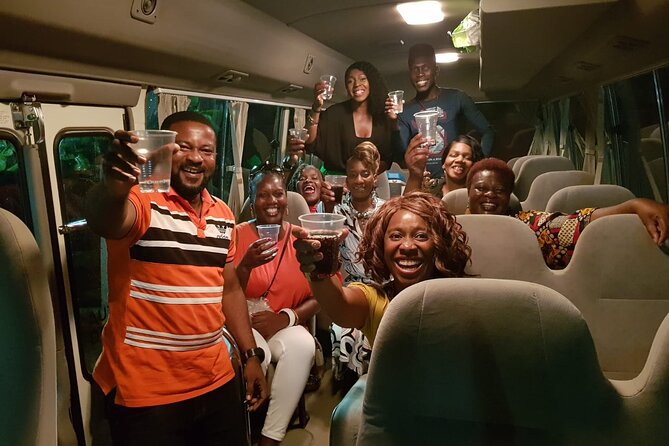
Day five moves outside Kumasi to traditional Ashanti buildings recognized by UNESCO as World Heritage Sites. The visit also connects to Nana Yaa Asantewaa, a major woman in Ashanti history who led resistance against the British in the 1901 war. She was the Queen Mother of Ejisu Besease.
This is an important correction to history tours that focus only on male rulers. Nana Yaa Asantewaa gives you a direct link to women’s political and military leadership in the Ashanti world.
At Adanwomase, you learn about Kente cloth and see weavers using traditional looms. Families have passed the craft down for generations, and the designs carry meaning rather than serving only as decoration. You have time to speak with weavers and buy Kente directly in the community.
Ntonso introduces Adinkra cloth, which predates Kente and has been used by Ashanti people for more than four centuries. Craftspeople carve symbols into calabash shells, then print them onto cloth with natural dyes made from tree bark.
The most useful part is that you can make your own strip of Adinkra cloth using symbols with personal meaning. That small activity gives you a better understanding of how visual language works in Ghanaian culture. It is also more personal than buying a finished souvenir.
The afternoon and evening are free at the hotel. After several cultural visits and road transfers, this break is welcome. Bring patience to the craft stops, since the point is to meet makers and understand the work, not just make a quick purchase.
Assin Manso and the road to Cape Coast Castle
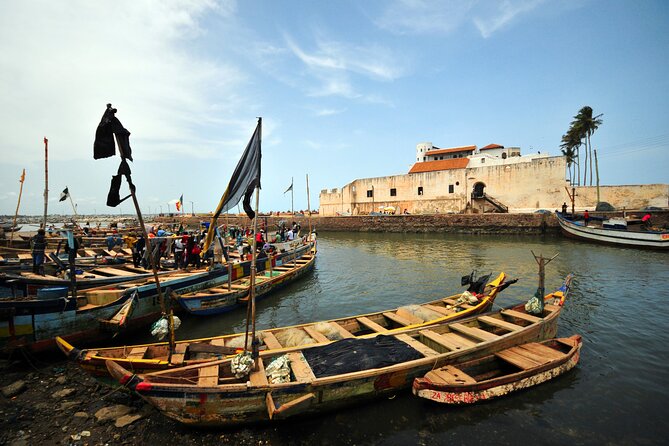
Day six turns toward the most serious part of the trip. At Assin Manso Ancestral Slave River Park, you learn about the route enslaved Africans were forced to travel from northern Ghana, Burkina Faso, and Niger toward the coast.
The Ndonkor Nsuo, known as the Slave River, was used to bathe and inspect enslaved people before they were marched onward to Cape Coast. The stop is intended for reflection, and the subject demands time and care. This is not a light sightseeing hour.
Cape Coast Castle is the day’s central visit. The castle held more enslaved Africans than any other castle on the West African coast, and its dungeons reveal the physical conditions of captivity before deportation to the Americas. You also see the governor’s place of worship and the castle church, positioned above the dungeons.
Expect this visit to be emotionally difficult. A good guide can provide historical context, but no explanation removes the weight of the place. Give yourself time afterward before moving on to dinner.
You spend the night at a beachfront hotel in Elmina, with dinner overlooking the coast. The setting offers a quiet place to process the day, though the contrast between a pleasant hotel and the morning’s subject may feel stark.
Kakum canopy bridges and your Ghanaian naming ceremony
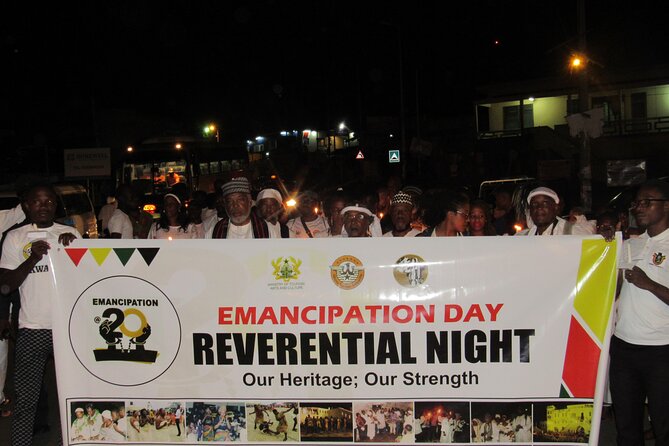
Day seven brings a change of pace at Kakum National Park. The rainforest canopy walkway uses seven bridges attached to trees about 40 meters above the forest floor. Viewing platforms break up the crossings and provide views across the forest.
The walkway is likely to be one of the trip’s more active moments. If heights make you uneasy, take the bridges slowly and listen carefully to your guide. The visit lasts about two hours, giving you time to cross the walkway and take in the forest.
The day’s main event is the traditional naming ceremony in a local village near Cape Coast. You pay a courtesy call to chiefs, queen mothers, and elders. The ceremony begins with libation, a formal welcome to the land connected to your ancestors. Drumming and dancing accompany the gathering, and the chiefs and elders give you your African name.
This is the part of the tour that most clearly matches its Beyond The Return theme. It is not simply a photo stop. The ceremony gives the journey a personal conclusion, linking historic places, cultural practices, and your own participation.
The evening returns to celebration. After dinner and time to freshen up, you can go into Cape Coast nightlife. If you ordered clothing in Accra, the outfits are expected to be delivered by this point, giving you a chance to wear them during the celebration.
Elmina Castle and the final return to Accra
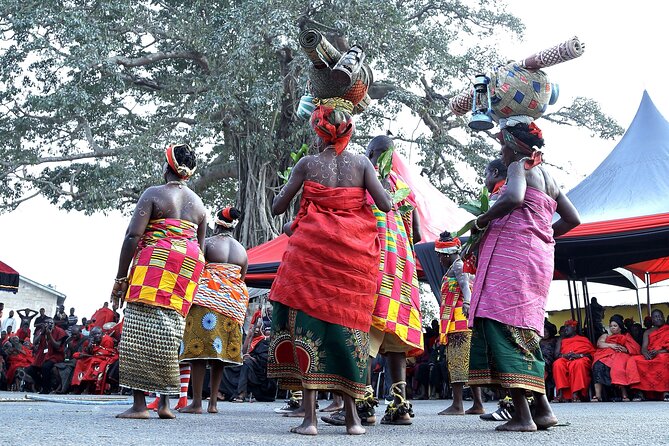
On day eight, you visit Elmina Castle, built in 1482 and described as the oldest surviving colonial building in sub-Saharan Africa. The castle was deeply involved in the transatlantic slave trade and is now a UNESCO World Heritage site.
The museum focuses on local history, while the castle itself conveys the scale and structure of the trade. After the tour, you visit the fishing market and walk to boat builders in the community. That final look at working coastal life keeps the visit tied to present-day Ghana rather than leaving you with only a memorial image.
The route then returns to Accra for an early evening meal, goodbyes, and an airport transfer or drop-off at a prearranged Accra location. Since the tour ends on departure day, confirm your flight timing carefully before booking. The program allows for a meal and transfer, but exact traffic and airport timing can vary.
What the $3,595 price really covers
At $3,595 per person, this is not a budget Ghana trip. Its value comes from how many costs are bundled together: accommodation, an air-conditioned vehicle, fuel with unlimited mileage, an experienced driver, an expert local guide, airport transfers, excursion fees, mineral water, and meals.
You receive seven breakfasts, seven lunches, and eight dinners. Soft drinks and alcoholic drinks cost extra, as do international flights and your visa. Those exclusions are normal, but you should add them to your real budget before deciding.
The private format is important. Only your group participates, so you are not tied to strangers or a fixed large-coach pace. You also have 24/7 office support and a guide available around the clock, which helps explain why the cost is higher than a basic sightseeing package.
The strongest praise attached to the experience focuses on staff care and organization. Alex and Eric are named as part of a team that made one guest feel welcome and confident with the details. That kind of support can be especially valuable on a first trip to Ghana.
Who should book this experience?
I would recommend this tour to someone who wants a structured first visit to Ghana, especially if ancestry, Pan-African history, Ashanti culture, and the slave trade are central interests. It also suits you if you want craft visits and a ceremony rather than only museums and monuments.
You should think twice if you prefer slow travel, independent public transport, or long stretches of free time. The route is full, and several days combine drives with multiple stops. The emotional weight of Assin Manso, Cape Coast Castle, and Elmina Castle also requires a willingness to engage with painful history.
The tour can be canceled for a full refund if you cancel at least three full days before the start time. Poor weather or failure to meet the minimum number of participants can lead to a new date, another experience, or a full refund. A visa and international flights are not included.
Should you book Ghana Heritage Tours: Beyond The Return?
Book it if you want connection, context, and convenience in one trip. The best features are the private vehicle, full meal plan, local support, craft encounters, and naming ceremony. The itinerary also gives you a broad view of Ghana, from Accra’s independence sites to Kumasi’s Ashanti heritage and Cape Coast’s memorials.
The price is high, but much of the trip’s practical cost is already handled. For a first visit, that can be worth paying for. Just arrive ready for busy days, long transfers, emotional sites, and a ceremony that asks you to take part rather than simply watch.
FAQ
How long is Ghana Heritage Tours: Beyond The Return?
The experience lasts approximately eight days.
Where does the tour begin?
The tour begins in Accra, Ghana, with airport pickup offered after you leave the arrival hall.
Is airport transportation included?
Yes. Airport transfers are included at the start and end of the tour.
Is this a private tour?
Yes. Only your group participates in this private activity.
What meals are included?
The package includes seven breakfasts, seven lunches, and eight dinners.
Are international flights included?
No. International flights are not included.
Is a visa included?
No. You must arrange and pay for your own visa.
What drinks are included?
Unlimited mineral water is included. Soft drinks and alcoholic drinks are not included.
Does the tour include a naming ceremony?
Yes. A traditional African naming ceremony is included, with chiefs, queen mothers, elders, libation, drumming, dancing, and the presentation of an African name.
What is the cancellation policy?
You can receive a full refund if you cancel at least three full days before the experience start time. Changes or cancellations made less than three full days beforehand are not accepted for a refund.
Just added around Accra
- Experience Cape Coast Castle and Kakum National Park★ 4.5 · 3 reviews
- Experience Northern Ghana In 10-Days★ 5.0 · 3 reviews
- Discover Ghana – Wli Waterfalls, Mountain Afadjato, Monkey Sanctuary & Akosombo.★ 4.5 · 3 reviews
- Cultural Tour Of Ghana And South Africa 12 Days★ 5.0 · 3 reviews
- Accra: City Highlights Half-day Guided Tour with Transfers★ 4.1 · 3 reviews
- Accra: Half day private safari with pick up★ 3.5 · 3 reviews
- Full Day Accra Guided Tour★ 5.0 · 3 reviews
- Experience Aburi Botanical Gardens And Boti Water Falls In A Day.★ 5.0 · 3 reviews
Roots & Heritage Tours, compared.
The Ancestral Naming Ceremony and Home Coming Experience
Read our review →
The Homecoming Experience To Cape-coast And Elmina.
Read our review →
Cape Coast/Elmina Slave Dungeon and Canopy Walkway Private Tour
Read our review →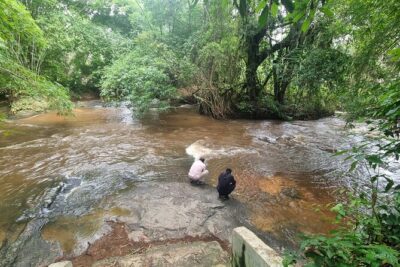
Assin Manso Slave River, Cape Coast and Elmina Castle Day Tour
Read our review →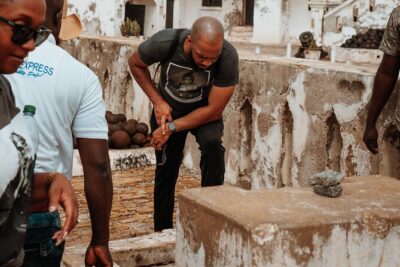
Cape Coast Castle, Assin Manso Slave River & Kakum Day Tour.
Read our review →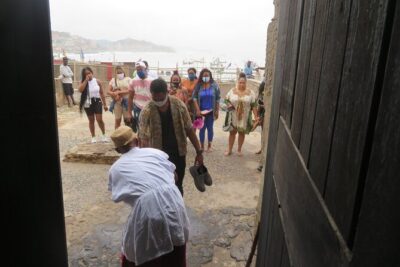
7-Day Private Cultural and Heritage Tour in Ghana
Read our review →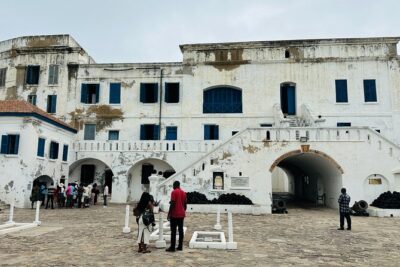
Assin Manso Slave River and Cape Coast Castle Private Day Tour
Read our review →Browse the lists this tour appears in