
Reviewed · ROOTS & HERITAGE TOURS
7-Day Private Cultural and Heritage Tour in Ghana
Ghana opens its doors wide. This private seven-day journey links Accra’s independence landmarks with Ashanti royal traditions, Kente weaving, Adinkra art, slave-trade memorials, and Kakum National Park. I like the private air-conditioned vehicle and the fact that a certified guide stays with you from airport pickup through departure. I also like the personal touches, such as drumming lessons, a hands-on textile workshop, and the option to take part in a traditional naming ceremony.
The route covers a great deal of ground, from Accra to the Volta region, Kumasi, Cape Coast, and back to the capital. That is its strength, but also its main drawback. You will spend long stretches in the vehicle, and some activities, including motorboat rides, ceremonies, and evening performances, cost extra.
The tour costs $1,998.95 per person, including accommodation, six breakfasts, entrance fees, transport, and guide services. For someone seeking an organized introduction to Ghana without arranging every hotel, transfer, and historic site alone, that can be a fair price. Still, you should budget separately for meals, drinks, flights, insurance, immunizations, and optional activities.
In This Review
- What makes this Ghana tour worth considering
- Arrival in Accra and the first taste of Ghana
- Accra’s independence story and city culture
- Aburi, beads, and the Volta River
- Kente, Adinkra, and Kumasi’s craft traditions
- Kumasi’s Ashanti royal center
- Assin Manso and the difficult story of Cape Coast
- Kakum’s canopy walkway and the journey back
- What the price covers, and what it does not
- Guides, comfort, and the personal touch
- Who should book this Ghana itinerary?
- Should you book the 7-Day Private Cultural and Heritage Tour?
- FAQ
- What is included in the tour price?
- Are meals and drinks included?
- Is this a private tour?
- Does the tour include airport pickup and drop-off?
- Are optional activities included?
- How physically active is the tour?
- Can I cancel for a full refund?
What makes this Ghana tour worth considering
- Airport-to-airport planning: Pickup begins at Kotoka International Airport, and the return transfer is scheduled for about two hours before your flight.
- A private guide and vehicle: Only your own group takes part, giving you more room to adjust the pace and ask questions.
- Hands-on culture: Kente weaving in Adanwomase and Adinkra stamping in Ntonso offer more than a quick look at local craft.
- Powerful heritage sites: Kwame Nkrumah Memorial Park, Manhyia Palace Museum, Assin Manso, and Cape Coast Castle give the trip a strong historical focus.
- Ghana beyond the cities: The Volta River, Aburi Botanical Gardens, Ahwiaa carving shops, and Kakum National Park add scenery and variety.
- Personal service: Guides named in the tour feedback include Timothy Dadgie, Jojo, Eric, Mike Amuzu, Adams, and others. Past guests particularly valued the warm welcome, clean vehicles, gentle driving, and help with airport arrival details.
Arrival in Accra and the first taste of Ghana
Your trip begins when a guide meets you at Kotoka International Airport at a prearranged time. From there, you ride in an air-conditioned vehicle to Accra Mall for a welcome refreshment known as an akwaaba, a greeting that sets the tone for the week.
If your arrival time allows, you may also receive a short orientation to Accra. This is useful after a long flight, especially if Ghana is new to you. Rather than forcing a full sightseeing program on day one, the schedule gives you time to reach your hotel, rest, and prepare for the days ahead.
The airport reception is one of the service’s strongest features. Jojo is specifically praised for helping with luggage and arrival formalities, while other guides, including Eric and Timothy Dadgie, are remembered for making the airport-to-hotel transition feel easy. That kind of support matters when you are tired, unfamiliar with the city, and carrying bags.
The first day is deliberately light. You should not expect a major sightseeing program here. Think of it as a soft landing, with the real touring beginning on day two.
More roots and heritage tours in Accra:
- Ghana Heritage Tours – Beyond The Return
★ 5.0 · 36 reviews - 10 Days Ghana Cultural and Heritage Trip
★ 5.0 · 31 reviews - The Ancestral Naming Ceremony and Home Coming Experience
★ 5.0 · 30 reviews
Accra’s independence story and city culture
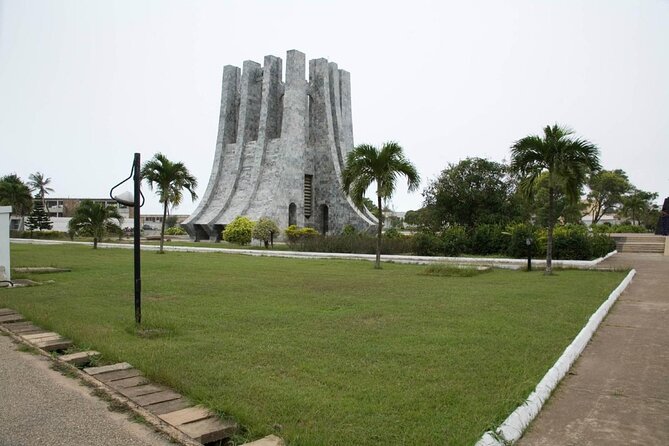
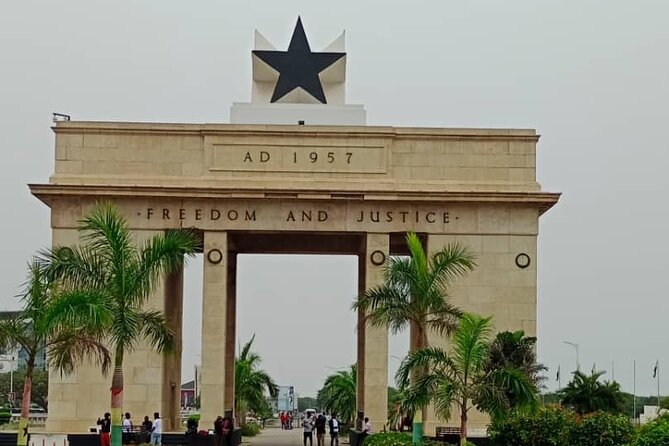
Day two begins at Kwame Nkrumah Memorial Park, where Ghana’s independence story takes center stage. The monument honors Kwame Nkrumah, Ghana’s first prime minister and president, and the nearby Independence Square connects the political story to the country’s public ceremonial life.
The visit is scheduled for about an hour, so expect a focused introduction rather than a long museum session. Your guide can add the context that helps the monument make sense, particularly if you want to understand Ghana’s place in Pan-African history.
The Arts Center gives the morning a more hands-on feel. You can browse local products, shop for crafts, and take a drumming lesson. Prices and shopping experiences can vary, so keep your bargaining instincts friendly and your expectations flexible. The purpose here is not simply to buy souvenirs. It is a chance to see how Ghanaian design, music, and salesmanship meet in one busy cultural setting.
The W.E.B. Du Bois Center adds an important Pan-African connection. Du Bois, an American scholar and civil rights thinker, spent his final years in Ghana. The center helps place Ghana within a wider African and African Diaspora story.
Your final stop is Oxford Street, where the capital’s evening activity begins. Nightlife is at your own expense, and the schedule allows only about an hour. You can treat this as a short look at Accra after dark rather than a full evening out. If nightlife is important to you, ask your guide how much flexibility the private format allows.
Aburi, beads, and the Volta River
Day three shifts from urban Ghana to greener surroundings and the Volta region. The program includes Aburi Botanical Gardens, a craft market, a bead workshop, the Volta River, and Adomi Bridge.
At Aburi, you have time to walk through the gardens and take in views from the hill country. Bicycles are available for rent, which gives you an active option instead of simply following a walking route. The visit is short, so do not expect a full day among the plants. The craft market on the way offers another chance to shop for handmade goods.
The route description refers to Atimpoku and later brings you to the Volta River. Since driving times and stop order can change, confirm the exact sequence with your guide before setting out. This is one of the practical advantages of a private tour: you can ask for clarity and discuss how much time you want at each stop.
The bead workshop shows how handmade beads are produced and sold. You will find a broad selection, making this a good place to choose a small keepsake with a direct connection to the region. As with the Arts Center, consider comparing items and prices before buying.
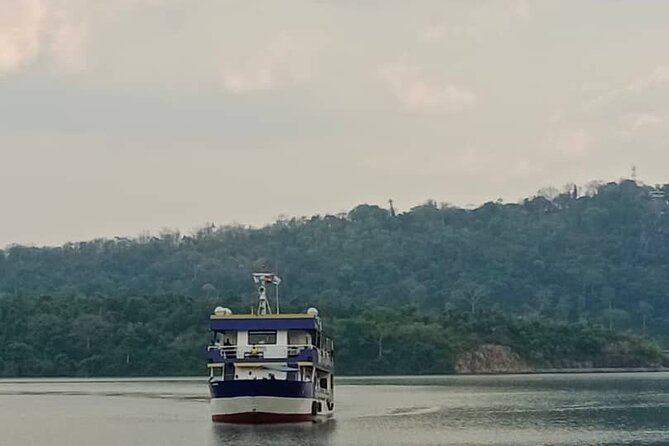
Adomi Bridge is the day’s most recognizable structure. It is described as Ghana’s only steel arch bridge, and the river setting gives you a pleasant place to pause. A canoe ride is available, while a motorboat ride costs extra. The canoe is the included-style option for a quiet outing; the motorboat is for anyone who wants more speed and movement.
You spend the night at a nearby resort. That break is welcome because the tour covers several regions in a short time. The next morning includes more time beside the river, with the chance to relax or swim while watching fishermen bring in their early catch. Swimming is mentioned in the schedule, but you should use your own judgment about conditions and ask locally before entering the water.
Kente, Adinkra, and Kumasi’s craft traditions
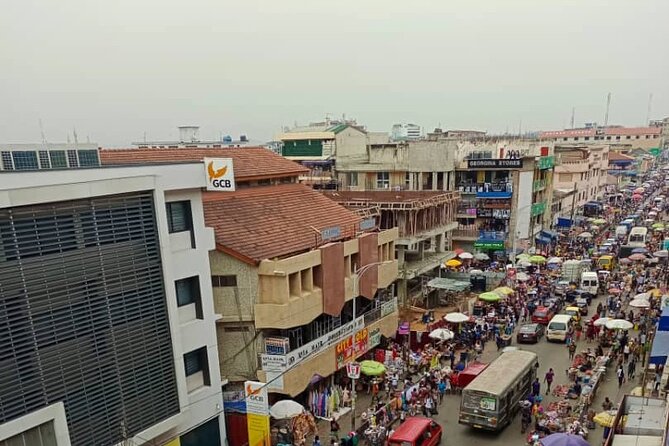
Day four is one of the best days for direct contact with Ghanaian craft. You leave the Volta River and travel toward the Ashanti region, stopping at Adanwomase, Ntonso, and Ahwiaa before reaching Kumasi.
Adanwomase is associated with authentic Ghanaian Kente. Here, you can watch weavers handle the detailed process behind the cloth. Kente is not just decorative fabric. Colors, patterns, and the occasions for wearing it can carry meaning, so a guide’s explanation adds real value.
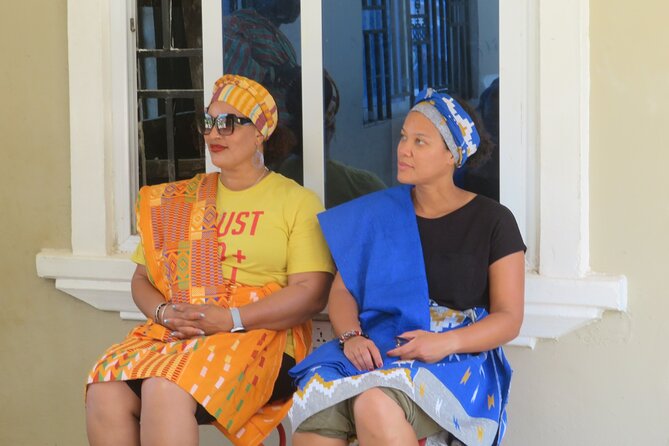
You can also pay extra for a traditional naming ceremony at the chief’s palace. The ceremony includes drumming and dancing, and you may be dressed in Kente cloth. This is an optional cultural activity, not part of the base price, so ask about the fee and the length of the ceremony before agreeing.
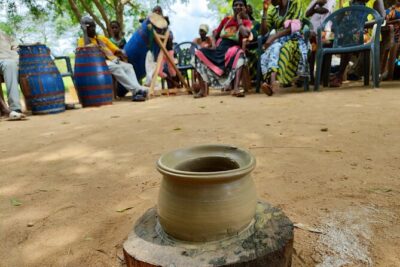
At Ntonso, you get to make your own Adinkra textile strip. You choose symbols, stamp them onto the cloth, and take the finished piece home. This is a strong part of the program because you are not only looking at an object in a shop. You are learning how symbolic designs are used and leaving with something you helped create.
Ahwiaa brings a different craft tradition: carved wooden sculptures. You can browse the workshops and see work by local artisans before continuing to your Kumasi hotel.
The day is rewarding, but the schedule may feel compressed. Each stop is listed at about an hour, and the road between regions takes time. I would value the weaving and Adinkra sessions most, so if you need to shorten a stop, I would protect those hands-on activities rather than rush through every shop.
More history tours in Accra:
- Experience the Beauty, History and the Culture Of Accra in a Day
★ 5.0 · 323 reviews - Cape Coast Historical Day Tour
★ 5.0 · 24 reviews - Full-Day Private Culture and History Tour of Accra
★ 5.0 · 23 reviews - Ghana Private Historic Tour through Castles and Nature
★ 5.0 · 18 reviews
Kumasi’s Ashanti royal center
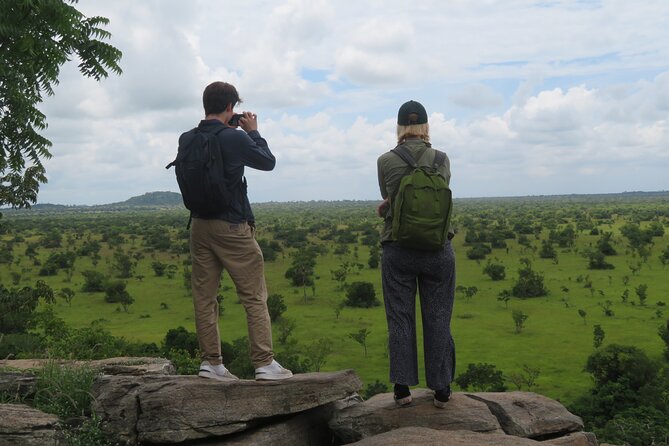
Kumasi receives a full heritage day on day five. The first major stop is Manhyia Palace Museum, the former residence of the Ashanti King. The museum explains royal customs, leadership, governance, and the place of the Ashanti Kingdom in Ghana’s past.
This stop gives the earlier craft visits more context. Kente, Adinkra symbols, palace traditions, and Ashanti identity are not separate subjects. They connect through language, ceremony, authority, and daily life.
The National Cultural Center adds a broader view of Ghanaian culture through artifacts and exhibits. The itinerary also calls attention to the Komfo Anokye sword, a famous symbol connected with Ashanti tradition and folklore. Since the schedule wording is slightly unclear about the stop numbering, confirm whether the cultural center is included with the stated entrance arrangements.
Kejetia Market finishes the day with a change of pace. It is known as one of West Africa’s largest outdoor markets, with stalls selling crafts, produce, and everyday goods. You will see a working commercial center rather than a staged cultural show.
Give yourself permission to observe without buying. The market can be exciting, but it can also feel crowded and intense, especially after several structured visits. Stay close to your guide, keep your belongings secure, and decide in advance what kinds of purchases you actually want.
The tour then allows time to rest. That pause is sensible. Kumasi is a major highlight, and you will enjoy it more if you are not trying to race from palace to market on tired legs.
Assin Manso and the difficult story of Cape Coast
Day six turns toward the coast and the history of the transatlantic slave trade. At Assin Manso Ancestral Slave River Park, you visit a site connected with a former slave market and cemetery. The stop is memorial in character, and it asks for quiet attention.
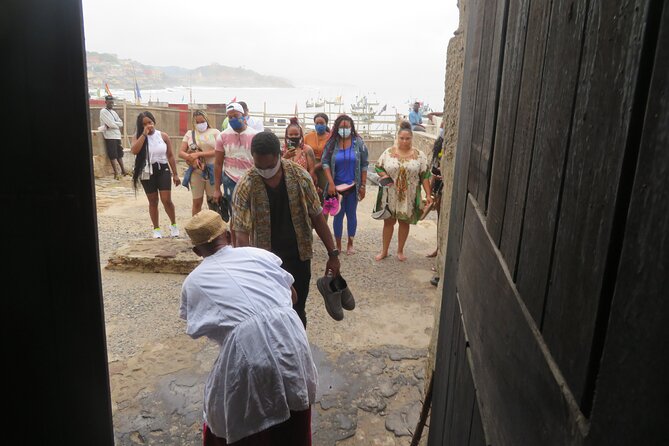
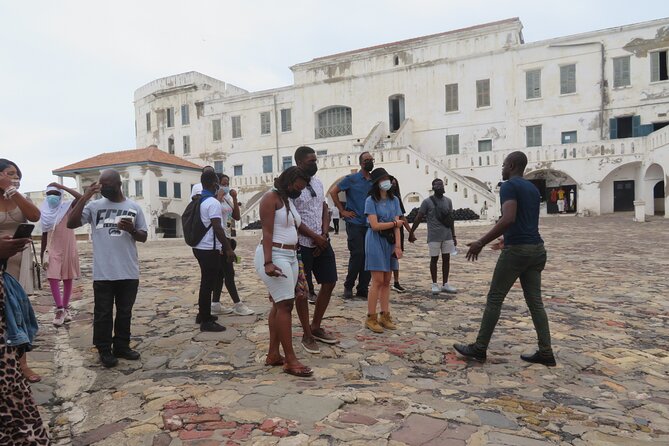
The experience becomes even more serious at Cape Coast Castle. The former slave dungeons and coastal position make this one of Ghana’s most emotionally difficult historic sites. A guide’s explanation is essential here. The spaces are not simply old rooms to photograph. They represent the confinement and forced removal of African people on a vast scale.
You may choose the Door of Return ceremony for an additional fee. It symbolizes a return to the motherland after the slave trade. In the evening, an optional cultural performance celebrates that return, with dancing and drumming and the chance to join the performers on stage.
These optional elements will not suit everyone. Some people will find the ceremony meaningful, while others may prefer to reflect quietly after Cape Coast Castle. You should choose based on your own comfort and purpose, not because you feel obliged to add every activity.
This is an emotionally heavy day, and the hotel stop afterward gives you space to process it. That is an important part of the design. Ghana’s heritage is not only music, cloth, markets, and welcoming meals. It also includes painful chapters that deserve time and respect.
Kakum’s canopy walkway and the journey back
The final day begins with a quieter morning at your hotel before the return to Accra. The route includes Kakum National Park, one of Ghana’s best-known attractions, with tropical forest and a canopy walkway high among the trees.
The walkway is the main draw. It provides a different view of the forest from the cultural sites visited earlier in the week. Kakum is also noted as a good birdwatching location, so bring patience if you keep a bird list. The visit is scheduled for about an hour, which may limit how long you can spend looking for birds.
You then stop in Mankessim to see one of the region’s remaining Posuban shrines. These shrines are linked with local traditional groups and offer another brief look at Ghanaian religious and artistic life.
The drive continues to Accra, with arrival planned before dark when possible. You may have time for last-minute shopping before being taken to Kotoka International Airport or another agreed drop-off point. The stated plan is to reach the airport about two hours before your flight, but you should still confirm the timing directly if your departure is early or traffic conditions are a concern.
What the price covers, and what it does not
At $1,998.95 per person, the tour is not a budget day trip. Its value comes from bundling the parts that are often difficult to arrange independently:
- Seven days of private touring
- Air-conditioned vehicle
- Accommodation
- Certified guide
- Six breakfasts
- Entrance fees
- Guide and driver meals and accommodation
- 24/7 office support
- Airport pickup and departure transfer
You still pay for international airfare, travel insurance, immunizations, alcoholic and non-alcoholic drinks, and your own meals apart from the six breakfasts. Motorboat rides, naming ceremonies, the Door of Return ceremony, and the evening cultural performance also cost extra.
For a solo visitor, couple, or private group that wants a single company handling the route, hotels, driver, and major admissions, the package can make financial and practical sense. A solo traveler specifically praised the company for arranging a comfortable trip within a personal budget, while another guest valued the clean vehicle, strong air conditioning, gentle driving, and breakfast at the hotels.
The private format is especially useful if you want to stop for photos, spend longer at a museum, or ask detailed questions. It does not remove the long drives, though. You should be comfortable with a moderate level of physical activity and several days that combine sightseeing with road travel.
Guides, comfort, and the personal touch
The service depends heavily on the guide assigned to your group. Names connected with positive experiences include Timothy Dadgie, Jojo, Eric, Mike Amuzu, Adams, and Jojo’s colleague drivers. The strongest pattern is personal care: airport help, attention to safety, clean vehicles, gentle driving, and a willingness to shape the trip around a group’s interests.
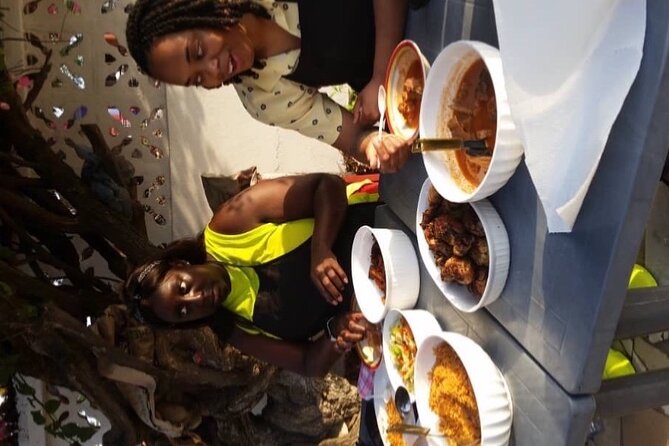
One couple received help arranging a special candlelit beach dinner for an anniversary. Another group enjoyed local foods such as fried yam, jollof rice, and chicken soup. These details suggest that the company can add personal touches when you explain what matters to you.
Do not expect your meals to be covered beyond breakfast. If trying local food is part of your goal, tell the guide early and ask for suggestions. The tour gives you cultural access, but you still need to make your own choices about restaurants, snacks, drinks, and evening spending.
The schedule also lists service animals as allowed and notes proximity to public transportation, although the tour itself is built around a private vehicle. Confirmation arrives at booking, and the stated operating hours are Monday through Friday from 6:00 a.m. to 10:30 p.m.
Who should book this Ghana itinerary?
I would recommend it to someone visiting Ghana for the first time who wants a broad introduction without managing multiple regional transfers alone. It is also a strong fit for people with a clear interest in African Diaspora history, Ashanti culture, textiles, traditional craft, and heritage sites.
It suits couples and small private groups particularly well. The anniversary example shows that the company can work with personal requests, and the private format gives you more control than a large coach tour.
You should think twice if you dislike long drives, prefer slow travel, or want several free days in each city. The route is ambitious. It covers a large portion of Ghana in seven days, so you gain range but give up spare time.
Book at least a few weeks ahead if possible. The average booking point is 56 days before departure, which suggests that advance planning is normal. Free cancellation is available up to 24 hours before the start time for a full refund. Within 24 hours, changes and refunds are not accepted. Poor weather can lead to a new date or a full refund.
Should you book the 7-Day Private Cultural and Heritage Tour?
Book it if you want Ghana presented through people, places, and craft, not just city sightseeing. The strongest parts are the private transport, steady guide support, Ashanti textile visits, Cape Coast and Assin Manso, and the welcome that begins at the airport.
Before paying, ask for the exact hotels, daily driving times, optional-activity prices, and the confirmed day five stop order. Also decide how you feel about the ceremony and performance options, since they are meaningful extras rather than automatic inclusions.
For a first Ghana visit, this is a well-rounded route with genuine cultural weight. It moves quickly, but it gives you a thoughtful introduction to Accra, the Volta region, Kumasi, the coast, and Kakum without leaving you to solve the logistics alone.
FAQ
What is included in the tour price?
The price includes an air-conditioned vehicle, accommodation, a certified tour guide, 24/7 office support, guide and driver meals and accommodation, entrance fees, and six breakfasts.
Are meals and drinks included?
Six breakfasts are included. Your other meals and alcoholic or non-alcoholic drinks are not included.
Is this a private tour?
Yes. Only your own group participates in the private tour or activity.
Does the tour include airport pickup and drop-off?
Yes. Pickup is offered at Kotoka International Airport, and the final day includes drop-off at the airport or another designated location.
Are optional activities included?
No. The motorboat ride, traditional naming ceremony, Door of Return ceremony, and evening cultural performance require additional payment.
How physically active is the tour?
The tour requires a moderate level of physical fitness. Activities include walking at heritage sites, visiting gardens and markets, taking part in craft sessions, and using the canopy walkway at Kakum National Park.
Can I cancel for a full refund?
You can cancel at least 24 hours before the experience start time for a full refund. Cancellations or changes made within 24 hours are not refunded or accepted. If poor weather causes cancellation, you will be offered another date or a full refund.
More 7-Day Experiences in Accra
- Private Multi-Day Ghana Tour about Culture History and Wildlife – 7 Days
★ 5.0 · 8 reviews - 7 Day Artisanal Tour
★ 5.0 · 4 reviews - 7days/6nights Eco Tourism
★ 5.0 · 3 reviews
Just added around Accra
- Experience Cape Coast Castle and Kakum National Park★ 4.5 · 3 reviews
- Experience Northern Ghana In 10-Days★ 5.0 · 3 reviews
- Discover Ghana – Wli Waterfalls, Mountain Afadjato, Monkey Sanctuary & Akosombo.★ 4.5 · 3 reviews
- Cultural Tour Of Ghana And South Africa 12 Days★ 5.0 · 3 reviews
- Accra: City Highlights Half-day Guided Tour with Transfers★ 4.1 · 3 reviews
- Accra: Half day private safari with pick up★ 3.5 · 3 reviews
- Full Day Accra Guided Tour★ 5.0 · 3 reviews
- Experience Aburi Botanical Gardens And Boti Water Falls In A Day.★ 5.0 · 3 reviews
Roots & Heritage Tours, compared.
The Ancestral Naming Ceremony and Home Coming Experience
Read our review →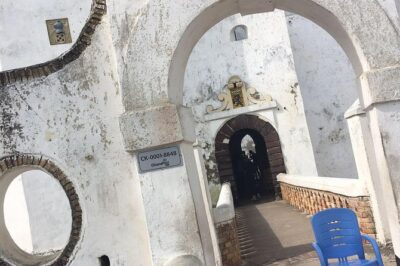
The Homecoming Experience To Cape-coast And Elmina.
Read our review →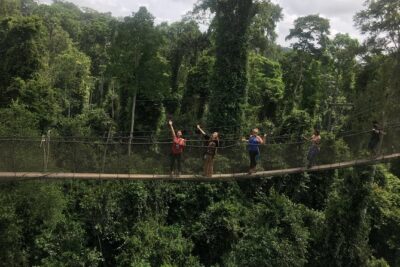
Cape Coast/Elmina Slave Dungeon and Canopy Walkway Private Tour
Read our review →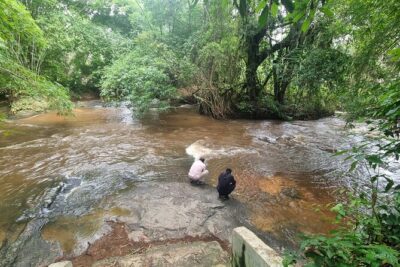
Assin Manso Slave River, Cape Coast and Elmina Castle Day Tour
Read our review →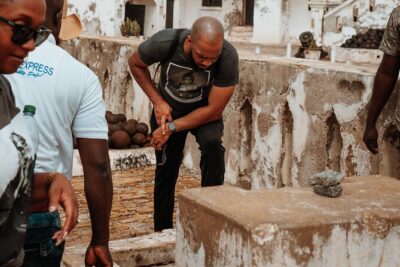
Cape Coast Castle, Assin Manso Slave River & Kakum Day Tour.
Read our review →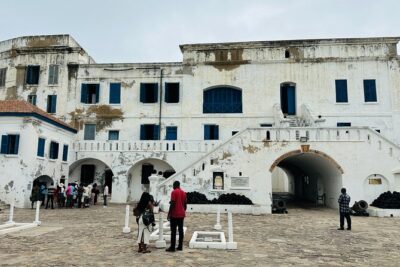
Assin Manso Slave River and Cape Coast Castle Private Day Tour
Read our review →Browse the lists this tour appears in