
Reviewed · COOKING CLASSES
Local Ghanaian Cooking Class in Accra to help support wellness community center
Bring your appetite and a curious palate. This Accra cooking class combines a local market visit, hands-on Ghanaian food preparation, and a meal shared with the people who host you. I like the community purpose behind the booking, which helps fund a wellness center, and I like the chance to learn dishes such as banku, fufu, jollof rice, fried fish, and okra soup in a home-style setting.
The $45 price is fair if you value a meal, transportation to the market, local spirits, and direct contact with a Ghanaian family or cooking host. My main caution is that the hands-on work can vary: some people have found ingredients partly prepared, and the class may last closer to two hours than the advertised six-hour estimate.
In This Review
- Key points to know before booking
- Starting at Global Wellness Mission in Accra
- Shopping for ingredients at a neighborhood market
- Choosing your Ghanaian dish
- Learning the work behind fufu and banku
- Tasting akpeteshie-based local spirits
- Eating the meal and meeting the hosts
- How much time should you allow?
- Is $45 a good value in Accra?
- Who will enjoy this class most?
- Booking details and cancellation
- Should you book the Accra Ghanaian cooking class?
- FAQ
- Where does the cooking class start and end?
- How long does the activity last?
- What days and times is the class available?
- Is transportation included?
- What foods can I learn to prepare?
- Are drinks included?
- Can dietary requests be accommodated?
- What is the cancellation policy?
Key points to know before booking
- Market shopping comes first: You travel by car from the meeting point to buy the ingredients for the meal.
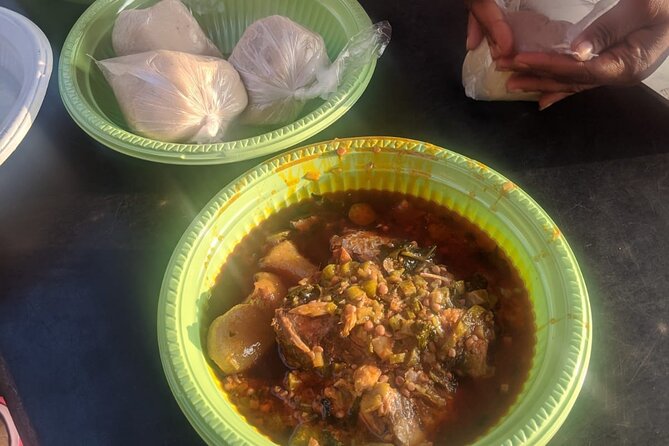
- You choose from several Ghanaian staples: Options include fufu, banku, jiji, or rice balls with soups and stews such as okra, groundnut, palm-nut, light, or plain soup.
- The community mission matters: Proceeds help support a wellness center offering fitness programs, nutrition education, health screenings, children’s lectures, art, and dance.
- Local spirits are part of the welcome: You may taste Emergency, Hatso, and Uwuba, all made with akpeteshie and infused with bark or tree leaves.
- Hosts can make the class personal: Past sessions have included Gifty, Auntie Irene, Ms. Pat, and other members of the host families.
- The format is not always identical: The listed duration is about six hours, but one account describes a class lasting around two hours.
Starting at Global Wellness Mission in Accra
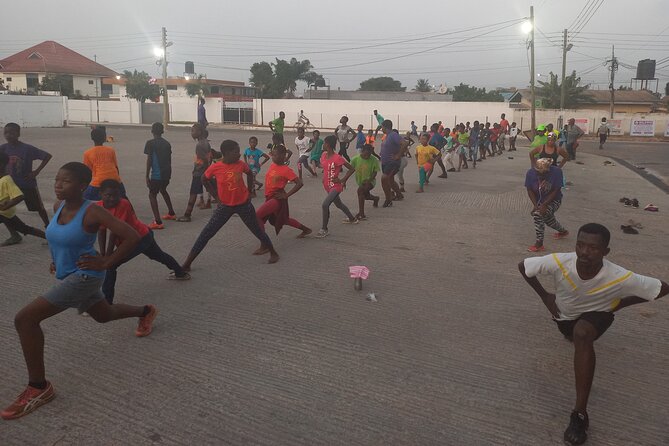
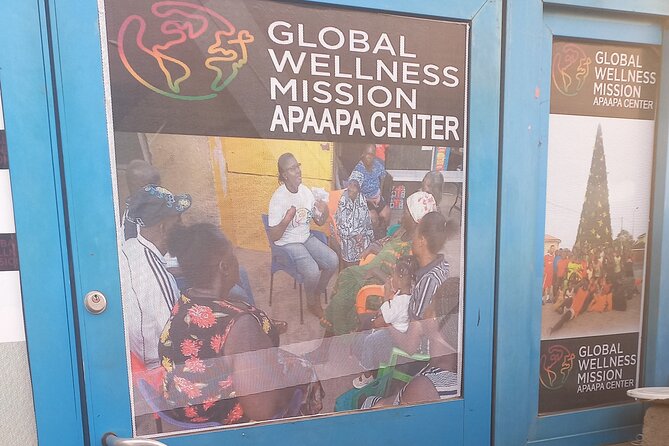
Your day begins at Global Wellness Mission, CM7, Third Oloti Street, Accra. The activity runs Monday through Saturday, with the stated start window from 8:00 a.m. to noon, and finishes back at the same meeting point.
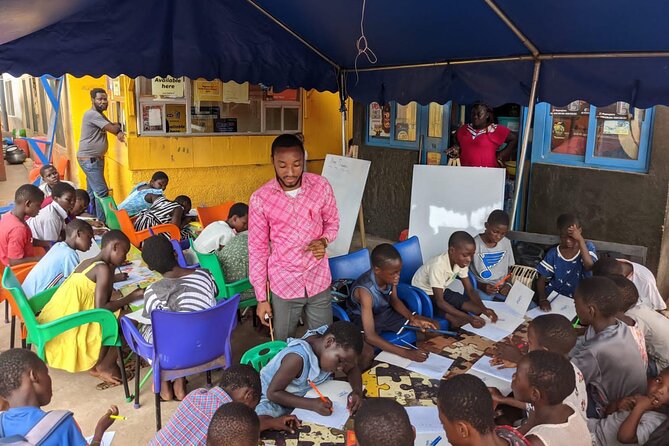
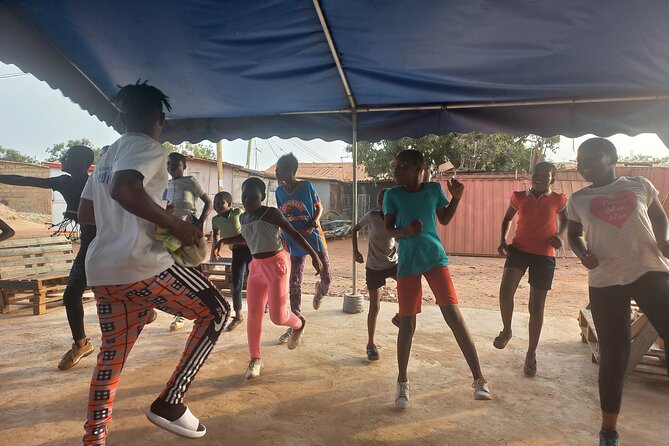
The location is more than a pickup spot. Booking the class helps the connected Wellness Community Center run programs focused on physical activity, nutrition education, health screenings, and after-school lectures for children. Art and dance programs are also part of its work.
That gives the cooking lesson a useful local purpose. You are not simply paying for a meal and a recipe demonstration. Your fee also helps support activities that serve the surrounding community. The class is still a paid food experience, but the money has a wider use than a standard cooking lesson.
Transportation is provided by car for the trip to the market. The exact distance and driving time are not given, so leave room in your morning schedule. The return to the starting point is included, which is helpful if you do not want to arrange separate transport between the market, cooking location, and your next Accra stop.
More cooking classes in Accra:
- Home Cooking Class by Auntie K
★ 5.0 · 62 reviews - Authentic Ghanaian Cooking Class in Accra
★ 4.5 · 11 reviews - Authentic Ghanaian Cooking Lessons and Take Out Services.
★ 5.0 · 9 reviews
Shopping for ingredients at a neighborhood market
The market visit gives the class a useful beginning. Instead of finding a table already set with anonymous ingredients, you go out to collect what you will cook. That lets you see the raw materials before they reach the pot and connects the meal with everyday shopping in Accra.
The market is also where the class becomes less like a formal demonstration. You are moving through a local setting with your host, selecting the ingredients needed for the dishes you choose. The supplied details do not name the market or list every ingredient, so you should not expect a fixed market tour with a long explanation of every stall.
Still, this is an important part of the experience. Ghanaian food can be easier to understand when you see the produce, starches, fish, meat, and seasonings before they are cooked. If you are interested in food culture, I would pay attention to how your host explains the ingredients and how much choice you have in planning the meal.
A practical point: the market visit requires some walking and time on your feet, though no exact walking distance is provided. Wear comfortable shoes and keep your morning open. The class is not designed as a quick meal stop squeezed between two tightly timed attractions.
Choosing your Ghanaian dish
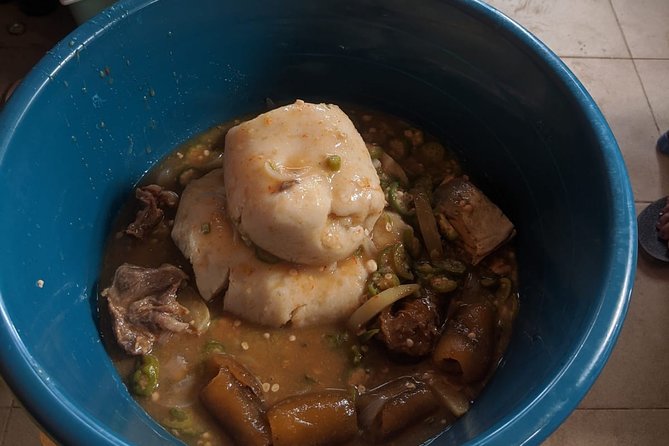
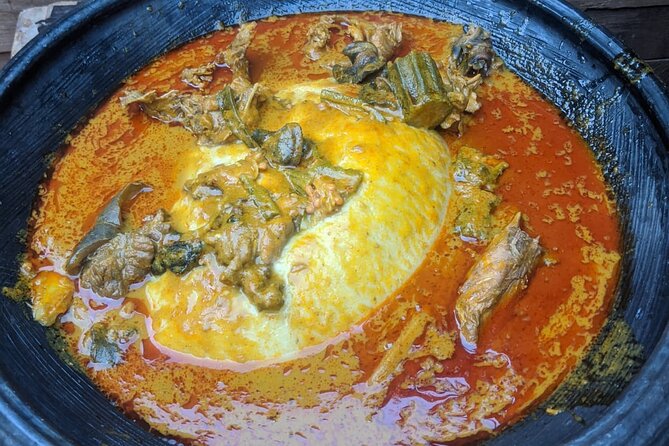
Once you return from the market, the cooking begins. The class centers on a staple and a soup or stew. You may learn to pound fufu, banku, jiji, or rice balls, then prepare a dish such as okra soup, groundnut soup, palm-nut soup, light soup, or plain soup.
The choices matter because the textures and methods differ. Fufu requires pounding and has a soft, stretchy texture. Banku involves working a fermented corn and cassava mixture into a smooth dough. Rice balls offer a simpler starch base, while jiji is another option named in the class description.
Your soup or stew choice can shape the whole lesson. Okra soup gives you a chance to work with the vegetable’s distinctive texture. Groundnut soup brings a nut-based flavor, while palm-nut soup uses a different base altogether. Light and plain soups offer less heavy alternatives, though the exact recipes depend on what you select and what is available that day.
Several dishes have appeared in individual sessions. Auntie Irene has taught banku, fried fish, stew, chicken, and jollof rice. Another class included fufu served with soup. These examples suggest that the meal can include more than one item, but you should confirm your preferred dishes and dietary needs in advance.
Learning the work behind fufu and banku
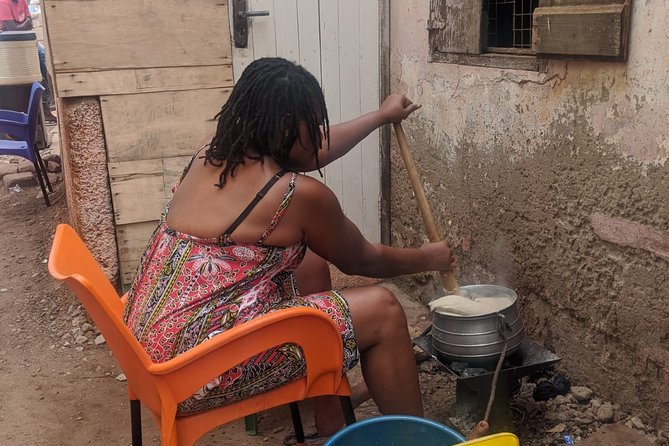
The strongest part of this class is the chance to handle traditional Ghanaian staples rather than only watch someone else cook. Pounding fufu is specifically included, and that physical work gives you a better sense of how much effort goes into a food often served as a simple, smooth accompaniment.
Banku also benefits from direct instruction. It is not just a matter of putting ingredients in a pot and waiting. You may help shape and work the mixture while your host shows you the right texture. The class can be a good fit if you want to understand technique, not just leave with a list of ingredients.
That said, the level of participation is not guaranteed to be the same every time. One person expected to do more of the preparation and found that some ingredients had already been prepared. If you want a fully hands-on lesson, ask before booking how much chopping, pounding, stirring, and cooking you will actually do.
This is especially important for anyone choosing the class mainly as a cooking school. The atmosphere may be more relaxed and social than technical. You can learn a lot, but the lesson may not follow a formal sequence with every step assigned to you.
More hands on workshops in Accra:
- African Drum and Dance Lessons
★ 5.0 · 6 reviews - Half-Day Private African Drumming Lessons with Pick Up
★ 5.0 · 3 reviews - Accra: Cooking Class with Auntie KK in Osu
★ 5.0 · 3 reviews
Tasting akpeteshie-based local spirits
The class includes alcoholic beverages, specifically local spirits. After the market visit, you may taste Emergency, Hatso, and Uwuba. These drinks are made with akpeteshie and soaked with local bark or tree leaves.
This adds a distinctly Ghanaian element to the meal. The spirits are not generic beer or wine added to a cooking package. They are part of the host’s way of welcoming you and sharing local flavors.
The descriptions do not provide alcohol percentages or serving sizes, so take a measured approach. If you do not drink alcohol, say so when arranging the class. Dietary requests can be accommodated upon request, but the available information does not specifically confirm a nonalcoholic substitute for the spirits.
Beer and soda are not included. Lunch is included, along with the local alcoholic beverages, so budget separately if you want a soft drink or another beer.
Eating the meal and meeting the hosts
The meal is the payoff, but the conversation is nearly as important. You eat the food you helped prepare and have time to talk with the people hosting you. This is where the class feels most personal.
The strongest sessions have involved warm family settings. Ms. Pat and her family have welcomed couples with food, conversation, and laughter. Gifty has been praised for making sure the cooking steps were understood and for adjusting the meal to suit what the participant wanted. Auntie Irene has also led a well-liked session featuring several Ghanaian dishes.
The hosts are not all presented as a single named chef, so your experience may differ depending on who is available. Pat and Maggie are identified as the providers, while individual sessions have included Gifty, Auntie Irene, Ms. Pat, and Linda. That variety can be a strength if you want a family-style encounter rather than a polished culinary studio.
The social tone also means this may not be the right choice if you want a quiet, highly structured lesson. You are joining a community setting where conversation and hospitality are part of the point.
How much time should you allow?
The published duration is approximately six hours. That estimate appears to cover the meeting, car transport, market shopping, food preparation, tasting, lunch, and return to the meeting point.
Plan carefully, though. One account describes the cooking session as lasting about two hours and considers that a positive length. This does not necessarily mean every booking lasts only two hours, but it does show that the timing can be shorter than the six-hour estimate.
I would reserve at least a broad half-day window and avoid placing an important appointment immediately afterward. If your schedule is tight, confirm the expected length before you go. The market trip and cooking time may depend on the dishes selected, the group, and the pace of the host.
The maximum group size is 20 people. That is not an intimate two-person lesson, but it is still limited compared with a large city tour. The class is described as small-group, and a smaller booking should allow more direct attention from the host. At the maximum, you may need to share the preparation work and wait your turn.
Is $45 a good value in Accra?
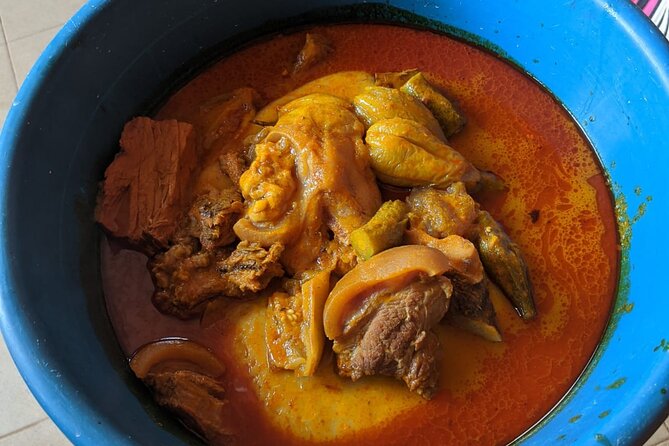
At $45 per person, the class offers more than lunch. You receive market transportation, ingredient shopping, cooking instruction, the food you prepare, and local spirits. You also contribute to a wellness center that provides several community programs.
I see the best value for people who want cultural contact and a meal in a local setting. A restaurant meal alone would not give you the market visit, the work of pounding fufu or preparing banku, or the chance to cook with a host family.
The value is weaker if you expect a professional chef school with guaranteed hands-on practice for every dish. The mixed reports about preparation work and duration suggest that expectations need to be realistic. You are paying for a social, community-based cooking experience, not a fixed curriculum with identical results every day.
Dietary requests can be accommodated when made in advance. Be clear about allergies, meat, fish, spice, and alcohol before the class. The available information confirms that requests are possible, but it does not list a fixed alternative menu.
Who will enjoy this class most?
I would recommend it to you if you enjoy food, conversation, and a direct connection with local life. It suits couples, curious solo visitors, and anyone who wants to learn the foundations of Ghanaian home cooking.
It is also a good choice if you want your spending to support a community project. The wellness center’s work with children, nutrition, exercise, health screenings, art, and dance gives the booking a practical social benefit.
Families may appreciate the informal setting, though the activity information does not specify a minimum age or child pricing. Ask before booking if you are bringing children. People with mobility concerns should also ask about the market and car transfers, since the listing only confirms that the activity is near public transportation and that service animals are allowed.
I would hesitate if you dislike alcohol, want precise timing, or need every recipe to be fully hands-on. The class can still work, but you should clarify those points before paying.
Booking details and cancellation
You receive confirmation when you book, and the activity uses a mobile ticket. It is typically booked about 36 days in advance, so reserving early is sensible if your Accra dates are fixed.
Free cancellation is available up to 24 hours before the scheduled start time for a full refund. Cancellations or changes made within 24 hours are not accepted for a refund, and the cutoff follows Accra local time.
There is one practical reason to keep your confirmation and meeting details handy. One poor account describes a no-show and difficulty reaching the provider, while most available accounts describe friendly, successful sessions. I would confirm the meeting point and start time shortly before the day of the class, especially because the booking can involve several hosts.
Should you book the Accra Ghanaian cooking class?
Book it if you want a community-focused food experience rather than a formal culinary course. The market visit, fufu pounding, banku preparation, Ghanaian soups, local spirits, and shared meal offer a good window into daily food traditions.
The strongest reason to go is the human element. Sessions with Gifty, Auntie Irene, Ms. Pat, and other host family members have offered warmth, humor, and generous portions. The biggest reason to pause is the uneven format: hands-on work and total duration may not match your expectations.
Ask about the host, dishes, timing, and level of preparation before you arrive. If you can accept a flexible class and want your $45 to support a wellness center as well as a meal, this is a worthwhile addition to an Accra visit.
FAQ
Where does the cooking class start and end?
It starts and ends at Global Wellness Mission, CM7, Third Oloti Street, Accra, Ghana.
How long does the activity last?
The stated duration is approximately six hours. One individual session lasted about two hours, so the actual schedule can vary.
What days and times is the class available?
It is listed from Monday through Saturday, with an opening window from 8:00 a.m. to 12:00 p.m.
Is transportation included?
Transportation by car is provided from the meeting point to the local market. The activity returns to the original meeting point.
What foods can I learn to prepare?
You may learn to make fufu, banku, jiji, or rice balls, paired with okra soup, groundnut soup, palm-nut soup, light soup, or plain soup. Sessions have also included jollof rice, fried fish, stew, and chicken.
Are drinks included?
Lunch and local alcoholic beverages are included. The listed spirits are Emergency, Hatso, and Uwuba, made with akpeteshie and local bark or tree leaves. Beer and soda are not included.
Can dietary requests be accommodated?
Yes. Dietary requests can be accommodated when made upon request.
What is the cancellation policy?
You can cancel at least 24 hours before the start time for a full refund. Changes or cancellations made less than 24 hours before the start are not accepted for a refund.
Just added around Accra
- Experience Cape Coast Castle and Kakum National Park★ 4.5 · 3 reviews
- Experience Northern Ghana In 10-Days★ 5.0 · 3 reviews
- Discover Ghana – Wli Waterfalls, Mountain Afadjato, Monkey Sanctuary & Akosombo.★ 4.5 · 3 reviews
- Cultural Tour Of Ghana And South Africa 12 Days★ 5.0 · 3 reviews
- Accra: City Highlights Half-day Guided Tour with Transfers★ 4.1 · 3 reviews
- Accra: Half day private safari with pick up★ 3.5 · 3 reviews
- Full Day Accra Guided Tour★ 5.0 · 3 reviews
- Experience Aburi Botanical Gardens And Boti Water Falls In A Day.★ 5.0 · 3 reviews
Cooking Classes, compared.

Authentic Ghanaian Cooking Lessons and Take Out Services.
Read our review →
Browse the lists this tour appears in