
Reviewed · CITY TOURS
Accra City Tour Experience
Accra comes alive through its markets and memorials. This private city tour pairs Accra’s major sights with a guide and air-conditioned transport, so you can cover a lot without sorting out taxis or routes yourself. I like the personal format, and I like that admission fees, bottled water, fuel, and pickup within Accra are included. The main catch is the long day and a confusing lunch detail that you should confirm before booking.
You’ll visit Makola Market, Independence Square, the National Museum, and several important cultural sites in roughly five to eight hours. The tour costs $72 per person, which is fair if you value private transport and a guide, but less attractive if you prefer to explore at a slow pace or only want two or three sights.
In This Review
- Key points to know before booking
- Seeing Accra through one well-planned day
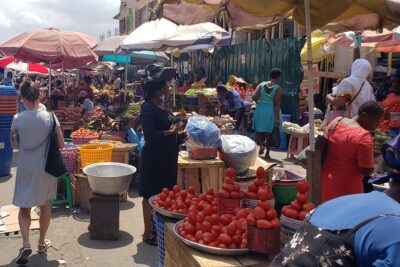
- Makola Market: Accra’s trading heart
- Kwame Nkrumah Memorial Park and Ghana’s independence story
- Centre for National Culture: local art and souvenir time
- Independence Square and the meaning of March 6, 1957
- National Museum of Ghana: the day’s broadest cultural stop
- W.E.B. Du Bois Centre and the Pan African connection
- What the $72 price really covers
- Guide, group size, and the pace of the day
- Booking, cancellation, and who should choose it
- Should you book the Accra City Tour?
- FAQ
- What time does the Accra City Tour begin?
- How long does the tour last?
- Is pickup included?
- Is this a private tour?
- How much does the tour cost?
- Are admission fees included?
- Is lunch included?
- What is included besides transportation?
- Are service animals allowed?
- Can most people participate?
- What is the cancellation policy?
Key points to know before booking
- Makola Market gives you a direct look at Accra’s trading life, with time for shopping or window browsing.
- The private format keeps the day flexible, with only your own group taking part.
- Six major stops fit into one busy outing, from Kwame Nkrumah’s memorial to the W.E.B. Du Bois Centre.
- Pickup and drop-off within Accra are included, along with an air-conditioned vehicle and bottled water.
- Lunch needs clarification, since one part of the tour details says it is included while another says it is not.
- The tour begins at 9:30 a.m. and can run from five to eight hours, depending on the pace and traffic.
Seeing Accra through one well-planned day
Accra is spread out, and its main sights tell different parts of Ghana’s story. A market visit shows daily commerce. A museum explains the country’s past. Memorials and public squares give political history a physical setting. This tour links those pieces in one day.
I see the biggest advantage in the private vehicle. You do not need to work out public transport between Makola Market, the museums, and the memorial sites. The included driver costs and fuel also remove some of the small expenses that can pile up during a full day.
The tour starts at 9:30 a.m. Pickup is offered within Accra, and drop-off within the city is included. The exact finish time depends on traffic, shopping time, and how long your group spends at each stop. The listed visits add up to four and a half hours, before driving, meals, and transitions, so a five-to-eight-hour window makes sense.
A private tour can also help if your group has mixed interests. You might spend more time at the National Museum, while someone else may prefer shopping at Makola Market or the Centre for National Culture. The guide can shape the pace more easily than a large group tour can.
More city tours in Accra:
- Accra Detailed City Tour
★ 4.5 · 118 reviews - Accra Guided City Tour Experience
★ 4.7 · 88 reviews - Accra Guided City Tour Experience
★ 5.0 · 76 reviews
Makola Market: Accra’s trading heart
Makola Market was built in 1924 and became a central part of urban life in Accra. It functions as both a wholesale and retail market, making it more than a simple souvenir stop.
You have about 45 minutes here. That is enough for a first look, a few purchases, and some window shopping, but it is not a long market expedition. If you want to browse carefully, decide what interests you before arriving so you do not spend the entire day at the first stall.
The market is useful because it gives you a view of ordinary commerce rather than a polished cultural display. You can shop for locally made items and see how trade operates in one of Ghana’s key urban spaces. The experience may feel busy and intense, so keep your expectations practical. This is a working market, not a quiet gallery.
Your guide matters here. Ask for help with local products, prices, and the best use of your limited time. Since the tour includes a private guide, you can ask questions as you go instead of trying to understand the market on your own.
Kwame Nkrumah Memorial Park and Ghana’s independence story
The Kwame Nkrumah Memorial Park is the final resting place of Ghana’s first president, Osagyefo Dr. Kwame Nkrumah. The site honors his campaign to free Ghana from colonial rule and gives the day a clear political focus.
You have 45 minutes at the memorial park. That should give you time to see the main memorial areas and listen to your guide explain Nkrumah’s role. The value here is not just the structure itself. It is the chance to connect Ghana’s independence to a person, a place, and a national turning point.
This stop works especially well early in the day because it gives context for Independence Square later. You will see the story first through a memorial to a leader, then through the public space where independence was declared.
If you prefer to read every display or take your time with photographs, 45 minutes may feel short. The private arrangement helps, but the day still has several scheduled stops. Tell your guide if this is one of your main interests.
Centre for National Culture: local art and souvenir time
The Centre for National Culture offers a different kind of stop. Here, you can see artworks made by local people and buy souvenirs. The visit lasts about 45 minutes.
This is a useful place to shop after seeing Makola Market because the two stops serve different purposes. Makola gives you a look at a major commercial market, while the Centre for National Culture focuses more directly on art and craft items.
I would treat this as a browsing stop rather than a formal museum visit. You may find artwork that suits your budget and luggage space, but the details of available pieces can change. Ask the guide which items are locally made and how to pack fragile purchases for the journey home.
The time limit is worth noting. Forty-five minutes is enough to look around and make a few decisions, but not enough for an unhurried search through every item. If shopping is a priority, say so at the beginning of the tour.
A completely different sort of day out of Accra:
- The Cape Coast Day Tour
★ 5.0 · 525 reviews - Experience the Beauty, History and the Culture Of Accra in a Day
★ 5.0 · 323 reviews - The Cape Coast Tour
★ 5.0 · 177 reviews - From Accra: Cape Coast, Elmina Castle & Kakum Park Day Tour
★ 4.6 · 144 reviews
Independence Square and the meaning of March 6, 1957
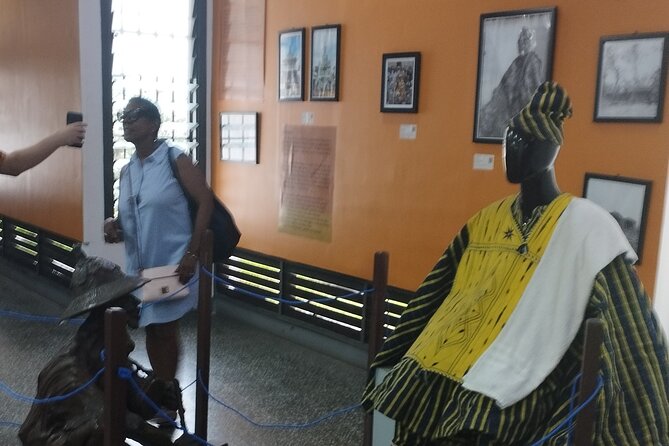
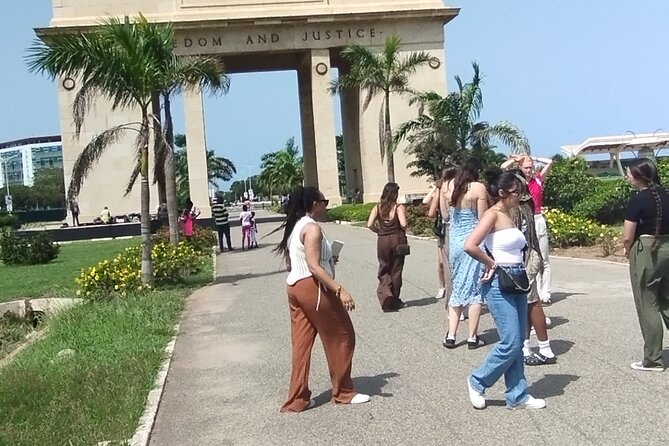
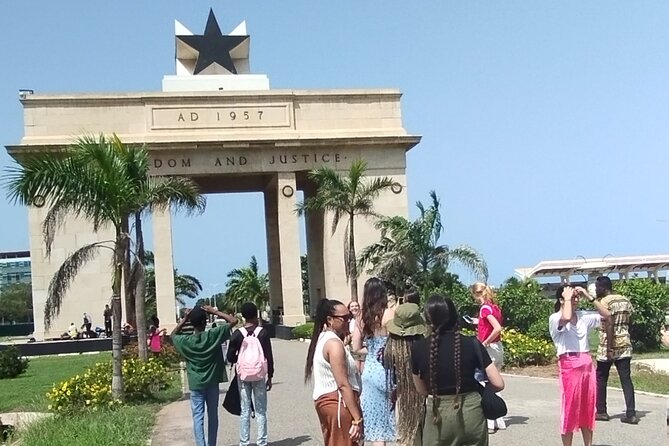
Independence Square is where Ghana declared independence on March 6, 1957. The open public setting gives you a strong sense of the national importance of that event.
The tour allows 45 minutes here. You can take photographs, enjoy the open space, and possibly ride a horse. The horse riding is mentioned as an available activity, but the details and any extra charge are not provided, so ask before assuming it is part of the price.
This stop is visually different from the market and museum visits. After enclosed displays and crowded shopping areas, you get room to pause. It also helps you understand why Accra’s public spaces matter. They are not just photo locations. They carry the memory of political change.
Bring your camera, but listen to the guide as well. A photograph of the square is easy to take. The story of why it matters is what makes the stop worthwhile.
National Museum of Ghana: the day’s broadest cultural stop
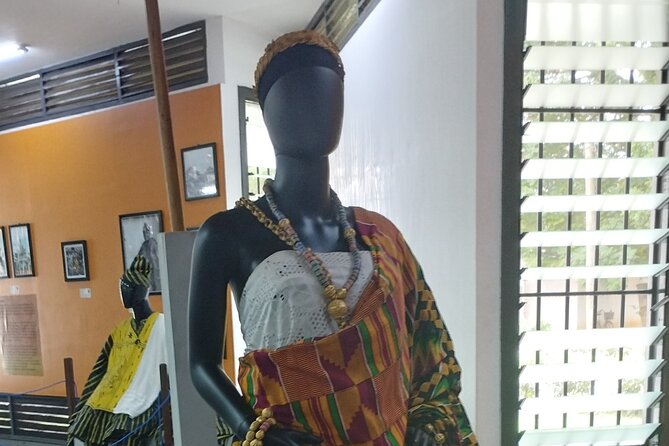
The National Museum of Ghana is the oldest and largest of the six museums administered by the Ghana Museums and Monuments Board. Its building opened on March 5, 1957, as part of Ghana’s independence celebrations.
You have one hour here, the longest single visit on the tour. That extra time is helpful because the museum covers many forms of art and cultural material. You can expect paintings, sculpture, fabric art, and objects connected with earlier periods of Ghanaian life.
I like this stop as the tour’s main place for background and interpretation. The market shows the present day. The memorials focus on political figures and events. The museum brings together objects that help explain Ghana’s wider cultural story.
One hour is a reasonable introduction, though it will not allow you to study every display in detail. If museums are your priority, you may want to ask how much of the visit will be guided and how much time you will have to look independently.
The museum also gives you a break from shopping and outdoor stops. Keep that in mind when judging the full day. The mix is one of the tour’s strengths, but the schedule is still active.
W.E.B. Du Bois Centre and the Pan African connection
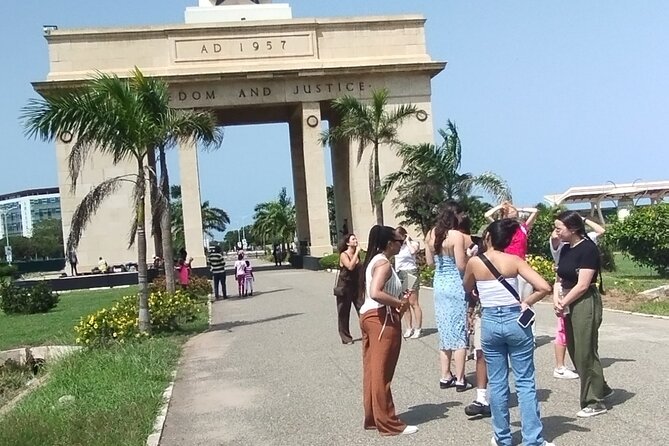
The W.E.B. Du Bois Memorial Centre for Pan African Culture adds an international dimension to the tour. You will learn about Du Bois, his role as a Pan Africanist, and his contribution to Pan African thought.
The visit lasts 45 minutes and includes his library and graveyard. Those details make the stop more personal than a general history lesson. You are not only hearing about an intellectual and activist. You are also seeing spaces tied directly to his life and memory.
This centre is a good match for anyone interested in African history, political thought, civil rights, or links between Ghana and the wider African world. It also gives the tour a different tone from the national sites devoted to Ghanaian independence.
The schedule allows enough time for an introduction, but not an extended study session. If you already know Du Bois’s work, use the visit to ask focused questions. If you do not, ask the guide to explain why his connection to Ghana matters.
What the $72 price really covers
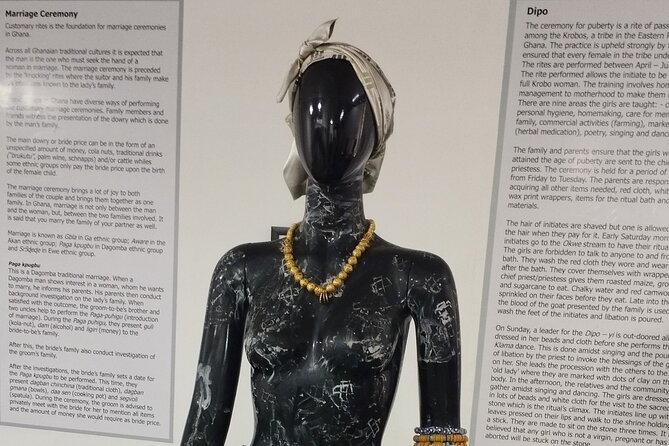
At $72 per person, the price should be judged as a package rather than as six separate admission tickets. You are paying for a private guide, an air-conditioned vehicle, fuel, car rental, bottled water, pickup, drop-off, taxes, and admission fees.
That can be good value for a small group that wants to see many major sites in one day. The private vehicle is particularly useful in a city where moving between stops takes time. You also avoid paying separately for several admissions and arranging transport throughout the day.
The value is weaker if you are staying near the sights and prefer to choose only one museum and one market. In that case, a full-day private tour may feel too fixed. The five-to-eight-hour duration also means you are paying for a full schedule, not a quick introduction.
Group discounts are offered, though the exact discount is not specified. Ask for the total price for your party before booking. A group of several people may find the per-person cost more appealing than a solo visitor would.
One important point needs clearing up. The highlights say lunch is included, but the inclusion details say lunch is not included. I would budget for your own lunch and ask Kadelo Travels to confirm the current policy before you pay. Bottled water is included, but that does not settle the lunch question.
Guide, group size, and the pace of the day
This is a private activity, so only your group participates. That is a major benefit for families, friends, and couples who want to ask questions without holding up strangers.
A guide named Foster is specifically associated with one family’s tour. The available feedback describes a prompt morning pickup and a well-organized visit through Accra’s important sites. Since guide assignments can change, confirm who will lead your tour if having Foster is important to you.
The schedule is full. Six stops, transport, shopping, and a possible meal create a day with little spare time. I would wear comfortable clothing, bring a camera, and keep your shopping decisions focused. The air-conditioned vehicle and bottled water are small comforts that matter in a long city outing.
The tour is suitable for most people, and service animals are allowed. It is also near public transportation, though the included pickup means you may not need to use it. If anyone in your group has specific mobility needs, ask the provider before booking, since the supplied information does not describe vehicle access or site conditions.
Booking, cancellation, and who should choose it
Confirmation is provided when you book. The tour is usually reserved about 12 days in advance, so booking early is sensible if your dates are fixed.
Free cancellation is available up to 24 hours before the 9:30 a.m. start time for a full refund. Cancellations or changes made within 24 hours are not refunded or accepted. The cutoff follows Accra local time, so check the clock carefully if you are booking from another country.
I would choose this tour if you have one day in Accra and want a guided introduction to politics, culture, art, and daily commerce. It is also a strong option if you prefer private transport, need pickup within the city, or are traveling with family.
I would hesitate if you want long museum visits, spontaneous wandering, or a slow market day. The schedule gives you breadth, not endless time at each site.
Should you book the Accra City Tour?
Book it if your goal is to see Accra’s main cultural and historical stops efficiently. The private format, included transport, admissions, and knowledgeable local guidance make $72 reasonable for a group that wants structure.
Before booking, confirm two points: who your guide will be and whether lunch is included. If you are comfortable with a busy day and short visits, this tour offers a useful first look at Accra, from Makola’s trade to Ghana’s independence story and the Pan African work linked to W.E.B. Du Bois.
FAQ
What time does the Accra City Tour begin?
The tour starts at 9:30 a.m.
How long does the tour last?
The experience lasts approximately five to eight hours.
Is pickup included?
Yes. Free pickup and drop-off are offered within Accra City.
Is this a private tour?
Yes. Only your group participates in the activity.
How much does the tour cost?
The listed price is $72 per person.
Are admission fees included?
Yes. All admission fees, taxes, car rental costs, and fuel costs are included.
Is lunch included?
The information is inconsistent. The highlights say lunch is included, while the inclusion details say lunch is not included. Confirm this with Kadelo Travels before booking.
What is included besides transportation?
The tour includes a professional guide and bottled water, as well as an air-conditioned vehicle.
Are service animals allowed?
Yes. Service animals are allowed.
Can most people participate?
Yes. The additional information says most people can participate. It does not provide specific details about mobility access at each location.
What is the cancellation policy?
You can cancel at least 24 hours before the start time for a full refund. Cancellations or changes made less than 24 hours before the start are not refunded or accepted.
Just added around Accra
- Experience Cape Coast Castle and Kakum National Park★ 4.5 · 3 reviews
- Experience Northern Ghana In 10-Days★ 5.0 · 3 reviews
- Discover Ghana – Wli Waterfalls, Mountain Afadjato, Monkey Sanctuary & Akosombo.★ 4.5 · 3 reviews
- Cultural Tour Of Ghana And South Africa 12 Days★ 5.0 · 3 reviews
- Accra: City Highlights Half-day Guided Tour with Transfers★ 4.1 · 3 reviews
- Accra: Half day private safari with pick up★ 3.5 · 3 reviews
- Full Day Accra Guided Tour★ 5.0 · 3 reviews
- Experience Aburi Botanical Gardens And Boti Water Falls In A Day.★ 5.0 · 3 reviews
City Tours, compared.



Escape Accra City to Aburi Gardens and Tetteh Quarshie Cocoa Farms
Read our review →
Browse the lists this tour appears in