
Reviewed · ROOTS & HERITAGE TOURS
Accra Slave Tour
Accra’s past is written in stone. This three-hour private tour takes you beyond Cape Coast to see how Accra, too, was tied to the Trans-Atlantic Slave Trade, with visits to James Fort, Ussher Fort, the lighthouse, Brazilian Lane, and other surviving sites. I like the strong local focus, and I like that the tour connects the slave trade with the beginnings of Accra itself. One point to weigh is the price: at $140 per person, it is not a budget walk, though private transport, pickup, a guide, and water are included.
The guide team is another reason to consider it. Prince led one highly praised booking from start to finish, while Ritchie, a Jamestown local, brought firsthand local perspective and strong knowledge of the area. The main limitation is time: three hours gives you a focused introduction, not a complete study of Accra’s history.
In This Review
- Key points to know before booking
- Why Accra deserves its own slave-trade tour
- James Fort and the two-hour walking section
- Ussher Fort and Accra’s European trading posts
- The lighthouse, Brazilian Lane, houses, and tunnels
- What the local guides add
- Transport, timing, and the practical side
- Is $140 per person a fair price?
- Shopping after the historical visit
- Who will get the most from this tour?
- Should you book the Accra Slave Tour?
- FAQ
- Where does the Accra Slave Tour take place?
- How long does the tour last?
- What sites are included?
- Is pickup included?
- Is transportation included?
- Is the tour private?
- What language is the tour conducted in?
- Is lunch included?
- Is water provided?
- Can I cancel for a full refund?
- Can I reserve now and pay later?
Key points to know before booking
- James Fort begins the main visit: Expect about two hours of guided sightseeing and walking around the historic James Fort Street area.
- Accra offers a different view of the slave trade: You do not need to travel to Cape Coast to see places connected with this painful history.
- Local guidance matters here: Prince and Ritchie were specifically praised for clear explanations and personal insight into Jamestown.
- The route includes more than forts: The lighthouse, Brazilian Lane, old houses, and tunnels add street-level context.
- Private transport keeps the day simple: Pickup and drop-off in Accra, fuel charges, and water are included.
- Shopping comes at the end: You can browse for goods before being returned to your preferred location in Accra.
Why Accra deserves its own slave-trade tour
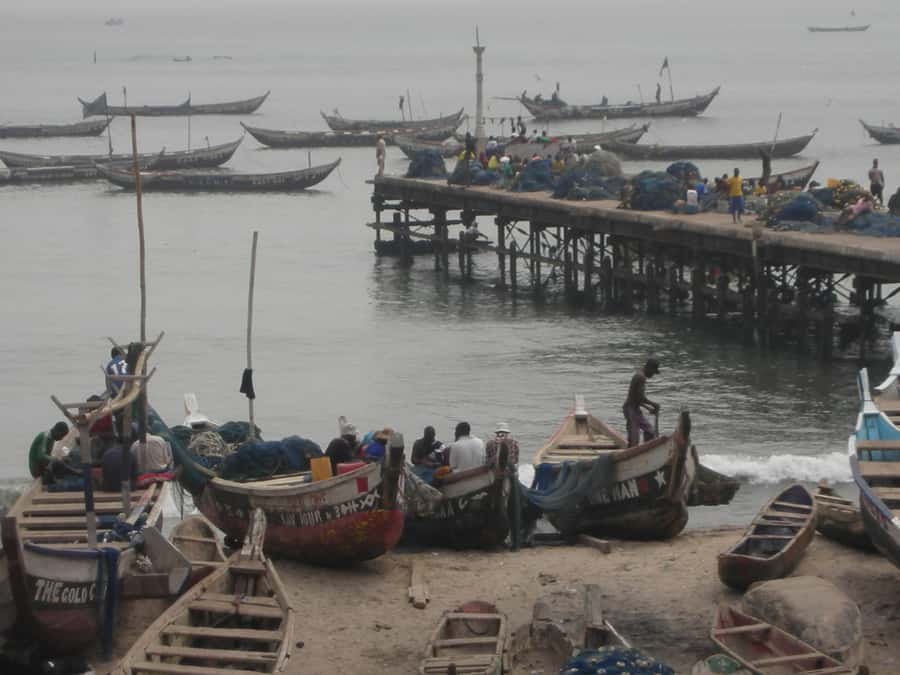
Cape Coast receives much of the attention in Ghana’s history of the Trans-Atlantic Slave Trade. That attention is deserved, but it can leave you with the mistaken idea that the story begins and ends there.
Accra has its own sites, buildings, streets, and coastal connections. This tour helps you see the capital as part of a larger trading system rather than as a separate modern city with a few old structures scattered around it.
The experience focuses on remnants of that past. You visit forts built by European powers, then move through streets and buildings linked to the activities around them. That combination matters. A fort can feel distant and formal when viewed alone. Historic streets, houses, tunnels, and a lighthouse help you understand how the trade affected the wider town.
I also like that the tour presents Accra’s beginnings alongside the slave-trade story. You are not only looking at one chapter of suffering. You are also seeing how the city developed around coastal commerce, foreign forts, local communities, and changing political control.
More roots and heritage tours in Accra:
- Ghana Heritage Tours – Beyond The Return
★ 5.0 · 36 reviews - 10 Days Ghana Cultural and Heritage Trip
★ 5.0 · 31 reviews - The Ancestral Naming Ceremony and Home Coming Experience
★ 5.0 · 30 reviews
James Fort and the two-hour walking section
The central part of the experience takes place around James Fort Street, with roughly two hours set aside for guided sightseeing and walking. This is where you should expect the most concentrated historical content.
James Fort was built by the British. Ussher Fort was built by the Dutch. Their presence gives the tour a useful framework because it shows that Accra’s coast was shaped by competing European powers, each seeking a position in trade.
Your guide can help put the buildings into human and local context. Rather than simply photographing old walls, you can ask how the forts connected with the surrounding town, what role they played in commerce, and how the trade affected people from the area.
That said, this is a walking visit through historic urban spaces, not a polished museum tour. The appeal is the setting itself: streets, old structures, and remains that still sit within Accra. You should come ready to listen, walk, and pause for explanations.
The emotional weight of the subject also deserves respect. This is not a light sightseeing stop with a historical label attached. The sites are connected with forced movement, exploitation, and the spread of African people across the globe through a brutal system. A good guide makes room for that seriousness while helping you understand the facts.
Ussher Fort and Accra’s European trading posts
Ussher Fort adds a second European perspective to the visit. Built by the Dutch, it sits alongside James Fort as part of the physical record of foreign involvement on the Accra coast.
Seeing the British and Dutch sites together is useful. It makes the history less abstract and shows how different powers established footholds in the same region. You can compare the forts as places of trade, control, and contact rather than treating them as isolated monuments.
The supplied details do not promise a full interior museum program or a long visit inside every structure. Keep your expectations practical. The value comes from seeing these places with an English-speaking guide who can explain what you are looking at and how it fits into the wider story.
If you are especially interested in military architecture, colonial competition, or Ghana’s coastal history, this part of the route will likely be one of the strongest sections. If you want a long, museum-style examination of artifacts, documents, and galleries, you may find the three-hour format too brief.
The lighthouse, Brazilian Lane, houses, and tunnels
The tour becomes more textured when it moves beyond the major forts. The lighthouse, Brazilian Lane, old houses, and tunnels show how the history extends into the ordinary fabric of Accra.
Brazilian Lane is particularly useful because it points to the wider movement of people and culture linked to the Atlantic world. The route does not limit the subject to European-built forts. It also takes you through places associated with homes, streets, and passageways.
The houses and tunnels can help you picture how the trade operated around the main strongholds. Their importance is not only architectural. They connect the large forces of international commerce with the smaller spaces where people were held, moved, housed, or encountered the system.
Some of these stops may be viewed from the street or explained as part of a walking route. The exact amount of time at each place is not specified, so you should think of the tour as a connected historical walk rather than a series of long, separate site visits.
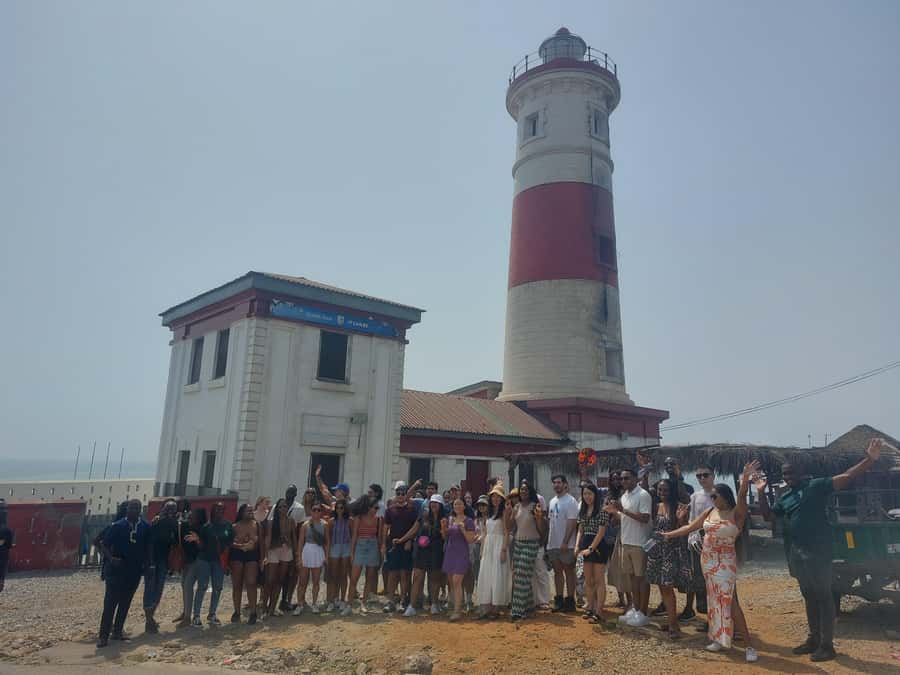
The lighthouse also adds a useful visual marker along the coast. It gives the route a clear sense of place and helps you understand Accra as a port city shaped by its relationship with the sea.
A completely different sort of day out of Accra:
- The Cape Coast Day Tour
★ 5.0 · 525 reviews - Experience the Beauty, History and the Culture Of Accra in a Day
★ 5.0 · 323 reviews - The Cape Coast Tour
★ 5.0 · 177 reviews - From Accra: Cape Coast, Elmina Castle & Kakum Park Day Tour
★ 4.6 · 144 reviews
What the local guides add
The guide can make or break a history tour, especially when the subject is painful and the surviving evidence is spread across a city.
Prince was praised for being an excellent overall guide. Ritchie, described as a Jamestown local, was praised for his knowledge, enthusiasm, and personal perspective. That pairing is valuable: one guide can keep the tour organized, while a local guide can explain the area from lived familiarity rather than from a memorized script alone.
You should feel free to ask questions during the walking portion. Ask how the sites relate to one another, what remains visible today, and how the slave trade affected Accra’s development. The tour is offered in English, so clear communication should be straightforward for English-speaking visitors.
The private-group format is another advantage. You are not tied to a large group’s pace, and you can focus your questions on the parts that matter most to you. Private does not mean every stop will be long or flexible, but it usually makes a serious subject easier to discuss at a comfortable pace.
Transport, timing, and the practical side
The tour lasts three hours and starts with pickup in Accra. Transportation, fuel surcharges, the tour guide, and water are included. You are returned to Accra at the end, with drop-off at your preferred location.
That arrangement adds real value if you do not want to organize transport to Jamestown or work out how to connect several historic sites on your own. It also keeps the experience compact, which is helpful if you have only part of a day available.
The trade-off is that three hours passes quickly. About two hours are allocated to guided sightseeing and walking around James Fort Street, leaving the rest for transport and the wider route. You will get a focused introduction, but not an exhaustive tour of every historic building in Accra.
Starting times depend on availability, so check the schedule before you book. Water is included, but lunch is not. Since the route includes walking, practical clothing and comfortable shoes make sense, though the supplied information does not give specific advice about distance, surfaces, or accessibility.
Is $140 per person a fair price?
At $140 per person, this tour asks you to pay for convenience, a private group, and guided interpretation rather than simply admission to one attraction.
The price includes pickup and drop-off in Accra, transportation, fuel surcharges, an English-speaking guide, water, and the private format. If you are traveling with people who value a dedicated vehicle and direct explanations, those inclusions can make the cost reasonable.
It is harder to justify if you are mainly looking for a cheap historic walk or are comfortable arranging your own transport and exploring without a guide. The tour’s value depends heavily on how much you want context and ease.
I would see it as a useful choice for a first visit to Accra when you want a serious introduction without giving up an entire day. The local guidance is especially important here because the sites are spread through a living city rather than presented in one clearly labeled museum.
Shopping after the historical visit
Shopping comes at the end of the tour, before you are dropped off. The details do not specify which market or shops you will visit, so do not book this solely as a shopping excursion.
Still, the option is a practical extra. After a concentrated historical walk, you can spend time browsing and perhaps buy a reminder of Ghana before returning to your chosen location in Accra.
Keep the priority clear: the forts, streets, and historical explanations are the main event. Shopping is a flexible add-on, not the reason to choose this experience.
Who will get the most from this tour?
I would recommend it most strongly to first-time visitors who want to understand Accra beyond its modern center. It suits history-minded adults, people tracing the wider African diaspora, and anyone who wants a local guide to connect scattered sites into one story.
It can also work well for a private family or friend group, since you can ask questions without keeping up with strangers. The three-hour length makes it easier to fit around other plans.
You may want a different experience if you prefer a slow museum visit, a full-day historical program, or a tour with extensive time inside every fort. This is a compact city route with serious subject matter, not a full account of Ghana’s entire slave-trade history.
Should you book the Accra Slave Tour?
Book it if you want to see Accra’s role in the Trans-Atlantic Slave Trade from the city itself. James Fort, Ussher Fort, the lighthouse, Brazilian Lane, old houses, and tunnels give the subject a broader setting than a single monument can provide.
The strongest reasons to choose it are the private transport, local guiding, and the chance to hear both organized guidance from Prince and Jamestown perspective from Ritchie when available. At $140 per person, it is best for visitors who value convenience and interpretation.
Skip it if you want a low-cost independent walk or need a longer, more detailed museum experience. For a focused three-hour introduction to Accra’s slave-trade sites, though, this tour offers a thoughtful and practical way to begin.
FAQ
Where does the Accra Slave Tour take place?
The tour takes place in Accra, in Ghana’s Central Region, with the main guided sightseeing centered around James Fort Street and nearby historic sites.
How long does the tour last?
The full experience lasts three hours.
What sites are included?
The tour includes James Fort, Ussher Fort, the lighthouse, Brazilian Lane, and other houses and tunnels connected with the Trans-Atlantic Slave Trade.
Is pickup included?
Yes. Pickup in Accra and drop-off at your preferred location in Accra are included.
Is transportation included?
Yes. Transportation and fuel surcharges are included in the price.
Is the tour private?
Yes. The experience is offered for a private group.
What language is the tour conducted in?
The live tour guide conducts the experience in English.
Is lunch included?
No. Lunch is not included.
Is water provided?
Yes. Water is included.
Can I cancel for a full refund?
Yes. You can cancel up to 24 hours in advance for a full refund.
Can I reserve now and pay later?
Yes. You can reserve the tour and pay later, so you do not need to pay anything at the time of booking.
Just added around Accra
- Experience Cape Coast Castle and Kakum National Park★ 4.5 · 3 reviews
- Experience Northern Ghana In 10-Days★ 5.0 · 3 reviews
- Discover Ghana – Wli Waterfalls, Mountain Afadjato, Monkey Sanctuary & Akosombo.★ 4.5 · 3 reviews
- Cultural Tour Of Ghana And South Africa 12 Days★ 5.0 · 3 reviews
- Accra: City Highlights Half-day Guided Tour with Transfers★ 4.1 · 3 reviews
- Accra: Half day private safari with pick up★ 3.5 · 3 reviews
- Full Day Accra Guided Tour★ 5.0 · 3 reviews
- Experience Aburi Botanical Gardens And Boti Water Falls In A Day.★ 5.0 · 3 reviews
Roots & Heritage Tours, compared.
The Ancestral Naming Ceremony and Home Coming Experience
Read our review →
The Homecoming Experience To Cape-coast And Elmina.
Read our review →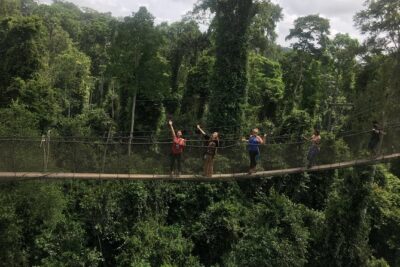
Cape Coast/Elmina Slave Dungeon and Canopy Walkway Private Tour
Read our review →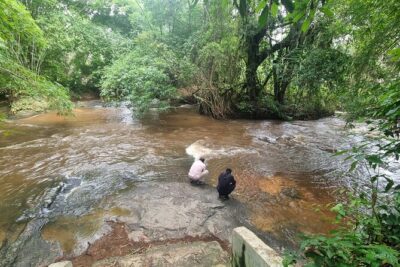
Assin Manso Slave River, Cape Coast and Elmina Castle Day Tour
Read our review →
Cape Coast Castle, Assin Manso Slave River & Kakum Day Tour.
Read our review →
7-Day Private Cultural and Heritage Tour in Ghana
Read our review →Browse the lists this tour appears in