
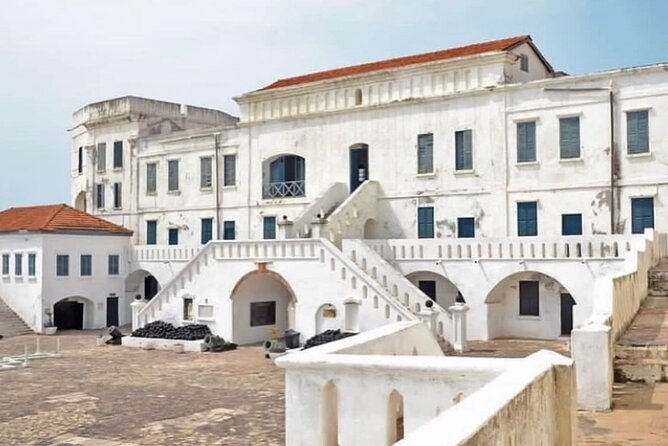
Reviewed · CAPE COAST & ELMINA CASTLE TOURS
Cape Coast Castle, Assin Manso Slave River and Door of No Return
The past speaks clearly here. This private day trip from Accra links Cape Coast Castle with Assin Manso Slave River Park, giving you a direct look at Ghana’s role in the trans-Atlantic slave trade and the culture of the Central Coast. I like the private format and the care shown by guides such as Ruby and Kwame Divine. I also like that lunch and the stop at Hans Cottage Crocodile Botel are built into the long day.
The main drawback is the schedule. You leave at 6:00 a.m. and spend 8 to 10 hours on the road and at historic sites, so this is not a light city outing. The subject matter is also painful, and you should come ready for a serious experience rather than a carefree sightseeing trip.
In This Review
- Key points to know before booking
- Why this Cape Coast day trip matters
- Leaving Accra at 6:00 a.m.
- Cape Coast Castle and the Door of No Return
- Assin Manso Slave River Park
- Culture on Ghana’s Central Coast
- Lunch at Hans Cottage Crocodile Botel
- What the $180 price includes in practical terms
- The guides can shape the entire day
- Who should book this experience?
- Booking and cancellation advice
- Should you book this Cape Coast tour?
- FAQ
- Where does the tour start?
- How long does the experience last?
- Which main sites are included?
- Is this a private tour?
- Is the tour suitable for most participants?
- What is the cancellation policy?
Key points to know before booking
- Cape Coast Castle takes about two hours, including an admission ticket and a guided look at the castle’s role in slave transport.
- Assin Manso Slave River Park adds a more personal layer, with an emotional connection to the people forced through the slave system.
- The Door of No Return is part of the castle experience, connecting the inland journey to the final departure by sea.
- Ruby and Kwame Divine are named guides associated with the tour, with praise for their warmth, clear explanations, and tact.
- Lunch at Hans Cottage Crocodile Botel is included in the total day, along with the travel time from Accra.
- This is a private activity, so only your group takes part, and cancellation is free up to 24 hours before departure.
Why this Cape Coast day trip matters
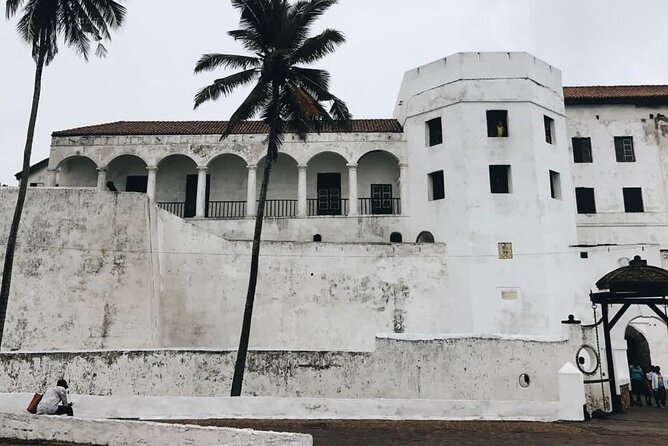
Ghana’s Central Region is one of the most important places in the world for understanding the history of the trans-Atlantic slave trade. A visit here is not just a castle tour. It connects several stages of that history: capture and forced movement inland, confinement at the coast, and departure by ship.
The route also introduces you to Cape Coast and the surrounding Fante communities. The tour description places local culture alongside the heritage sites, including the fishing community on the Central Coast. That balance matters. You are not only looking at old walls. You are seeing how living communities exist around places marked by suffering and memory.
I would choose this trip if you want history explained by a guide rather than simply read from plaques. A good guide can help you understand how Cape Coast fit into a much wider system involving local powers, European colonists, forced labor, trade, and ocean transport.
The day begins early from Accra at 6:00 a.m. That start is practical, not decorative. Cape Coast is far enough from Accra that the outing requires a full day, and the return trip is part of the time commitment. Plan for 8 to 10 hours in total, including transport, sightseeing, and lunch.
More Cape Coast and Elmina castle days:
- The Cape Coast Day Tour
★ 5.0 · 525 reviews - The Cape Coast Tour
★ 5.0 · 177 reviews - From Accra: Cape Coast, Elmina Castle & Kakum Park Day Tour
★ 4.6 · 144 reviews
Leaving Accra at 6:00 a.m.
The early departure is the first thing to consider carefully. If you are staying in Accra and want to see Cape Coast without changing hotels, this tour offers a simple solution. Pickup is offered, and the activity is private, so you avoid the uncertainty of gathering a large group at several meeting points.
You should keep the morning flexible and be ready to leave on time. The tour is not designed for a late start, and the distance means that every delay reduces the time available at the historic sites.
The private setup is especially useful for families and small groups with different interests. You can ask questions as they arise, and the guide can adjust the pace within the limits of the day. One past participant traveled with family and later used Ruby for other outings during the Ghana trip, suggesting that the personal service can extend beyond this single route.
This is also a better choice than a large coach trip if you prefer conversation. You are not simply being moved from one stop to the next. You have a guide who can explain Ghana’s general history, the Central Region, and the Fante communities connected with the area.
Cape Coast Castle and the Door of No Return
Cape Coast Castle is the emotional center of the tour. It was established by Swedish colonists and built in the 1650s, with enslaved people used in its construction according to the supplied history. The castle later served as a place connected to the transport of enslaved Ghanaians and other West Africans to European destinations.
The visit lasts about two hours, and admission is included. That gives you enough time for a guided explanation rather than a rushed walk through the grounds.
The castle’s most difficult spaces are the rooms connected with confinement. You may find the contrast between the grand exterior and the suffering held inside especially disturbing. The thick walls, narrow spaces, and coastal setting make the system feel physical rather than distant.
The Door of No Return is an important part of that story. It represents the point at which enslaved people were taken from the castle toward ships and forced departure. The name is stark because the journey beyond it was generally permanent. You should expect the guide to connect the castle interior with the wider route from inland capture to ocean transport.
This is where guide quality matters most. Ruby is praised for being friendly and well informed, while Kwame Divine is credited with a powerful but tactful delivery. That combination is valuable. The subject needs honesty, but it also needs care. A guide who can explain difficult events without turning them into a performance makes the visit more respectful.
Give yourself time to be quiet here. You do not need to fill every pause with photographs or questions. The castle is a place where the setting itself carries weight.
Assin Manso Slave River Park
Assin Manso adds an important inland connection to the day. The park is linked to the Slave River, where enslaved people were brought and washed before being taken onward toward the coast. The supplied tour information describes this stop as an in-depth look at slavery and an emotional moment, with a ritual that can be especially meaningful for people seeking heritage experiences.
The visit lasts about two hours, and no separate admission ticket is listed. That does not make it a minor stop. In some ways, the river helps you understand the forced journey before people ever reached Cape Coast Castle.
The castle shows the final stages of confinement and departure. Assin Manso helps you picture the earlier movement through the interior. Together, the two stops create a fuller route through the history, rather than treating the castle as an isolated monument.
The ritual element may be important to you if you are visiting Ghana to connect with family history or African ancestry. One participant described the river ceremony as especially powerful. You should approach it with respect and an open mind, while remembering that the experience may affect people in different ways.
Kwame Divine’s tactful explanations are particularly useful at this stop. A guide needs to provide context without flattening the experience into a simple speech. You may want to ask about the route from Assin Manso to the coast, how the Central Region fits into Ghanaian history, and how present-day communities remember these events.
More Assin Manso slave river visits:
- Assin Manso Slaves River and Cape Coast Castle Tour
★ 5.0 · 24 reviews - Assin Manso Slave River, Cape Coast and Elmina Castle Day Tour
★ 5.0 · 19 reviews - Cape Coast Castle, Assin Manso Slave River & Kakum Day Tour.
★ 5.0 · 19 reviews - Assin Manso Slave River and Cape Coast Castle Private Day Tour
★ 5.0 · 16 reviews
Culture on Ghana’s Central Coast
The tour also includes a look at the fishing community on the Central Coast. The information provided does not promise a separate formal village tour or a set activity, so you should not expect a long standalone cultural program. Instead, local life forms part of the wider route and the guide’s explanation.
That still adds value. Cape Coast is not an abandoned historical site. People live, work, worship, and fish in the same broader region where the castle once played its role in colonial trade. Seeing that connection can prevent the history from feeling sealed away behind museum walls.
The Central Region is mainly associated here with Fante communities. You can ask the guide about local customs, language, food, fishing, and how the communities relate to the coastal heritage sites. The best conversations may happen during the drive or between formal stops, when you have time to connect the historical material with present-day Ghana.
I like this part of the plan because it gives the day some human scale. You are not only moving between monuments. You are also seeing a part of Ghana where history and ordinary life share the same roads.
Lunch at Hans Cottage Crocodile Botel
Lunch at Hans Cottage Crocodile Botel is included in the total duration. The information supplied does not specify the menu, meal cost, or how long the stop lasts, so you should treat it as a planned lunch break rather than assume a particular dining package.
The stop helps break up a demanding day. After the castle and river park, you will likely appreciate a chance to sit down and reset before continuing or returning toward Accra.
The name may raise questions, but the provided details do not describe the crocodile viewing arrangements or the dining style. Ask the operator for current meal details if food choices matter to you, especially if you have dietary needs.
Because travel time and lunch are included in the 8 to 10 hour estimate, the day is not two separate two-hour visits with a short journey between them. Road time takes up a substantial part of the outing. That is normal for a Cape Coast trip from Accra, but it is worth understanding before you book.
What the $180 price includes in practical terms
At $180 per person, this is not the cheapest way to reach Cape Coast. The value comes from the structure: private transport from Accra, an expert guide, admission to Cape Coast Castle, the Assin Manso visit, lunch at Hans Cottage Crocodile Botel, and a full day focused on connected heritage sites.
The private format is the biggest factor in the price. If you are traveling alone, the cost may feel high. If you are traveling as a family or small group, you are paying for a dedicated experience rather than a seat on a larger shared excursion.
The tour also saves you from having to arrange separate transport between Cape Coast Castle and Assin Manso. That matters because the sites tell different parts of the same story. Booking them together gives you a more coherent day and reduces the chance of missing one.
I would compare this price with the value of time. You leave from Accra and return within roughly one day, with the historical planning already handled. If you want a private guide and a focused heritage route, the cost can be reasonable. If you are comfortable arranging public transport, paying for sites separately, and building your own schedule, you may prefer a more independent approach.
The guides can shape the entire day
Ruby is the clearest personal highlight associated with this experience. She is described as friendly, well informed, and a joy to spend the day with. That kind of warmth matters on a long drive and during emotionally difficult visits.
You are encouraged to connect with Ruby ahead of time. This is practical advice, especially if you want to discuss your interests, family background, or the pace of the day before pickup.
Kwame Divine is also named for his delivery at the heritage sites. His style is described as powerful yet tactful, which is exactly what this subject requires. Strong guiding is not just about remembering dates. It means knowing when to explain, when to let a place speak for itself, and how to discuss trauma without making it feel like entertainment.
The guide is also your best source for details that are not fixed in the short description, such as current road conditions, timing changes, meal arrangements, and the precise flow of the cultural stops.
Who should book this experience?
I would recommend it most to you if you want a focused introduction to Ghana’s slavery heritage and prefer a private guide. It suits families, small groups, first-time visitors to the Central Region, and people with a personal or ancestral connection to West Africa.
It is also a good fit if you want to see both Cape Coast Castle and Assin Manso in one day from Accra. The two sites complement each other, and the guide can connect them into one historical route.
You may want to reconsider if you dislike early starts, long road days, or emotionally heavy subjects. This is not a casual beach outing, and the 8 to 10 hour duration can feel demanding.
Most travelers can participate, and service animals are allowed. The tour is near public transportation, but the main convenience is the offered pickup. Confirmation arrives at booking, and the activity is available as a mobile ticket.
Booking and cancellation advice
You can cancel for a full refund up to 24 hours before the scheduled start time. Cancellations or changes made within 24 hours are not accepted for a refund, and the cut-off follows local time.
Since the tour is commonly booked about 30 days in advance, reserve early if you need a particular date or are coordinating a family trip. Before paying, confirm the pickup details, meal needs, and any questions about the day’s ritual or cultural elements.
Should you book this Cape Coast tour?
Book it if you want history with context, a private guide, and both Cape Coast Castle and Assin Manso Slave River Park in one long day. Ruby’s personal approach and Kwame Divine’s tactful delivery are strong reasons to value this operator, especially when the subject becomes difficult.
The $180 price makes the most sense for a small group that wants transport, guiding, lunch, and planning handled together. Go with patience, comfortable clothing, and an understanding that the most important moments may be quiet ones.
If your priority is Ghana’s heritage and the human story behind the monuments, this is a thoughtful and well-focused choice from Accra.
FAQ
Where does the tour start?
The tour starts in Accra at 6:00 a.m. Pickup is offered.
How long does the experience last?
The total duration is approximately 8 to 10 hours. Travel time and lunch at Hans Cottage Crocodile Botel are included in that estimate.
Which main sites are included?
The tour includes Cape Coast Castle and Assin Manso Slave River Park. The Cape Coast visit includes admission, while no separate admission ticket is listed for Assin Manso.
Is this a private tour?
Yes. Only your group participates in the activity.
Is the tour suitable for most participants?
Most travelers can participate, and service animals are allowed. The tour is also near public transportation.
What is the cancellation policy?
You can cancel at least 24 hours before the start time for a full refund. Cancellations or changes made less than 24 hours before the start time are not accepted for a refund.
More Roots and Heritage Tours in Accra
- Ghana Heritage Tours – Beyond The Return
★ 5.0 · 36 reviews - 10 Days Ghana Cultural and Heritage Trip
★ 5.0 · 31 reviews - The Ancestral Naming Ceremony and Home Coming Experience
★ 5.0 · 30 reviews - The Homecoming Experience To Cape-coast And Elmina.
★ 5.0 · 28 reviews
Just added around Accra
- Experience Cape Coast Castle and Kakum National Park★ 4.5 · 3 reviews
- Experience Northern Ghana In 10-Days★ 5.0 · 3 reviews
- Discover Ghana – Wli Waterfalls, Mountain Afadjato, Monkey Sanctuary & Akosombo.★ 4.5 · 3 reviews
- Cultural Tour Of Ghana And South Africa 12 Days★ 5.0 · 3 reviews
- Accra: City Highlights Half-day Guided Tour with Transfers★ 4.1 · 3 reviews
- Accra: Half day private safari with pick up★ 3.5 · 3 reviews
- Full Day Accra Guided Tour★ 5.0 · 3 reviews
- Experience Aburi Botanical Gardens And Boti Water Falls In A Day.★ 5.0 · 3 reviews
Cape Coast & Elmina Castle Tours, compared.
Cape Coast, Elmina Castle & Kakum Park Day Tour
Read our review →
Cape Coast ,Elmina Castle and Kakum Full-Day Tour
Read our review →
10 Days Trip to Cape Coast and Elmina Castles from Accra
Read our review →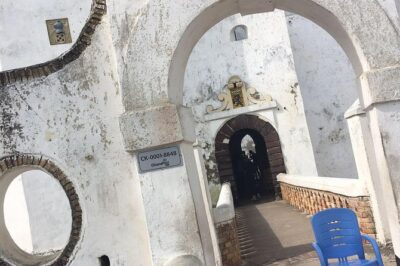
The Homecoming Experience To Cape-coast And Elmina.
Read our review →Browse the lists this tour appears in