
Reviewed · TRADITIONAL NAMING CEREMONIES
Cultural Village Tour: Traditional Naming Ceremony
Come home to a new name. This private excursion from Accra takes you to a rural village in Ghana’s Volta Region, where a chief and elders welcome you with libation before a traditional naming ceremony, drumming, and dancing. I like the personal scale of the experience and the chance to join hands-on workshops in pottery, glass beads, or kente weaving.
I also like that hotel pickup, an air-conditioned vehicle, fuel, and activity fees are included. The main consideration is the price, $320.67 per person, plus lunch, so this makes the most sense for people who value a private cultural experience rather than a low-cost sightseeing trip. Also, the timing needs clarification: pickup is listed for 8:00 a.m., while the start time is listed as 9:00 a.m.
The ceremony has received a strong 4.8 rating from five published reviews. One African American participant described the welcome as spiritual and joyous, and praised the courteous guide and driver. That detail matters: this is not only a village stop with photographs. For some people, especially those exploring a connection to West Africa, receiving a Ghanaian name can carry real emotional weight.
In This Review
- Key points to know before booking
- The two-hour road from Accra to the Volta Region
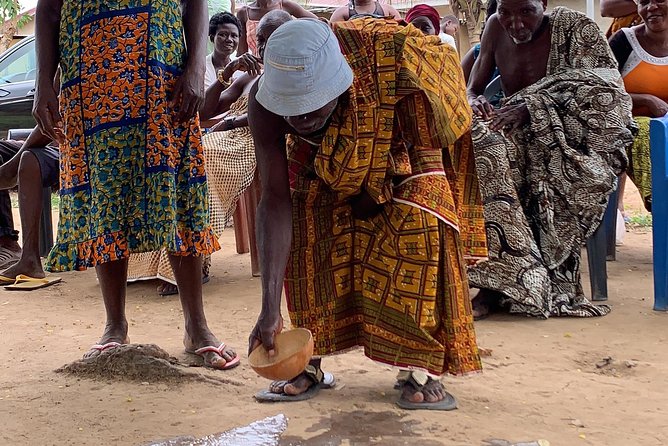
- Meeting the chief and elders through libation
- Receiving a Ghanaian name with drumming and dance
- Choosing between pottery, beads, and kente
- What private touring changes for your day
- What the price includes, and what it leaves out
- Who will appreciate this Ghana village experience
- Practical advice for a respectful visit
- Should you book the Traditional Naming Ceremony?
- FAQ
- Where does the Traditional Naming Ceremony tour take place?
- How long does the tour last?
- What time does pickup begin?
- Is transportation included?
- Is lunch included in the price?
- Can I cancel for a full refund?
Key points to know before booking
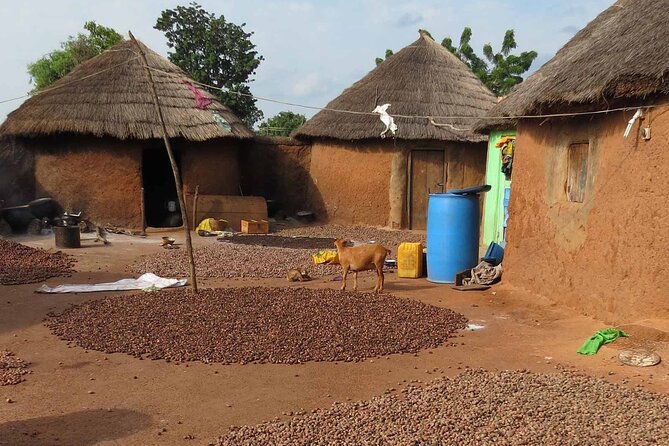
- A chief and elders lead the welcome: Your arrival includes libation, a traditional form of blessing and welcome into the community.
- Your group has the village experience privately: This is not a mixed coach excursion. Only you and your own party take part.
- The ceremony includes your own Ghanaian name: Drumming, dancing, and ceremonial activities give the visit a personal focus.
- The drive takes about two hours from Accra: Plan for a full day away from the city, with roughly five to seven hours set aside for the experience.
- You choose a practical craft activity: You can take part in pottery making, bead making, or kente weaving.
- Lunch is not included: Bring money or confirm your lunch plan before setting out.
The two-hour road from Accra to the Volta Region
The day begins with pickup in Accra in an air-conditioned car or bus. The stated pickup time is 8:00 a.m., while the listed tour start time is 9:00 a.m., so I would confirm the exact collection time with Tichama Tours before the day arrives. The drive to the village takes about two hours.
That road time is a real part of the experience, not just an annoying transfer. You are leaving the capital behind and heading toward a rural community where the pace and purpose of the day are different. Still, you should be ready for a long outing. The experience is listed as about five to seven hours, and the return drive adds to your total time away from your hotel.
The air conditioning is welcome in Ghana’s heat, especially after an early start. Since fuel and the vehicle are included, you do not need to manage local transport between each part of the visit. That makes the day easier, particularly if you are unfamiliar with Accra or are traveling with family or a small private group.
The vehicle is also one reason to think about the price in practical terms. You are paying for private transportation, a guide and driver, a ceremony, and several activities, rather than only admission to a village attraction. At $320.67 per person, the cost is high for a simple day trip, but more defensible if your main goal is a private cultural welcome.
More traditional naming ceremonies:
- The Ancestral Naming Ceremony and Home Coming Experience
★ 5.0 · 30 reviews - Naming Ceremony and Heritage Homecoming Experience for Diasporas
★ 4.5 · 15 reviews - Traditional Naming Ceremony and Boat Cruise Experience
★ 5.0 · 15 reviews
Meeting the chief and elders through libation
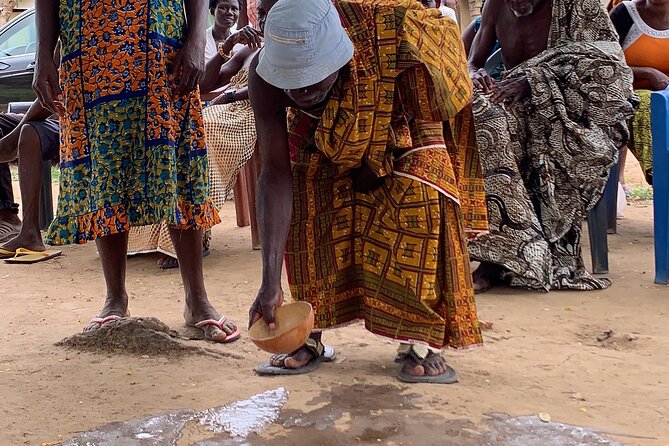
The first formal moment in the village is a visit to the chief and elders. Your welcome includes the pouring of libation, a traditional act used to honor ancestors and ask for blessing or protection. It is not a quick ticket check or staged greeting. It gives the day a clear cultural setting.
You should approach this part with respect and attention. Listen to your guide, follow local instructions, and let the ceremony take its own pace. The details supplied for the tour do not explain the exact words, language, or length of the libation, so I would not arrive expecting a scripted performance with a fixed schedule.
This welcome is important because it places you in relation to the community. You are not simply walking through a rural setting to look at crafts. The chief and elders formally acknowledge your arrival, and the later naming ceremony grows from that first act of welcome.
The private format may also make this moment more comfortable. Instead of being one person in a large group, you take part with only your own party. That gives you more room to listen, ask your guide questions, and take part without feeling rushed by a busload of people.
Receiving a Ghanaian name with drumming and dance
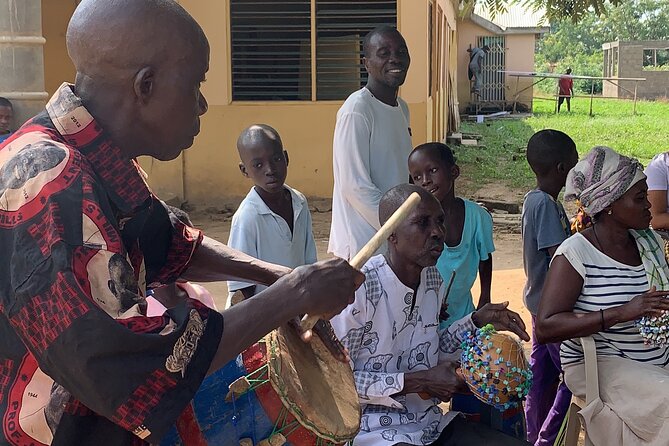
After the welcome, the naming ceremony begins. You receive a local Ghanaian name and take part in drumming, dancing, and other ceremonial activities. This is the heart of the experience, and it is the part most likely to stay with you after the drive home.
The ceremony is described as spiritual and joyous, with a strong sense of welcome. That combination is worth noting. The event is festive, but it is not presented as entertainment alone. Your new name makes the moment personal, while the music and dance connect the ceremony to the wider community.
If you have an African American family background or are exploring your connection to the African continent, the ceremony may carry special meaning. One published account specifically praised the experience from that point of view and described the local people as welcoming. The tour is also open to anyone traveling through Ghana who wants a respectful cultural encounter, but you should be comfortable taking part in a formal tradition rather than only watching one.
The supplied information does not state how names are chosen, what they mean, or whether you receive any written record. Those are useful questions to ask before booking. Your guide can also explain when to join the dancing, what gestures are appropriate, and how the ceremony will proceed.
The drumming and dancing give the ceremony energy, but you do not need to be an expert dancer. Take your cue from the people around you. The point is participation, not performance. A willingness to listen and join in matters more than getting every step right.
Choosing between pottery, beads, and kente
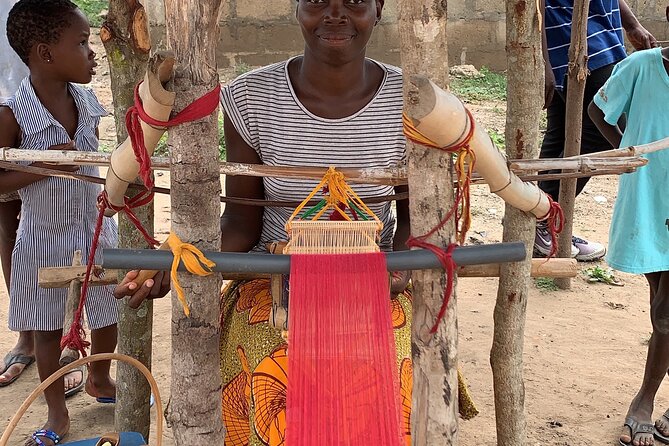
The craft workshop gives the day a hands-on second act. You can take part in pottery making, glass bead making, or kente weaving. These activities help turn the visit from a brief ceremony into a closer look at village skills and daily work.
Pottery is a good choice if you like working with your hands and want an activity that feels direct and practical. Bead making offers another tactile option, with a focus on shaping and assembling small decorative pieces. Kente weaving lets you see the care involved in producing one of Ghana’s best-known textiles.
The description does not say how long each workshop lasts or whether you can try all three. It says you can take part in a workshop in pottery making, beads making, or kente weaving, so expect to select one unless Tichama Tours confirms otherwise. Ask about the choice before the day if one craft is especially important to you.
I like this part of the tour because it gives you a way to learn by doing. You are not only hearing about village life from a guide. You are given a chance to handle materials and see how a craft is practiced. The activity can also break up the ceremony and make the visit work well for families or mixed-age groups.
Do not assume that every workshop will produce a finished souvenir. The information provided does not promise an item to take home, a shipping service, or a shop visit. If you want to buy beads, pottery, or kente, ask what is available and what payment methods are accepted.
A completely different sort of day out of Accra:
- The Cape Coast Day Tour
★ 5.0 · 525 reviews - Experience the Beauty, History and the Culture Of Accra in a Day
★ 5.0 · 323 reviews - The Cape Coast Tour
★ 5.0 · 177 reviews - From Accra: Cape Coast, Elmina Castle & Kakum Park Day Tour
★ 4.6 · 144 reviews
What private touring changes for your day
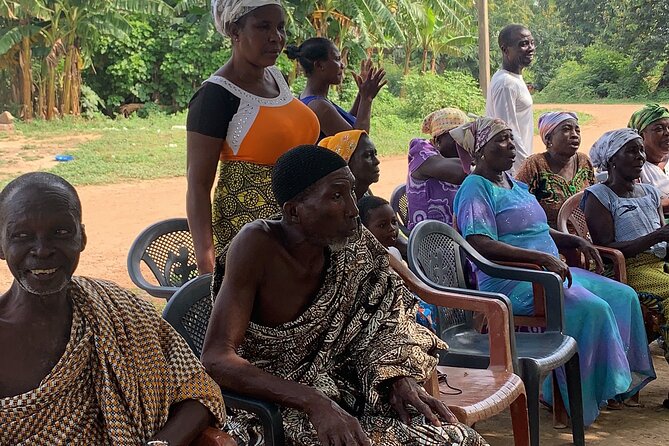
This is a private activity, so only you and your group participate. That is a major advantage for a ceremony with personal meaning. Your guide can focus on your party, and the pace may feel less rigid than a large shared tour.
Private touring also helps with sensitive moments. If you are marking a family connection, celebrating a return to Africa, or simply feel unsure about joining a traditional activity, you have more space to ask questions and take part in your own way. The published account praised both the guide and driver for being courteous and friendly, which supports the idea of a calm, personal day.
The tradeoff is cost. A private tour at $320.67 per person may be reasonable for a group that wants exclusive transport and a customized feel, but it is not the best choice for someone comparing prices with standard shared excursions. Group discounts are offered, so a larger party should ask how the price changes before booking.
The private setup does not mean you can control every part of the ceremony. The village welcome follows local custom, and the chief, elders, and community activities set the rhythm. That is part of the value. You get a personal experience, but not a private stage show designed entirely around your schedule.
What the price includes, and what it leaves out
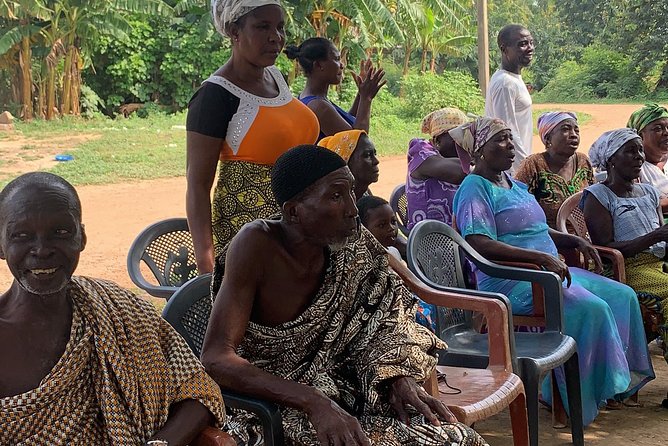
The ticket includes an air-conditioned vehicle, fuel surcharge, and fees for all activities. That is useful because there should not be separate charges when you arrive for the libation, naming ceremony, or selected workshop.
Lunch is not included. This is the clearest extra cost to plan for. The supplied details do not state whether lunch is bought in the village, stopped for on the road, or arranged separately, so ask Tichama Tours what food options are available. Do not assume that a meal will appear during the five to seven-hour outing.
The $320.67 price should be judged against the full package. You receive hotel transfer, private transportation, guidance, access to a formal welcome, a naming ceremony, and a craft activity. If you are traveling alone, the price may feel steep. If you are splitting the experience across a private group and care deeply about the ceremony, the value becomes easier to see.
All fees being included also makes budgeting simpler. You still need to allow for lunch and any personal purchases, but the main activities are covered. Since group discounts are available, contact the provider with your party size rather than assuming the listed per-person figure is final.
Who will appreciate this Ghana village experience
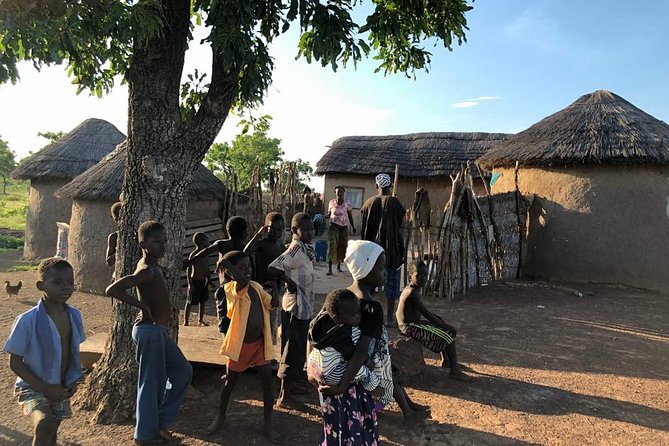
I would recommend this tour most strongly to people who want meaningful participation, not a quick city excursion. It suits someone returning to Africa, an African American visitor exploring ancestral connection, or a person who wants a formal welcome into a Ghanaian community.
It can also work well for families, couples, and private friend groups. The craft options provide something active to do, while the ceremony offers a shared event that is different from standard sightseeing. Most people can participate, and service animals are allowed according to the supplied accessibility information.
You should think twice if you have only a short window in Accra or dislike long road transfers. About two hours each way to the village makes this a full-day commitment. You should also reconsider if your main interest is architecture, museums, or city food, since the focus here is community, ceremony, and craft.
The experience requires good weather. If bad weather forces cancellation, you are offered another date or a full refund. You can cancel for a full refund up to 24 hours before the start time, but cancellations or changes within 24 hours are not refunded or accepted. That policy is worth noting when planning around flights.
Practical advice for a respectful visit
Wear clothing that lets you move comfortably during dancing and workshop activities. The tour details do not give a dress code, so ask your guide if the village has specific expectations for shoulders, knees, or head coverings.
Bring water, sun protection, and a way to keep small personal items secure. The vehicle is air-conditioned, but the village activities may take place outdoors or in simple working spaces. The information does not promise shade, seating, or restrooms, so you can ask Tichama Tours about those points before departure.
Keep your attitude open and patient. The libation and naming ceremony are cultural acts, not just photo moments. Watch first, follow your guide’s instructions, and ask before photographing people or ceremonial details.
A mobile ticket is accepted, and booking confirmation is provided at the time of booking. Save the confirmation on your phone, but also make sure the pickup address and time are clear. The difference between the listed 8:00 a.m. pickup and 9:00 a.m. start time is small but important on a day with a long drive.
Should you book the Traditional Naming Ceremony?
Book it if you want a private, personal welcome into a Ghanaian village and you are ready to give the day plenty of time. The chief and elders’ libation, your local name, drumming, dancing, and hands-on craft workshop create a fuller experience than a simple village visit.
I would be more cautious if $320.67 per person strains your budget, if you are traveling alone, or if you need a tightly timed half-day activity. Lunch is extra, the drive is long, and the exact workshop details are not spelled out.
For the right person, the naming ceremony is the reason to book. It offers a respectful point of contact with the community and may be especially powerful for someone returning to the motherland. Confirm the pickup time, lunch plan, naming process, and preferred craft before paying, then choose this tour for its personal meaning rather than for bargain pricing.
FAQ
Where does the Traditional Naming Ceremony tour take place?
The tour visits a rural village in Ghana’s Volta Region, departing from Accra.
How long does the tour last?
The experience takes approximately five to seven hours, and the drive from Accra to the village takes about two hours.
What time does pickup begin?
The pickup information lists 8:00 a.m. from your location in Accra. The tour start time is also listed as 9:00 a.m., so confirm the exact pickup time with Tichama Tours.
Is transportation included?
Yes. An air-conditioned car or bus, hotel transfer, and fuel surcharge are included.
Is lunch included in the price?
No. Lunch is not included.
Can I cancel for a full refund?
Yes, if you cancel at least 24 hours before the experience start time. Cancellations or changes made within 24 hours are not refunded or accepted. If poor weather causes the tour to be canceled, you will be offered another date or a full refund.
Just added around Accra
- Experience Cape Coast Castle and Kakum National Park★ 4.5 · 3 reviews
- Experience Northern Ghana In 10-Days★ 5.0 · 3 reviews
- Discover Ghana – Wli Waterfalls, Mountain Afadjato, Monkey Sanctuary & Akosombo.★ 4.5 · 3 reviews
- Cultural Tour Of Ghana And South Africa 12 Days★ 5.0 · 3 reviews
- Accra: City Highlights Half-day Guided Tour with Transfers★ 4.1 · 3 reviews
- Accra: Half day private safari with pick up★ 3.5 · 3 reviews
- Full Day Accra Guided Tour★ 5.0 · 3 reviews
- Experience Aburi Botanical Gardens And Boti Water Falls In A Day.★ 5.0 · 3 reviews
Traditional Naming Ceremonies, compared.

Bonwire Namimg Ceremony and Kente Tourist Center
Read our review →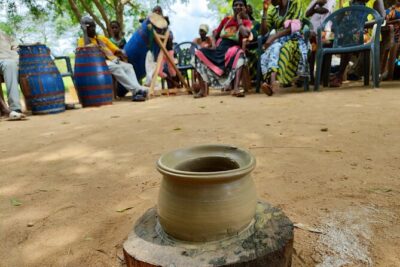
The Ancestral Naming Ceremony and Home Coming Experience
Read our review →
Naming Ceremony and Heritage Homecoming Experience for Diasporas
Read our review →
Traditional Naming Ceremony and Boat Cruise Experience
Read our review →
Kumasi Heritage Tours And Naming Ceremony In A Day
Read our review →
Traditional naming ceremony For African Diasporas in Kumasi
Read our review →
Naming Ceremony, Assin Manso Slave River and Cape Coast Castle
Read our review →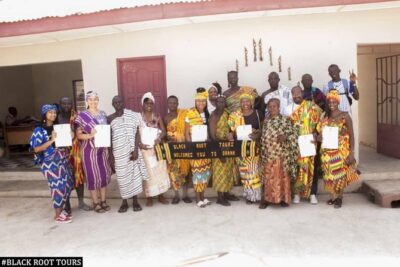
Traditional Naming Ceremony For African Americans In Kumasi
Read our review →Browse the lists this tour appears in