
Reviewed · TRADITIONAL NAMING CEREMONIES
Naming Ceremony and Heritage Homecoming Experience for Diasporas
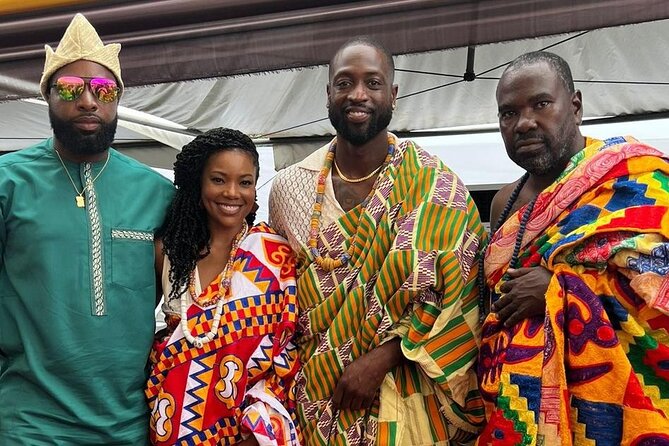
Come home through a name. This private heritage experience takes you from Kotoka Airport into a Ghanaian village or Accra community for a traditional naming ceremony, complete with drumming, dancing, and a welcome from local elders. I especially like the chance to receive both a Soul Name based on your birth date and a Ghanaian community name with its own meaning. I also like that the ceremony is led by a respected elder and includes a lasting gift, such as beads or a Ghana Kente Stole, plus a certificate of recognition.
The main point to consider is the setting. If you expect a polished indoor event in Accra, you may be surprised to find yourself at an actual rural village, which one participant found different from what they had imagined. That change is also the heart of the experience for many people, but you should book it for an authentic community welcome, not a quick staged photo opportunity.
In This Review
- Key points to know before booking
- Why a Ghanaian naming ceremony carries weight
- Leaving Accra from Kotoka Airport at 7:00 a.m.
- Entering the village and meeting the community
- The Soul Name and local Ghanaian name
- Drumming, dancing, and the public welcome
- Ghanaian cloth, beads, Kente, and your certificate
- What the elder-led ceremony feels like
- Is $265 a fair price?
- Who will get the most from this experience?
- Practical details that can shape your day
- Should you book the naming ceremony?
- FAQ
- Where does the naming ceremony begin?
- What time does the experience start?
- Where does the experience end?
- How long does the experience last?
- Is pickup available?
- Is this a private tour?
- What name will I receive?
- What information do I need to provide?
- What gifts are included?
- Can I cancel for a refund?
Key points to know before booking

- A real village setting: The ceremony may take place in a rural Ghanaian village rather than inside a city venue.
- Your birth date shapes the ceremony: You provide your date of birth to receive a Ghanaian Soul Name connected with the day you were born.
- A second local name has meaning: The community also gives you a local Ghanaian name as part of your welcome.
- Elders lead the event: A respected elder with a strong moral standing conducts the naming ceremony.
- Music and gifts make it personal: Traditional drumming, dancing, Ghanaian cloth, beads or a Kente Stole, and a certificate are part of the welcome.
- Private transport and timing matter: Pickup begins at Kotoka Airport at 7:00 a.m., and the activity returns to the same meeting point.
Why a Ghanaian naming ceremony carries weight
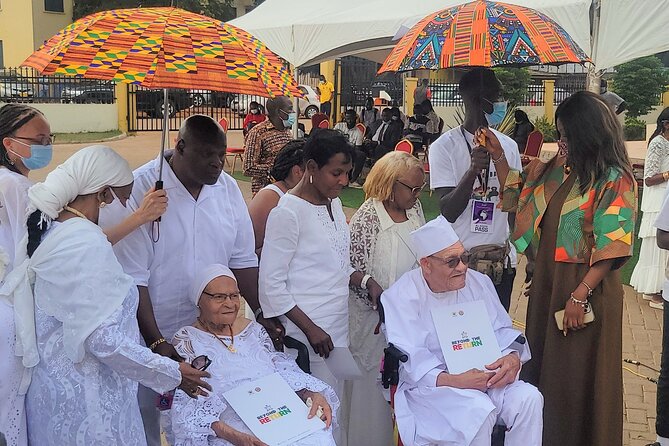
A naming ceremony is not simply a way to collect a souvenir name. In this experience, your birth date becomes part of the process. You share the day you were born, and the community uses it to identify your Soul Name, a name connected to the traditional understanding of the day of birth.
You also receive a local name with a meaning. That gives the ceremony two layers. One name connects to your birth identity, while the other welcomes you into the community taking part in the event. For people of African American or Caribbean heritage, that connection can feel especially personal. The experience is designed around returning to ancestral roots and being received by a community in Ghana.
I appreciate that the event does not stop at a spoken introduction. Your name is presented through a public ritual, music, movement, and the presence of local elders. The ceremony gives the welcome a social setting, rather than reducing it to a private exchange between you and a guide.
Still, expectations matter. The exact wording and sequence of the ceremony are not specified, so you should not arrive expecting a precise script or a formal religious service. Think of it as a cultural welcome shaped by the community and the elder leading the event.
More traditional naming ceremonies:
- The Ancestral Naming Ceremony and Home Coming Experience
★ 5.0 · 30 reviews - Traditional Naming Ceremony and Boat Cruise Experience
★ 5.0 · 15 reviews - Kumasi Heritage Tours And Naming Ceremony In A Day
★ 5.0 · 11 reviews
Leaving Accra from Kotoka Airport at 7:00 a.m.
The meeting point is Kotoka Airport in Accra, with pickup offered and the return to the same point at the end. The early 7:00 a.m. start is worth noting. A five to eight hour activity can occupy much of your morning and afternoon, so avoid scheduling a tight flight, business appointment, or another major tour afterward.
This airport meeting point may be useful if you are beginning your Ghana visit or arriving in Accra for a short stay. It gives the experience a clear starting place and removes some of the guesswork involved in finding a village or community on your own.
The exact drive time is not provided. That means the total duration can vary depending on the ceremony, the location selected, and the transport conditions. You should allow the full five to eight hours rather than planning around the shorter estimate.
Because this is a private activity, only your group participates. That can make a major difference during a personal ceremony. You are not placed with a large busload of unrelated people, and your group can take part without having to compete for attention. Group discounts are available, which may improve the value if you are traveling with family or friends.
Entering the village and meeting the community
The strongest feature here is the chance to be welcomed in an actual village setting. The experience may also take place in a community in Accra, but the supplied details and the provider’s response to one participant make clear that a rural village is a real possibility.
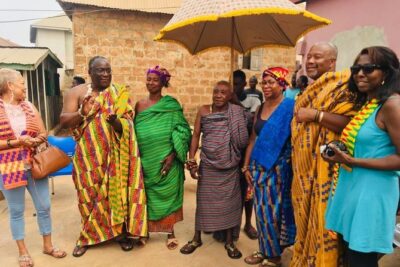
That setting changes the mood. Instead of simply arriving at a prepared room, you may meet older women, elders, and other members of the community who take part in receiving you. The provider specifically described the presence of the village’s eldest and older women as an important part of reconnecting with your roots.
This is where the experience feels most distinctive. You are not only being given a name by an individual. You are being introduced to a group, with the community itself acting as part of the welcome.
The tradeoff is comfort and predictability. A village ceremony may feel less controlled than an indoor program. The surroundings, pacing, and level of formality may differ from what you picture from the phrase naming ceremony. If your priority is a carefully staged event in central Accra, this may not suit you. If you value meeting people in their own community, the village setting is likely the reason to book.
The Soul Name and local Ghanaian name
The naming process begins with your date of birth. You provide the day you were born, and the ceremony identifies your Soul Name according to Ghanaian naming traditions.
You then receive a local name from the community, along with its meaning. This is a useful detail because it turns the name into more than a sound to remember later. You leave knowing what the name represents and why it was selected for you.
The information provided does not identify the exact naming system or list the possible names in advance. You should therefore treat the process as a personal cultural presentation rather than a name-picking exercise. The community and elder guide the process.
For people tracing family roots, the names may be the most meaningful part of the day. They offer a direct connection to Ghanaian customs and give you language to carry home. The certificate of recognition also records the occasion, which can be valuable for family gatherings, heritage work, or simply remembering the day years later.
More roots and heritage tours in Accra:
- Ghana Heritage Tours – Beyond The Return
★ 5.0 · 36 reviews - 10 Days Ghana Cultural and Heritage Trip
★ 5.0 · 31 reviews - The Homecoming Experience To Cape-coast And Elmina.
★ 5.0 · 28 reviews - Cape Coast/Elmina Slave Dungeon and Canopy Walkway Private Tour
★ 5.0 · 24 reviews
Drumming, dancing, and the public welcome
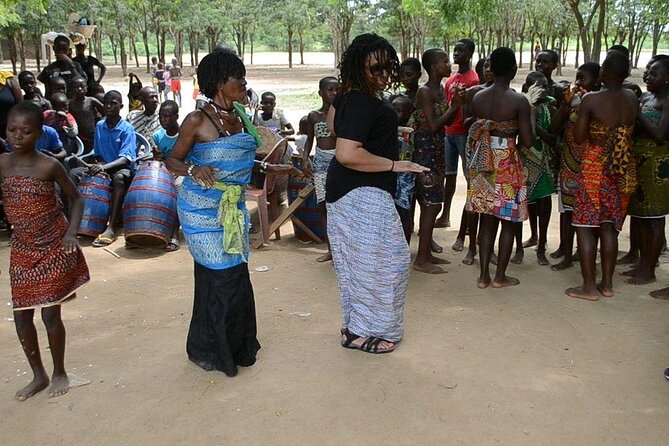
Traditional drumming and dancing accompany the ceremony. These are not minor decorations added after the serious part. They help make the naming a shared event, with sound and movement bringing the community into the welcome.
You should expect a festive atmosphere rather than a quiet appointment. One participant described the people conducting the ceremony as welcoming and festive, which matches the experience’s stated focus. The celebration gives the event warmth and makes it easier for your group to participate, even if you are unfamiliar with the customs.
The details of the music and dancing are not fixed in the information provided, so I would avoid expecting a scheduled performance with a set length. The emphasis is on the community taking part in your welcome.
That distinction matters. This is not presented as a concert or a dance show. The drumming and dancing support the naming ceremony and help place your arrival within a Ghanaian cultural setting.
Ghanaian cloth, beads, Kente, and your certificate
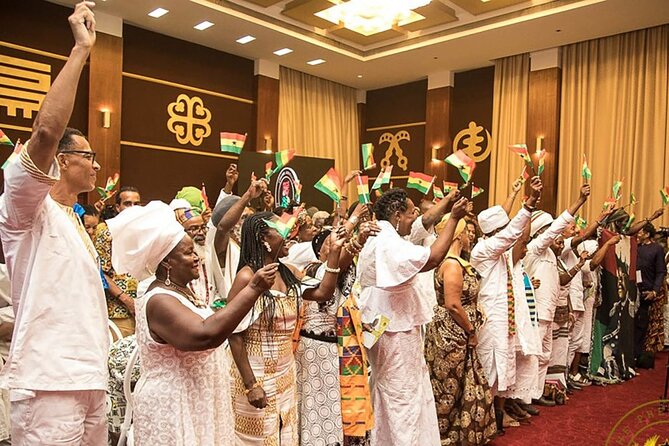
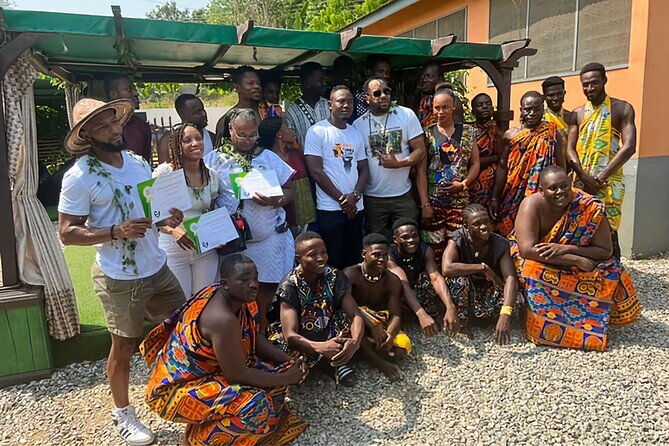
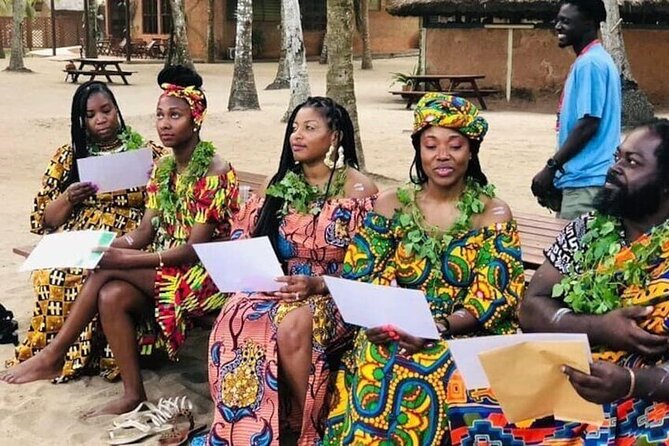
The welcome may include a gift from the community. Possible gifts include beads or a Ghana Kente Stole with Welcome to Ghana written and designed on it. You may also receive Ghanaian cloth tailored for you as part of the ceremony.
These items add a physical reminder to an event that could otherwise live only in memory. A certificate of recognition gives you another keepsake and confirms that you took part in the naming ceremony.
The materials are not guaranteed to be identical for every participant. The details indicate that the gift may vary, so you should not book solely because you want one specific item. If the Kente Stole is especially important to you, ask Kwame Tours to confirm what is included before booking.
I like the connection between the cloth and the ceremony. The textile is not simply a retail purchase made on the way back to the city. It is presented as part of your welcome into the community, which gives it greater personal meaning.
What the elder-led ceremony feels like
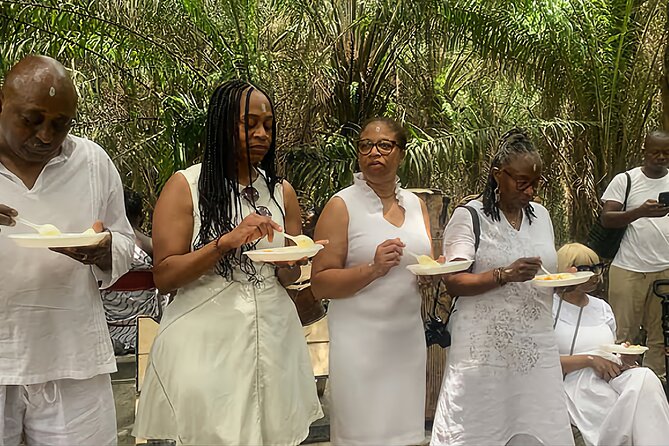
A respected elder conducts the ceremony. The elder is described as someone known for strong moral standing within the community, a detail that signals the importance of the person leading the ritual.
That role helps give the event structure and local authority. You are not receiving a name from a generic host reading from a card. The ceremony is placed in the hands of someone recognized by the community.
The available information does not provide the elder’s name or a detailed script. I would keep your questions open and allow the elder to explain the process. You may be invited to respond, receive cloth or beads, listen to the name’s meaning, and join the group in the celebration.
If you have a particular cultural, religious, or family request, it is sensible to discuss it with the provider before the day. The ceremony is traditional and community-led, so the experience may not follow the exact format you have seen in another naming event.
Is $265 a fair price?
At $265 per person, this is not a low-cost city sightseeing stop. The value depends on what you want from your time in Ghana.
The price covers a private cultural experience lasting about five to eight hours, with pickup offered from Kotoka Airport and return to the same meeting point. It also includes the naming process, elder-led ceremony, drumming, dancing, community welcome, certificate, and a gift that may include beads or Kente cloth.
For someone looking for a short, inexpensive introduction to Ghanaian culture, the cost may feel high. You might find better value elsewhere if you only want a museum visit, a city walk, or a brief performance.
For a family group or diaspora visitor who places real value on heritage and personal recognition, the price is easier to justify. You are paying for time, transport, privacy, and an event created around your identity rather than a standard sightseeing route. Group discounts can help if several people book together.
I would compare the cost with the emotional importance of the occasion. If you want a name, a community welcome, and a formal connection to Ghanaian tradition, $265 can be reasonable. If you mainly want to see rural Ghana for a few hours, this is probably not the right purchase.
Who will get the most from this experience?
This experience is best suited to people who want a direct connection with Ghanaian heritage. It has particular appeal for members of the African American and Caribbean diasporas, families returning to Ghana, and visitors who want a ceremony rather than a standard city attraction.
It can also suit a group celebrating a birthday, family reunion, or personal milestone. The private format gives your group space to share the ceremony together.
You should be comfortable with some uncertainty in the setting and schedule. The duration is approximate, and the event may take place in a rural village. Anyone who needs a tightly timed program, a guaranteed indoor venue, or a predictable performance may prefer another activity.
The experience is not limited to people with a known Ghanaian family history. The stated purpose is to welcome people back to their roots, and the ceremony is built around receiving a local name and becoming connected with the community taking part.
Practical details that can shape your day
Confirmation is received at booking, and a mobile ticket is available. Pickup is offered, with Kotoka Airport listed as the starting and ending point.
The activity begins at 7:00 a.m. and lasts approximately five to eight hours. Plan for the longer end of that range, especially if the ceremony takes place outside Accra.
Most people can participate, and service animals are allowed. The experience is near public transportation, though the provided details do not specify the route or the exact access arrangements at the village or community location.
Free cancellation is available when you cancel at least 24 hours before the start time. A cancellation or change made less than 24 hours before the start time is not accepted for a refund, and the cutoff follows local Ghana time.
The experience has an overall rating of 4.6 from 15 ratings. That suggests a strong response overall, but the small number of ratings means I would still read the description carefully and contact the provider if the setting is important to you.
Should you book the naming ceremony?
Book this if you want a personal heritage experience built around a Ghanaian name, a community welcome, and the presence of an elder. The village setting, drumming, dancing, cloth, and certificate give the day more substance than a quick photo stop.
I would be especially comfortable recommending it to diaspora visitors and families who see the ceremony as an important part of their Ghana visit. The private format and possible group discount also make sense for relatives or close friends attending together.
Think twice if you expect a formal indoor ceremony in Accra or a tightly timed program. One participant wanted something different and found the actual village setting unexpected, so ask Kwame Tours about the location before paying.
For the right person, this is less about checking off a sightseeing stop and more about being publicly received by a Ghanaian community. If that is the connection you want, the price and early start may be worth it.
FAQ
Where does the naming ceremony begin?
The experience begins at Kotoka Airport in Accra, Ghana.
What time does the experience start?
The stated start time is 7:00 a.m.
Where does the experience end?
It ends back at the same meeting point where it begins.
How long does the experience last?
The experience lasts approximately five to eight hours.
Is pickup available?
Yes, pickup is offered.
Is this a private tour?
Yes. Only your group participates in the activity.
What name will I receive?
You receive a Soul Name connected with the day of your birth and a local Ghanaian name with a meaning.
What information do I need to provide?
You provide your date of birth for the Ghanaian naming process.
What gifts are included?
The community gift may include beads or a Ghana Kente Stole with Welcome to Ghana written and designed on it. A certificate of recognition is also included.
Can I cancel for a refund?
Yes, you can cancel at least 24 hours before the experience start time for a full refund. Cancellations made less than 24 hours before the start time are not refunded.
More History Tours in Accra
- Experience the Beauty, History and the Culture Of Accra in a Day
★ 5.0 · 323 reviews - Cape Coast Historical Day Tour
★ 5.0 · 24 reviews - Full-Day Private Culture and History Tour of Accra
★ 5.0 · 23 reviews - Ghana Private Historic Tour through Castles and Nature
★ 5.0 · 18 reviews
Just added around Accra
- Experience Cape Coast Castle and Kakum National Park★ 4.5 · 3 reviews
- Experience Northern Ghana In 10-Days★ 5.0 · 3 reviews
- Discover Ghana – Wli Waterfalls, Mountain Afadjato, Monkey Sanctuary & Akosombo.★ 4.5 · 3 reviews
- Cultural Tour Of Ghana And South Africa 12 Days★ 5.0 · 3 reviews
- Accra: City Highlights Half-day Guided Tour with Transfers★ 4.1 · 3 reviews
- Accra: Half day private safari with pick up★ 3.5 · 3 reviews
- Full Day Accra Guided Tour★ 5.0 · 3 reviews
- Experience Aburi Botanical Gardens And Boti Water Falls In A Day.★ 5.0 · 3 reviews
Traditional Naming Ceremonies, compared.
Bonwire Namimg Ceremony and Kente Tourist Center
Read our review →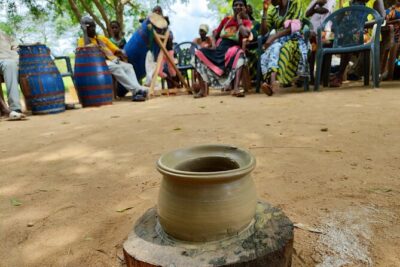
The Ancestral Naming Ceremony and Home Coming Experience
Read our review →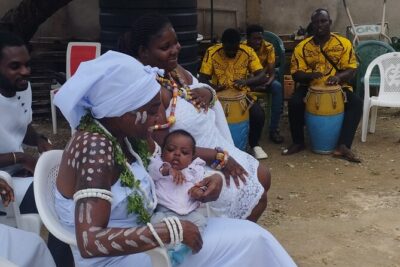
Traditional Naming Ceremony and Boat Cruise Experience
Read our review →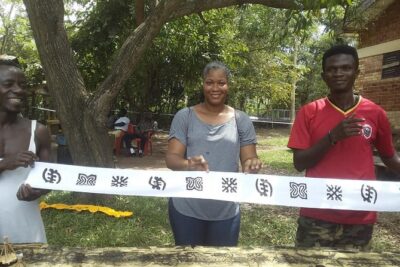
Kumasi Heritage Tours And Naming Ceremony In A Day
Read our review →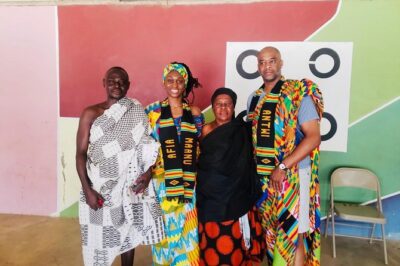
Traditional naming ceremony For African Diasporas in Kumasi
Read our review →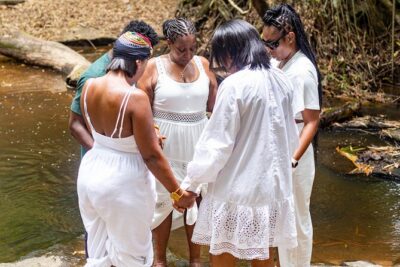
Naming Ceremony, Assin Manso Slave River and Cape Coast Castle
Read our review →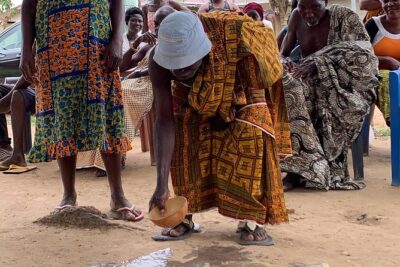
Cultural Village Tour: Traditional Naming Ceremony
Read our review →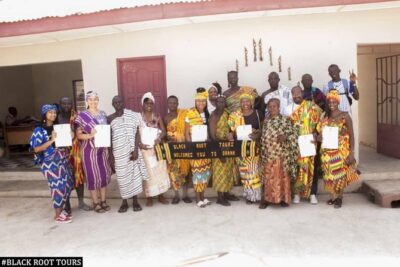
Traditional Naming Ceremony For African Americans In Kumasi
Read our review →Browse the lists this tour appears in