
Reviewed · TRADITIONAL NAMING CEREMONIES
Traditional Naming Ceremony For African Americans In Kumasi
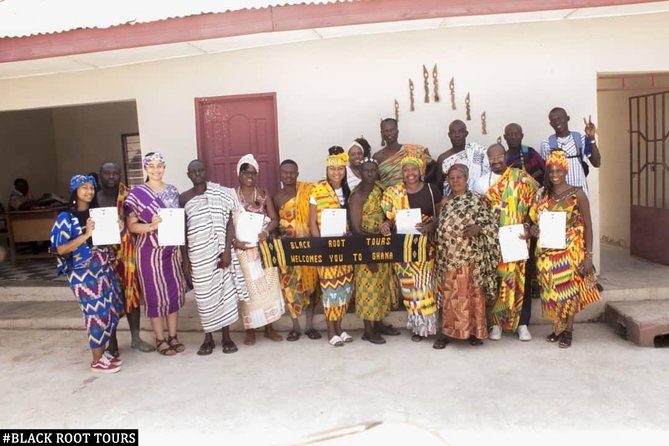
A new name can make Ghana feel personal. This four-hour private experience combines an Akan naming ceremony with visits to Ntonso Adinkra craftsmen, Adanwomase Kente weavers, and a cocoa farm. It is designed especially for African Americans who want a meaningful connection with Asante culture, not just a quick sightseeing stop. I like the personal naming rite, and I like that the ceremony comes with a woven Kente script and an official certificate.
The private vehicle and included lunch also make the half-day easier, especially when you are exploring Kumasi on a tight schedule. The main consideration is that the $180 price does not cover personal shopping or admission charges at the craft villages, so your final cost may be higher than the advertised tour price.
In This Review
- Key things to know before you book
- Why the naming ceremony matters
- Riding from Kumasi in a private vehicle
- Ntonso Adinkra cloth stamping
- Adanwomase Kente and the cocoa farm
- Receiving the Kente script and certificate
- How Maclean shapes the experience
- Is $180 a fair price?
- Who will enjoy this most?
- Timing, weather, and cancellation
- Should you book the Kumasi naming ceremony?
- FAQ
- Where does the traditional naming ceremony take place?
- What time does the tour start?
- How long does the experience last?
- Is transportation included?
- Is lunch included?
- What do I receive during the naming ceremony?
- Are admission fees and shopping included?
Key things to know before you book
- Your Akan name is selected from your birth day: The name is based on the day you were born and is presented as part of the Asante naming tradition.
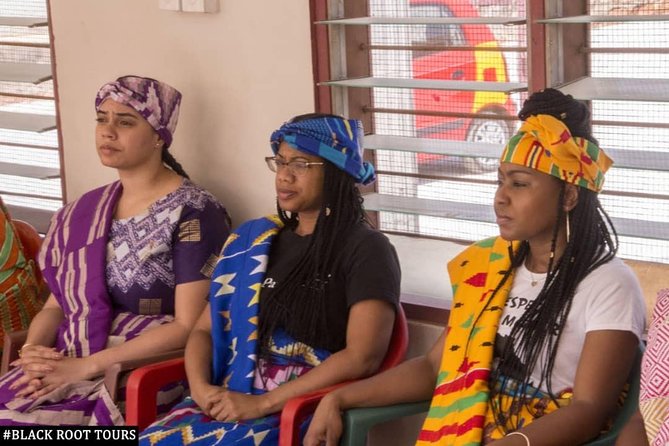
- The ceremony is the heart of the experience: You receive a new name, a woven Kente script, and a certificate to take home.
- Ntonso and Adanwomase add cultural context: You visit an Adinkra cloth stamping village, a Kente weaving village, and a cocoa farm.
- Your group has the vehicle to itself: This is a private activity, useful for families, couples, and small groups who prefer a quieter pace.
- Maclean Afful is the named guide: Past participants specifically praised Maclean for his patience, kindness, and help during the ceremony.
- Lunch and transport are included: The air-conditioned vehicle, fuel, and lunch are covered, but admission tickets and shopping are not.
Why the naming ceremony matters
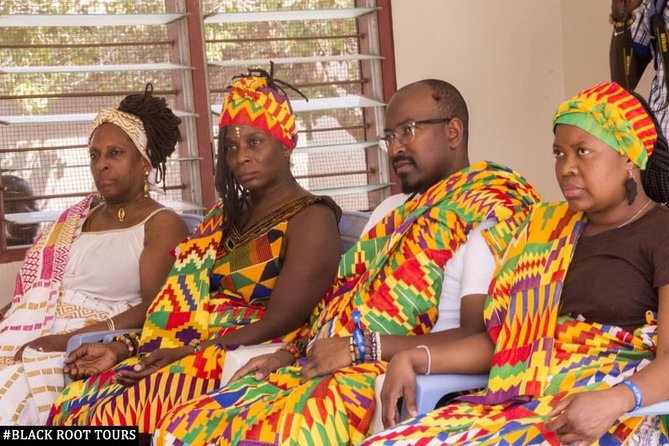
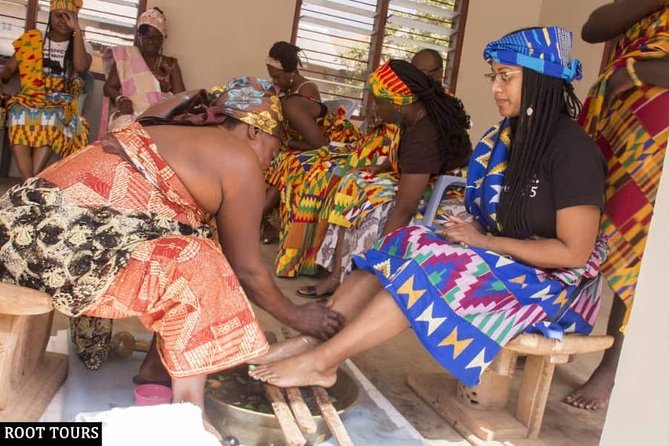
The ceremony gives this outing its purpose. You are not simply watching a cultural performance or buying a cloth souvenir. You are given a name selected according to the day you were born, following an Asante custom. For many African Americans, that personal link is the reason to choose this experience over a standard Kumasi city tour.
The information provided does not spell out every ritual step, so you should expect the exact order and presentation to depend on the local ceremony and the people taking part. What is clear is the central result: you receive an Akan name, a certificate, and a woven Kente script connected with that name.
That personal element can carry real emotional weight. One participant described being named Abena Agyemang after the chief’s late wife. You should not assume the same kind of family connection will happen for you, but the detail shows how individual the ceremony can become.
The best approach is to arrive with an open mind and a respectful attitude. This is a cultural rite, not a themed photo opportunity. If you want the name only as a novelty, the experience may feel less satisfying. If you have been thinking about ancestry, identity, and Ghana’s connection with the African diaspora, the ceremony offers a more personal setting for those questions.
More traditional naming ceremonies:
- Bonwire Namimg Ceremony and Kente Tourist Center
★ 5.0 · 40 reviews - Traditional naming ceremony For African Diasporas in Kumasi
★ 5.0 · 10 reviews - Full Day Tour with Traditional Naming Ceremony in Kumasi
★ 5.0 · 4 reviews
Riding from Kumasi in a private vehicle
The tour begins at 9:00 am and ends back at the meeting point after about four hours. Pickup is offered, and transport is in an air-conditioned vehicle with fuel included. That matters in Kumasi, where a private vehicle lets you move between separate cultural sites without arranging taxis or working out several short rides yourself.
Because the activity is private, only your group takes part. You can ask questions without competing with a large busload, and the day should feel more focused on your ceremony. Private tours also make it easier to travel with family members who may want different levels of participation.
The four-hour length is another practical advantage. You can fit it into a morning and still have part of the afternoon for Kumasi, rest, or another activity. At the same time, the schedule is fairly compact. The ceremony, two craft stops, a cocoa farm visit, lunch, and driving all share the same block of time, so you should not expect long, unhurried sessions at every location.
The starting point is listed as near public transportation, and the experience returns to the meeting point. Since pickup is offered, confirm the exact collection details when booking, particularly if you are staying outside central Kumasi.
Ntonso Adinkra cloth stamping
The first listed stop is Ntonso, known here as an Adinkra cloth stamping village. Adinkra is a Ghanaian cloth tradition built around stamped symbols and designs. The stop gives you a useful visual counterpoint to the Kente weaving later in the morning.
This is more than a quick craft shop if you take time to notice how different the two textile traditions are. Adinkra focuses on stamped motifs, while Kente is associated with woven patterns and strips. Seeing both in one short outing helps you understand that Ghanaian textiles are not one single style.
Admission is not included. That is a small but important budget detail. The tour price covers the vehicle, fuel, and lunch, but you should be prepared to pay any required entrance charge at the site. The supplied information does not give the fee, so ask for the current amount before the day begins.
Shopping is also separate. Ntonso may tempt you to buy cloth or other handmade goods, but personal purchases are specifically excluded. Bring spending money only if you want to shop, and do not confuse a purchase with the Kente script presented as part of the ceremony.
Adanwomase Kente and the cocoa farm
The second stop is Adanwomase Kente Weaving Village, paired with a cocoa farm tour. This combination gives you two strong links to Ghanaian life: a textile craft with a clear cultural role and one of the country’s best-known agricultural products.
The Kente visit is especially relevant because the ceremony includes a woven Kente script. You can see the kind of work associated with that presentation rather than receiving the textile without context. The supplied details do not promise a particular weaving demonstration or a set amount of time, so keep your expectations flexible. You will visit the village, but the exact presentation may vary.
The cocoa farm adds a rural note to the morning. Again, the available details do not describe the farm’s activities in full, so you should treat it as an included stop rather than assume a long hands-on agricultural lesson. Its value is in connecting the cultural outing with a major part of Ghana’s economy and daily work.
Admission is not included at Adanwomase either. This is the clearest extra-cost issue in the itinerary. At $180 per person, the experience is not a bargain-basement tour, so knowing that some site charges sit outside the advertised rate helps you plan honestly.
More things to do in Kumasi:
- Tour Kumasi City Like a Local
★ 4.5 · 34 reviews - Kumasi City Tour
★ 5.0 · 8 reviews - Kumasi City Tour
★ 4.5 · 7 reviews - Lake Bosomtwe Boat Cruisely and Kumasi City Tours
★ 4.5 · 6 reviews
Receiving the Kente script and certificate
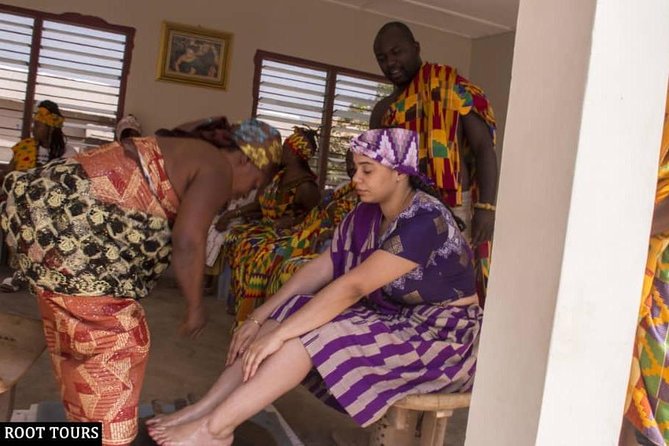
The ceremony’s keepsakes are more meaningful than ordinary merchandise. You receive a woven Kente script and a certificate bearing your new name. Those items give you something tangible to carry home, but they also record the event in a way a standard photograph cannot.
The certificate may be especially useful if you want to share the name and its connection to the day of your birth with family. The exact wording and design are not provided, so I would not book this expecting a particular official document beyond the stated certificate.
The Kente script is also worth viewing as part of the ceremony rather than treating it as a free shopping item. The experience connects it with your name and the Asante tradition. That relationship is what gives the textile its value.
Photography details are not specified. Ask your guide before taking pictures during the rite, and follow the instructions of the chief and ceremony participants. A little care here shows respect and helps you remain present during the important part of the morning.
How Maclean shapes the experience
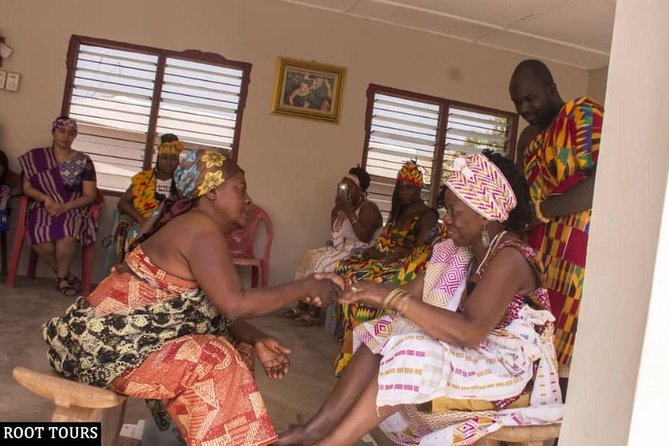
Maclean Afful is the guide named in the available information, and his role appears to be a major part of the appeal. Direct feedback describes him as kind, patient, cultured, easy to work with, and effective at guiding the naming rite. One participant called the ceremony life changing and credited Maclean with reconnecting them to their ancestors.
Those are strong endorsements, but they also point to what you should want from your guide: clear explanations, patience with an emotional moment, and help with the practical flow between the ceremony and the village visits. The experience depends on communication, so contact Maclean or Root Tour Ghana in advance if you have questions about pickup, the ceremony, or the included items.
The supplied contact information gives a phone and WhatsApp number, +233 24 730 4270, along with the email [email protected]. Use the contact details provided at booking and confirm the current information, as tour arrangements can change.
Is $180 a fair price?
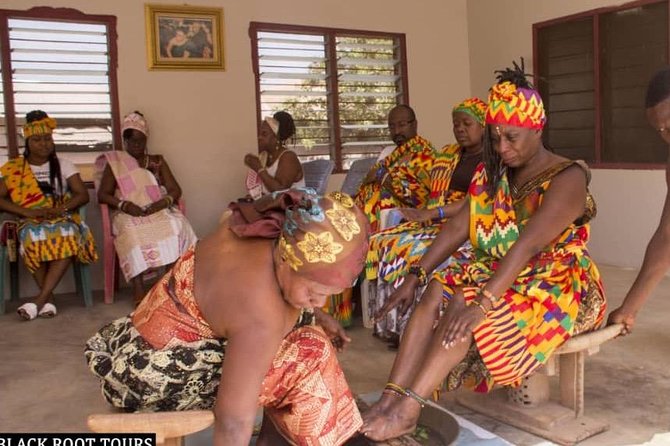
The cost is $180 per person. That is a substantial half-day price, but you are paying for more than transportation to a single attraction. The package includes a private air-conditioned vehicle, fuel, lunch, the naming ceremony, the Kente script, the certificate, and visits to three types of places: Adinkra artisans, Kente weavers, and a cocoa farm.
Private transport is a meaningful part of the value. A shared tour might lower the price, but it could also make the ceremony feel less personal. Here, only your group participates, which is important when the central activity involves your name and identity.
Lunch also removes one small decision from a busy morning. You do not need to arrange a separate meal during the four-hour outing. Still, you should budget for admission fees at Ntonso and Adanwomase, plus any personal shopping. Those extras are not included, and no amounts are given.
I would consider the price fair for someone who places high value on the ceremony and private service. It is less compelling if you mainly want a low-cost craft tour. The strongest value lies in the personal rite, not in the number of stops checked off.
Who will enjoy this most?
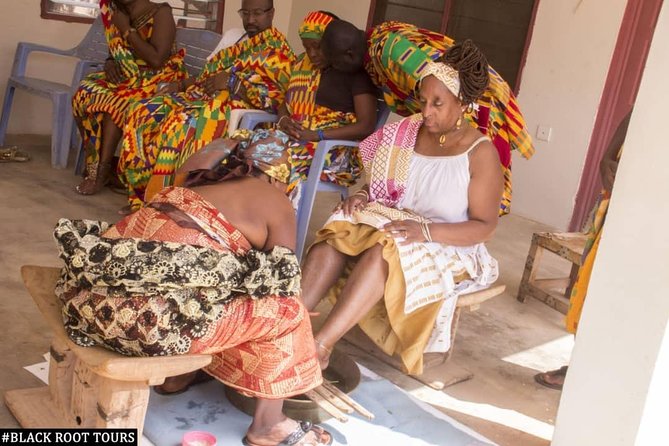
This experience is best suited to African Americans who want a direct cultural connection during a Ghana visit. It may be particularly meaningful if you are visiting Kumasi, Cape Coast, or Accra and are willing to set aside a morning for a ceremony centered on ancestry and identity.
It also fits couples, families, and small groups who want their own space. The private format means you are not sharing the ceremony with unrelated participants. Most people can participate, according to the supplied information, and the activity is near public transportation.
You may want to choose another activity if you prefer a museum-based history tour, a long textile workshop, or a full-day excursion. The program offers visits and cultural context, but it does not promise extended instruction in weaving, Adinkra production, or cocoa farming.
This is also not the right choice if you are uncomfortable with a ceremony whose details are not fully laid out in advance. Some people prefer a tightly scripted attraction. Here, the human and personal side appears to matter more than a fixed show schedule.
Timing, weather, and cancellation
The experience starts at 9:00 am and lasts approximately four hours. It ends at the same meeting point, and pickup is offered. Confirmation is provided at booking, so check the start time and pickup arrangement carefully before the day.
Free cancellation is available if you cancel at least 24 hours before the start time. A cancellation made less than 24 hours in advance is not refunded, and changes inside that period are not accepted. The cutoff follows local Ghana time.
Good weather is required. If poor weather causes the operator to cancel, you are offered another date or a full refund. Since the outing includes village and farm visits, this policy is worth noting when planning around a short stay.
Should you book the Kumasi naming ceremony?
Book it if the ceremony is your main reason for going. The Akan name, Kente script, and certificate create a personal experience that goes beyond sightseeing, while Maclean’s patient guidance appears to be a real strength.
I would also book it if you value private transport, included lunch, and a morning that links the naming rite with Adinkra, Kente, and cocoa. Just allow extra money for admission and shopping, and confirm the ceremony details and pickup before you leave.
Skip it if your priority is the cheapest possible Kumasi tour or a detailed, hands-on craft class. For the right person, though, this can become the emotional center of a Ghana trip, not simply another stop on the schedule.
FAQ
Where does the traditional naming ceremony take place?
The experience is based in Kumasi, Ghana. It is designed for African Americans visiting Kumasi, Cape Coast, or Accra.
What time does the tour start?
The activity starts at 9:00 am.
How long does the experience last?
The experience lasts approximately four hours and ends back at the meeting point.
Is transportation included?
Yes. An air-conditioned vehicle and fuel surcharge are included, and pickup is offered.
Is lunch included?
Yes. Lunch is included in the tour price.
What do I receive during the naming ceremony?
You are given a new name selected according to the day you were born from the Asante culture. A woven Kente script and a certificate with your name are also presented.
Are admission fees and shopping included?
No. Admission tickets at the Ntonso and Adanwomase stops are not included, and personal shopping is also excluded.
Just added around Kumasi
- Kumasi: City Tour★ 5.0 · 3 reviews
- Discover kumasi Tours★ 5.0 · 3 reviews
- Kumasi City Tour★ 4.5 · 3 reviews
- Kumasi Culture and Heritage Tours★ 4.5 · 3 reviews
- Full Day Tour with Traditional Naming Ceremony in Kumasi★ 5.0 · 4 reviews
- Lake Bosomtwe Boat Cruisely and Kumasi City Tours★ 4.5 · 6 reviews
- One day tour at Kumasi★ 5.0 · 6 reviews
- Kumasi City Tour★ 4.5 · 7 reviews
Traditional Naming Ceremonies, compared.
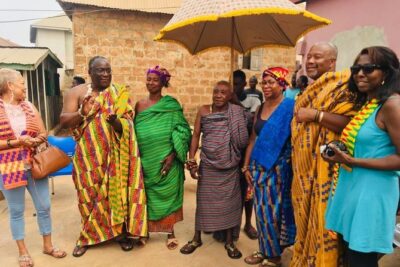
Bonwire Namimg Ceremony and Kente Tourist Center
Read our review →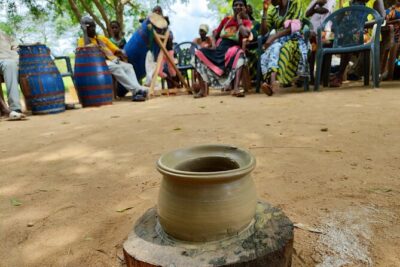
The Ancestral Naming Ceremony and Home Coming Experience
Read our review →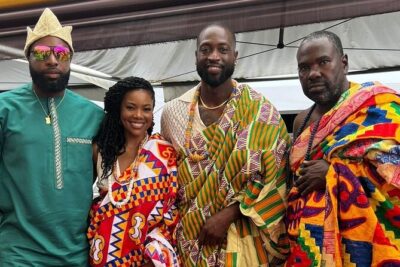
Naming Ceremony and Heritage Homecoming Experience for Diasporas
Read our review →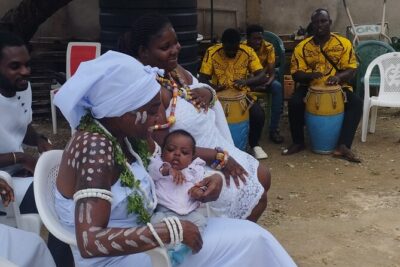
Traditional Naming Ceremony and Boat Cruise Experience
Read our review →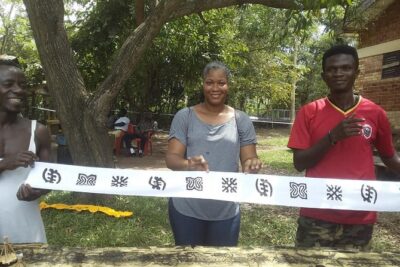
Kumasi Heritage Tours And Naming Ceremony In A Day
Read our review →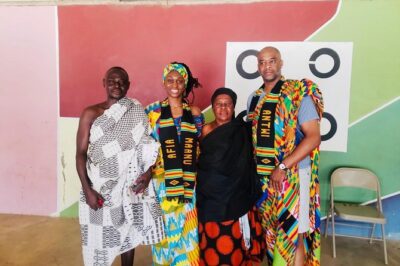
Traditional naming ceremony For African Diasporas in Kumasi
Read our review →
Naming Ceremony, Assin Manso Slave River and Cape Coast Castle
Read our review →
Cultural Village Tour: Traditional Naming Ceremony
Read our review →Browse the lists this tour appears in