
Reviewed · HISTORICAL TOURS
Full-Day Tour to Ashanti Region, Kumasi and Ghanaian History
Kumasi tells Ghana’s story in living color. This long private trip from Accra combines Ashanti royal history, working craft villages, busy markets, and Lake Bosomtwe, giving you far more than a quick city visit. I especially like the chance to watch Kente cloth made by hand and the practical help with bargaining at Kejetia Market. The guides also make a real effort to support older visitors and adjust the day to suit the group.
The main drawback is the distance. Kumasi is about six hours from Accra by road, so a 12 to 16-hour day means much of your time is spent in the vehicle. You need an early start, a good tolerance for long road journeys, and realistic expectations about how much can fit into one day.
In This Review
- Key points to know before booking
- Why this Kumasi trip takes a full day
- Manhyia Palace Museum and the Ashanti royal story
- The Okomfo Anokye Sword Site and the birth of the kingdom
- Kejetia Market: two hours of useful chaos
- Handmade crafts at the Centre for National Culture
- Bonwire and the careful work of Kente weaving
- Lake Bosomtwe brings a change of pace
- Guides, drivers, and the value of local help
- Is $280 a fair price?
- Who should book this experience?
- Should you book the Kumasi day trip?
- FAQ
- Where does the tour start?
- Where does the tour end?
- How long does the tour last?
- How far is Kumasi from Accra?
- Is transportation included?
- Is this a private tour?
- Is admission included at Manhyia Palace Museum?
- Is admission included at the Okomfo Anokye Sword Site?
- Do the boat ride and horse ride at Lake Bosomtwe cost extra?
- Can I cancel for a full refund?
Key points to know before booking
- A six-hour road journey each way makes this an ambitious day trip rather than a relaxed city tour.
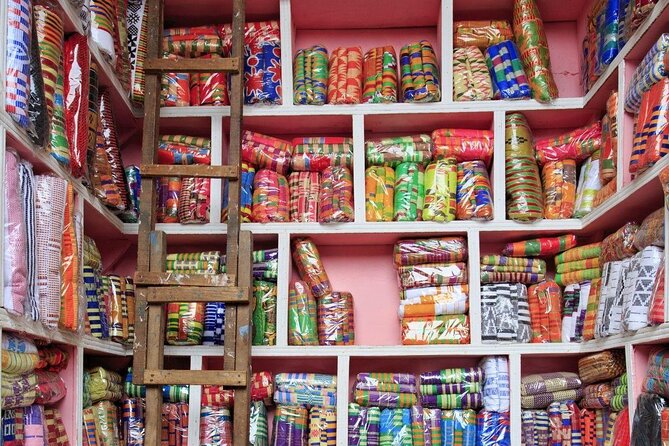
- Bonwire Kente Village shows how Akan Kente cloth is woven from the first threads to the finished design.
- Kejetia Market gives you two hours to shop for fabrics, food, jewelry, pottery, soaps, and other local goods.
- Manhyia Palace Museum and the Okomfo Anokye Sword Site explain the origins and royal traditions of the Ashanti Kingdom.
- Lake Bosomtwe adds a quieter natural stop, with optional boat rides, horse riding, swimming, and rest.
- Private touring and local support mean your group can receive help with timing, mobility, shopping, and transport arrangements.
Why this Kumasi trip takes a full day
Kumasi lies far inland from Accra, and the road journey shapes the entire experience. The tour starts at Kotoka Airport in Accra, with pickup offered, and returns to the same meeting point. The listed duration is about 12 to 16 hours, with the remaining hours used for travel between locations.
That timing calls for an early departure. One group chose a 5:30 a.m. start, and the driver arrived at the building at 5:00 a.m. so they could get moving promptly. That kind of early start matters here. Leaving late would reduce the time available in Kumasi and could make an already packed schedule feel hurried.
I like that this is a private activity. Only your group participates, so you can ask questions, request help in the market, and discuss mobility needs more easily than on a large coach tour. The tour team has also planned local arrangements for groups with seniors, which can make a major difference on a long day.
Still, you should not treat this as a leisurely outing. You will visit several important places, but the day has a clear road-trip character. If you want several days in Kumasi, this tour works best as an introduction rather than a complete visit.
More history tours in Accra:
- Experience the Beauty, History and the Culture Of Accra in a Day
★ 5.0 · 323 reviews - Ghana Heritage Tours – Beyond The Return
★ 5.0 · 36 reviews - 10 Days Ghana Cultural and Heritage Trip
★ 5.0 · 31 reviews
Manhyia Palace Museum and the Ashanti royal story
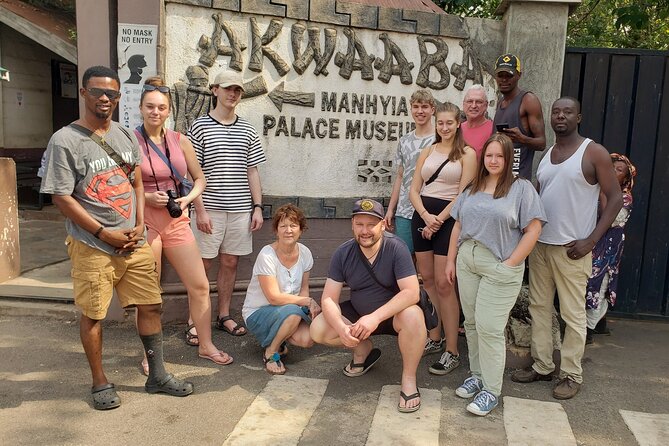
Manhyia Palace Museum is a natural place to begin your Kumasi sightseeing. The museum focuses on Ashanti culture, the Asante royal family, and Ghana’s past before and during British colonial rule.
You can expect about one hour here, with admission included. Video presentations and historic objects help explain the role of the Ashanti Kingdom and its rulers. The museum is not simply a collection of old items. It gives you a framework for understanding the palace, the sword site, the crafts, and the traditions you encounter later in the day.
I recommend paying close attention to the guide’s explanation rather than rushing through the displays. The value of the stop is the connection between the objects and the wider story of the Asante people. Without that context, later visits to the market or craft villages could feel like isolated attractions.
The one-hour visit is useful but limited. If royal history is your main interest, you may wish you had more time for questions and exhibits. On a day that already includes a long drive, though, this brief introduction keeps the schedule moving.
The Okomfo Anokye Sword Site and the birth of the kingdom
The Okomfo Anokye Sword Site is one of the most unusual stops in Kumasi. An ancient sword, said to be more than 300 years old, remains wedged in rock on the grounds of Komfo Anokye Teaching Hospital.
The site is tied to Okomfo Anokye, a major spiritual figure in Asante history. The story of the sword is linked to the founding of the Ashanti Kingdom, so this stop adds a strong sense of place to the historical account you began at Manhyia Palace Museum.
You have about an hour here, with admission included. The physical landmark is modest, but its meaning is large. This is a good example of why a skilled local guide matters. The sword itself does not explain its importance. The stories surrounding it do.
Expect a historical site rather than a major architectural attraction. You will not spend the hour wandering through a large complex. Instead, the stop works through explanation, symbolism, and the connection between spiritual tradition and political power.
Kejetia Market: two hours of useful chaos
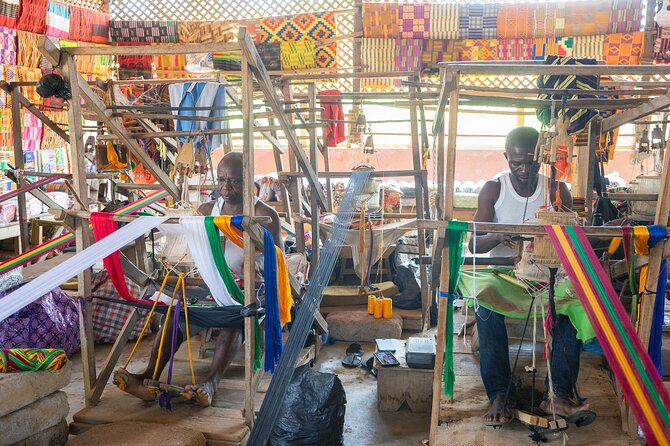
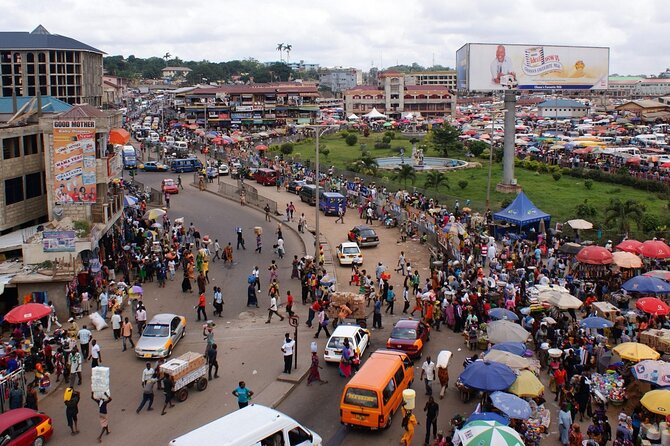
Kejetia Market is one of the biggest single markets in West Africa, and two hours gives you enough time to get a taste of its scale. The market is divided into sections, with food, fabrics, footwear, jewelry, gold, pottery, household goods, oils, soaps, spices, and handmade items all found in different areas.
This is not a tidy row of souvenir stalls. It is a working market where people shop, sell, carry goods, and move quickly. You may find the size confusing at first, which is why your guide’s local knowledge is useful. Tell the guide what interests you before entering. If you want beads, fabric, spices, or handmade objects, that information can save time.
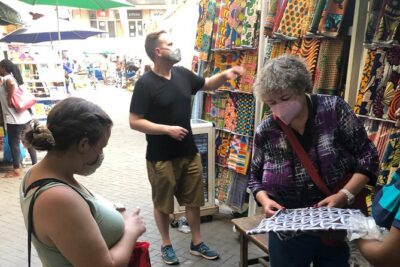
The best part for many people will be the chance to shop with help. One guide, Daniel, received particular praise for checking what his group wanted and negotiating prices. Bargaining is part of the experience, but it is easier and more respectful when you understand what a fair price might be and when your guide can help with the conversation.
I would set a budget before arriving. The market offers a lot, and it is easy to buy more than planned. Also keep your schedule in mind. Two hours can pass quickly, especially if you want to explore more than one section.
Kejetia may be the most exciting stop for anyone who wants to see daily life rather than only formal museums. It can also be the most tiring. The crowds, size, and constant movement are part of the point, but they are not ideal for someone who wants a quiet shopping experience.
A few more Accra trips worth weighing up
- Cape Coast ,Elmina Castle and Kakum Full-Day Tour
★ 5.0 · 62 reviews - Full-Day Accra Safari and Boat Cruise Private Tour
★ 5.0 · 32 reviews - Full-Day Private Culture and History Tour of Accra
★ 5.0 · 23 reviews - Private Full-Day Ghanaian Delicacy and Dessert Tour in Accra
★ 5.0 · 13 reviews
Handmade crafts at the Centre for National Culture

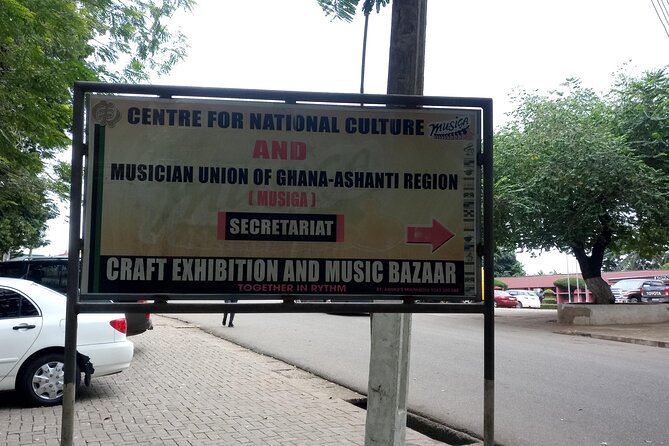
The Centre for National Culture offers a calmer look at local arts. At the Craft Centre, you can watch artisans work with traditional methods to produce Kente cloth, brass goods, pottery, and other handmade items.
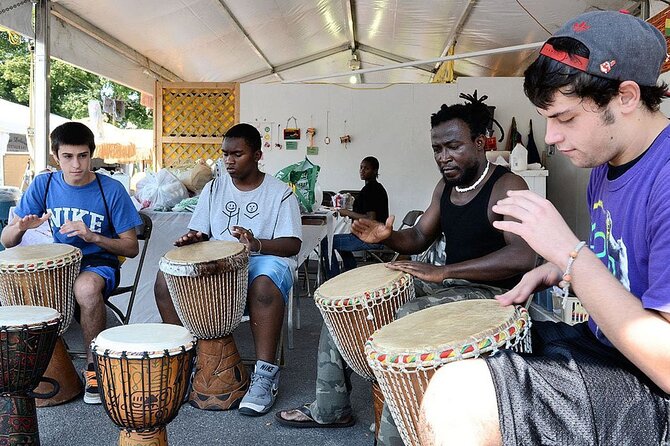
You may also have the chance to learn how to play local drums. The neighboring gift shop sells crafts, and the guide can help with negotiation. That makes this stop useful if you want souvenirs but prefer a more focused setting than Kejetia Market.
I like the contrast between the two shopping stops. Kejetia shows the scale and energy of commerce, while the Centre for National Culture lets you look more closely at the work itself. You can compare prices, styles, and materials rather than buying the first item you see.
Admission to the centre is free, though purchases cost extra. Use this stop to inspect the quality of a piece and ask how it was made. A handmade item has more meaning when you know the process behind it.
Bonwire and the careful work of Kente weaving
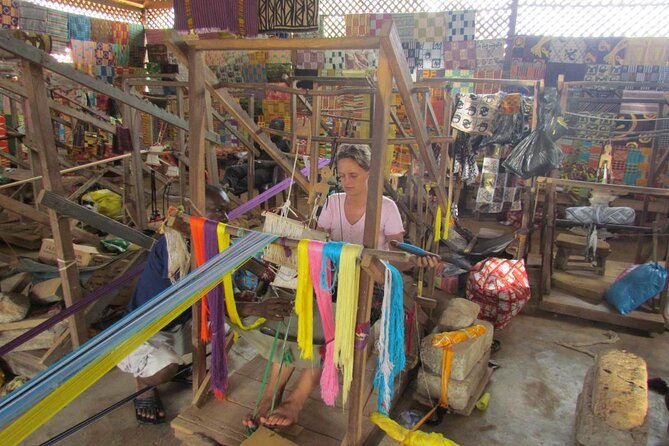
Bonwire is known as the home of Akan Kente cloth, and the weaving demonstration is one of the strongest parts of the day. Local tradition connects the origins of Kente weaving to two friends who watched a spider make its web and copied the method.
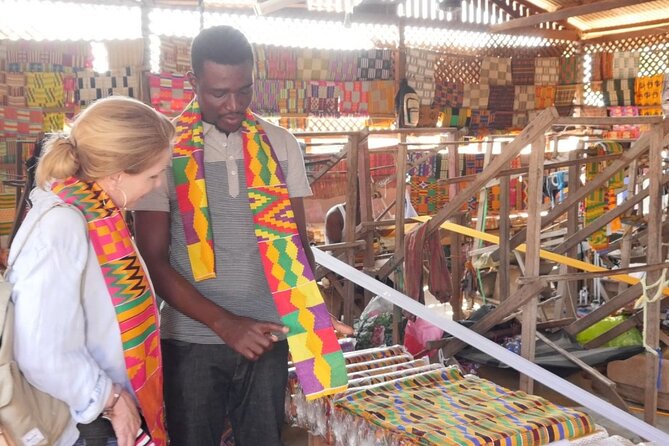
At Bonwire Kente Weaving Centre, you can see how the cloth is produced from start to finish. The process gives you a better understanding of why Kente can cost more than a simple printed fabric. The patterns require time, skill, and careful work on a narrow loom.
You will have about two hours here, with admission included. That is enough time to watch the weaving, ask questions, and consider buying a piece. I suggest looking closely at the patterns and asking about the difference between traditionally woven cloth and printed designs before you shop.
The tour description also allows for a visit to Adanwomase Kente Village instead of Bonwire, and the wider experience includes Ntonso Adinkra Village in some arrangements. Ntonso is described as the only place in Ghana where traditional Adinkra is made locally from scratch. There, you can make Adinkra banners and clothing of your choice.
Because the exact craft village may depend on the day’s arrangements, confirm before departure which location is included. That is especially important if learning Adinkra printing is your main reason for booking. Bonwire focuses on weaving, while Ntonso focuses on Adinkra symbols, stamps, and cloth production.
Lake Bosomtwe brings a change of pace
After museums, markets, and workshops, Lake Bosomtwe offers a different mood. It is Ghana’s only natural lake and is surrounded by rainforest. The stop is listed for about two hours, with no admission fee.
The lake can be a welcome place to rest after so much movement. From the road or surrounding high ground, you may see broad views toward Kumasi and the nearby villages. The itinerary also notes optional activities, including a boat cruise for an extra fee and horse riding through the forest and around seven villages at a nearby ranch.
Swimming and beach relaxation are also possible, so bring a swimsuit if you want to use the water. These activities are optional and cost extra, which means you should ask about pricing and available time before committing. On a long return journey, it may be wiser to rest by the lake than to add another activity.
Lake Bosomtwe is valuable because it prevents the tour from becoming one long sequence of indoor exhibits and shopping stops. At the same time, its place in the schedule may vary. With six hours of road travel and several Kumasi visits, the day may not leave much time for a slow lakeside stay.
Guides, drivers, and the value of local help
The tour’s strongest feature is its human support. The team includes guides and drivers who stay in contact about pickup details and work with local contacts in Kumasi. Kwame, Daniel, James, Mike, and Joseph are names connected with the guiding and driving arrangements described for different departures.
Daniel was praised for explaining how past events shaped Ghanaian and Kumasi culture, while also checking that the group understood. His help with bargaining is especially useful at Kejetia and the craft centres.
James contacted one group the day before pickup and arrived early for the 5:30 a.m. departure. That sort of basic reliability matters when your day depends on covering a long distance. Another group appreciated the planning given to older people with mobility concerns.
The exact guide assigned to you may differ, so do not assume you will have Daniel or any other named team member. The useful point is that this tour depends on local coordination. The guide is not just there to point out buildings. You need help with stories, directions, shopping, timing, and the practical details of moving through Kumasi.
Is $280 a fair price?
At $280 per person, this is not a cheap excursion. The price needs to be judged against what it includes: private transportation from Accra, a full day of guiding, admission to several listed sites, local arrangements, and the chance to cover Kumasi in one day.
If you are traveling alone, the cost is harder to justify, especially since the tour information has at times indicated a four-person minimum. However, one solo customer was still accommodated, so it is worth confirming the current arrangement before booking.
For a private group, the value improves. You are paying for a long round-trip drive, not only for entrance tickets. Group discounts are offered, and a larger party may find the cost more reasonable. The tour can also save you the trouble of arranging separate transport, guides, village visits, and market support.
Admission to the Centre for National Culture and Lake Bosomtwe is free, while the boat ride and horse ride cost extra. Budget separately for shopping, meals if not otherwise arranged, and optional activities. The price is strongest for people with limited time in Ghana who want a broad introduction to Ashanti culture in one demanding day.
Who should book this experience?
I would recommend it to you if you have only a short stay in Accra but want to see more of Ghana. It suits people interested in royal history, traditional crafts, markets, photography, and cultural learning. Families and groups with older members may also appreciate the private format and the guide’s ability to plan around mobility needs.
It is less suitable if you dislike early starts, long drives, hot markets, or a tightly packed schedule. It is also not the best choice if you want a slow, detailed exploration of Kumasi. In that case, staying overnight would give you more breathing room.
Wear comfortable clothing and shoes. Bring water, sun protection, spending money, and a swimsuit if you might swim at Lake Bosomtwe. Ask ahead about the craft village, the start time, included meals, and the cost of optional lake activities.
Should you book the Kumasi day trip?
Book this tour if you want maximum cultural variety in one day and accept that the road from Accra will take much of your energy. The combination of Manhyia Palace Museum, the Okomfo Anokye Sword Site, Kejetia Market, Kente weaving, and Lake Bosomtwe gives you a broad picture of the region.
I would book it as a first look at Kumasi, not as a relaxed replacement for an overnight stay. The strongest reasons to choose it are the private setup, hands-on craft opportunities, and local help with history and bargaining. If those matter more to you than comfort and spare time, the $280 price can make sense.
FAQ
Where does the tour start?
The tour starts at Kotoka Airport in Accra, Ghana.
Where does the tour end?
The activity ends back at the meeting point in Accra.
How long does the tour last?
The tour lasts approximately 12 to 16 hours, including travel between Accra and the various sites.
How far is Kumasi from Accra?
Kumasi is about a six-hour drive from Accra, according to the tour information.
Is transportation included?
Pickup is offered, and the tour includes the road journey between Accra and Kumasi as part of the private activity.
Is this a private tour?
Yes. Only your group participates in the activity.
Is admission included at Manhyia Palace Museum?
Yes. Admission to Manhyia Palace Museum is included.
Is admission included at the Okomfo Anokye Sword Site?
Yes. Admission to the Okomfo Anokye Sword Site is included.
Do the boat ride and horse ride at Lake Bosomtwe cost extra?
Yes. The boat cruise and horse ride are optional activities with additional fees.
Can I cancel for a full refund?
You can cancel up to 24 hours before the experience starts for a full refund. Cancellations or changes made less than 24 hours before the start time are not accepted for a refund.
Just added around Accra
- Experience Cape Coast Castle and Kakum National Park★ 4.5 · 3 reviews
- Experience Northern Ghana In 10-Days★ 5.0 · 3 reviews
- Discover Ghana – Wli Waterfalls, Mountain Afadjato, Monkey Sanctuary & Akosombo.★ 4.5 · 3 reviews
- Cultural Tour Of Ghana And South Africa 12 Days★ 5.0 · 3 reviews
- Accra: City Highlights Half-day Guided Tour with Transfers★ 4.1 · 3 reviews
- Accra: Half day private safari with pick up★ 3.5 · 3 reviews
- Full Day Accra Guided Tour★ 5.0 · 3 reviews
- Experience Aburi Botanical Gardens And Boti Water Falls In A Day.★ 5.0 · 3 reviews
Historical Tours, compared.

Experience the Beauty, History and the Culture Of Accra in a Day
Read our review →
Full-Day Private Culture and History Tour of Accra
Read our review →
Ghana Private Historic Tour through Castles and Nature
Read our review →
7-Day Private Cultural and Heritage Tour in Ghana
Read our review →
The Historic Cape Coast and Elmina Tour (The Land of History).
Read our review →Browse the lists this tour appears in