
Reviewed · CITY TOURS
Ghana City 2-day Tour
History reaches the present here. This private two-day tour links Assin Manso and Cape Coast Castle with Accra’s James Town and Ussher Fort, giving you a clear route through major sites tied to slavery, coastal trade, and local life. I like the focused design: day one takes you to the Central Region, while day two stays in Accra. I also like the private format, which gives your group of up to four a more personal pace.
The tour includes hotel pickup and admission fees, which makes planning easier. Guide Isaac has earned praise for his informed guiding and for taking guests to the places they most wanted to see. The main consideration is emotional weight: the slave trade sites tell painful stories, and the two days are tightly packed with about 13 hours of listed visits.
In This Review
- Key points to know before booking
- Why this two-day route works
- Assin Manso and the Last Bath
- Cape Coast Castle and the Gate of No Return
- James Town Lighthouse in Accra
- Ussher Fort and Museum
- What the private format adds
- The guide can shape the experience
- Who should book this Ghana tour?
- Should you book it?
- FAQ
- Where does the Ghana City 2-day Tour take place?
- How long does the tour last?
- How much does the tour cost?
- Is hotel pickup available?
- Is this a private tour?
- What is included at Assin Manso?
- Is Cape Coast Castle a UNESCO site?
- What can you see at James Town Lighthouse?
- When was Ussher Fort built?
- Can I cancel for a full refund?
Key points to know before booking
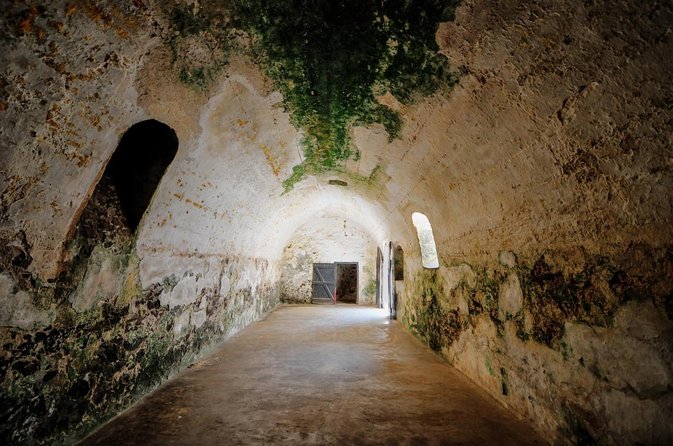
- Assin Manso begins the historical journey: You visit the Ancestral Slave River Park, the Slave River, and the Last Bath, where captured Africans were brought before being forced onward.
- Cape Coast Castle is the central visit: This UNESCO World Heritage Site presents the final stages of the transatlantic slave trade from a Ghanaian coastal fort.
- James Town offers a local Accra setting: Fishing, family ties, the coast, and the James Town Lighthouse help place the city’s past in a living neighborhood.
- Ussher Fort adds a second Accra viewpoint: The Dutch-built fort, later restored as a museum, broadens the story beyond Cape Coast.
- The private price works best for a small group: At $307.70 for up to four people, the full cost is about $76.93 each if four people share it.
- The schedule needs emotional and physical stamina: Each day has several hours of touring, and the subject matter is not light sightseeing.
Why this two-day route works
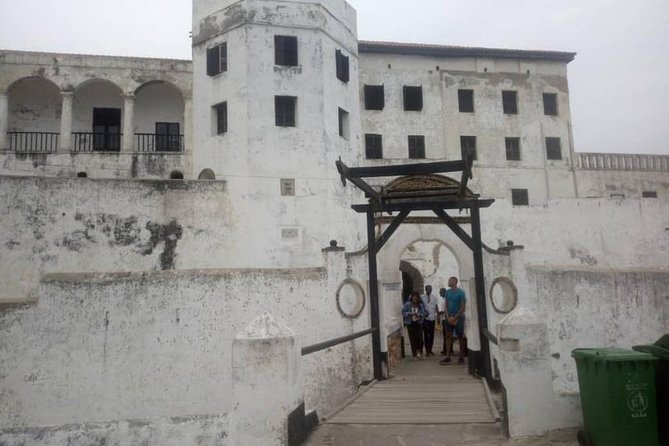
Many Accra tours stay within the city. This one gives you a wider view by pairing Accra with the Central Region, where the physical sites connected to forced removal and shipment remain visible.
I like the order. Assin Manso comes first, then Cape Coast Castle. That sequence follows part of the historical path from inland movement toward the coast, rather than presenting disconnected monuments. On the second day, you return to Accra’s coastal neighborhoods and forts, where the same history shaped the city.
The tour is private, so only your group participates. That matters at places where you may want to pause, ask questions, or take a quiet moment. It also means you are not working around a large group’s pace. Still, a private tour does not make the subject matter easier. Give yourself room to process what you see.
The listed schedule includes four hours at Assin Manso, three hours at Cape Coast Castle, three hours at James Town Lighthouse, and three hours at Ussher Fort and Museum. Those are substantial visits, not quick photo stops. The total does not include every transfer detail, so you should keep both days open rather than plan another major activity around them.
A few more Accra trips worth weighing up
- 2-Day Private Tour to the Mount Afadjato and Wli Waterfalls
★ 5.0 · 17 reviews - 2Days private explore volta region
★ 5.0 · 4 reviews - 2 Days (1 night) Elephants Safari at Mole Park with Round – trip flights
★ 5.0 · 4 reviews
Assin Manso and the Last Bath
Assin Manso Ancestral Slave River Park is the starting point for day one. The site focuses on the Slave River and the Last Bath, parts of a forced route that led captured Africans toward the coast and eventual shipment across the Atlantic.
The value of this stop is its direct connection to the movement of enslaved people. You are not simply looking at an old building. You are being asked to consider the stages of a system that operated from the 16th through the 19th centuries.
The four-hour visit gives the guide time to explain the setting and its place in the wider slave trade. That extra time is useful because the site requires context. Without explanation, a river and memorial area could be easy to pass through. With a guide, the location becomes part of a human story about separation, violence, and loss.
This is a sober beginning, and that is appropriate. I would not schedule a party or carefree outing immediately afterward. The route is designed for people who want to understand Ghana’s past, not for anyone seeking only light sightseeing.
Admission is included, so you do not need to arrange a separate ticket for this stop. Since hotel transfers are included each day, you also avoid the work of arranging your own transport between Accra and the Central Region.
Cape Coast Castle and the Gate of No Return
Cape Coast Castle is the best-known stop on the first day and the tour’s main historical site. The castle is a UNESCO World Heritage Site and was visited by President Obama in 2009, details that reflect its international importance.
The fort’s role in the transatlantic slave trade is the focus here. Captured Africans were held in the castle before being sent across the Atlantic, and the site’s rooms, artifacts, and remaining structures help explain how that process worked.
The phrase Gate of No Return refers to the departure point toward the Atlantic and the ships that carried enslaved people to the Americas. The language is stark, but the place calls for plain speaking. You will encounter accounts of the final moments before forced removal from Africa, along with evidence of the conditions inside the castle.
Three hours is a sensible amount of time for Cape Coast Castle. A much shorter visit could reduce the castle to a few photographs and a quick walk through its courtyards. Here, you have time to listen, examine historical remains, and ask your guide about details that are difficult to absorb at first glance.
I like that Cape Coast follows Assin Manso. The first stop introduces the inland route and the Last Bath. Cape Coast then shows the coastal stage of that journey. Together, they form a stronger picture than either site would provide alone.
You should expect this portion to be emotionally difficult. The tour does not soften the subject with unrelated attractions. That focus is its strength, but it may not suit someone who wants a relaxed day of general sightseeing.
James Town Lighthouse in Accra
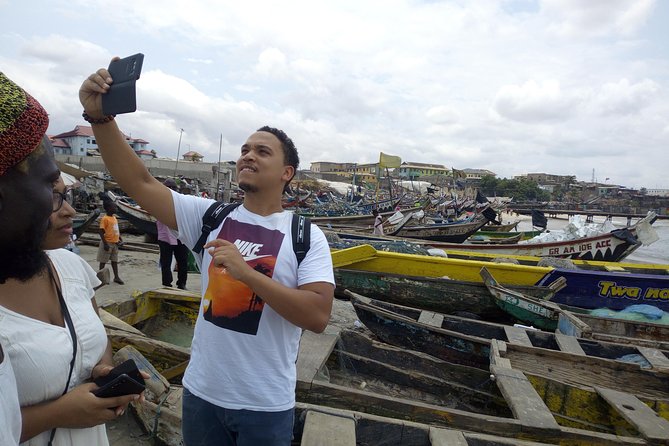
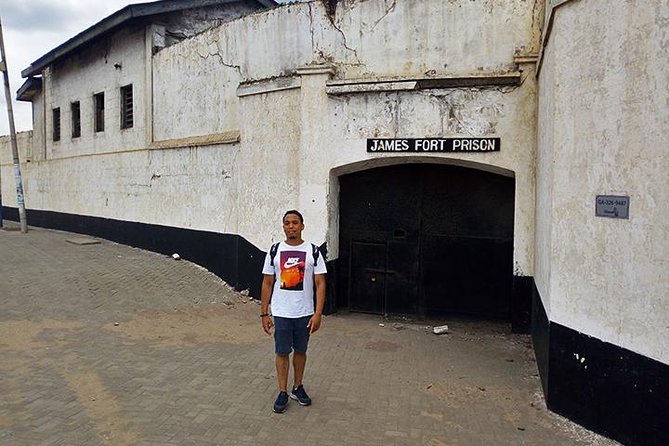
Day two shifts back to Accra and begins in James Town, one of the city’s historic coastal districts. Fishing remains the main occupation described for the area, and the neighborhood is also known for close family and community ties.
James Town helps you see history in a living setting. The fortifications and lighthouse are not isolated museum pieces placed far from daily life. They are part of a coastal district shaped by the sea, fishing, trade, and the long effects of colonial rule and the slave trade.
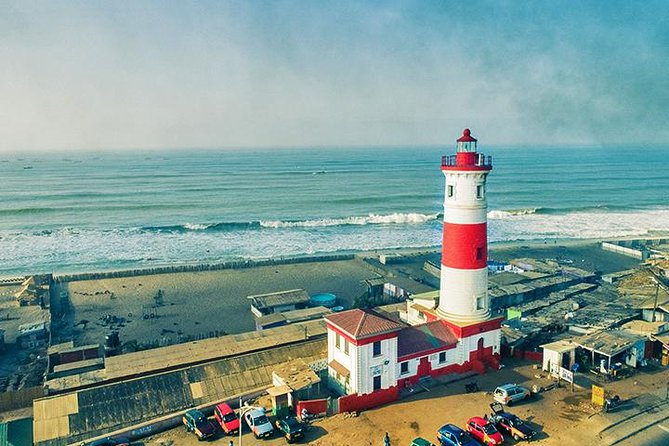
The James Town Lighthouse was built as a navigation aid for ships. The present 28-meter structure dates from the 1930s and replaced an earlier lighthouse built in 1871. It consists of a stone tower with a lantern and gallery, attached to a keeper’s house.
The lighthouse is described as a simple, working historical site rather than a polished tourist attraction. You should not expect gift shops or a large ticket complex. Instead, the draw is the building itself and the panoramic view available from the top of its spiral staircase.
That detail matters. The climb is part of the visit, and the reward is a wider look over James Town and the coast. If you prefer fully passive sightseeing, this may feel less convenient than a standard museum. If you like places with a strong sense of place, the lack of heavy commercial staging is a plus.
The three-hour allocation also leaves room for the guide to explain James Town’s role. The lighthouse alone is not the whole story. Its importance comes from the district around it, the sea traffic it served, and the communities that developed along this part of Accra.
More city tours in Accra:
- Accra Detailed City Tour
★ 4.5 · 118 reviews - Accra Guided City Tour Experience
★ 4.7 · 88 reviews - Accra Guided City Tour Experience
★ 5.0 · 76 reviews - Know Ghana in 4 hrs – Accra City Tour
★ 4.5 · 47 reviews
Ussher Fort and Museum
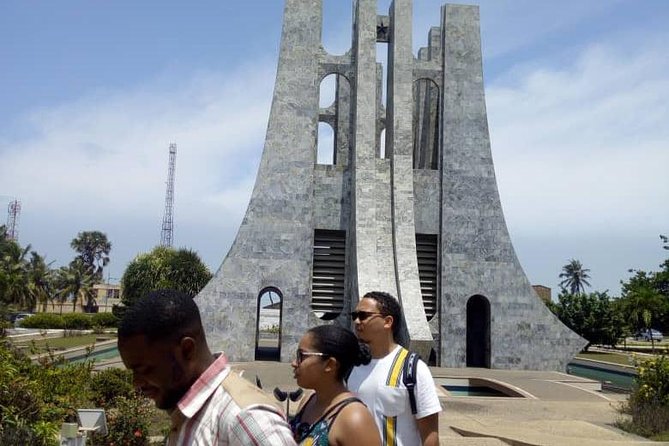
The final listed stop is Ussher Fort, another major historic site in James Town. The Dutch built it in 1649 as Fort Crêvecoeur. That date places the fort within the long period when European powers built coastal bases for trade and control.
The fort adds an important second Accra perspective. Cape Coast Castle is larger in the public imagination, but Ussher Fort helps show that the capital’s coastline also contained structures tied to commerce, military power, and the slave trade.
A major restoration project involving the Ghanaian government, the European Union, and UNESCO took place in 2007. The fort was restored into a museum in 2007, giving you a place to examine the building while learning about its past.
The three-hour visit is long enough for more than a quick exterior look. You can expect the museum setting to provide historical material, artifacts, and explanations connected to the fort’s role. The stated purpose is educational, with particular attention to the slave trade in Accra.
I appreciate that Ussher Fort follows James Town Lighthouse. The lighthouse gives you a view of the district and its coastal setting. The fort then brings you into a specific structure where European presence and local history meet.
As with Cape Coast Castle, this is not an easygoing stop. The buildings are impressive, but their purpose was tied to a harsh system. A good guide matters here, and Isaac has been praised for giving clear information about Ghana and adapting visits to a guest’s interests.
What the private format adds
The tour costs $307.70 per group of up to four people. If four people share the booking, that works out to about $76.93 each for two days, before any costs not covered by the tour.
That is a fair value if you want hotel transfers, admission to all four listed sites, and a private guide. You are paying for a planned route through several historically important places rather than arranging separate taxis, entry fees, and explanations on your own.
For one person, the value is less striking because the full group price remains the same. For two, three, or four people, the price becomes easier to justify. The private format also gives you more control over questions and pace than a large shared excursion.
Pickup is offered from your Accra hotel, and the tour provides daily transfers to and from the hotel. That is especially helpful on the day trip to the Central Region. You do not have to coordinate several separate rides or work out how the sites connect.
Confirmation is provided when you book. The tour is near public transportation, and the supplied information says most people can participate. No special accessibility details are provided, so anyone with mobility concerns should ask the operator for current information before paying.
The experience is usually booked about 65 days ahead. That does not guarantee every date sells out, but it is a useful planning signal. If your Accra stay is short, reserve early enough to place these two days where they fit best.
The guide can shape the experience
A history-focused tour depends heavily on the guide’s explanations. The sites are powerful, but you need someone who can connect the river, castle, lighthouse, fort, and local communities without turning the day into a list of dates.
Isaac is the guide name associated with especially strong praise. He is described as well informed about Ghana and attentive to the places guests wanted to see. One account also describes visits to additional sites such as Elmina Castle, Boti Waterfalls, and Umbrella Rock, but you should not assume those places are part of this two-day program unless the operator confirms them directly.
That point is worth making because the advertised route is already full. Extra stops may be possible in some arrangements, but they are not guaranteed by the stated itinerary. Ask before booking if you hope to add another castle or natural attraction.
Who should book this Ghana tour?

I would recommend this experience to you if you want a serious introduction to Ghana’s role in the transatlantic slave trade and prefer a private setting. It suits history-minded visitors, first-time visitors to Accra, and small groups that want transportation and admissions handled together.
It is also a good fit if you value local context. James Town gives you more than another fort. Its fishing community, coastal position, and lighthouse help connect the historical sites to present-day Accra.
I would be more cautious if you want a slow holiday with plenty of unplanned time. The listed stops fill both days, and day one takes you out to the Central Region. The subject matter also calls for attention and emotional readiness.
The tour is recommended by 100 percent of the available ratings and has a 4.9 rating from 21 reviews. That is a strong signal, with the sensible reminder that a small review total cannot predict every guide or every day.
Free cancellation is available if you cancel at least 24 hours before the start time. Within 24 hours, the amount paid is not refunded, and changes are not accepted. The experience requires good weather, so a weather cancellation leads to a different date or a full refund.
Should you book it?
Book this tour if you want the main historical sites arranged in a clear two-day route, with private transport and a guide who can explain what you are seeing. The best reason to choose it is the combination of Assin Manso, Cape Coast Castle, James Town, and Ussher Fort. Each site adds a different part of the story.
Skip it if your priority is beaches, markets, or a flexible city break. This is a focused history tour, and its strongest moments are also its hardest. For a small group sharing the $307.70 price, it offers a practical and meaningful way to understand Ghana beyond the usual Accra highlights.
FAQ
Where does the Ghana City 2-day Tour take place?
The tour begins in Accra, Ghana. It includes sites in the Central Region and historic locations in Accra.
How long does the tour last?
The experience lasts approximately two days.
How much does the tour cost?
The price is $307.70 per group of up to four people.
Is hotel pickup available?
Yes. Pickup is offered, and daily transfers to and from your Accra hotel are included.
Is this a private tour?
Yes. Only your group participates in the activity.
What is included at Assin Manso?
The visit includes the Ancestral Slave River Park, the Slave River, and the Last Bath. Admission is included.
Is Cape Coast Castle a UNESCO site?
Yes. Cape Coast Castle is a UNESCO World Heritage Site.
What can you see at James Town Lighthouse?
You can see the 28-meter lighthouse, its stone tower, lantern, gallery, and attached keeper’s house. A panoramic view is available from the top of its spiral staircase.
When was Ussher Fort built?
The Dutch built Ussher Fort in 1649 as Fort Crêvecoeur.
Can I cancel for a full refund?
Yes, if you cancel at least 24 hours before the experience begins. Cancellations within 24 hours are not refunded.
Just added around Accra
- Experience Cape Coast Castle and Kakum National Park★ 4.5 · 3 reviews
- Experience Northern Ghana In 10-Days★ 5.0 · 3 reviews
- Discover Ghana – Wli Waterfalls, Mountain Afadjato, Monkey Sanctuary & Akosombo.★ 4.5 · 3 reviews
- Cultural Tour Of Ghana And South Africa 12 Days★ 5.0 · 3 reviews
- Accra: City Highlights Half-day Guided Tour with Transfers★ 4.1 · 3 reviews
- Accra: Half day private safari with pick up★ 3.5 · 3 reviews
- Full Day Accra Guided Tour★ 5.0 · 3 reviews
- Experience Aburi Botanical Gardens And Boti Water Falls In A Day.★ 5.0 · 3 reviews
City Tours, compared.





Escape Accra City to Aburi Gardens and Tetteh Quarshie Cocoa Farms
Read our review →
Browse the lists this tour appears in