
Reviewed · ROOTS & HERITAGE TOURS
Trails of the transatlantic slave trade in Ghana
Ghana’s coast tells a difficult story. This eight-day private tour links Accra with the castles, forts, memorial sites, and communities tied to the transatlantic slave trade. I like the route’s range: you visit major sites such as Cape Coast Castle and Elmina Castle, then continue to quieter places including Nzulezo Stilt Village and Fort Batenstein. I also like having a private, air-conditioned car and an English-speaking driver-guide throughout.
The main consideration is the price, $1,955 per person, before airfare, visas, lunches, and dinners. The schedule also includes several long road days, high humidity, and a fair amount of walking at historic sites. Still, the private service, hotel stays, airport pickup, and carefully connected route can make this a strong choice for a first visit to Ghana, especially if ancestral connections are part of your reason for coming.
In This Review
- Five details that shape the experience
- Why this Ghana tour works as a historical journey
- Day 1: A simple arrival in Accra
- Day 2: Accra’s Pan-African and national story
- Day 3: Assin Manso and Cape Coast Castle
- Day 4: Elmina Castle and Fort St. Jago
- Day 5: Nzulezo’s lake setting and Fort Appollonia
- Day 6: Portuguese and English forts near Axim
- Day 7: Fort Metal Cross, Kakum, and the return to Accra
- Day 8: Accra shopping before departure
- What the $1,955 price really covers
- Guides, comfort, and the human side
- Who should book this route?
- Should you book this Ghana experience?
- FAQ
- Where does the tour begin and end?
- How long is the experience?
- What time does the tour start?
- Is this a private tour?
- What transportation is provided?
- Is a guide included?
- Are hotel stays included?
- Are meals included?
- Can I cancel for a full refund?
Five details that shape the experience
- Assin Manso’s Ancestral Slave River: Visit the place described as the final bathing site for enslaved people before shipment overseas, along with its ancestral graveyard.
- Cape Coast and Elmina Castles: Tour two of Ghana’s most important slave-trade sites, both UNESCO World Heritage Sites.
- Private road travel: Ride in an insured, air-conditioned car with an English-speaking driver-guide instead of joining a large group.
- A wider view of Ghana: The route includes Accra landmarks, coastal forts, a lake village, rainforest, beaches, and an arts market.
- Guides who handle the details: The company’s team, including guides named Nuru-Deen and Tony in guest accounts, is praised for punctuality, care, and flexibility.
- Time for reflection: Several days include free time at a beach hotel or recreational stop, though the trip remains active and road-based.
Why this Ghana tour works as a historical journey
This is not simply a castle tour. It follows a broad section of Ghana’s southern coast, showing how the slave trade fit into a much larger world of colonial rule, trade, local communities, forests, and coastal life.
You begin and end in Accra, which keeps international connections simple. Between those airport days, the route moves through the Central and Western regions. That matters because the forts and castles are not all alike. Their builders included Swedish, British, Portuguese, and English interests, and each site gives you another piece of the story.
I especially like the way the tour places famous landmarks beside less familiar stops. Cape Coast Castle and Elmina Castle are the emotional center, but Assin Manso, Fort St. Jago, Fort Appollonia, Fort Santo Antonio, Fort Batenstein, and Fort Metal Cross broaden the picture. The trip also includes places with no direct slave-trade focus, such as Kakum National Park and Nzulezo Stilt Village. These breaks can help you process what you have seen.
Because this is a private tour, your group is the only group participating. That gives you more room to ask questions and adjust the pace within the planned route. The company provides 24-hour ongoing support, a useful safeguard on a multi-day trip in an unfamiliar country.
More roots and heritage tours in Accra:
- Ghana Heritage Tours – Beyond The Return
★ 5.0 · 36 reviews - 10 Days Ghana Cultural and Heritage Trip
★ 5.0 · 31 reviews - The Ancestral Naming Ceremony and Home Coming Experience
★ 5.0 · 30 reviews
Day 1: A simple arrival in Accra
Your trip begins at Terminal 3 of Kotoka International Airport. A staff member meets you and takes you to your hotel, a short first-day plan that gives you time to recover from an international flight.
There is no sightseeing scheduled for this arrival day, and that is sensible. Accra is the gateway to the rest of the route, so you do not need to rush into a full program after landing. Pickup is offered, and the tour provides accommodation with air conditioning.
The next morning begins at 7 a.m. Confirm that early start with the company before you travel, particularly if you prefer a slower first morning.
Day 2: Accra’s Pan-African and national story
After breakfast, you begin with the W.E.B. Du Bois Centre for Pan-African Culture. Dr. Du Bois accepted an invitation from Ghana’s first president, Dr. Kwame Nkrumah, to research and compile the Encyclopedia Africana. The centre connects Ghana with a larger Pan-African movement and gives useful context before you visit the national memorials.
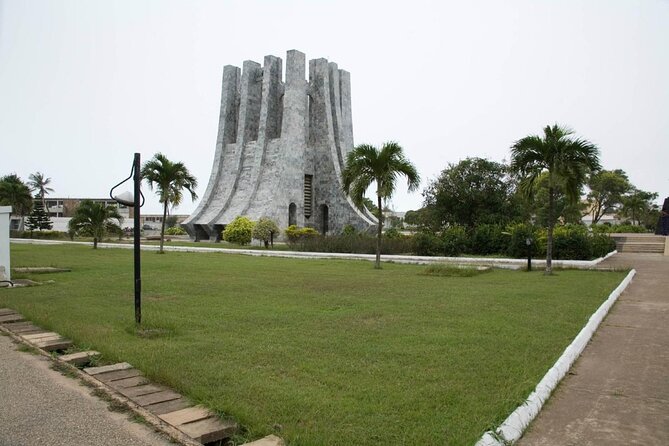
You then continue to Kwame Nkrumah Memorial Park, with stops at Independence Square and the mausoleum. These sites focus on Ghana’s independence and the political vision of Nkrumah. They are important counterpoints to the colonial forts later in the trip. You are not looking only at what was done to Ghana and its people. You are also seeing the country’s own independence story.
The day also includes Osu Castle, once the administrative seat of the colonial governor and later associated with Ghana’s government. This creates a full seven-hour introduction to Accra’s political and national past.
The schedule is busy, but the sites are connected by theme. You move from Pan-African thought to independence, colonial administration, and modern Ghana. Keep water with you and expect the heat to make the day feel longer than the clock suggests.
Day 3: Assin Manso and Cape Coast Castle
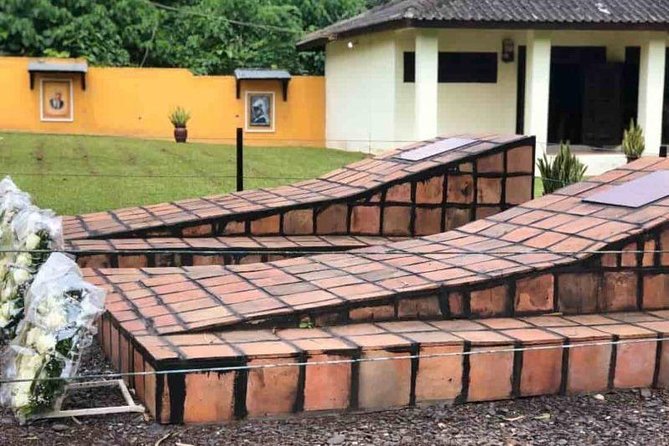
After breakfast, you leave Accra for the Central Region. The first major stop is the Assin Manso Ancestral Slave River Site. The river is described as the last bathing place for enslaved people before their shipment overseas, and the site also includes an ancestral graveyard.
This stop is valuable because it shifts the focus away from stone buildings. It points to the people who passed through the system and to the final moments before forced removal. Give yourself time here. The setting is part of the meaning, and the visit can feel more personal than a quick photo stop.
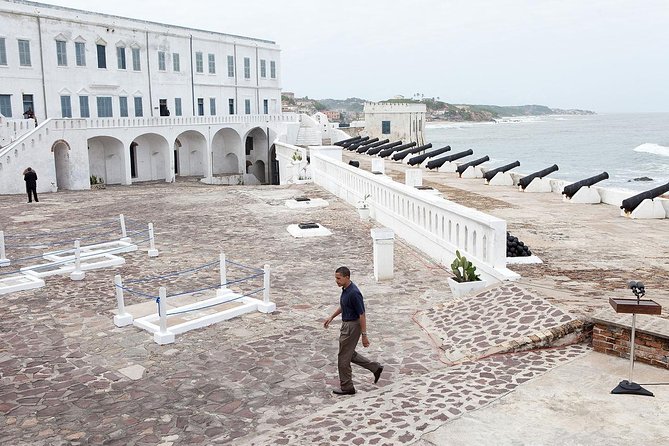
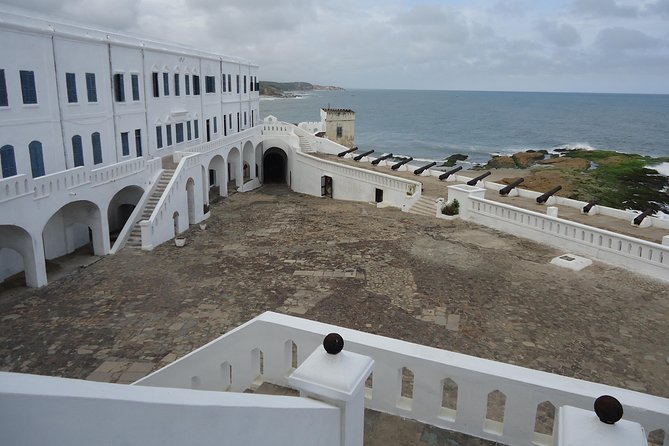
Next comes Cape Coast Castle, a UNESCO World Heritage Site. It was built in 1653 by the Swedish and later taken over by the British. The castle is regarded as the second-largest slave castle in Ghana, and its rooms and passages help you understand the scale and mechanics of the trade.
This is likely to be one of the heaviest days emotionally. The site concerns confinement, forced movement, and treatment of enslaved people, so a guide who can explain the details clearly matters. The tour includes admission, and the private format gives you the chance to ask direct questions rather than simply follow a large crowd.
The day lasts about seven hours, including the road journey. You should expect a full schedule, not a casual coastal outing. Overnight accommodation is provided in the Cape Coast area.
A completely different sort of day out of Accra:
- The Cape Coast Day Tour
★ 5.0 · 525 reviews - Experience the Beauty, History and the Culture Of Accra in a Day
★ 5.0 · 323 reviews - The Cape Coast Tour
★ 5.0 · 177 reviews - From Accra: Cape Coast, Elmina Castle & Kakum Park Day Tour
★ 4.6 · 144 reviews
Day 4: Elmina Castle and Fort St. Jago
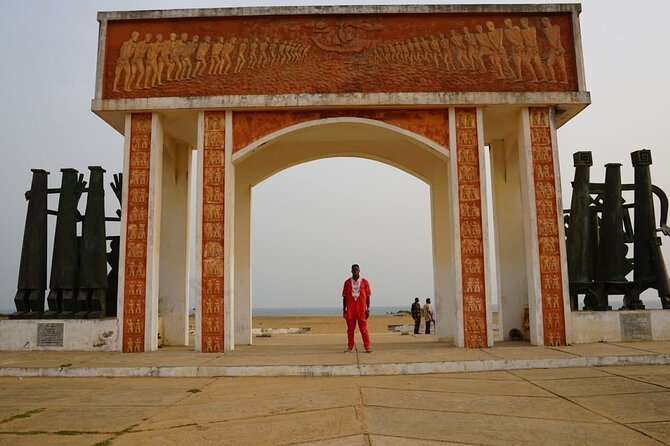
Day four focuses on Elmina, a colonial community with both cultural and historical importance. The central visit is Elmina Castle, also called St. George Castle. It is described as the biggest and oldest slave castle in Ghana and is also a UNESCO World Heritage Site.
Seeing Elmina after Cape Coast helps you compare two major sites rather than treating either one as an isolated monument. The buildings are imposing, but the purpose behind them is the key point. Your guide can help connect the architecture to the movement of people and goods along the coast.
You also visit Fort St. Jago, located on a hill overlooking Elmina Township. The hilltop setting gives you a broader view of the town and a useful sense of how forts controlled access and watched the surrounding area.
The historic visits take about five hours. Afterward, you return to a beachfront hotel with the rest of the day free. I consider this one of the better-paced days in the program. After two demanding historical days, you get time to rest rather than immediately rushing to another major site.
A practical note: one account praises the forts in Elmina and Cape Coast but also points out the area’s high humidity. Bring light clothing, water, and shoes that work on uneven historic surfaces.
Day 5: Nzulezo’s lake setting and Fort Appollonia
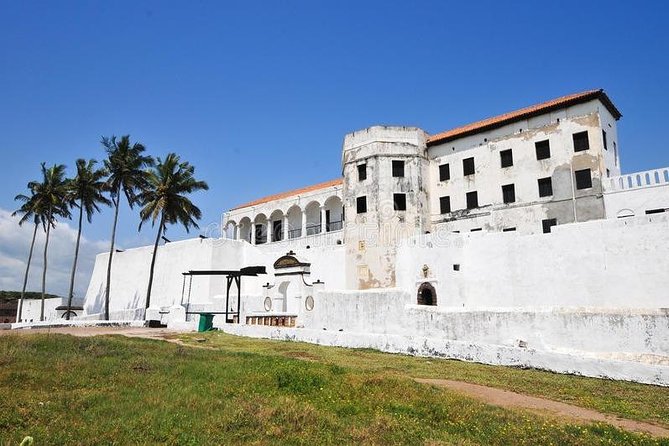
The road continues west to Beyin in the Western Region. From there, you take a canoe across Amansari Lake to Nzulezo Stilt Village. The community is built on top of the lake, making this one of the tour’s most unusual stops.
The canoe ride changes the rhythm of the trip. Instead of another stone fort, you are seeing a living community shaped by water and local building traditions. The village visit is included, but the itinerary does not give details about how long the canoe segment lasts, so ask the operator if you need a precise timing estimate.
Back in Beyin, you visit Fort Appollonia, built by English merchants. The contrast is useful: Nzulezo shows community life on the lake, while the fort reflects European commercial interests on the coast.
The day takes about seven hours, and you stay overnight in Axim. The long transfer is part of the price of seeing this far-western section of Ghana. If your priority is only Cape Coast and Elmina, this day adds considerable travel. If you want a wider view of Ghana’s coastal history and geography, it earns its place.
Day 6: Portuguese and English forts near Axim
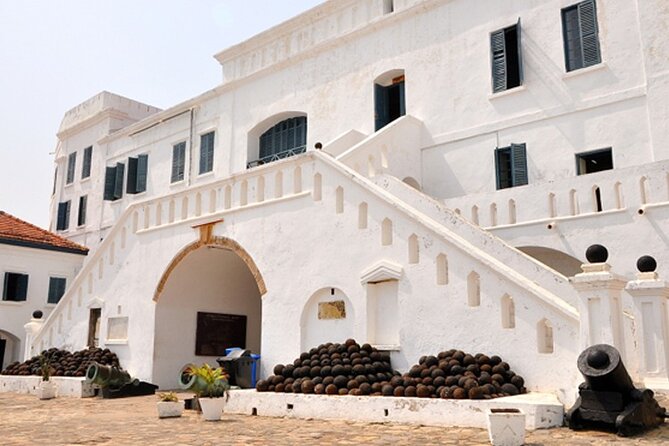
This is another fort-focused day, but the sites offer different colonial connections. Fort Santo Antonio, also called Fort St. Anthony, was built by the Portuguese in 1515 near Axim.
You then visit Fort Batenstein in Butre. The itinerary places these visits within a five-hour day, followed by time at a beach for the rest of the afternoon. That balance is welcome. You get two historic stops without giving up the coast entirely.
You stay overnight in Busua. The tour does not promise a specific beach activity, and one account gives a useful warning about beach conditions, noting that a selected beach was not clean for swimming or walking along the shore. Treat the beach stop as downtime, not as the main reason to book this trip, and ask the company which beach is planned.
Day 7: Fort Metal Cross, Kakum, and the return to Accra
After breakfast, you travel to Dixcove to visit Fort Metal Cross, originally called Fort Dixcove. It was built as a military structure, adding another chapter to the coastal fort network.
From there, you begin the return to Accra, with a detour to Kakum National Park. The park protects rainforest and is home to endangered mammals including forest elephants and monkeys. The most popular activity is the canopy walkway, suspended 30 metres above the ground.
You can also choose a nature walk with an experienced park guide. The supplied schedule does not say whether the canopy walkway or forest walk is included as a separate fee, so confirm that point before booking if it matters to your budget.
This is a long seven-hour day that combines a fort, a national park, and a major road transfer. The variety is appealing, but the pace may tire you. You spend the night back in Accra, which avoids a stressful airport transfer on the same day as the final sightseeing.
Day 8: Accra shopping before departure
The final day begins with hotel checkout and a visit to the Accra Arts Centre. It is a large market selling different kinds of artefacts, and bargaining is part of the experience.
You should keep some Ghanaian currency ready. A practical tip from the tour experience is to use Ghanaian currency for everyday purchases and keep a simple conversion chart in your wallet. ATMs are described as plentiful, but having local cash makes small purchases and tips easier.
The schedule allows a possible stop at a recreational centre if time permits, followed by airport transfer. Since international departure times vary, do not count on the extra stop until your flight schedule is clear.
What the $1,955 price really covers
At $1,955 per person, this is not a budget independent trip. But the price includes several items that can add up quickly:
- Private insured air-conditioned car with fuel
- English-speaking driver-guide
- Accommodation with air conditioning
- Eight breakfasts
- Admission fees and taxes
- Airport pickup and transfer arrangements
- Ongoing support at all hours
The strongest value is convenience. You do not need to arrange separate transport between Accra, Cape Coast, Elmina, Axim, Busua, and the western forts. You also avoid rebuilding the route day by day.
The price does not include international airfare, visa fees, lunch, or dinner. Food costs can therefore be significant across eight days, especially on long road days when you may want meals near the sites. Ask what hotel categories are used and whether single-room pricing changes the total.
For a private trip with a dedicated vehicle, multiple entrance fees, accommodation, fuel, and a driver-guide, the price can be reasonable for someone who values help and structure. It is less attractive if you are comfortable arranging buses, hotels, and site visits independently.
Guides, comfort, and the human side
The strongest praise centers on the staff. Nuru-Deen is repeatedly described as attentive, careful, professional, personable, and willing to accommodate requests. Tony is praised for punctuality, care, and strong explanations while driving and guiding, particularly around Cape Coast.
Those details matter here. This route involves sensitive subjects, long drives, borderless shifts between regions, and many historic sites. A good guide does more than point at walls. You need someone who can answer questions, manage timing, and notice when the group needs a break.
The private setup also helps couples, families, and small groups travel at their own pace. The operator says most people can participate, and the tour is private rather than shared with a larger group. Still, you should be ready for early starts, road time, humidity, walking, and historic buildings that may not offer modern ease.
Who should book this route?
I would recommend it most strongly to you if Ghana is your first visit, if you want the major slave-trade sites in one organized journey, or if you are tracing family ancestry connected to West Africa. One person described traveling the route of enslaved ancestors as life changing, and the itinerary gives that purpose real weight by including Assin Manso as well as the major castles.
It also suits you if you want more than a narrow history trip. The Accra memorials, lake village, rainforest, forts, beaches, and arts market show several sides of Ghana.
You may want a shorter or more flexible plan if you dislike long road days, prefer independent dining, or mainly want time on the beach. The tour covers a lot of ground, and some days may feel packed.
Free cancellation is available if you cancel at least 24 hours before the experience start time. Changes or cancellations inside that window are not accepted for a refund.
Should you book this Ghana experience?
Book it if you want a private, structured route through Ghana’s coastal slave-trade sites and value having transport, hotels, admission fees, and a guide handled together. The combination of Cape Coast, Elmina, Assin Manso, the western forts, and Accra gives you a serious historical foundation, while Nzulezo and Kakum keep the trip from becoming eight straight days of castles.
Think carefully if the price stretches your budget or if you want slow mornings and long beach afternoons. Before paying, confirm the hotel standard, meal options, beach location, and any extra cost for Kakum activities. For an ancestry-focused visit or a first Ghana trip where you want dependable support, this route offers a thoughtful and practical starting point.
FAQ
Where does the tour begin and end?
The tour begins in Accra with pickup at Terminal 3 of Kotoka International Airport and ends in Accra with a transfer to the airport.
How long is the experience?
The tour lasts approximately eight days.
What time does the tour start?
The stated start time is 7:00 a.m.
Is this a private tour?
Yes. Only your group participates in the private tour or activity.
What transportation is provided?
You travel in a private insured, air-conditioned car with fuel included.
Is a guide included?
Yes. The tour includes a professional English-speaking driver-guide.
Are hotel stays included?
Yes. Accommodation with air conditioning is included. The route lists overnight stays in Elmina, Axim, Busua, and Accra, along with the other scheduled nights.
Are meals included?
Eight breakfasts are included. International airfare, visa fees, lunch, and dinner are not included.
Can I cancel for a full refund?
Yes, if you cancel at least 24 hours before the experience start time. Cancellations or changes made less than 24 hours before the start time are not accepted for a refund.
Just added around Accra
- Experience Cape Coast Castle and Kakum National Park★ 4.5 · 3 reviews
- Experience Northern Ghana In 10-Days★ 5.0 · 3 reviews
- Discover Ghana – Wli Waterfalls, Mountain Afadjato, Monkey Sanctuary & Akosombo.★ 4.5 · 3 reviews
- Cultural Tour Of Ghana And South Africa 12 Days★ 5.0 · 3 reviews
- Accra: City Highlights Half-day Guided Tour with Transfers★ 4.1 · 3 reviews
- Accra: Half day private safari with pick up★ 3.5 · 3 reviews
- Full Day Accra Guided Tour★ 5.0 · 3 reviews
- Experience Aburi Botanical Gardens And Boti Water Falls In A Day.★ 5.0 · 3 reviews
Roots & Heritage Tours, compared.
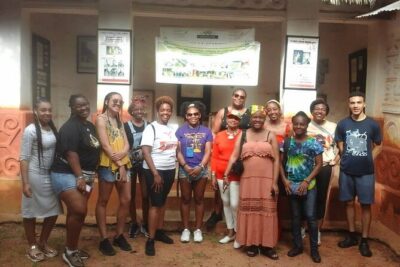
The Ancestral Naming Ceremony and Home Coming Experience
Read our review →
The Homecoming Experience To Cape-coast And Elmina.
Read our review →
Cape Coast/Elmina Slave Dungeon and Canopy Walkway Private Tour
Read our review →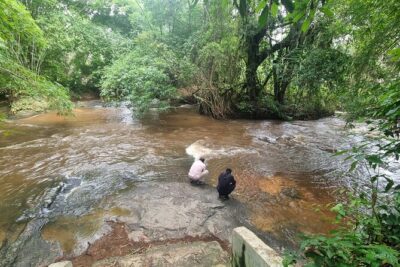
Assin Manso Slave River, Cape Coast and Elmina Castle Day Tour
Read our review →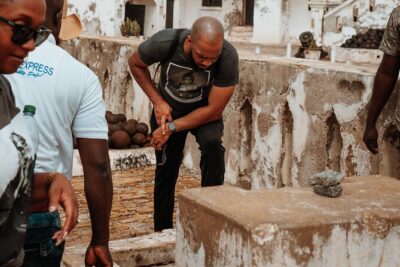
Cape Coast Castle, Assin Manso Slave River & Kakum Day Tour.
Read our review →
7-Day Private Cultural and Heritage Tour in Ghana
Read our review →Browse the lists this tour appears in