
Reviewed · ROOTS & HERITAGE TOURS
Travel Back In Time(The door of no return)
Feel the past beneath your feet. This long day from Accra connects the Assin Manso Slave River, Elmina Castle, Cape Coast Castle, and Kakum National Park in one carefully packed journey through Ghana’s Central Region. I like the private format, which gives you room to ask questions and set the tone, and I like that the experience joins difficult history with a symbolic act of remembrance. The main drawback is the punishing schedule: a 5:00 am start and up to 14 hours on the road will test your energy.
This is not a light sightseeing trip. The dungeons and Door of No Return can be painful to face, but the visit has a clear purpose for people tracing African ancestry or seeking a fuller account of the transatlantic slave trade. One serious concern is worth noting: a booking failure left one pair without pickup, although the operator said the money was refunded and blamed a calendar-synchronization error.
In This Review
- Key points to know before you book
- Why this Accra day trip carries real weight
- 5:00 am departure and the long road south
- Assin Manso and the Ndonkor Nsuo Slave River
- Elmina Castle and the Door of No Return
- Cape Coast Castle and the Door of Return
- Kakum National Park gives the day a needed change
- Lunch, water, and private transport add practical value
- What the personal guiding adds
- The emotional demands of the castles
- Who will get the most from this experience
- Should you book the Door of No Return tour?
- FAQ
- Where does the tour begin?
- How long does the experience last?
- What is the price?
- Is this a private tour?
- Which historic sites are included?
- Is Kakum National Park included?
- What is included in the price?
- Can I cancel for a full refund?
Key points to know before you book
- The 5:00 am start matters: You need to be ready for a full-day outing of roughly 10 to 14 hours.
- Assin Manso comes first: The Slave River site includes storytelling, memorials, traditional rites, and the symbolic First Bath of Return.
- Two castles bring different settings: Elmina and Cape Coast each show holding cells, colonial power, and the Door of No Return.
- Kakum adds a change of pace: The canopy walk brings a nature stop to an otherwise serious day.
- Nii is the named guide: Personal accounts praise his patience, flexibility, kindness, and ability to set a respectful tone.
- The $300 price buys privacy: Lunch, water, fuel, air-conditioned transport, and private service are included, but the value depends on your group size.
Why this Accra day trip carries real weight
Many Ghana tours offer beaches, markets, and music. This one asks you to spend much of a day facing a harder part of the country’s past. You move from a river linked to the final days of captives in the interior to coastal forts where enslaved Africans were held before forced shipment across the Atlantic.
I appreciate the order of the day. Assin Manso gives you a place for reflection before the castles provide the architecture and confinement. Kakum then offers a physical change of pace, though the exact timing of that stop is not given and the itinerary details provided do not specify how long you spend there.
For people of African descent, the experience can carry a personal meaning that goes beyond ordinary sightseeing. One account describes the tour as ideal for Africans of the diaspora returning home, with Nii setting a tone of remembrance at the beginning. Another calls the experience a highlight of time in Ghana. Those comments point to the tour’s strongest quality: it treats the sites as places of memory, not just old buildings.
Still, you should arrive prepared for emotional strain. The subject is slavery, and the castle dungeons are described in direct, human terms. If you prefer history presented at a distance, this may be a difficult day.
More roots and heritage tours in Accra:
- Ghana Heritage Tours – Beyond The Return
★ 5.0 · 36 reviews - 10 Days Ghana Cultural and Heritage Trip
★ 5.0 · 31 reviews - The Ancestral Naming Ceremony and Home Coming Experience
★ 5.0 · 30 reviews
5:00 am departure and the long road south
Pickup begins at 5:00 am. That early start is necessary because the excursion covers several sites outside Accra, but it also shapes the whole experience. You will want to sleep well beforehand and keep the morning simple.
Your ride is a private, air-conditioned vehicle with fuel costs included. Bottled water and lunch are also covered. Those inclusions matter on a day that can last from 10 to 14 hours, especially since you are not dealing with a large shared group or making your own way between distant stops.
The private setup is one of the tour’s better selling points. Your group is the only group participating, so you can ask questions without waiting for a busload of strangers. You may also have more flexibility around breaks, although the published details do not promise a fully adjustable schedule.
The distance and early hour are the tradeoff. This is not a quick outing from central Accra. You are paying for a full day of transport and guiding, not simply admission to three historic locations.
Assin Manso and the Ndonkor Nsuo Slave River
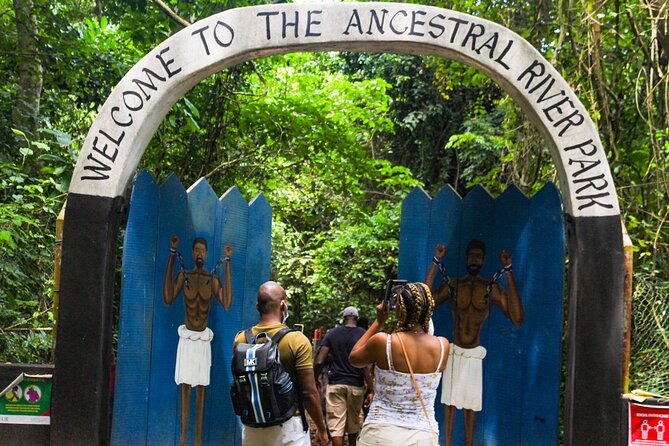
The first major stop is Assin Manso Ancestral Slave River Park. Here, the focus is remembrance and reconnection. The site includes the Ndonkor Nsuo, known as the Slave River, where captives were forced to take a final bath before being taken toward the coast.
The experience follows the path associated with enslaved Africans and uses local storytelling to explain the site. Memorials and Ghanaian cultural elements add context, while traditional rites and symbolic rituals honor those who endured the trade.
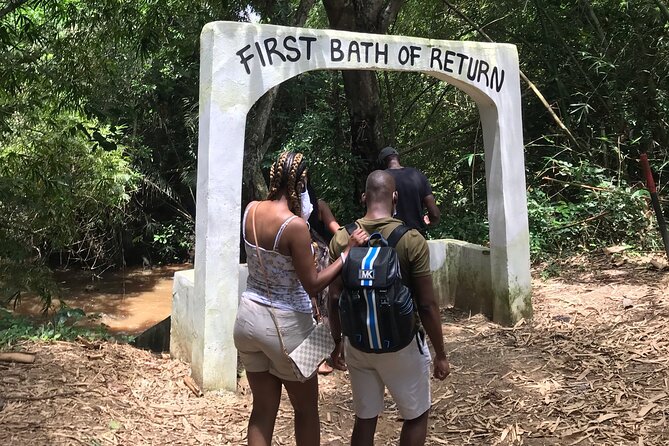
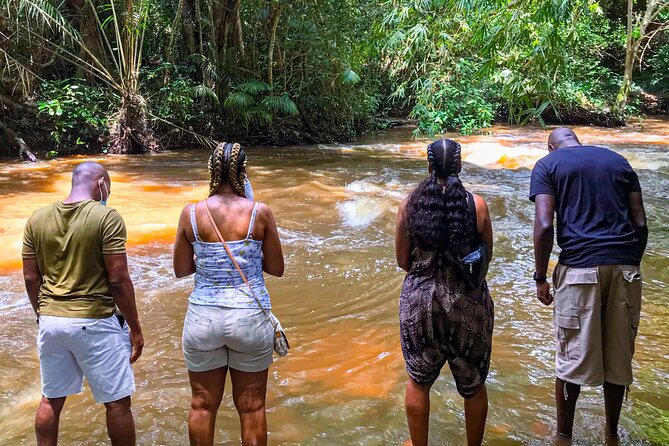
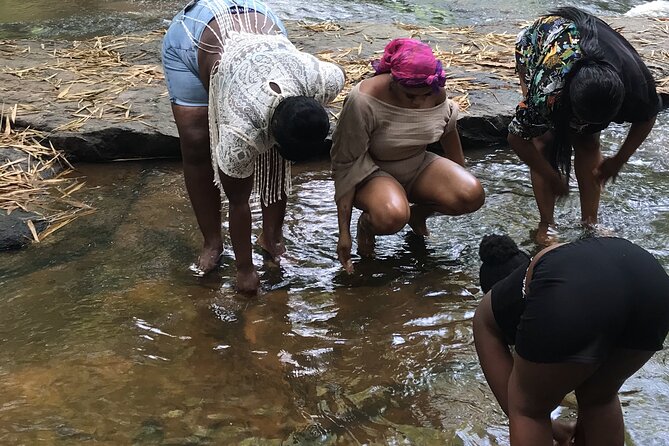
The most personal part is the First Bath of Return. This is described as a symbolic cleansing in the river, representing renewal, reconnection with heritage, and the start of a healing process. It is not presented as a historical reenactment. It is a present-day act of remembrance.
That distinction matters. You are not simply looking at a plaque and taking a photograph. You are being invited to think about what return, ancestry, and spiritual repair mean. For someone with a family connection to the African diaspora, that can make Assin Manso the emotional center of the day.
You should also understand that the visit may feel solemn rather than polished or theatrical. The value lies in the setting, the guide’s explanation, and the meaning you bring to it. Give yourself permission to be quiet.
Elmina Castle and the Door of No Return
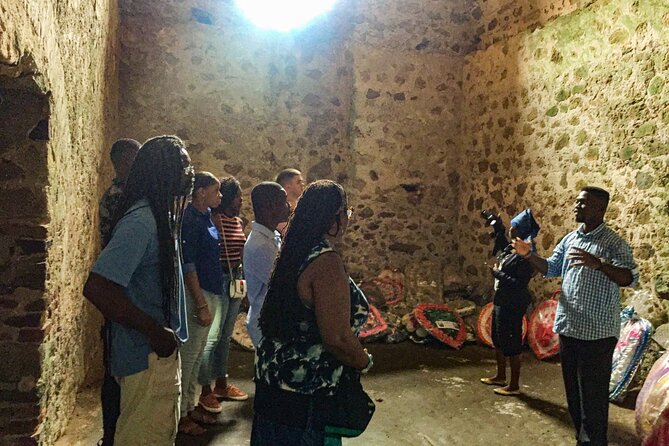
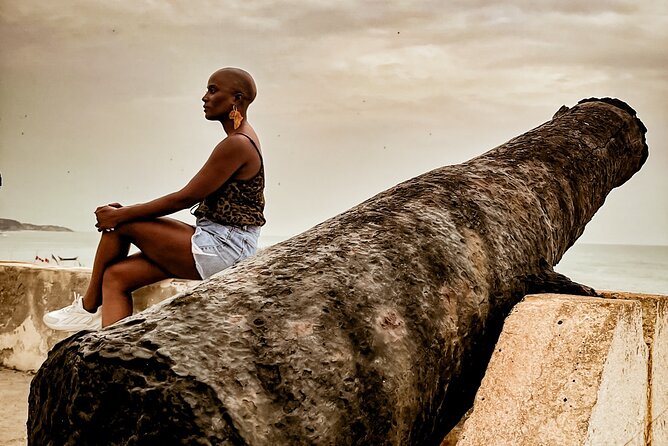
Elmina Castle was built by the Portuguese in 1482 and later became a major center in the transatlantic slave trade. Its seaside position can look striking, but the beauty of the setting should not soften what happened inside.
A guided visit takes you into the narrow dungeons where enslaved Africans were held. You also see the governor’s quarters, creating a stark contrast between the people who controlled the castle and those confined below. That contrast is one of the most effective ways to understand the social order built into the fort.
The Door of No Return is the best-known point in the visit. Captives passed through it toward ships and an unknown future. Standing there can feel heavy, especially after seeing the holding areas.
The tour’s private format helps here. You can ask Nii to explain details that catch your attention, or pause before moving on. Accounts of his guiding repeatedly praise his patience, kindness, flexibility, and ability to provide useful background without rushing people through the site.
Elmina is not a place to treat as a casual photo stop. You can take in the architecture, but the castle’s importance comes from connecting those walls to individual lives. A guide can help prevent the visit from becoming a string of dates and dramatic rooms.
A completely different sort of day out of Accra:
- The Cape Coast Day Tour
★ 5.0 · 525 reviews - Experience the Beauty, History and the Culture Of Accra in a Day
★ 5.0 · 323 reviews - The Cape Coast Tour
★ 5.0 · 177 reviews - From Accra: Cape Coast, Elmina Castle & Kakum Park Day Tour
★ 4.6 · 144 reviews
Cape Coast Castle and the Door of Return
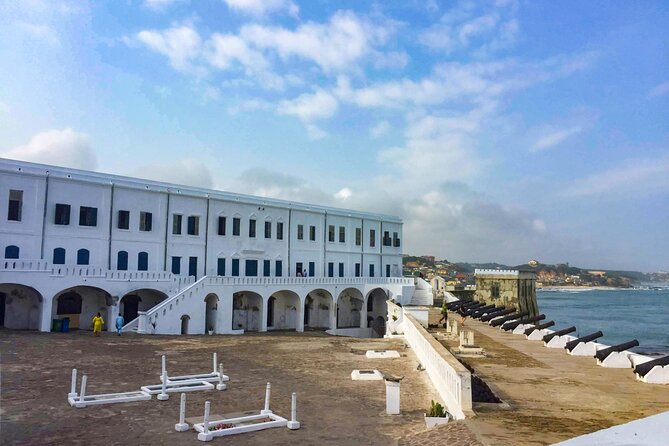
Cape Coast Castle brings a second major perspective on the coastal slave trade. You explore the dungeons, the governor’s quarters, and the Door of No Return, which is now also presented symbolically as the Door of Return.
The change in name expresses the purpose of this tour especially well. The original door represented forced departure. The symbolic Door of Return represents coming back to Ghana, honoring ancestors, and reconnecting with a heritage that the slave trade tried to sever.
You should expect some overlap with Elmina. Both sites include dungeons, colonial authority, and the forced movement of enslaved people toward the sea. That repetition is not necessarily a flaw. Seeing two castles lets you compare them and reinforces the scale and structure of the trade.
The drawback is time. Each castle is allocated about one hour, which is enough for a guided introduction but not enough for an unhurried study of every room. With a full day already in motion, you may feel that the schedule moves quickly.
I would focus your attention on the dungeons, the Door of Return, and the contrast between the governor’s living areas and the cells below. Those spaces convey the central story more clearly than trying to remember every architectural detail.
Kakum National Park gives the day a needed change
Kakum National Park is included as part of the experience, with a walk through the canopy listed among the main highlights. After Assin Manso and two castles, this is a welcome shift from enclosed rooms and painful testimony to an outdoor setting.
The canopy walk also gives you a more physical activity during a day that otherwise involves driving and guided visits. It can help break up the rhythm and make the overall itinerary feel less one-note.
The available details do not state the length of the Kakum stop, the exact canopy route, or the order in which it fits beside lunch. I would treat it as an important included feature, but not plan the day around a long national park visit.
One account describes the national park as one of the fun parts of the outing, alongside a pleasant lunch on a beautiful beach. Lunch is included, but the supplied details do not identify the restaurant or beach. That means you can count on a meal, but not on a specific dining setting.
Lunch, water, and private transport add practical value
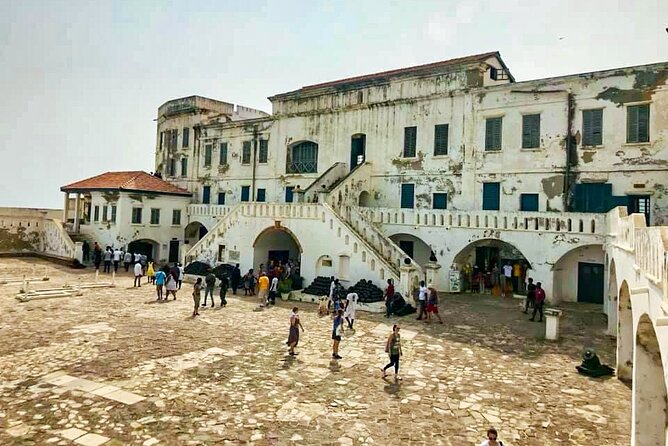
At $300 per person, this is not a bargain-priced day trip. The price makes more sense when you consider what is bundled: private transportation, an air-conditioned vehicle, fuel surcharge, bottled water, lunch, admission to the listed sites, and a private guide.
The value improves for a small group that wants personal service. You are not only buying entry tickets. You are paying to avoid arranging transport between Accra, Assin Manso, Elmina, Cape Coast, and Kakum, while having a guide shape the day around your questions and interests.
For a solo participant or a couple, the price may feel steep. Group discounts are offered, so a larger party can bring down the effective cost per person. Ask for the current group rate before booking, since the exact discount is not provided here.
The air conditioning is particularly useful. Ghana’s heat, a long road day, and several outdoor walks can drain you. Bottled water helps, but you should still dress for a full day and bring anything you personally need for comfort.
What the personal guiding adds
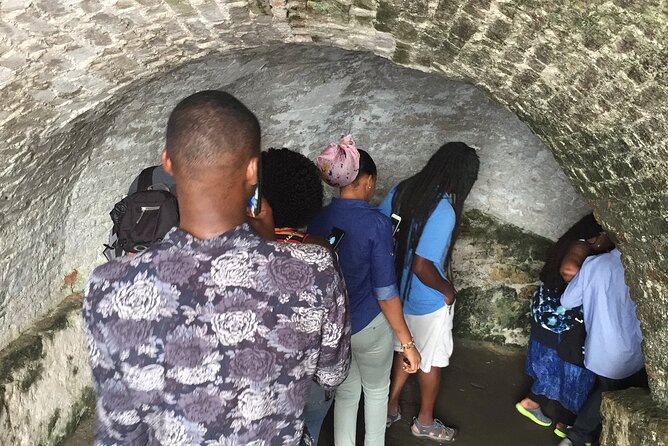
The strongest praise centers on Nii. He is described as patient, kind, flexible, and ready to adjust to individual needs. One account also credits him with opening the day with a powerful message about remembering and honoring ancestors.
That beginning matters. A tour about slavery can easily become a checklist of dungeons and dates. A guide who sets a thoughtful tone helps you understand why Assin Manso, Elmina, and Cape Coast belong in one story.
The guide also acts as a bridge between the private vehicle, local site staff, cultural rites, and castle explanations. The itinerary says local historians guide parts of the Assin Manso visit, while the castles provide guided tours. Nii’s role appears to be keeping the day connected rather than leaving you to piece it together alone.
The overall rating is 4.4 from seven ratings, which suggests strong approval but also a small sample. Four published accounts give the experience five stars, while one gives it one star after a missed pickup. The operator says that booking was missed because of a calendar problem and that a refund was sent. I would confirm your pickup details shortly before the morning departure.
The emotional demands of the castles
You should not book this simply because the Door of Return sounds photogenic. The most important parts are the dungeons, the forced separation from home, and the contrast between those confined below and those living in comfort above.
Some sections may feel especially difficult if you have a personal connection to the African diaspora. That is also why the tour can be so meaningful. It creates room to acknowledge ancestors, ask questions, and consider how the past continues to shape identity.
The experience is not designed as entertainment, though Kakum and lunch provide lighter moments. You will need to move between grief, reflection, conversation, and ordinary sightseeing. That emotional movement is part of the day’s character.
I would avoid scheduling another major activity after you return. Since the day can run until evening, and because the subject matter requires attention, a quiet night makes more sense than another packed outing.
Who will get the most from this experience
I would recommend this tour most strongly to:
- People of African descent seeking a guided return to important ancestral sites
- First-time visitors to Ghana who want the Central Region’s major slavery-related sites in one day
- Small groups that value privacy and direct access to a guide
- Visitors who prefer historical explanation and reflection over a casual sightseeing stop
- Anyone who wants to combine the castles with Assin Manso and Kakum rather than arrange separate trips
It may not suit you if you dislike very early starts, long road days, or emotionally serious sites. It is also a poor choice if you want a slow visit at each castle, since the stated time at Elmina and Cape Coast is about one hour each.
Confirmation is provided at booking. Most people can participate, and the meeting information notes proximity to public transportation, though the tour itself provides pickup and private transport. Free cancellation is available up to 24 hours before the start time. Poor weather or failure to meet the minimum number of participants can lead to a new date, another experience, or a full refund.
Should you book the Door of No Return tour?
Book it if you want a guided, purposeful day centered on Ghana’s slave trade sites and African diaspora identity. The combination of Assin Manso, Elmina, Cape Coast, Kakum, lunch, and private transport is hard to arrange as smoothly on your own in one day.
I especially like the symbolic First Bath of Return and the chance to visit both major castles with a private guide. Nii’s reported care and flexibility add value to a subject that deserves more than a rushed explanation.
Before paying $300, make sure your group accepts the 5:00 am start, the possible 14-hour duration, and the emotional weight of the dungeons. Confirm pickup details, ask about the group discount if you are not alone, and leave your evening free. If those conditions suit you, this is a serious and worthwhile way to connect Ghana’s coastal forts with the people and places behind the history.
FAQ
Where does the tour begin?
The tour begins in Accra, with pickup starting at 5:00 am.
How long does the experience last?
The full experience lasts approximately 10 to 14 hours.
What is the price?
The listed price is $300 per person. Group discounts are offered.
Is this a private tour?
Yes. Only your group participates in the private tour or activity.
Which historic sites are included?
The experience includes Assin Manso Ancestral Slave River Park, Elmina Castle, and Cape Coast Castle.
Is Kakum National Park included?
Yes. A canopy walk at Kakum National Park is listed as one of the tour highlights.
What is included in the price?
Lunch, bottled water, an air-conditioned vehicle, private transportation, fuel surcharge, and admission tickets for the listed included stops are provided.
Can I cancel for a full refund?
Yes. You can cancel at least 24 hours before the experience starts for a full refund. Changes or cancellations made less than 24 hours before the start time are not accepted for a refund.
Just added around Accra
- Experience Cape Coast Castle and Kakum National Park★ 4.5 · 3 reviews
- Experience Northern Ghana In 10-Days★ 5.0 · 3 reviews
- Discover Ghana – Wli Waterfalls, Mountain Afadjato, Monkey Sanctuary & Akosombo.★ 4.5 · 3 reviews
- Cultural Tour Of Ghana And South Africa 12 Days★ 5.0 · 3 reviews
- Accra: City Highlights Half-day Guided Tour with Transfers★ 4.1 · 3 reviews
- Accra: Half day private safari with pick up★ 3.5 · 3 reviews
- Full Day Accra Guided Tour★ 5.0 · 3 reviews
- Experience Aburi Botanical Gardens And Boti Water Falls In A Day.★ 5.0 · 3 reviews
Roots & Heritage Tours, compared.
The Ancestral Naming Ceremony and Home Coming Experience
Read our review →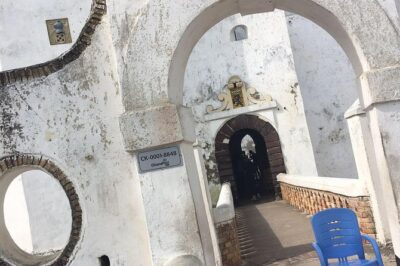
The Homecoming Experience To Cape-coast And Elmina.
Read our review →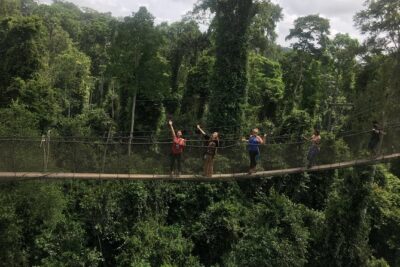
Cape Coast/Elmina Slave Dungeon and Canopy Walkway Private Tour
Read our review →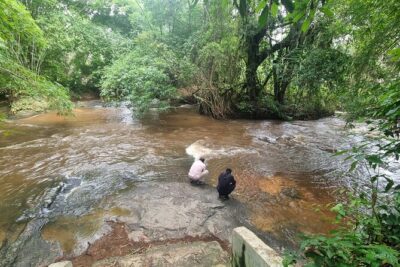
Assin Manso Slave River, Cape Coast and Elmina Castle Day Tour
Read our review →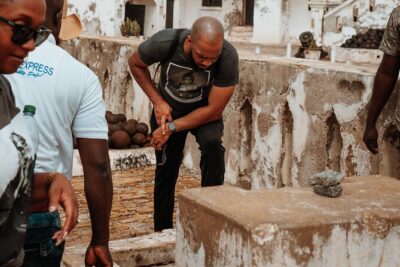
Cape Coast Castle, Assin Manso Slave River & Kakum Day Tour.
Read our review →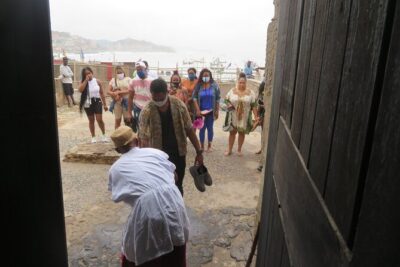
7-Day Private Cultural and Heritage Tour in Ghana
Read our review →Browse the lists this tour appears in