Reviewed · TOURS
7 Day Artisanal Tour
Ghana rewards hands-on curiosity. This seven-day private tour pairs pottery, black soap, and batik workshops with Accra sightseeing, Kakum National Park, Cape Coast Castle, and Aburi Botanical Gardens. I like the strong mix of making things yourself and learning Ghana’s past. I also like that private transport keeps the schedule flexible for your group.
The main consideration is the price: $2,610 per person is a serious commitment, and one full day is left open. The itinerary also packs several Accra stops into long sightseeing days, so you should be comfortable with time in a vehicle and a steady pace.
In This Review
- Key points at a glance
- Why the craft workshops make this trip different
- Day 1: A simple arrival in Accra
- Day 2: Pottery, Nkrumah, and Accra’s main sights
- Day 3: Black soap and Accra’s gallery circuit
- Day 4: Use the free day wisely
- Day 5: Kakum’s forest and Cape Coast Castle
- Day 6: Make batik, then head to Aburi
- Transport, meals, and the real value of $2,610
- Who should book this Ghana experience?
- FAQ
- Is airport pickup included?
- How long does the tour last?
- Is this a private tour?
- What meals are included?
- Is transportation provided?
- What craft workshops are part of the tour?
- What are the choices at Kakum National Park?
- What is the cancellation policy?
- Should you book the 7 Day Artisanal Tour?
Key points at a glance
- Three practical craft classes: Shape and paint pottery, make traditional black soap, and produce two yards of wax-resist batik fabric.
- Accra’s history and art in one route: Visit Independence and Black Star Square, the Kwame Nkrumah Memorial Park, the Arts Center, and several galleries.
- A powerful Cape Coast day: Combine Kakum’s forest canopy walkway or nature trail with the sobering dungeons of Cape Coast Castle.
- Private travel for your group: Air-conditioned transportation and pickup make a multi-stop schedule easier to manage.
- One useful rest day: Day 4 gives you time at the hotel or room to add your own Accra plans.
- Five breakfasts included: Lunches, dinners, airport taxes, and facility fees are not included.
Why the craft workshops make this trip different
Many Ghana trips focus on sights viewed from a vehicle. This one gives you something to do with your hands. That matters because the workshops turn local traditions into personal souvenirs rather than quick photo stops.
At Happy Art Academy, you shape clay under the direction of skilled artisans. The class lasts about three hours and includes painting your finished pieces. You should expect a practical introduction rather than a professional studio course, but that is part of its appeal. You get to make something imperfect, personal, and useful.
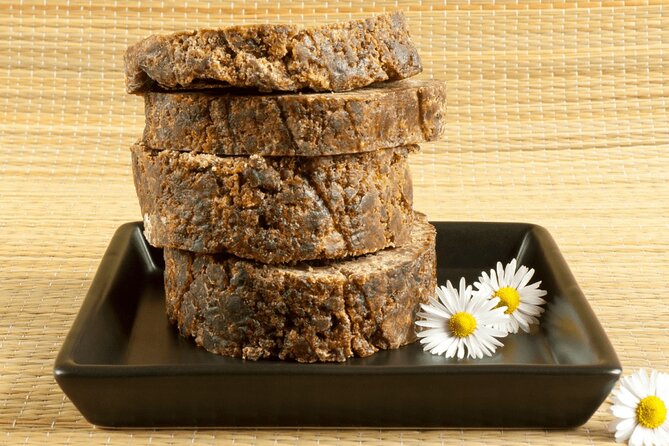
The black-soap session at ALL PURE NATURE Skin & Hair Care Products offers a different kind of lesson. You learn about natural ingredients and local methods, then mix and mold the soap. Essential oils and botanicals let you customize the result. It is a good fit if you enjoy beauty products, natural ingredients, or small-scale production.
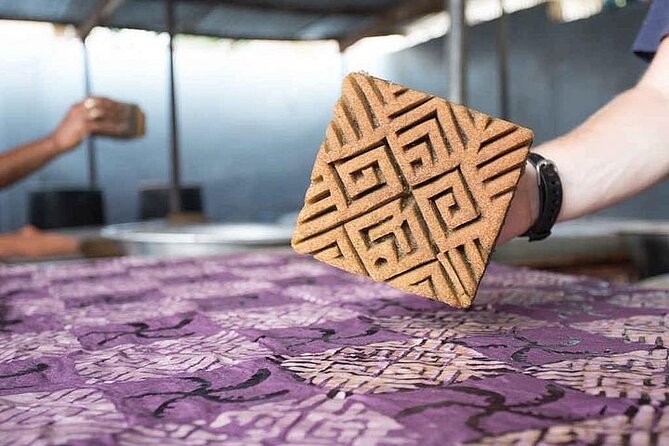
The batik class gives you a chance to work beside local batikers for about three hours. Wax and dye create the patterns, and two yards of your finished fabric go home with you. The material can later become part of your wardrobe or home, although finishing it into clothing or another item is not part of the scheduled class.
These sessions also help spread the week’s energy. You are not only listening to a guide or walking through a museum. You are learning through touch, color, scent, and repetition.
A few more Accra trips worth weighing up
- 7-Day Private Cultural and Heritage Tour in Ghana
★ 5.0 · 17 reviews - Private Multi-Day Ghana Tour about Culture History and Wildlife – 7 Days
★ 5.0 · 8 reviews - 7days/6nights Eco Tourism
★ 5.0 · 3 reviews
Day 1: A simple arrival in Accra
The first day is intentionally light. You arrive in Accra, meet your transfer, and go to the hotel. The transfer takes about an hour, and no admission fee is charged.
That simplicity is welcome after an international flight. You can use the evening to rest, adjust to the city, and prepare for an early start the next morning. Hotel details are not specified, so confirm the property, meal arrangements, and check-in time before paying.
Private transportation is included throughout the tour, with an air-conditioned vehicle. That is useful in Ghana’s heat, especially on the Cape Coast and Aburi days. It also means your group avoids the work of arranging separate taxis for every stop.
Day 2: Pottery, Nkrumah, and Accra’s main sights
The second day begins with pottery at Happy Art Academy. Set aside three hours for the workshop, including the painting stage. Since your creation may need time to dry or be handled carefully, ask how and when it will be ready for collection or transport.
The city tour follows. Accra has served as Ghana’s capital since 1877 and is the country’s most populous city. The route passes through administrative and economic districts, giving you a basic sense of how the capital is organized rather than confining you to one museum.
The scheduled sights include Artiste Alliance Gallery, the W.E.B. Du Bois Center for Pan African Culture, and Independence or Black Star Square. Each adds a different layer. The public squares connect you with Ghana’s modern national identity, while the Du Bois Center links the country to wider Pan-African thought.
The Kwame Nkrumah Memorial Park receives about two hours. The grounds include Nkrumah’s mausoleum, a museum about his life, his former residence, the Eternal Flame of African Liberation, and landscaped gardens. You learn about his early life, political career, and vision for African independence.
This is one of the week’s most important history stops. Kwame Nkrumah was Ghana’s first president and a major figure in the country’s independence. The park gives you a place to connect political ideals with a specific person, rather than treating independence as a date on a timeline.
The Center for National Culture and Arts Center round out the day. At the Arts Center, bargaining is part of the shopping experience. If you are not used to negotiating, keep your tone friendly, know what you are willing to pay, and avoid treating the exchange like a confrontation. The goal is to buy something you genuinely want at a fair price.
Day 2 covers a lot. The advantage is variety. The drawback is that the day may feel full, particularly after a hands-on class in the morning. Keep water with you and wear comfortable shoes.
Day 3: Black soap and Accra’s gallery circuit
Day 3 begins with another three-hour workshop, this time focused on black soap. At ALL PURE NATURE, you learn how plant-based ingredients and traditional methods come together. The session includes mixing, molding, and adding aromatic oils and botanicals.
The appeal is its direct connection to daily life. This is not just an object made for tourists. It is a household and beauty product, and the class helps explain why its ingredients and preparation matter. You also leave with a personalized product, though the exact amount is not specified.
The afternoon shifts to contemporary and traditional African art. Gallery 1957 presents contemporary African work. Artists Alliance Gallery covers a wider range of paintings, sculptures, and textiles from across the continent. Dot.ateliers in South La adds another stop to the gallery route.
An hour is allocated to each gallery. That gives you enough time for an introduction and a look around, but not necessarily the slow pace of a serious collector. If one exhibition catches your attention, ask your guide about adjusting the timing. Since this is a private tour, your group may have more room to shape the day than it would on a large coach excursion.
The art route is especially useful after the previous day’s historical sites. You see Ghana not only through national monuments, but also through current artistic work and commercial galleries. It helps connect the country’s past with its present creative life.
A completely different sort of day out of Accra:
- The Cape Coast Day Tour
★ 5.0 · 525 reviews - Experience the Beauty, History and the Culture Of Accra in a Day
★ 5.0 · 323 reviews - The Cape Coast Tour
★ 5.0 · 177 reviews - From Accra: Cape Coast, Elmina Castle & Kakum Park Day Tour
★ 4.6 · 144 reviews
Day 4: Use the free day wisely
Day 4 is at leisure. You can relax at the hotel, recover from the first three days, or make your own plans in Accra.
A free day is valuable here because the scheduled program is active. You may want to keep it genuinely slow rather than fill every hour. It also gives you a chance to revisit a market or gallery, handle personal errands, or simply catch up on rest.
The tour does not specify extra activities for this day, so any independent outing, meal, or entry fee would be your responsibility. Ask the operator or hotel for current suggestions rather than assuming a particular attraction is included.
Day 5: Kakum’s forest and Cape Coast Castle
Day 5 is the longest historical and nature outing. After breakfast, you travel toward Cape Coast through the former Denkyira Kingdom area and continue to Kakum National Park.
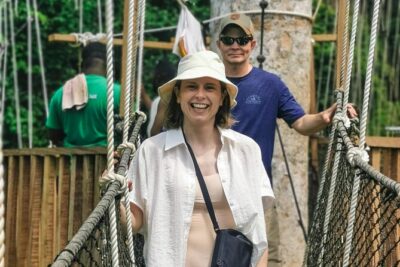
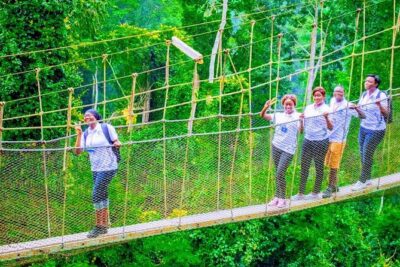
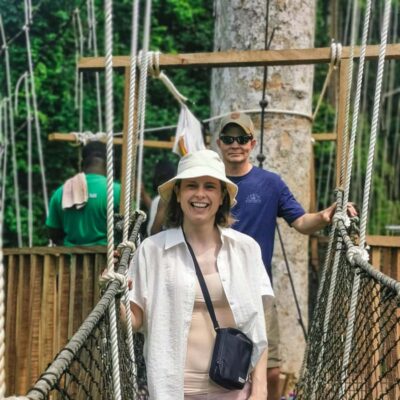
Kakum is one of West Africa’s remaining tropical rain forests. You have two stated choices: a two-kilometer nature walk or the canopy walkway, suspended about 40 meters above the forest floor. The walk lets you focus on plants, animals, and medicinal uses. The elevated walkway provides a different view and a stronger sense of height.
Choose based on comfort and interest. The canopy option may be the memorable choice if you enjoy heights. The forest walk may suit you better if you want to concentrate on plant life and the guide’s explanations. The park visit lasts about four hours, including the selected activity.
Cape Coast Castle follows, with around three hours devoted to the site. Built by the Swedes in 1653 and later taken over by the British, the castle played a role in the trans-Atlantic slave trade. The tour includes the dark, confined dungeons and the West African Historical Museum.
This visit can be emotionally difficult. The cramped rooms and subject matter are not presented as light sightseeing, and they should not be. The value lies in facing the physical setting where enslaved Africans were held and in learning about the relationships among European traders and African groups that made the trade possible.
Give yourself a little quiet time after the castle if needed. The drive back to Accra follows the visit, so this is a demanding day both physically and emotionally. Comfortable clothes help, but the larger tip is to approach Cape Coast Castle with respect and patience.
Day 6: Make batik, then head to Aburi
The final full sightseeing day starts with batik in Accra. During the three-hour class, you learn to apply wax and dye to create patterns on fabric. You take two yards of your work home, giving you a clear souvenir with a story attached.
Batik is a good workshop choice because the result is visual and practical. You can see how repeated steps create a larger pattern, and small variations make the fabric your own. The description lists no admission charge for this stop, though the overall tour price includes the program.
After lunch or a suitable break, the route continues to Aburi Botanical Gardens. The gardens were created in 1890 for recreation and scientific research. They contain plants and butterflies from around the world, and the town of Aburi is described as a pleasant place with local history and welcoming residents.
The gardens take about three hours. Rental bicycles are available for tours in the hills, according to the supplied details, but the bicycle cost and availability for your exact visit are not specified. Ask before counting on a cycling option.
This is a calmer finish than another museum-heavy afternoon. It gives you open space, plant life, and a change from Accra’s urban streets. The drive to Aburi also broadens the trip beyond the capital without requiring an overnight move.
Transport, meals, and the real value of $2,610
At $2,610 per person, the tour is not a budget Ghana introduction. Its value depends on what you want included in one organized package.
You receive private transportation, an air-conditioned vehicle, airport pickup, and five breakfasts. The itinerary also includes admission to the listed workshops, museums, galleries, Kakum, Cape Coast Castle, and Aburi Botanical Gardens. For a private group, the convenience of one vehicle and one arranged schedule can justify part of the cost.
The price does not include airport or departure tax, landing fees, facility fees, lunches, or dinners. Those extras can affect your final budget. Hotel details are not provided in the supplied information, so ask exactly which properties and room types are included.
The strongest value comes from the range of experiences. You get three hands-on classes, city history, modern art, a national park, a major slavery-history site, and a botanical garden. If you only want a beach break or a short Accra stay, you will pay for more structure than you need. If you want a private, varied introduction to Ghana, the price may feel more reasonable.
The tour is private, and only your group participates. That is a practical advantage for families, school groups, and friends. It can also make the pace more comfortable because questions, shopping time, and workshop attention stay within your group.
The four available ratings are shown as five out of five, and the written feedback gives useful clues about service. One family group described the bus as comfortable, the hotels as good, and the restaurants as outstanding. Another praised guide Mohammad for making requested arrangements happen, while also noting the steady supply of cold drinks and clear communication. Those details matter on long, warm sightseeing days.
Who should book this Ghana experience?
I would recommend it most strongly to you if you want culture through several formats. It suits people who like making things, families who need variety, school or educational groups, and private parties that prefer their own vehicle.
It is also a good choice if you want an introduction to Ghana without arranging every transfer yourself. The airport pickup, organized hotel transfers, and private vehicle remove much of the planning burden.
I would be more cautious if you prefer a slow itinerary. Day 2 and Day 3 contain several stops, and Day 5 includes both Kakum and Cape Coast Castle before the return to Accra. You should also think carefully about the emotional weight of Cape Coast Castle and the price of a week with several meals and fees still outside the package.
At booking, confirm the hotel names, meal plan, airport charges, landing and facility fees, workshop take-home arrangements, and whether your preferred Kakum activity is the canopy walkway or forest walk. You can cancel for a full refund up to six full days before the local start time. Cancellation two to six days ahead brings a 50 percent refund, while cancellation less than two days ahead is nonrefundable.
FAQ
Is airport pickup included?
Yes. Airport transfer to the hotel is scheduled on Day 1, and pickup is offered as part of the experience.
How long does the tour last?
The tour lasts approximately seven days, from arrival in Accra on Day 1 through airport transfer and departure on Day 7.
Is this a private tour?
Yes. Only your group participates in the private tour or activity.
What meals are included?
Five breakfasts are included. Lunches and dinners are not listed as included.
Is transportation provided?
Yes. Private transportation in an air-conditioned vehicle is included.
What craft workshops are part of the tour?
The program includes traditional pottery making, black-soap making, and batik making. The pottery class includes painting, the soap class includes essential oils and botanicals, and the batik class includes two yards of finished handiwork to take home.
What are the choices at Kakum National Park?
You can choose a two-kilometer nature walk through the forest or a canopy walkway about 40 meters above the forest floor.
What is the cancellation policy?
Cancel at least six full days before the local start time for a full refund. Cancellation two to six full days ahead qualifies for a 50 percent refund. Cancellations less than two full days before the start time are nonrefundable.
Should you book the 7 Day Artisanal Tour?
Book it if you want Ghana presented through craft, history, art, and nature, and you value private transport more than a low package price. The pottery, black soap, and batik sessions give the week a personal feel, while Kakum and Cape Coast add the country’s larger natural and historical story.
Skip it if you want an unstructured holiday, need every meal and fee bundled into the price, or prefer to spend most of your time in one place. Before committing, confirm the hotel and extra charges. For the right group, this is a thoughtful and varied way to meet Ghana through people, materials, memory, and place.
Just added around Accra
- Experience Cape Coast Castle and Kakum National Park★ 4.5 · 3 reviews
- Experience Northern Ghana In 10-Days★ 5.0 · 3 reviews
- Discover Ghana – Wli Waterfalls, Mountain Afadjato, Monkey Sanctuary & Akosombo.★ 4.5 · 3 reviews
- Cultural Tour Of Ghana And South Africa 12 Days★ 5.0 · 3 reviews
- Accra: City Highlights Half-day Guided Tour with Transfers★ 4.1 · 3 reviews
- Accra: Half day private safari with pick up★ 3.5 · 3 reviews
- Full Day Accra Guided Tour★ 5.0 · 3 reviews
- Experience Aburi Botanical Gardens And Boti Water Falls In A Day.★ 5.0 · 3 reviews
Tours, compared.
Cape Coast, Elmina Castle & Kakum Park Day Tour
Read our review →