
Reviewed · MULTI-DAY GHANA ITINERARIES
Private Multi-Day Ghana Tour about Culture History and Wildlife – 7 Days
Ghana rewards curious visitors. This seven-day private journey links Accra, Kumasi, and the Cape Coast area with local guides, historic sites, craft villages, markets, and Kakum National Park. I like the strong mix of experiences, especially the chance to meet artisans making kente, adinkra cloth, beads, brasswork, and batik. I also like that airport transfers, accommodation, meals, transport, water, admission fees, and a private guide are included.
The main consideration is the pace. You cover a lot of ground by road, and several days run from morning into evening. Kakum is the main wildlife stop, so you should book this for culture and history first, with rainforest scenery and animal information as an added part of the trip, not as a full safari.
In This Review
- Key points to know before booking
- What the $3,095 price really covers
- Day one begins with a useful airport welcome
- Accra connects national history with daily life
- The road to Kumasi includes hills, plants, and beads
- Ashanti villages turn cloth into living history
- Kumasi brings kings, markets, and everyday commerce
- Kakum puts you above the rainforest
- Cape Coast and Elmina confront the past
- Fort Amsterdam makes the final coastal link
- The guide makes the difference
- Who should book this Ghana tour?
- FAQ
- Is this a private Ghana tour?
- How long does the tour last?
- What meals are included?
- Are airport transfers included?
- Does the tour include wildlife viewing?
- Are international flights and visas included?
- Can the tour be canceled for a full refund?
- Should you book it?
Key points to know before booking

- Seven days across three very different regions: Accra, the Ashanti heartland around Kumasi, and Ghana’s historic central coast.
- Private touring only: Your group travels together rather than joining a large shared coach.
- Hands-on local crafts: You can see bead making, weave kente, print adinkra cloth, cast brass, and make a batik garment.
- Powerful slavery-era history: Cape Coast Castle, Elmina Castle, Fort Amsterdam, and Assin Manso give the coastal days serious weight.
- One memorable rainforest adventure: Kakum’s seven suspended bridges rise about 40 meters above the forest floor.
- Strong practical value: The $3,095 per-person price includes lodging, meals, transport, guides, water, excursions, fuel, and airport transfers.
What the $3,095 price really covers
At $3,095 per person, this is not a low-cost Ghana trip. It is a private, fully arranged package designed to remove much of the work from a multi-city journey.
The price includes an air-conditioned vehicle, an experienced driver, an expert local guide available around the clock, accommodation, unlimited mineral water, fuel, airport transfers, excursion fees, insurance, and office support. You also receive six breakfasts, six lunches, and seven dinners. International flights, visas, and soft or alcoholic drinks are extra.
That list matters in Ghana because the route involves long drives and several changes of base. You are not simply paying for entry tickets. You are paying for a vehicle, fuel, local coordination, and a guide who can explain the cultural meaning behind what you see.
A private trip also gives you more room to ask questions or spend longer at a craft workshop. Families and small groups may find the price easier to justify, especially since group discounts are offered. Solo visitors should look closely at the cost, since the listed price is per person and private touring can be expensive for one traveler.
The included meals make budgeting easier, though you should plan separately for drinks and personal purchases. The markets and workshops are a major part of the experience, so you may want cash for fabric, beads, brass items, carvings, and other locally made goods.
More multi day trips around Accra:
- Ghana 8 Day Special
★ 5.0 · 38 reviews - 10 Days Trip to Cape Coast and Elmina Castles from Accra
★ 5.0 · 31 reviews - 10 Days Ghana Cultural and Heritage Trip
★ 5.0 · 31 reviews
Day one begins with a useful airport welcome
Your guide and driver meet you at Kotoka International Airport in Accra. After customs, you look for the Ashanti African Tours sign outside the main terminal building.
That airport pickup is a practical start, particularly if you are arriving after a long international flight. You do not need to work out your first transfer alone, and the same guide team is intended to accompany you throughout the trip.
The first day is mainly arrival time, with the rest of the day available for transfer, settling in, and rest. The schedule lists no admission charge for this day.
Accra connects national history with daily life
Your first full sightseeing day begins at the National Museum of Ghana. The museum focuses largely on ethnographic displays and presents material from Ghana and other parts of West Africa. It is a useful place to begin because it gives you a broad frame for the traditions, objects, and symbols you will encounter later.
Allow about an hour here. The adjoining garden contains sculptures linked to West African customs and history, and traditional fabrics and crafts are available to view and purchase.
Next comes James Town, one of Accra’s oldest suburbs. A walking tour takes you past old structures, the colorful fishing boats on the beach, and the 30-meter lighthouse built by the British in 1871.
Fort James dates from 1673, when it served as a British trading post. The fort, along with the Dutch Fort Crêvecœur and Danish Fort Christiansborg, reflects the European competition that shaped this part of the coast. James Town is not a polished museum district, and that is part of its value. You see a living neighborhood alongside the remains of colonial trade.
Lunch is at Country Kitchen, which serves West African and continental food. In the afternoon, you visit Black Star Square and Independence Square, including the enclosed flame of African liberation lit by Kwame Nkrumah in 1961.
The Kwame Nkrumah Memorial Park then shifts the focus to Ghana’s independence. Nkrumah’s final resting place is set in gardens, with a museum containing photographs, artifacts, and material about his life. Nearby, the National Cultural Center offers Ghana’s largest outdoor arts and crafts market, with items from across West Africa.
Your final stop is Teshie Nungua, known for fantasy coffins. These unusual coffins can represent the occupation, interests, or personality of the person who died. Designs may take the form of cars, cocoa pods, airplanes, crocodiles, shoes, bottles, or boats.
This is an important cultural stop, but it can feel surprising if you expect a conventional museum visit. Listen carefully to the guide’s explanation of Ghanaian funeral traditions, where solemn burial rites are followed by celebration and a belief that the dead move into another world.
The road to Kumasi includes hills, plants, and beads
Day three starts with a visit to TK Beads in Accra. You watch artisans use traditional methods to make beads, then browse the onsite selection. Beads remain important in Ghanaian ceremonies, durbars, and festivals, where they can signal beauty and wealth.
The tour then heads into the Akuapem hills. Aburi Botanical Gardens were founded by the British in 1890 and contain both indigenous and exotic plants. Your guide identifies trees and plants, including some used for medicine, and explains their importance to local communities.
On a clear day, the gardens offer views toward Accra and Tema. The stop provides a welcome change from city sightseeing, though the route also means a long road day. Nearby Aburi craft village sells African drums, sculptures, and other handmade items.
Lunch takes place in Koforidua, the capital of Ghana’s Eastern Region, before continuing to Kumasi. Arrival is expected in the early evening, followed by dinner and free time.
This is one of the days when a private vehicle earns its keep. You are moving between regions, not simply visiting nearby attractions. Keep the schedule in mind if you prefer slow mornings or dislike long periods on the road.
More wildlife trips in Accra:
- 15-Day Ghana Wildlife Private Tour
★ 4.5 · 9 reviews - 9 Day Ghana Wildlife and Culture Tour
★ 5.0 · 5 reviews - 5 Days Adventurous Wildlife Safari
★ 4.5 · 49 reviews
Ashanti villages turn cloth into living history
Day four explores the surviving traditional buildings of the former Asante Empire. The buildings are made from bamboo, timber, mud, and thatch, and are now UNESCO World Heritage Sites. Ten active shrines remain within the structures.
The walls carry motifs based on Adinkra symbols. These symbols have specific meanings, and your guide explains how they connect architecture, belief, and social life. The site also relates to Nana Yaa Asantewaa, the important Ashanti woman warrior who led resistance against the British in the 1901 war.
You then visit Adanwomase, associated with Ghana’s kente cloth. Weavers work with traditional looms outside their homes, and families have passed the craft down through generations. The visit is stronger than simply shopping because you see the labor behind the finished cloth and learn that some designs belong only to particular regions.
At Ntonso, you learn about adinkra cloth and its symbols. Craftspeople carve designs from calabash shells and print them onto cloth with natural dyes made from tree bark. Adinkra predates kente and remains important for funerals, festivals, and other formal occasions.
A particularly good feature is the chance to make your own strip of adinkra cloth. You choose symbols with personal meaning and take home a small piece of your work. It is a modest souvenir, but it gives you a better sense of how the patterns are made.
After lunch, Sokoban Krofrom introduces another traditional craft: brass casting. Artisans produce beads, jewelry, and statues using methods that have changed little over time. You can watch a demonstration and browse the village shops.
These stops require respectful curiosity. They are working communities, not stage sets. Your guide helps explain the process, but you should ask before photographing people or workshops.
Kumasi brings kings, markets, and everyday commerce
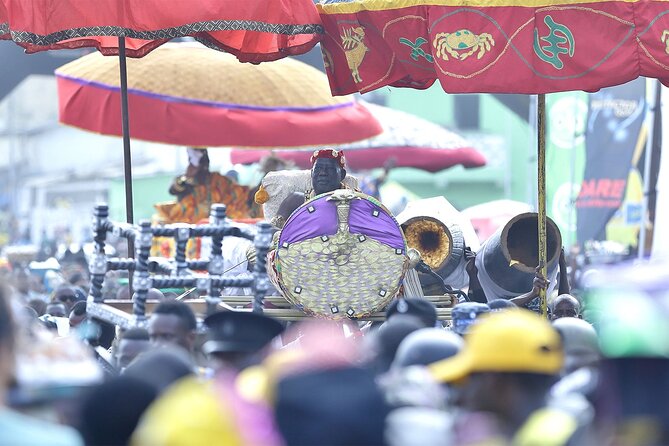
Day five begins at Manhyia Palace Museum, the former home of the Asantehene, the king of the Ashanti people and ruler of the Asanteman Kingdom. The museum explains Ashanti political traditions, royal legacies, and the development of the kingdom.
The National Cultural Centre follows. It sits in one of Kumasi’s older suburbs and continues the focus on local arts and crafts. If you enjoy textiles, carving, and handmade objects, this is a good place to compare work from different communities.
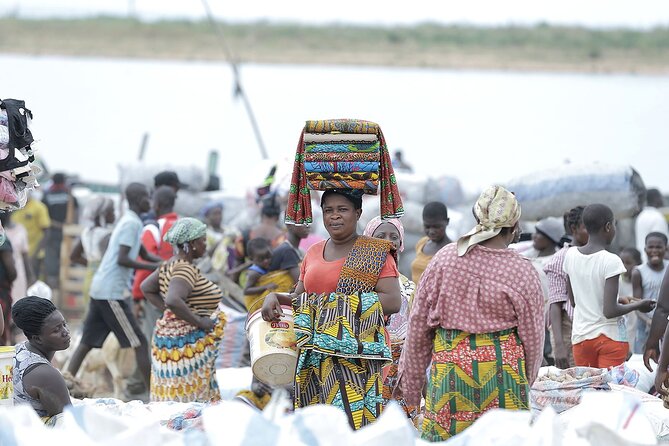
Kejetia Market offers a sharp change of mood. It is described as one of the largest outdoor markets in West Africa, with tightly packed stalls and trade continuing for much of the day. You can see the practical side of Kumasi here, from daily shopping to souvenir buying.
A market visit can be tiring. The paths are crowded, the layout can feel confusing, and bargaining is part of the experience. Stay close to your guide, keep valuables secure, and avoid rushing from stall to stall. The reward is a direct look at ordinary commerce rather than a carefully arranged cultural display.
After lunch, the route heads south toward Elmina. A stop at Assin Manso introduces the Ndonkor Nsuo, known as the Enslaved African River, and the town’s place along routes connected to the transatlantic slave trade.
You reach Elmina in the early evening. This transfer is another long stretch, but it places you close to the coast for the next day’s major sites.
Kakum puts you above the rainforest
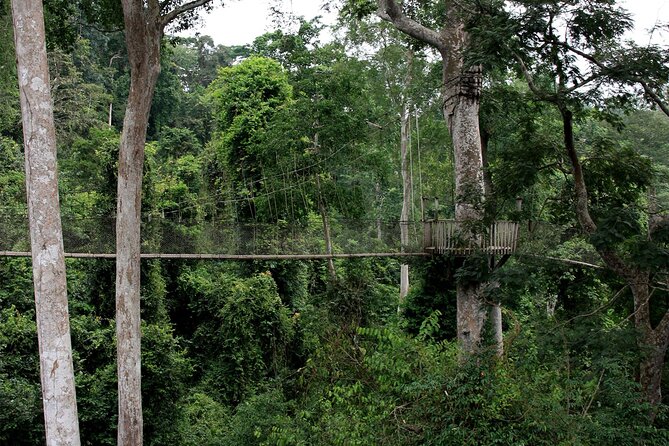
Day six begins early at Kakum National Park. The park protects tropical Guinea rainforest, including habitat that once supported local communities with food and other resources.
The canopy walkway is the headline experience. Seven bridges are attached to seven emerging trees about 40 meters above the forest floor. The suspended walk offers views across the treetops and is likely to be one of the trip’s most memorable moments.
The walkway may not suit anyone uncomfortable with heights. The schedule also depends on suitable weather, so flexibility matters.
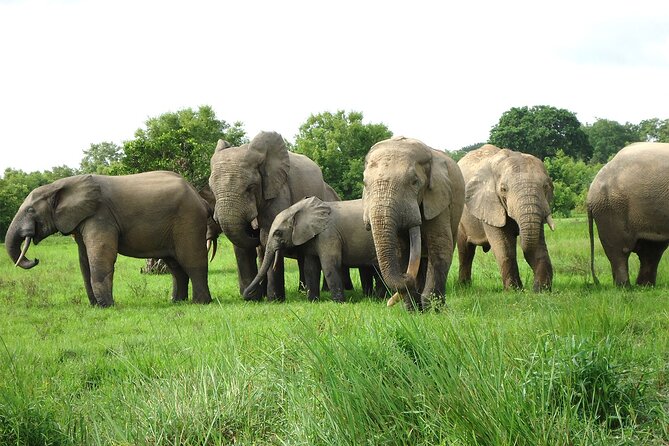
At the park headquarters, an information center explains the area’s plants and animals. More than 40 mammal species have been recorded in the park, including forest elephants, leopards, and six primate species. The tour presents wildlife information, but this is not a dedicated animal-watching expedition. You should expect rainforest ecology and the canopy structure to be the main focus.
The nearby International Stingless Bee Project adds an unusual environmental stop. Ghana has about nine identified species of stingless bees, and the center explains their role in local ecosystems, medicinal uses, and honey production.
Cape Coast and Elmina confront the past
After lunch, Cape Coast Castle provides the most emotionally difficult part of the tour. The UNESCO World Heritage site held more enslaved Africans captive than any other castle in West Africa. The guided visit includes the dungeons, the Door of No Return, and a museum covering the castle and the history of Cape Coast.
Allow about three hours. This is not a quick photo stop. The castle asks you to confront the human cost of the transatlantic slave trade, and the transition from the forest to this place of confinement is stark.
The afternoon continues with a batik workshop through Global Mamas, an organization that helps local women build artistic skills and sell finished products through fair-trade markets. You learn the process from heating wax and stamping designs to preparing the cloth, then make a garment or cloth item to take home.
The schedule lists two batik-related stops, so expect a substantial workshop rather than a brief demonstration. That hands-on time helps balance the heavier historical sites with a present-day look at local work and income.
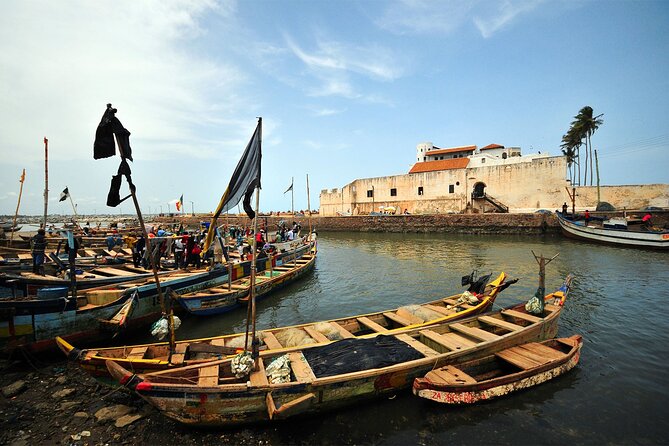
In Elmina, you visit the fishing market and walk to the boat builders. Traditional wooden boats serve the fishing community, and the building process offers another view of practical skills passed through families.
Elmina Castle, also called St. George’s Castle, dates from 1482 and is the oldest surviving colonial building in sub-Saharan Africa. Its museum focuses on local history and the castle’s role in the slave trade. Afterward, you can return to your accommodation or go into town for local nightlife.
Fort Amsterdam makes the final coastal link
Day seven begins slowly. You have time to use the accommodation facilities, swim, relax on the beach, or enjoy the coast before lunch overlooking the Gold Coast.
The return route to Accra includes Fort Amsterdam in Abandze. The British built it between 1631 and 1638, and it later became the headquarters of English activity on the Gold Coast. The Dutch captured it in 1665 after a long battle, giving the fort its later name.
This final fort adds another layer to the coastal story. The castles and forts are not isolated monuments. Together, they show how European trading powers competed for gold, territory, and control of the coast.
Back in Accra, you may have time at Accra Mall for modern shopping and final souvenirs. Dinner at a locally owned restaurant gives you a last chance for Ghanaian and international food before the airport transfer.
The timing on the last day depends on your departure. Because the itinerary includes a return drive, lunch, Fort Amsterdam, possible mall time, dinner, and airport transfer, give the guide your flight details well in advance.
The guide makes the difference
The company uses local guides with expertise in Ghanaian culture, history, plants, and animals. That matters most at places where a quick visit would otherwise leave you with only a few dates and photographs.
Past tour correspondence specifically praises Foster Frimpong as a senior birdwatching guide with an exceptional ear for bird calls. He is not confirmed as the guide for this seven-day itinerary, but you can ask if he is available if the nature portion matters greatly to you.
Rosematilda is also identified as a responsive contact for itinerary planning and email communication. The company has arranged custom trips for families, including one with an eight-year-old child, and has adjusted tours to suit specific interests.
That flexibility is worth asking about before you pay. You might want more time in Kumasi, stronger birding attention at Kakum, fewer shopping stops, or a slower pace for a family group. The advertised route is full, but private touring gives you a better chance of discussing changes.
Who should book this Ghana tour?
I would recommend it to you if you want a guided first look at Ghana that combines major historical sites with real craft communities. It suits families, small groups, and visitors who prefer having transport and accommodation organized in advance.
You will get the most from it if you enjoy asking questions, shopping directly from artisans, and learning how objects are made. The kente, adinkra, brass, bead, and batik visits are not filler. They are some of the clearest ways to connect Ghana’s past with its present.
I would hesitate if your main goal is wildlife. Kakum is excellent for rainforest views, canopy walking, and ecological information, but the route does not provide several safari days or a dedicated wildlife schedule.
I would also hesitate if you want an unhurried holiday. The tour covers major distances and packs several sites into days five and six. The private format softens that pressure, but it does not shorten Ghana’s roads.
Cancellation is available for a full refund if you cancel at least three full days before the local start time. Changes later than that are not accepted, and poor weather or failure to meet the minimum number of participants may lead to a new date, another experience, or a refund.
FAQ
Is this a private Ghana tour?
Yes. Only your group participates in the activity, and the tour includes a private air-conditioned vehicle, driver, and local guide.
How long does the tour last?
The tour lasts approximately seven days, beginning with airport pickup in Accra and ending with an airport transfer after returning to Accra.
What meals are included?
The package includes six breakfasts, six lunches, and seven dinners. Soft drinks and alcoholic drinks are not included.
Are airport transfers included?
Yes. Airport transfers at Kotoka International Airport in Accra are included at arrival and departure.
Does the tour include wildlife viewing?
The wildlife portion centers on Kakum National Park. You visit the rainforest canopy walkway and an information center covering mammals, primates, plants, and other local wildlife.
Are international flights and visas included?
No. You must arrange and pay for your international flights and visa separately.
Can the tour be canceled for a full refund?
You can cancel for a full refund at least three full days before the experience begins, based on local time. Later cancellations are not refunded, while weather or minimum-participant cancellations may result in another date, another experience, or a full refund.
Should you book it?
Book this tour if you want Ghana explained through its people, crafts, independence story, Ashanti traditions, coastal forts, and rainforest. The best parts are the personal scale, the range of local workshops, and the strong historical route from Accra to Elmina.
Ask about the exact guide, available custom changes, accommodation details, and your group’s preferred pace before booking. If you accept the long driving days and understand that Kakum is one wildlife stop rather than a full safari, the $3,095 price can represent fair value for a carefully managed private introduction to Ghana.
More 7-Day Experiences in Accra
- 7-Day Private Cultural and Heritage Tour in Ghana
★ 5.0 · 17 reviews - 7 Day Artisanal Tour
★ 5.0 · 4 reviews - 7days/6nights Eco Tourism
★ 5.0 · 3 reviews
More History Tours in Accra
- Experience the Beauty, History and the Culture Of Accra in a Day
★ 5.0 · 323 reviews - Ghana Heritage Tours – Beyond The Return
★ 5.0 · 36 reviews - Cape Coast Historical Day Tour
★ 5.0 · 24 reviews - Full-Day Private Culture and History Tour of Accra
★ 5.0 · 23 reviews
Just added around Accra
- Experience Cape Coast Castle and Kakum National Park★ 4.5 · 3 reviews
- Experience Northern Ghana In 10-Days★ 5.0 · 3 reviews
- Discover Ghana – Wli Waterfalls, Mountain Afadjato, Monkey Sanctuary & Akosombo.★ 4.5 · 3 reviews
- Cultural Tour Of Ghana And South Africa 12 Days★ 5.0 · 3 reviews
- Accra: City Highlights Half-day Guided Tour with Transfers★ 4.1 · 3 reviews
- Accra: Half day private safari with pick up★ 3.5 · 3 reviews
- Full Day Accra Guided Tour★ 5.0 · 3 reviews
- Experience Aburi Botanical Gardens And Boti Water Falls In A Day.★ 5.0 · 3 reviews
Multi-Day Ghana Itineraries, compared.
10 Days Trip to Cape Coast and Elmina Castles from Accra
Read our review →

9-Day Private Guided Tour of West Africa (Ghana, Togo & Benin)
Read our review →Browse the lists this tour appears in