
Reviewed · MULTI-DAY GHANA ITINERARIES
9-Day Private Guided Tour of West Africa (Ghana, Togo & Benin)
West Africa rewards curious travelers. This nine-day private journey links Ghana, Togo, and Benin through monuments, markets, forests, waterfalls, and coastal sites tied to the Atlantic slave trade. I like the mix of outdoor activity and serious cultural stops, and I like that your group travels in a private, air-conditioned vehicle with WiFi.
The guide is another strong point. Sam, also called Samuel, is praised for careful planning, clear communication, and personal attention. The tour can also be arranged in English or French, which helps make a complicated cross-border trip easier to manage.
The main drawback is the pace. You cover a lot of ground in nine days, and some days include long drives followed by several visits. At $3,700 per person, this is not a budget tour, so you should value privacy, convenience, and a guide who can adjust the experience to your interests.
In This Review
- Key points to know before booking
- Accra begins the trip with a gentle landing
- Kakum and Elmina bring nature and memory together
- Monkeys and Wli Waterfalls add a welcome change of pace
- Lomé brings markets, national symbols, and difficult subjects
- Agbodrafo and Togo Ville slow the historical clock
- Ouidah explains Benin’s religious and coastal past
- Ganvie closes the route on the water
- What $3,700 per person really buys
- The vehicle, pace, and guide make the difference
- Who should book this West African route
- Should you book it?
- FAQ
- How long is the tour?
- Where does the tour start?
- Which countries does the tour visit?
- Is transportation private?
- Are meals included?
- Is the tour offered in English?
- Is the tour suitable for most people?
- Can I cancel for a full refund?
Key points to know before booking
- Three countries in nine days: Ghana, Togo, and Benin are connected in one private itinerary, with pickup in Accra and final drop-off at your hotel or airport.
- Nature with real activity: Kakum’s canopy walk, the hike toward Mount Afadjato and Wli Waterfalls, and the Tafi Atome Monkey Sanctuary add movement to the cultural program.
- A serious look at West Africa’s past: Elmina Castle, Agbodrafo’s slave castle, Ouidah, and the Door of No Return offer difficult but important context.
- Private transport matters: Your group rides in an air-conditioned vehicle with WiFi, a practical advantage on long road days.
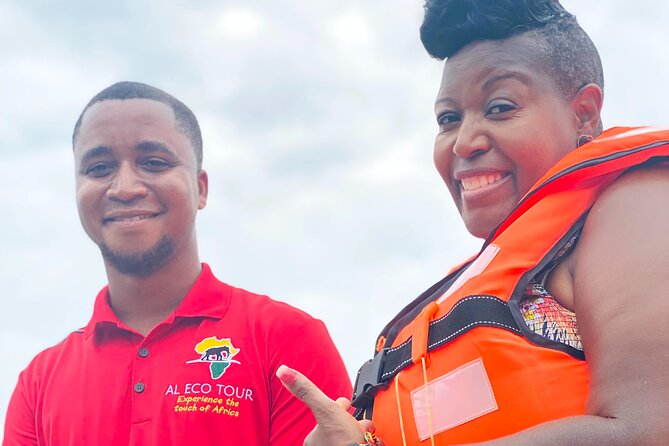
- Sam receives repeated praise: Specific feedback highlights Samuel’s communication, flexibility, and attention to comfort.
- The trip is best for active, culturally curious visitors: Expect early starts, full sightseeing days, border travel, markets, museums, and outdoor stops rather than a relaxed resort holiday.
Accra begins the trip with a gentle landing
The first day is mostly about meeting your guide and settling into the arrangement. Pickup is available at any point in Accra, and the listed start time is 8:00 a.m. That flexibility is useful if you are arriving at a hotel or need help getting oriented in the city.
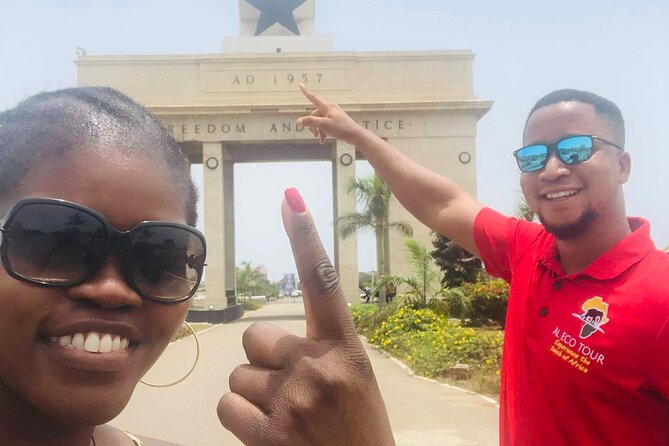
Day two gives Accra its proper place in the story. At the Dr. Kwame Nkrumah Memorial Museum and Black Star Square, you begin with Ghana’s independence and modern national identity. The museum visit is scheduled for about an hour, followed by roughly 30 minutes at Black Star Square.
The W.E.B. Du Bois Memorial Center adds another layer. Du Bois, the American scholar and civil rights thinker, spent his final years in Ghana. The 40-minute visit connects Ghana to a wider African and African American political story.
You then move to the Art Centre and Makola Market for about an hour. These stops are less formal and more sensory. You can expect shopping, local goods, and the practical challenge of moving through a market with plenty to look at. If you like buying crafts, ask your guide for help with prices and choices. The schedule is short, so do not expect a leisurely market morning.
The first two days are well judged. Accra’s memorials provide context before you head toward the coast and neighboring countries. Sam’s willingness to customize the trip, noted in his feedback, could be especially useful here if you have a strong interest in independence history, art, or African diaspora connections.
More multi day trips around Accra:
- Ghana 8 Day Special
★ 5.0 · 38 reviews - 10 Days Trip to Cape Coast and Elmina Castles from Accra
★ 5.0 · 31 reviews - 10 Days Ghana Cultural and Heritage Trip
★ 5.0 · 31 reviews
Kakum and Elmina bring nature and memory together
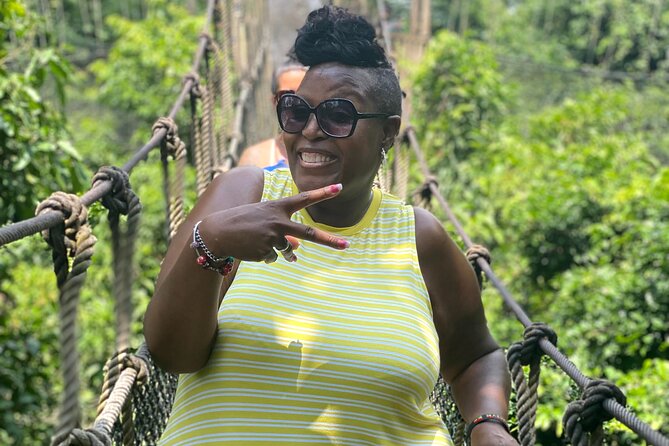
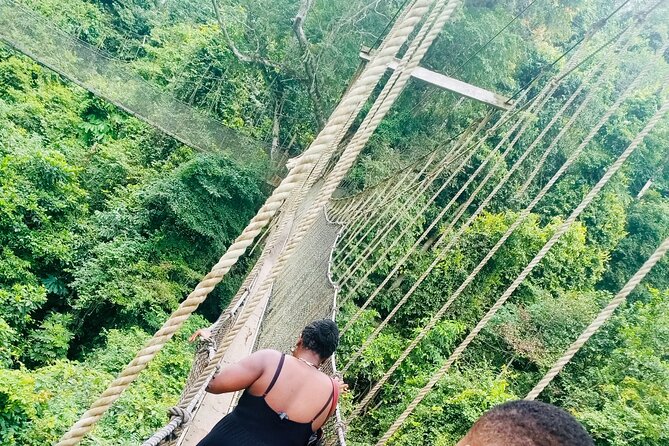
Day three heads west to Kakum National Park for a canopy walk. The visit is scheduled for about an hour, and admission is included. This is one of the tour’s clearest outdoor highlights. From the elevated walkways, you get a different view of the forest than you would from a road or ordinary footpath.
The stop is brief, so think of it as a focused experience rather than a full park visit. You may see local plant and animal life, but the itinerary does not promise specific wildlife sightings. Wear shoes suitable for walking and expect the canopy section to be more active than the museum stops in Accra.
From Kakum, the route continues to Elmina Castle. The listed visit lasts about an hour. The castle is one of the most important sites on the Ghanaian coast, and it deserves a quiet, attentive visit. Its rooms and shoreline position connect directly to the Atlantic slave trade and European colonial power.
This is not a light sightseeing stop. You may find the castle emotionally difficult, especially as the tour moves through spaces associated with captivity and forced removal. A private guide can help you ask questions at your own pace, which is a real benefit here.
The day pairs a forest canopy with a place of painful memory. That contrast is effective, though the schedule leaves little room for lingering. If you need extra time at Elmina, discuss it with the guide before the day begins.
Monkeys and Wli Waterfalls add a welcome change of pace
Day four moves into a more rural setting with a two-hour visit to Tafi Atome Monkey Sanctuary and Cultural Village. The tour specifically includes the chance to see monkeys, along with a cultural component. This is a good stop for families and anyone who wants direct contact with local conservation work rather than another monument.
The cultural village matters because the visit is not only about animals. You get a look at how a local community presents its traditions and protects the sanctuary. Keep your expectations sensible: the supplied details do not promise a particular number of monkeys or a specific performance.
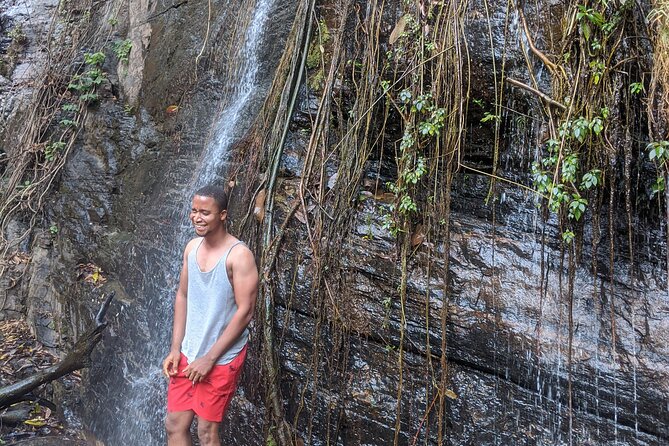
The next stop is Wli Waterfalls, with about an hour scheduled for the visit. The waterfall sits near the highlands around Mount Afadjato, and the tour description includes hiking Mount Afadjato as part of the nature program. The supplied schedule does not give a separate hiking duration, so confirm the exact walking plan before you go.
This is one day when footwear and fitness matter. The route includes outdoor walking, and the waterfall is not the same kind of stop as an urban museum. A private vehicle is helpful because you can keep your day organized without waiting for a larger group.
One past guest singled out Wli Waterfalls as a memorable sight, describing the water dropping from the mountain. That matches the appeal of this day: it gives you a strong visual break after the more formal sites in Accra and Elmina.
Lomé brings markets, national symbols, and difficult subjects
Day five crosses into Togo and focuses on Lomé. The Grand Marché receives the largest block of time, about four hours. That is generous compared with the one-hour market visit in Accra, and it changes the feel of the day.
A four-hour market stop gives you room to browse instead of rushing from stall to stall. It also means you should be ready for heat, noise, crowds, and persistent sales attention. The supplied details do not specify what is included in the market admission, so ask the guide how much time will be spent shopping and how much will be used for orientation.
The National Museum and Monument of Independence follow, with about an hour scheduled. These places help explain Togo’s national story after the more commercial energy of the market. The day ends at Akodessewa, described as the biggest fetish market in Africa, with a one-hour visit.
Akodessewa may be confronting. The word fetish refers here to traditional religious objects and practices, and the site is not arranged like a polished museum. Listen carefully to the guide and approach the visit with respect. You do not need to treat every sight as entertainment. Some places are valuable because they challenge your assumptions.
The tour is offered in English and French, an important practical advantage in Togo and Benin. You should still clarify your preferred language when booking, especially if everyone in your private group does not speak the same language.
A few more Accra trips worth weighing up
- Private Car Service
★ 5.0 · 59 reviews - Private Aburi Hill Guided Tour
★ 5.0 · 34 reviews - Full-Day Accra Safari and Boat Cruise Private Tour
★ 5.0 · 32 reviews - The Agbogbloshie (Accra E-waste and Recycling experience) Private Tour
★ 5.0 · 31 reviews
Agbodrafo and Togo Ville slow the historical clock
Day six centers on Agbodrafo, a coastal area associated with a slave castle, and Togo Ville. The schedule allows about five hours, making this one of the trip’s more substantial cultural days.
That longer block is welcome. Sites connected to enslavement need more than a quick photograph and a hurried explanation. The exact division of time between Agbodrafo and Togo Ville is not provided, so ask your guide what the day will look like.
Togo Ville gives the itinerary a different angle from Lomé’s national museum and market. Instead of concentrating on a capital city, you spend time in a place tied to local identity and regional history. The combination of the slave castle and Togo Ville should help you see how the country’s past is preserved in both formal sites and living communities.
This is also a day when private travel earns its keep. If a particular stop affects you and you need a little more time, you can discuss that with Sam rather than follow a fixed bus schedule. His repeated praise for communication and customization is most relevant on days like this.
Ouidah explains Benin’s religious and coastal past
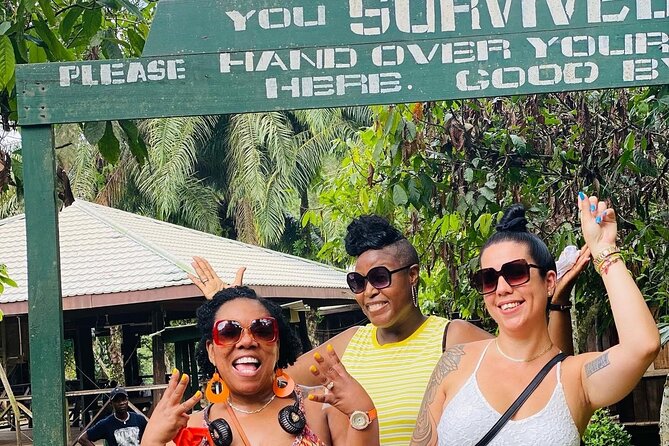
Day seven brings you to Benin, where the Temple des Pythons and the Door of No Return are the major stops. The Temple des Pythons is scheduled for about an hour. It reflects Benin’s religious traditions and is one of the most unusual places on the route.
The site may not suit everyone. Some visitors are uncomfortable around live animals or unfamiliar religious practices. Go with an open mind, but remember that you are entering a place of belief, not simply a strange attraction.
The Ouidah Museum of History also receives about an hour. This visit gives needed context before or after the coastal memorial. The Door of No Return, or La Porte du Non Retour, is scheduled for about 20 minutes.
That final visit is short, but the symbolism is heavy. The monument recalls the departure of enslaved Africans from the coast, and its location turns the history from an abstract lesson into a physical place. You may wish the schedule allowed longer, especially if you prefer thoughtful visits over quick stops.
The tour description lists both the Door of No Return near the Temple des Pythons and La Porte du Non Retour as separate entries. Confirm the exact sequence with your guide, since the names may refer to the same Ouidah memorial area.
Ganvie closes the route on the water
Day eight visits Ganvie, described as a stilt village, for about two hours. This is a fitting final full day because it shifts attention from memorials and museums to a living community shaped by water.
The available details do not state the exact boat arrangements, so you should ask how the visit operates and whether any part requires a separate payment. A bicycle is available for $10 per hour, but that is an optional extra and is not the main focus of the listed Ganvie visit.
Two hours gives you a useful introduction, though not an exhaustive look at village life. Pay attention to how homes, travel, and daily work relate to the water. The value here is not simply taking a scenic ride. It is seeing how people organize a community in a setting very different from Accra, Lomé, or Ouidah.
The final day returns you to Accra for drop-off at your hotel or airport. The listed transfer takes about 40 minutes. Since the tour links three countries, confirm your flight timing carefully before booking. The tour provides a drop-off, but the supplied details do not promise a specific airport transfer schedule or help with flight connections.
What $3,700 per person really buys
At $3,700 per person, this tour asks for a serious budget. The price includes private transportation, an air-conditioned vehicle, onboard WiFi, and eight breakfasts. Admission is included for several major stops, including Kakum, Tafi Atome, Wli Waterfalls, the Lomé museum visits, the Temple des Pythons, Ouidah Museum, and the Door of No Return.
The value depends on how much you would otherwise pay for transport, border travel, guiding, and planning across three countries. If you tried to arrange this route alone, the hardest parts would not be choosing the monuments. They would be coordinating long road days, crossing borders, handling timing, and finding reliable transport.
A private tour also changes the experience. You are not sharing the vehicle with a large group, and only your party participates. That can be worth a premium if you want flexibility, privacy, or the ability to tailor stops to your interests.
Still, the price does not include everything. Bicycle use costs $10 per hour, and the supplied information does not list lunch, dinner, lodging, visas, flights, or other personal spending. Do not assume those costs are covered. Ask for a complete cost breakdown before paying.
The vehicle, pace, and guide make the difference
The air-conditioned car is more than a comfort feature. Road travel is a large part of a three-country route, and cooling, privacy, and WiFi can make long transfers much easier. You should still expect full days, road delays, and changes in energy as the route moves from city centers to rural sites.
Sam is the guide name most closely associated with the experience. Direct feedback describes him as attentive, relaxed, professional, and highly communicative before arrival. One particularly useful detail is that he customized a trip around personal interests and kept the arrival process smooth.
That sort of service is the tour’s strongest selling point. The route itself is appealing, but a private guide determines how much you understand and how comfortable the days feel. Ask in advance about walking levels, the order of stops, border crossings, and how much time you can spend at major sites.
The tour is available in English and French. Most people can participate, and service animals are allowed. It is near public transportation, but since private pickup is offered, you may not need to use public transit during the tour.
Who should book this West African route
I would recommend this tour to you if you want one organized trip covering Ghana, Togo, and Benin, and you prefer a private guide to independent planning. It suits people who enjoy a mix of museums, markets, religious sites, outdoor walks, wildlife, and difficult historical subjects.
It is also a good choice for a family or small group that wants control over the pace. The private format lets you ask more questions and discuss adjustments. The positive feedback about Sam’s personal attention is encouraging, especially for first-time visitors to Ghana and the neighboring countries.
I would be more cautious if you want slow mornings, long hotel stays, or a resort-style holiday. This schedule is active and tightly packed. You should also think carefully about the emotional weight of Elmina, Agbodrafo, and Ouidah. These are important places, but they are not easy sightseeing.
The experience has a five-star rating from seven submitted reviews, with especially strong praise for the guide, communication, educational value, and warm welcome. One person also mentioned an evening nightclub experience and a jet-ski ride at Sogakope Beach Resort on Volta Lake, but those activities are not part of the listed nine-day schedule, so treat them as possible customization rather than included features.
Should you book it?
Book this tour if you want a guided, private introduction to three West African countries and value convenience over the lowest price. The combination of Accra’s political landmarks, Kakum’s canopy walk, Elmina and Ouidah’s difficult history, Togo’s markets, Wli Waterfalls, and Ganvie gives you a broad first look at the region.
Before committing, ask for the exact daily driving times, border requirements, accommodation details, meal coverage beyond breakfast, hiking expectations, and the plan for the Door of No Return visits. If those answers fit your comfort level, the price can make sense for the planning, transport, and personal service included.
Free cancellation is available up to 24 hours before the start time. The trip requires good weather and a minimum number of participants, even though the activity itself is private. If weather or minimum participation cancels the tour, you are offered another date, another experience, or a full refund.
FAQ
How long is the tour?
The experience lasts approximately nine days, beginning and ending in Accra.
Where does the tour start?
Pickup is offered at any point in Accra, with a listed start time of 8:00 a.m.
Which countries does the tour visit?
The route covers Ghana, Togo, and Benin.
Is transportation private?
Yes. Your group uses private transportation in an air-conditioned vehicle with WiFi onboard.
Are meals included?
Eight breakfasts are included. The provided information does not list lunch or dinner as included.
Is the tour offered in English?
Yes. The experience is offered in English and French.
Is the tour suitable for most people?
Most travelers can participate, and service animals are allowed. The itinerary includes outdoor walking and a waterfall visit, so you should confirm the expected activity level before booking.
Can I cancel for a full refund?
Yes. You can cancel at least 24 hours before the experience start time for a full refund. Changes or cancellations made less than 24 hours before the start time are not accepted for a refund.
Just added around Accra
- Experience Cape Coast Castle and Kakum National Park★ 4.5 · 3 reviews
- Experience Northern Ghana In 10-Days★ 5.0 · 3 reviews
- Discover Ghana – Wli Waterfalls, Mountain Afadjato, Monkey Sanctuary & Akosombo.★ 4.5 · 3 reviews
- Cultural Tour Of Ghana And South Africa 12 Days★ 5.0 · 3 reviews
- Accra: City Highlights Half-day Guided Tour with Transfers★ 4.1 · 3 reviews
- Accra: Half day private safari with pick up★ 3.5 · 3 reviews
- Full Day Accra Guided Tour★ 5.0 · 3 reviews
- Experience Aburi Botanical Gardens And Boti Water Falls In A Day.★ 5.0 · 3 reviews
Multi-Day Ghana Itineraries, compared.
10 Days Trip to Cape Coast and Elmina Castles from Accra
Read our review →


Private Multi-Day Ghana Tour about Culture History and Wildlife – 7 Days
Read our review →Browse the lists this tour appears in