
Reviewed · MULTI-DAY GHANA ITINERARIES
Historical & Cultural Tour of Ghana, 12 Days
Ghana’s past is never far away. This 12-day journey links Accra, the Volta region, Kumasi, Lake Bosomtwe, Elmina, Cape Coast, and Kakum National Park in one carefully arranged route. I like the mix of major historical sites and hands-on local visits, especially the Cedi Bead Factory and Ashanti craft villages. I also like that your private vehicle and guide remain with you throughout, which makes a long Ghana itinerary easier to manage.
The main consideration is pace. You cover ten Ghanaian destinations in 12 days, with several long road journeys and plenty of walking. Some roads may be rough, and the $4,900 price per person is substantial, so this tour makes the most sense if you value private transport, full guiding, included admissions, and a tightly planned cultural program.
In This Review
- Five Details That Shape the Experience
- Arriving in Accra and Settling Into Ghana
- Accra’s Independence Story and Jamestown
- Teshie Coffins and the Volta River at Akosombo
- Kumasi and the Living Traditions of the Ashanti
- Manhyia Palace and the Akwasidae Festival
- The Golden Stool, Brass Casting, and Ashanti Symbols
- Lake Bosomtwe and the Road Toward the Coast
- Elmina’s Market, Harbor, and Fishing Community
- Cape Coast Castle and Elmina Castle
- Kakum’s Canopy Walk and Abandze Village
- A Flexible Final Day in Accra
- What $4,900 Buys You
- Who Should Book This Ghana Tour?
- FAQ
- Where does the tour begin and end?
- How long is the tour?
- What is included in the price?
- Are meals besides breakfast included?
- How many people can join the tour?
- Can I cancel for a full refund?
- Should You Book It?
Five Details That Shape the Experience
- A full Ghana route: You travel from Accra to Akosombo, Kumasi, Lake Bosomtwe, Elmina, Cape Coast, Kakum National Park, and back to Accra.
- A personal guide throughout: An expert cultural guide meets you at Kotoka International Airport, gives an arrival briefing, and stays with you during the tour.
- Strong historical focus: W.E.B. DuBois, Kwame Nkrumah, the Ashanti monarchy, Assin Manso, Cape Coast Castle, and Elmina Castle all form part of the story.
- Hands-on traditions: You can see Kente weaving, brass casting, coffin making, and Krobo bead production, with the chance to design your own beads.
- Small-group format: The maximum group size is 15 people, while transport is provided in a private air-conditioned vehicle.
- Helpful practical advice: Wear comfortable clothes and shoes, carry water, and bring sunscreen and a hat for outdoor visits.
Arriving in Accra and Settling Into Ghana
Your tour begins with a personal airport welcome at Kotoka International Airport. A guide and driver meet you, help with the transfer, and take you to your hotel in a private air-conditioned vehicle.
That first evening is deliberately light. After check-in, your guide explains what to expect during the stay, then you have dinner included. I appreciate this start because international arrivals can be tiring, and you do not have to figure out a taxi, hotel transfer, or next morning’s plan on your own.
The trip begins officially at 8:30 am on the sightseeing days. You receive 11 nights of hotel accommodation, breakfast each morning, dinner on arrival night, transport, guide service, and admissions to the listed sites. Lunches and other meals are not included, so keep some budget available for those.
More multi day trips around Accra:
- Ghana 8 Day Special
★ 5.0 · 38 reviews - 10 Days Trip to Cape Coast and Elmina Castles from Accra
★ 5.0 · 31 reviews - 10 Days Ghana Cultural and Heritage Trip
★ 5.0 · 31 reviews
Accra’s Independence Story and Jamestown
Your second day introduces Accra through a blend of colonial-era structures, government districts, and modern city life. The first major stop is the W.E.B. DuBois Centre, which honors the Pan-African thinker who chose to spend his final years in Ghana.
This is an important stop for anyone interested in the relationship between Ghana and the African diaspora. The visit gives the wider journey a clear starting point: you are not only seeing places, you are following ideas about independence, identity, and a return to Africa.
At Independence Square, you see the enclosed flame of African liberation and one of Accra’s major public spaces. The Kwame Nkrumah Mausoleum then brings Ghana’s independence story into sharper focus. Nkrumah played a central role in Ghana’s independence from British rule, and the memorial helps explain why Accra became such an important symbol for newly independent African nations.
The day also includes Jamestown Fishing Community. Here, you get a closer look at one of Accra’s older neighborhoods and its connection to the sea. The contrast between the historic quarter, working fishing life, and the city’s newer districts is one of the more useful parts of the day.
You should expect walking, traffic, heat, and a full schedule. Comfortable footwear matters. The tour’s city visits are not polished sightseeing in the European sense, which is precisely why they can feel more revealing.
Teshie Coffins and the Volta River at Akosombo
After breakfast and check-out on Day 3, you travel east toward Akosombo. The stop at a Teshie coffin shop is one of the tour’s most unusual visits.
These custom coffins can be shaped like objects linked to a person’s life, work, hopes, or personality. The tradition is connected with Seth Kane Kwei, who began making such pieces in the 1950s after an unusual commission led to a new kind of burial art.
This visit works best when approached with respect. It is not simply a curious photo stop. The designs reflect beliefs about death, social identity, and the way a person is remembered. Your guide can help explain the cultural meaning behind what you see.
You then continue to Akosombo, located along the Volta River. The change from Accra’s dense urban setting to the river area gives the itinerary some breathing room. You stay overnight near the river, making this one of the calmer sections of the tour.
On Day 4, you visit the Cedi Bead Factory in Krobo Odumase. Beads have long played a role in Ghanaian ceremonies connected with birth, adulthood, marriage, and death. Here, you see how glass beads are made using a traditional Krobo method.
The best part is the chance to take part in designing your own beads. That small hands-on element gives you more than a quick look at a workshop. You get a clearer sense of the patience and skill behind an item that might otherwise seem like a simple souvenir.
The day also includes a visit connected with the Akosombo Hydroelectric project. Together, the bead factory and the Volta River area show two sides of Ghana: older craft traditions and major modern infrastructure.
Kumasi and the Living Traditions of the Ashanti
Day 5 takes you through Ghana’s forest zone to Kumasi, the historic center of the Ashanti kingdom. The journey is a long one, but it moves the tour into a different cultural setting.
Near Ejisu, you visit three craft villages. At Adanwomase, artisans demonstrate how Kente cloth is made on traditional looms. You can see the patterns, colors, and weaving methods up close, and there is time to purchase pieces.
Kente is not just decorative fabric. Its designs and colors carry meaning, and the cloth is linked with ceremony and status. A guided explanation helps you understand why buying a piece involves more than selecting a pleasing pattern.
The craft village visits may also include a courtesy call with a local traditional leader, depending on the day’s arrangements. You should see these stops as cultural encounters rather than fast attractions. They can take time, and purchases are optional.
Kumasi itself is larger and busier than the villages. The city has colonial buildings, monuments, markets, and strong links to Ashanti culture. Your guide helps connect the city you see now with the kingdom that shaped much of central Ghana.
More history tours in Accra:
- Experience the Beauty, History and the Culture Of Accra in a Day
★ 5.0 · 323 reviews - Ghana Heritage Tours – Beyond The Return
★ 5.0 · 36 reviews - Cape Coast Historical Day Tour
★ 5.0 · 24 reviews - Full-Day Private Culture and History Tour of Accra
★ 5.0 · 23 reviews
Manhyia Palace and the Akwasidae Festival
Day 6 focuses on the Ashanti monarchy. At Manhyia Palace Museum, you see the former residence of Ashanti kings, used as the official royal residence until 1974. The museum contains objects and material connected with the Ashanti kingdom.
This visit is especially useful after seeing the craft villages. The earlier stops show you living traditions at community level, while Manhyia Palace places those traditions within the story of royal power, unity, and ceremony.
The day also includes the Akwasidae Festival. This is one of the tour’s most memorable opportunities because you see Ashanti pageantry rather than only reading about it in a museum. The Asantehene appears in ceremonial dress, with gold ornaments and a palanquin, while traditional protocol shapes the event.
Festival schedules can affect the exact feel of the visit, so you should expect ceremony rather than a staged performance designed for tourists. Dress respectfully, follow your guide’s instructions, and allow time for crowds and formal proceedings.
The festival is also one reason this tour may appeal strongly to people with family or cultural ties to Ghana. It offers a direct connection to traditions that continue in public life today.
The Golden Stool, Brass Casting, and Ashanti Symbols
Day 7 continues in Kumasi with the Okomfo Anokye sword site. The sword marks the place associated with the descent of the Golden Stool, the central symbol of Ashanti unity.
The story says the Ashanti kingdom would collapse if the sword were removed. You do not need to accept the legend literally to understand its importance. The site shows how political authority, spiritual belief, and collective identity are closely linked in Ashanti history.
You then visit Sokoban Krofrom, where traditional brass casting has supported families for generations. You can see a wide range of brass items, beads, and jewelry. This is another good place to buy a locally made object, although the tour price does not include shopping.
I like the way the Kumasi section moves beyond palaces and monuments. You see the royal tradition, but you also meet the craft workers who keep older skills in use. The trade-off is that repeated workshop visits can feel similar if you are not interested in textiles, jewelry, or decorative arts.
Lake Bosomtwe and the Road Toward the Coast
On Day 8, you leave Kumasi for the coastal part of the journey. Lake Bosomtwe provides a peaceful pause along the way. It is Ghana’s largest natural freshwater lake and has sacred importance for the Ashanti people.
You can walk along the beach, observe local fishing activity, and learn how the lake supports the surrounding community. The setting is suited to a slower visit after several busy days of museums, ceremonies, and city stops.
The program then continues toward Elmina and Cape Coast, with a stop at Assin Manso Slave River. That site adds another serious chapter to the story of the transatlantic slave trade. The journey is emotionally demanding, but the sequence is meaningful: you first see daily life and local traditions, then move toward places tied to forced departure and historical trauma.
Road time is a real factor here. Ghana is a large country for a 12-day circuit, and the private vehicle makes the journey more comfortable than public transport, but it does not make every road short or smooth.
Elmina’s Market, Harbor, and Fishing Community
Day 9 centers on Elmina Township and Kotokoraba Market. The market has served as an economic hub for decades, with stores and trade arranged around it.
You get time to see ordinary commercial life rather than only historic monuments. The nearby harbor brings in colorful fishing boats and the day’s catch, giving you a direct look at the work that supports the coastal community.
This is a good day to pay attention to your guide’s local knowledge. Markets can be confusing, and a guide helps you understand what you are seeing without turning the visit into a rushed shopping stop. You may also find handcrafted goods, but bargaining and purchases are your responsibility.
Elmina is a useful counterpoint to the castles. The town is not frozen in the past. People work, trade, fish, and raise families alongside buildings connected with difficult chapters of Ghanaian and European history.
Cape Coast Castle and Elmina Castle
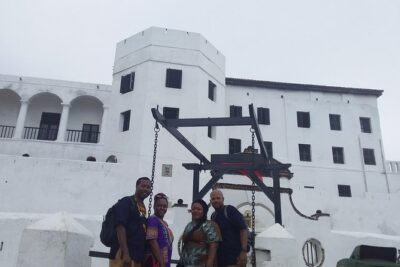
Day 10 is the emotional center of the tour. Cape Coast Castle is a UNESCO World Heritage site and one of the most important places connected with the history of enslavement on Ghana’s coast.
Inside, you visit the dungeons and the Door of No Return. The castle museum explains the history of the site and the wider coastal trade. This is not light sightseeing. You should allow yourself time to process what you see and hear.
The tour then continues to Elmina Castle, also known as St. George’s Castle. Visiting both castles gives you a fuller understanding of the scale and reach of the trading system. The experience can be difficult, but it is central to understanding Ghana’s connection with Africa, Europe, the Americas, and the African diaspora.
The castle admissions are included, which matters because these are among the most important paid sites on the route. You can also buy books about Ghana’s forts, castles, cultural traditions, and history.
Kakum’s Canopy Walk and Abandze Village
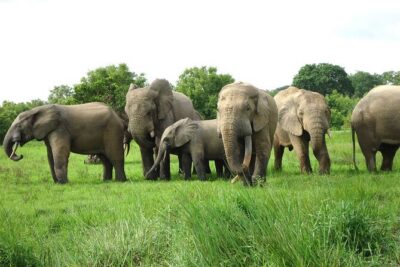
On Day 11, you check out and visit Kakum National Park. The forest-floor walk introduces you to the environment and to traditional ways people lived in the forest. You may see birds, butterflies, and perhaps monkeys or other wildlife, although sightings are not guaranteed.
The main attraction is the canopy walkway, described as about 1,000 feet long, with bridges and platforms more than 150 feet above the ground. It offers a different kind of Ghana experience after the museums and castles.
The walk requires comfort with heights, uneven ground, and outdoor conditions. Wear sturdy shoes, carry water, and bring sun protection. The itinerary also includes a brief stop at Abandze, an ancestral village connected with the coastal story.
Kakum is a strong final sightseeing day because it shifts the focus from human history to forests and wildlife. It also reminds you that Ghana is more than its forts and independence landmarks.
A Flexible Final Day in Accra
Day 12 is at leisure in Accra, with help from your driver and guide. If time allows, you can visit places missed earlier or choose between Oxford Street in Osu and Makola Market.
Oxford Street is suited to shopping for African clothing, handcrafted jewelry, and accessories. Makola Market is Accra’s large open market, divided into sections that make it easier to browse, though the setting can be crowded and demanding.
The airport transfer is provided that evening. Since your departure time is not supplied, confirm the amount of free time available before planning a distant excursion.
What $4,900 Buys You
At $4,900 per person, this is not a budget Ghana tour. The value comes from having nearly every major arrangement handled: airport transfers, 11 hotel nights, private air-conditioned transport, an experienced guide, breakfasts, dinner on arrival, and admission to listed sites.
You also gain continuity. The same guide and driver accompany you, which matters on long road days and during serious historical visits. Several people praised the service of guide Elvis and driver Joseph, noting Elvis’s clear explanations and Joseph’s careful driving on rough roads. Other strong praise went to Elvus, Joshua Kosi, and the wider Continent Tours team.
The price is easier to justify for a small family group or first visit to Ghana, especially if you would otherwise need to arrange multiple hotels, drivers, and site visits. It is harder to justify if you prefer independent travel, local buses, simple lodging, or a slower schedule.
Most meals beyond breakfast and the first-night dinner are extra. Visa costs, insurance, gratuities, and personal purchases are also not included.
Who Should Book This Ghana Tour?
I would recommend this tour if you want Ghana’s major historical sites explained in context and prefer not to manage long-distance transport yourself. It suits first-time visitors, families, culturally focused groups, and people tracing links with the African diaspora.
You should think twice if you dislike long drives, rough roads, formal ceremonies, outdoor heat, or emotionally heavy historical sites. The schedule is full, and the tour gives you a broad introduction rather than long stays in each place.
The maximum group size is 15, and most people can participate. Free cancellation is available up to 24 hours before the start time. If poor weather causes a cancellation, you are offered another date or a full refund.
FAQ
Where does the tour begin and end?
The tour begins in Accra, Ghana, with airport pickup at Kotoka International Airport. It ends back at the meeting point in Accra after the airport transfer on Day 12.
How long is the tour?
The experience lasts approximately 12 days and includes 11 nights of hotel accommodation.
What is included in the price?
The price includes airport meeting assistance, round-trip airport and hotel transfers, hotel accommodation, private vehicle transport, an experienced guide, listed site admissions, 11 breakfasts, and dinner on the first evening.
Are meals besides breakfast included?
Only dinner on the first night and the 11 breakfasts are specifically included. Other meals are not included.
How many people can join the tour?
The maximum group size is 15 people. Transport is provided in a private air-conditioned vehicle.
Can I cancel for a full refund?
Yes. You can receive a full refund if you cancel at least 24 hours before the experience start time. Cancellations made within 24 hours are not refunded, and poor-weather cancellations offer either a new date or a full refund.
Should You Book It?
Book this tour if you want a guided introduction to Ghana that combines Accra’s independence story, Ashanti royal culture, traditional crafts, coastal slave-trade sites, and Kakum National Park in one route.
I would choose it for the strong guide support and the range of places covered, not for a relaxed holiday. Pack light, wear comfortable shoes, carry water and sunscreen, and prepare for long road days. If you accept that pace, this tour gives you a serious, varied, and well-supported first look at Ghana.
Just added around Accra
- Experience Cape Coast Castle and Kakum National Park★ 4.5 · 3 reviews
- Experience Northern Ghana In 10-Days★ 5.0 · 3 reviews
- Discover Ghana – Wli Waterfalls, Mountain Afadjato, Monkey Sanctuary & Akosombo.★ 4.5 · 3 reviews
- Cultural Tour Of Ghana And South Africa 12 Days★ 5.0 · 3 reviews
- Accra: City Highlights Half-day Guided Tour with Transfers★ 4.1 · 3 reviews
- Accra: Half day private safari with pick up★ 3.5 · 3 reviews
- Full Day Accra Guided Tour★ 5.0 · 3 reviews
- Experience Aburi Botanical Gardens And Boti Water Falls In A Day.★ 5.0 · 3 reviews
Multi-Day Ghana Itineraries, compared.
10 Days Trip to Cape Coast and Elmina Castles from Accra
Read our review →
Private Multi-Day Ghana Tour about Culture History and Wildlife – 7 Days
Read our review →
9-Day Private Guided Tour of West Africa (Ghana, Togo & Benin)
Read our review →Browse the lists this tour appears in