
Reviewed · MULTI-DAY GHANA ITINERARIES
9 Day Ghana Wildlife and Culture Tour
Ghana packs a lot into nine days. This private journey links Accra’s political and cultural sights with elephant country in the north, Ashanti craft villages, Atlantic forts, rainforest, and beach time. I like the way it reaches beyond the usual city tour, especially with Mole National Park and the hands-on cloth and batik workshops. I also like that local guides and drivers stay with your group throughout, giving the trip a personal, flexible feel.
The main consideration is pace. You cover a large part of Ghana, including an internal flight to Tamale and long road transfers south. The price is $4,695 per person, so this is not a budget trip, but it includes lodging, meals, excursions, airport transfers, transport, and private guiding. For you, the value depends on whether seeing Ghana’s major regions in one carefully managed trip matters more than having slow, unplanned days.
In This Review
- Key points worth knowing before you book
- Day 1: A gentle arrival in Accra
- Day 2: Accra’s public story and everyday traditions
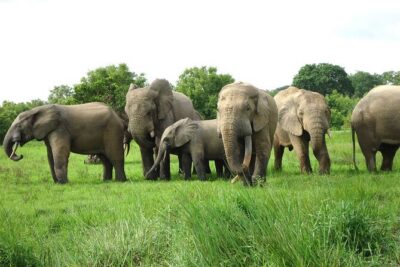
- Days 3 and 4: Elephants, savannah, and village life at Mole
- Day 5: Kintampo Falls and a sacred monkey sanctuary
- Day 6: Asante architecture and the making of cloth
- Day 7: Assin Manso and the castles of the coast
- Day 8: Kakum’s canopy and Elmina’s working harbor
- Day 9: Fort Amsterdam and the final ride to Accra
- What the $4,695 price really covers
- Who should book this Ghana tour?
- FAQ
- Is this tour private?
- Is airport pickup included?
- Are meals included?
- Does the tour visit Mole National Park?
- Are international flights included?
- Can I cancel for a full refund?
Key points worth knowing before you book

- Elephants on foot at Mole: An armed guide leads a morning walk to track African elephants around the park’s watering holes.
- A genuine mix of Ghana: You move from Accra’s independence monuments to northern savannah, Ashanti villages, slave-trade sites, rainforest, and the coast.
- Hands-on local crafts: You can make adinkra cloth, watch kente weaving and brass casting, and create a batik garment with a local artisan.
- Private transport throughout: Only your group takes part, with an air-conditioned vehicle, experienced driver, airport transfers, and 24/7 office support.
- A strong wildlife range: Mole offers elephants, monkeys, antelope, crocodiles, and many bird species, while Kakum adds rainforest habitat.
- Serious historical stops: Cape Coast Castle, Elmina Castle, Assin Manso, and Fort Amsterdam give necessary context to Ghana’s role in the Atlantic slave trade.
Day 1: A gentle arrival in Accra
Your tour begins at Kotoka International Airport, where a guide meets you after customs with an Ashanti African Tours sign. That small detail matters after a long flight. You do not need to negotiate a taxi or find your hotel alone.
The transfer takes you to your Accra accommodation, where you check in and meet the team who will accompany you. An introductory meal is included, along with mineral water and dinner. The first day is mainly about getting settled, so do not expect a long sightseeing program immediately after landing.
Because the itinerary lists the arrival day as about 12 hours, your exact schedule will depend on your flight time. I would send your arrival details well ahead of time and ask how the first evening will work if your flight arrives late.
More multi day trips around Accra:
- Ghana 8 Day Special
★ 5.0 · 38 reviews - 10 Days Trip to Cape Coast and Elmina Castles from Accra
★ 5.0 · 31 reviews - 10 Days Ghana Cultural and Heritage Trip
★ 5.0 · 31 reviews
Day 2: Accra’s public story and everyday traditions
Your first full day starts at the National Museum of Ghana. Its displays focus largely on ethnography, with objects and information connected to Ghana and other parts of West Africa. This is a useful opening lesson before you encounter the country’s regional traditions in later days.
The museum garden adds sculptures linked to West African customs. You also have a chance to see traditional fabrics and crafts. If you enjoy buying directly from makers, take note of the styles and prices here before reaching the larger craft market later in the day.
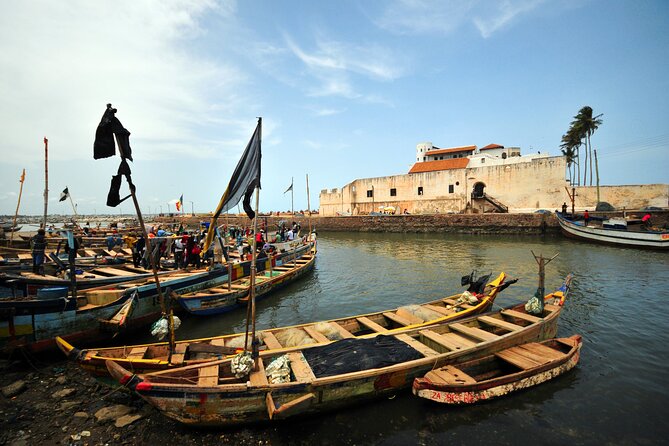
Next comes James Town, one of Accra’s oldest suburbs. The walking tour brings you near colonial-era structures, the British lighthouse built in 1871, Fort James, and the fishing beach with its colorful boats. This is not a polished heritage district. You see a working community, which makes the visit more revealing, but also means you should be ready for uneven paths and a busy street setting.
Lunch is at Country Kitchen, with West African and continental choices. That mix is useful on a packed day, especially if you are still getting used to Ghanaian food.
In the afternoon, Black Star Square and Independence Square explain Ghana’s modern political identity. The enclosed flame of African liberation was lit by Kwame Nkrumah in 1961. These broad ceremonial spaces can feel stark, but their importance becomes clearer when your guide explains Ghana’s independence and its wider influence in Africa.
At Kwame Nkrumah Memorial Park, you visit the burial place of Ghana’s founder, an adjoining museum, and formal gardens. The museum’s photographs and artifacts help put a human face on the independence movement. Nearby, the National Cultural Center is a large open-air arts and crafts market. Bargaining is part of the experience, so decide what you like before naming your price.
The final stop is Teshie Nungua, known for its fantasy coffins. Local funerals are solemn, but the coffin designs can represent the person’s work, interests, or personality. Cars, cocoa pods, airplanes, crocodiles, beer bottles, and boats are among the forms you might see. It is a memorable stop, though some visitors may find the subject matter emotionally difficult.
Days 3 and 4: Elephants, savannah, and village life at Mole
Day 3 begins early, with a transfer to Accra airport for the first flight north to Tamale. The reason is practical: you want as much time as possible at Mole National Park. After meeting your northern driver, you stop for breakfast before continuing toward the park.
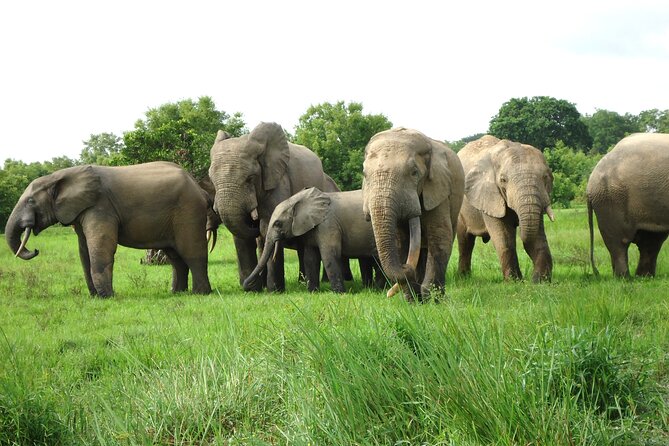
Mole protects about 4,847 square kilometers and records almost 100 mammal species and more than 330 bird species. Your accommodation sits on an escarpment above the park, with views toward a watering hole. One of the most appealing parts of the stay is simply sitting near the pool and watching elephants bathe, with crocodiles also present in the water.
That setting gives Mole a strong advantage over a wildlife trip built entirely around long vehicle drives. You can see animals from the accommodation area, then head out for a night drive and walking activity. Night viewing is less predictable, so treat it as a chance rather than a promise of rare sightings.
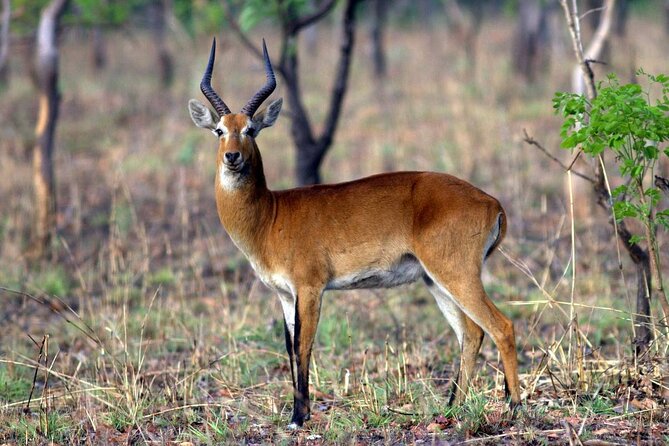
Day 4 is the wildlife centerpiece. An armed guide leads a morning walk to track African elephants. You may also see olive baboons, patas monkeys, kob, bushbuck, and waterbuck around the watering holes. Walking gives you a closer sense of the savannah than sitting in a vehicle, but it also requires following safety instructions carefully and accepting that wildlife sightings cannot be guaranteed.
After lunch and time by the pool, you drive about 30 minutes to Mognori, a village near the park boundary. A local resident leads the walk through the community, explaining shea butter production and the many uses of the shea nut. You also learn about local shrines and daily life in a farming community.
This is one of the tour’s better cultural choices because it connects the park to the people living beside it. You are not only seeing wildlife as a visitor. You are also learning about the materials, beliefs, and work that shape life in the region.
The day ends with a traditional dugout canoe river safari. Your guide watches for birds and other wildlife as you move along the water. The schedule is full, and the combination of an early walk, village visit, and canoe trip may leave you tired. Still, this is where the trip’s wildlife and culture themes fit together most naturally.
Day 5: Kintampo Falls and a sacred monkey sanctuary
You leave northern Ghana after breakfast and travel south toward Kumasi. This is mainly a road day, so expect a great deal of time in the vehicle. The stops prevent it from becoming a simple transfer.
At Kintampo Falls, a fast-flowing waterfall drops into a small pool where swimming is possible. Some people use the water as a natural shower, but the decision depends on conditions and your comfort. Lunch is at the nearby Falls restaurant.
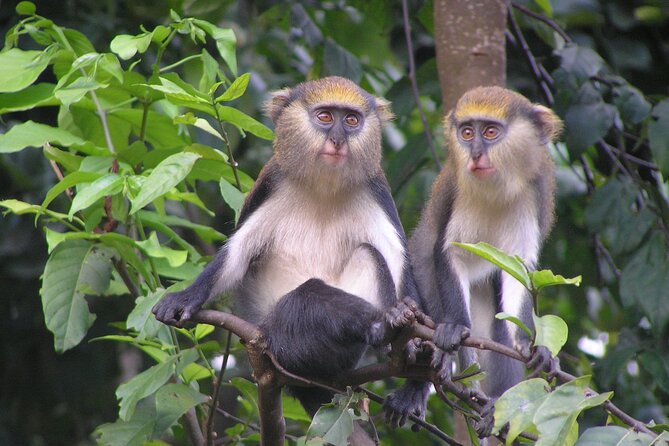
The second stop is Boabeng-Fiema Monkey Sanctuary, protected by two neighboring villages. Black-and-white colobus monkeys and Lowe’s mona monkeys live in the forest, and local beliefs regard them as sacred. The communities provide traditional burials for the monkeys, a practice that says much about the relationship between local culture and wildlife protection.
Walking the forest trails, your guide identifies medicinal trees and plants and explains their uses. This is not a zoo or a staged animal encounter. The monkeys live in their forest habitat, and sightings depend on where they are that day.
You arrive in Kumasi in the early evening. After the long drive, the free time at your accommodation is welcome. If you prefer slow travel, this day may feel too ambitious, but the waterfall and sanctuary make the journey more rewarding.
More wildlife trips in Accra:
- 15-Day Ghana Wildlife Private Tour
★ 4.5 · 9 reviews - Private Multi-Day Ghana Tour about Culture History and Wildlife – 7 Days
★ 5.0 · 8 reviews - 5 Days Adventurous Wildlife Safari
★ 4.5 · 49 reviews
Day 6: Asante architecture and the making of cloth
Kumasi is the cultural center of the Asante region, and the morning begins with traditional Asante buildings recognized as UNESCO World Heritage Sites. The structures use bamboo, timber, mud, and thatched roofs, with walls decorated by symbolic Adinkra motifs.
There are 10 active shrines within the buildings. Your guide also explains the connection to Nana Yaa Asantewaa, the Asante woman warrior associated with the 1901 war against the British. This is a valuable correction to history lessons that focus too heavily on male leaders.
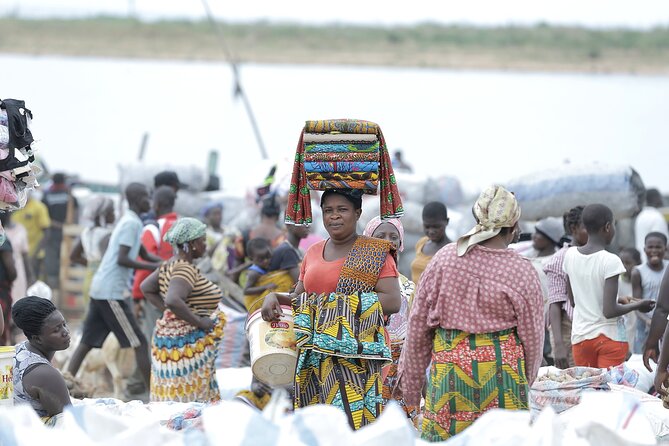
At Adanwomase, you visit a village known for kente cloth. Families have woven the cloth for generations, and many designs carry specific meanings or local associations. Watching the weavers work on traditional looms gives you a better sense of the time and skill behind a fabric often sold as a simple souvenir.
Next comes Ntonso, the source of Adinkra cloth and symbols. Artisans carve the symbols from calabash shells, then print them on cloth with natural dyes made from tree bark. You can make your own strip of Adinkra cloth using symbols that have personal meaning.
This is one of the tour’s most useful hands-on moments. You leave with more than a purchased textile. You understand that the patterns communicate ideas and are used for funerals, festivals, and other important occasions.
After lunch, Sokoban Krofrom introduces traditional brass casting. Beads, jewelry, and statues are produced using methods that have not changed for generations. The demonstration helps explain why handmade pieces cost what they do, and the village shops provide another chance to buy directly from local producers.
The schedule allows two hours for each major craft stop, which is a sensible amount of time. If you are serious about textiles, tell your guide early. You may want more time to ask about symbols, weaving, and prices.
Day 7: Assin Manso and the castles of the coast
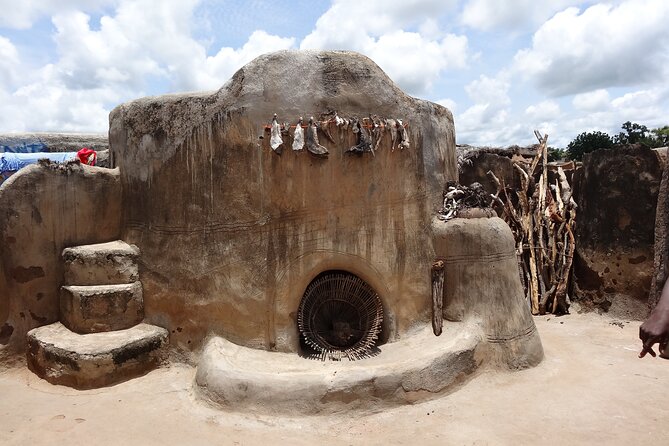
You travel south toward Elmina, stopping first at Assin Manso. The town lies along routes used in the forced movement of enslaved Africans. The Ndonkor Nsuo, also called the Enslaved African River, is part of this history.
The visit prepares you for Cape Coast Castle, where you have lunch overlooking the ocean before entering the fortress. Cape Coast Castle is a UNESCO World Heritage Site and held more enslaved Africans captive than any other site in West Africa.
The tour of the dungeons and Door of No Return is difficult by design. Give yourself time afterward. This is not a quick photo stop, and the emotional weight can change the mood of the day. The museum inside the castle helps explain the history of Cape Coast and the role of the fortress.
You should approach these sites with patience and respect. The guide’s explanations matter here, since the buildings alone cannot explain the people, systems, and lasting effects involved.
Day 8: Kakum’s canopy and Elmina’s working harbor
You can spend the morning at your beach accommodation, swim, or relax by the coast. The alternative is a visit to Kakum National Park, home to a rainforest canopy walkway.
The walkway has seven bridges attached to seven trees, about 40 meters above the forest floor. If heights bother you, this is the activity to think about before booking. The route is suspended and can feel exposed, but the views across the rainforest provide a strong reward.
Kakum protects rainforest habitat and records more than 40 mammal species, including forest elephants, leopards, and six primate species. Seeing those animals is not assured, but the park’s information center gives useful background on the flora and fauna.
Nearby, the International Stingless Bee Centre introduces you to Ghana’s nine identified stingless bee species. You learn why they matter to the ecosystem, hear about medicinal uses, visit the hives, and taste or buy stingless bee honey. A butterfly garden and bee walkway add interest without turning the visit into a formal wildlife show.
Lunch is at a restaurant run by a local organization supporting children in the Cape Coast area through education and advocacy. That makes the meal feel connected to the community rather than simply placed along the route.
In the afternoon, Global Mamas hosts a traditional batik workshop. You learn the process from heating wax to stamping patterns and drying the cloth, then make a piece of your own. The organization supports local women through artistic skills and fair-trade sales, so this is both a creative activity and a way to understand how craft income supports families.
You finish in Elmina, visiting the fishing market, boat builders, colorful fishing boats, and Elmina Castle, also called St. George’s Castle. Dating from 1482, it is the oldest surviving colonial building in sub-Saharan Africa. Like Cape Coast Castle, it played a major role in the Atlantic slave trade.
The day holds a lot: rainforest, bees, lunch, batik, a fishing community, and a castle. You can choose the beach instead of Kakum if you need a break. That flexibility improves the trip.
Day 9: Fort Amsterdam and the final ride to Accra
The morning is deliberately slower. You can swim, sit on the beach, or enjoy the accommodation before lunch near the Gold Coast. That pause is welcome after the previous day.
On the coastal road to Accra, you stop at Fort Amsterdam in Abandze. The British built it between 1631 and 1638, and the Dutch later captured it after a long battle in 1665. The fort adds another layer to the coast’s trading and colonial past.
Back in Accra, you may have time for Accra Mall and last-minute souvenirs. Dinner at a locally owned restaurant gives you one final chance to eat local or international dishes before the airport transfer.
The last day is not padded with major sightseeing. It is mainly a return journey, so check your flight time carefully. The airport transfer is included, but the exact amount of free time in Accra depends on your departure schedule.
What the $4,695 price really covers
At $4,695 per person, this is a high-cost Ghana tour. It is also a private nine-day program with a great deal built in:
- Accommodation
- Air-conditioned vehicle
- Experienced driver
- Expert local guide
- Airport transfers
- All excursion fees
- Fuel and unlimited mileage
- Unlimited mineral water
- Breakfast for eight days
- Lunch for eight days
- Dinner for nine days
- Public liability and professional indemnity insurance
- 24/7 office and guide support
The private format is the key value point. You are not sharing the vehicle with an unknown group, and the itinerary can be adjusted in small ways, such as taking a beach morning instead of Kakum. The long drives, internal flight, wildlife guiding, meals, and many admission fees would be difficult to arrange independently in nine days.
International flights, drinks, and the visa are not included. The plan also uses an internal flight from Accra to Tamale, but the supplied inclusions do not clearly state whether that domestic airfare is part of the price. Ask this directly before paying, since it could affect the final cost.
The operator’s team has also received especially strong praise for office support, guides, and drivers. Foster is singled out for birding skill, while Frank is praised as a careful driver. Another couple specifically highlighted Ali and Abdul on a Senegal trip, which shows the company also operates across the region, but those names should not be assumed for this Ghana departure.
Who should book this Ghana tour?
I would recommend it to you if you want a broad first look at Ghana and prefer having transport, meals, guiding, and lodging arranged. It suits people who care about wildlife, African history, textiles, local crafts, and community visits more than nightlife or luxury resort time.
It is also a good fit for a private family group or a small party with shared interests. Most people can participate, and only your group takes part, but the walking, canopy bridges, early starts, long drives, and full sightseeing days require reasonable stamina.
I would hesitate if you want a slow beach holiday, a dedicated birding trip, or a specialist safari with several days in one park. Mole receives only two days, and wildlife sightings are never guaranteed. I would also ask for a detailed hotel list and confirmation of the domestic flight before deciding.
For the right person, the strength is variety. You see elephants from a savannah escarpment, learn how Adinkra symbols are made, walk through communities that protect monkeys, confront the history of the coastal castles, and return to Accra with a clearer sense of how Ghana’s past and present connect.
FAQ
Is this tour private?
Yes. Only your group participates in the activity.
Is airport pickup included?
Yes. The tour includes airport transfers, with pickup at Kotoka International Airport in Accra.
Are meals included?
Yes. The package includes breakfast for eight days, lunch for eight days, and dinner for nine days. Soft drinks and alcoholic drinks are not included.
Does the tour visit Mole National Park?
Yes. The program includes time in Mole National Park, including an evening wildlife activity, a morning elephant-tracking walk with an armed guide, and a dugout canoe river safari.
Are international flights included?
No. International flights are specifically excluded. The itinerary also uses an internal flight from Accra to Tamale, so you should confirm separately whether that domestic flight is included in the quoted price.
Can I cancel for a full refund?
Yes, if you cancel at least three full days before the experience start time. Cancellations made less than three full days in advance are not refunded. Poor weather or failure to meet the minimum number of participants may lead to a different date or a full refund.
Just added around Accra
- Experience Cape Coast Castle and Kakum National Park★ 4.5 · 3 reviews
- Experience Northern Ghana In 10-Days★ 5.0 · 3 reviews
- Discover Ghana – Wli Waterfalls, Mountain Afadjato, Monkey Sanctuary & Akosombo.★ 4.5 · 3 reviews
- Cultural Tour Of Ghana And South Africa 12 Days★ 5.0 · 3 reviews
- Accra: City Highlights Half-day Guided Tour with Transfers★ 4.1 · 3 reviews
- Accra: Half day private safari with pick up★ 3.5 · 3 reviews
- Full Day Accra Guided Tour★ 5.0 · 3 reviews
- Experience Aburi Botanical Gardens And Boti Water Falls In A Day.★ 5.0 · 3 reviews
Multi-Day Ghana Itineraries, compared.
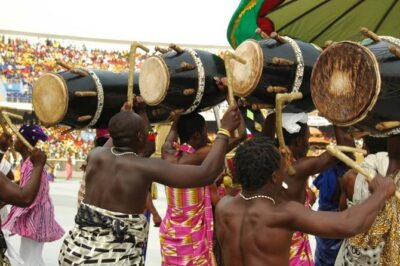
10 Days Trip to Cape Coast and Elmina Castles from Accra
Read our review →
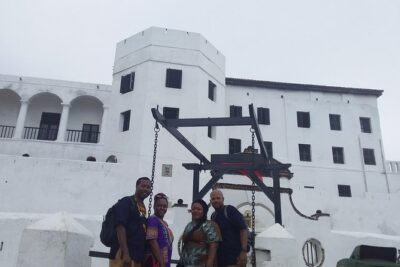
Private Multi-Day Ghana Tour about Culture History and Wildlife – 7 Days
Read our review →
9-Day Private Guided Tour of West Africa (Ghana, Togo & Benin)
Read our review →Browse the lists this tour appears in