

Reviewed · KUMASI TOURS
Kumasi City Tour
Kumasi tells its story through places, objects, and people. This four-hour private tour brings together the Okomfo Anokye Sword Site, Manhyia Palace Museum, Prempeh II Museum, and Kejetia Market in one focused outing. I like the strong mix of royal history and everyday city life, and I like that the private format lets your group move at a more personal pace.
The price is $65 per person, including transportation and entry fees. That is a fair deal if you want several major Kumasi sights arranged in one morning or afternoon. The main consideration is pace: four one-hour stops make for a full half-day, and Kejetia Market can feel demanding if you prefer quiet museums to crowded public spaces.
In This Review
- Five details that shape the experience
- Why this four-hour route works in Kumasi
- Okomfo Anokye Sword Site and the story of unity
- Manhyia Palace Museum and three royal reigns
- Prempeh II Museum and the details of palace life
- Kejetia Market, Kumasi’s largest public encounter
- What the $65 price really covers
- Who will enjoy this Kumasi tour most?
- Useful planning advice before you go
- Should you book the Kumasi City Tour?
- FAQ
- How long is the Kumasi City Tour?
- What places does the tour visit?
- Is transportation included?
- Are admission fees included?
- Is this a private tour?
- Does the price include shopping or accommodation?
- What is the cancellation policy?
Five details that shape the experience
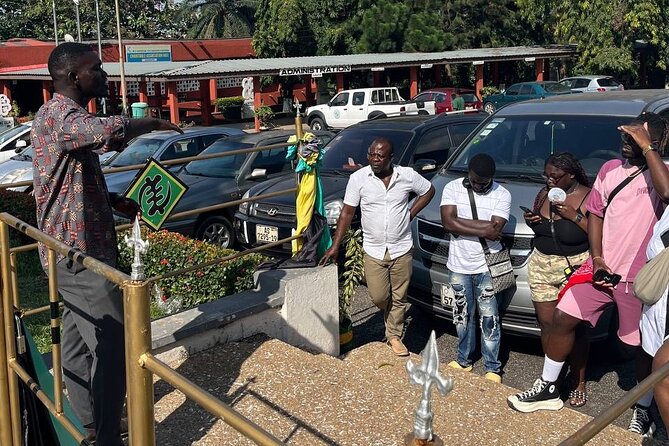
- Okomfo Anokye’s sword remains in the ground, according to the Asante tradition, and the site connects the city to the founding of the Asante kingdom.
- Manhyia Palace Museum occupies a former royal residence used by three Asante kings before becoming a museum in 1996.
- Prempeh II Museum has an Asante palace-style design, with displays linked to royal daily life, including a bath arrangement and kitchen setup.
- Kejetia Market contains about 11,000 stalls, giving you a direct look at Kumasi’s commercial heart.
- Private transportation and included fees simplify the day, while one past guest particularly valued seeing Kumasi by local transportation.
- A message from Maclean after booking helped reassure one guest before the tour began.
Why this four-hour route works in Kumasi
Kumasi can feel like several cities at once. It is a modern commercial center, a royal capital, and a place where Asante customs remain part of public life. This tour works because it connects those layers in a sensible order.
You begin with Okomfo Anokye, a legendary spiritual figure associated with the creation of the Asante kingdom. You then move into royal buildings and museum collections before ending at Kejetia, where trade and daily business take over from palace ceremony.
That structure gives you more than a string of unrelated stops. The first three places explain power, belief, and royal life. The market shows how the city functions now.
The tour lasts about four hours, with roughly one hour at each stop. That is enough time for a useful introduction, but not enough for a slow, scholarly examination of every display. I would treat this as a strong first look at Kumasi rather than a final word on the city.
The private format is useful if you are traveling with family or friends. You do not have to match the pace of a large group, and you can ask questions as they come up. The details provided do not promise a particular vehicle or a fixed transport style, so confirm whether your booking will use private transport throughout. One guest praised the use of local transportation, while private transportation is included in the package description. That difference is worth clarifying before the day begins.
More things to do in Kumasi:
- Bonwire Namimg Ceremony and Kente Tourist Center
★ 5.0 · 40 reviews - Tour Kumasi City Like a Local
★ 4.5 · 34 reviews - Traditional naming ceremony For African Diasporas in Kumasi
★ 5.0 · 10 reviews
Okomfo Anokye Sword Site and the story of unity
The first stop centers on one of Kumasi’s most memorable symbols. Okomfo Anokye is said to have planted a sword in the ground to unite the Asante people and begin the Asante kingdom.
The story gives the site its power. The sword has remained in place, and according to the account attached to the attraction, nobody has managed to pull it out. Even Muhammad Ali, the late former heavyweight boxing champion, is mentioned in connection with an attempt to uproot it.
You should expect this stop to be more about the story and meaning of the place than a large collection of objects. The value comes from hearing how spiritual authority and political unity are linked in Asante tradition. It is a good opening because it gives you a key idea to carry through the palace museums: leadership in Asante culture was not only a matter of government.
The one-hour allocation should give you time to hear the explanation and look around without rushing. Ask your guide to explain the sword’s role in Asante identity, and listen for the difference between historical record, oral tradition, and sacred belief. Those distinctions can make the visit more thoughtful.
Manhyia Palace Museum and three royal reigns
Manhyia Palace Museum shifts the focus from legend to royal residence. The building was constructed by the British as compensation when an Asante king returned from exile in Seychelles. The Asantes rejected the offer as presented and instead paid the British before using the building as a palace.
That detail gives the building a complicated political background. It was not simply a gift from one side to another. The account presents the Asantes as retaining control over the arrangement, which makes the building itself part of the story.
Three Asante kings used the palace before it became a museum in 1996. It was converted under Otumfuo Opoku Ware II, an Asante king whose decision helped preserve the building and its contents for public viewing.
Inside, you can expect objects connected with Asante royalty and past centuries. The supplied information does not provide a complete catalog, so your guide will be important here. Rather than walking quickly past each item, ask how objects were used, who owned them, and what they reveal about royal life.
I like this stop because it puts political events into a physical setting. A palace is easier to understand when you know who lived there and why the building came into being. The possible drawback is that the museum visit may feel brief if you want extensive background on every king and artifact. With only one hour, focus on the objects and stories your guide identifies as most important.
Prempeh II Museum and the details of palace life
The Prempeh II Jubilee Museum offers a different view of Asante heritage. Its architecture resembles a traditional Asante palace, so the building helps set the scene before you even examine the displays.
The museum houses items associated with Asante kings and objects said to date back to the 16th century. Among the most distinctive displays are an ancient royal bath arrangement, a kitchen setup, and a mysterious bag made by Okomfo Anokye that, according to tradition, should not be opened.
Those details make this museum especially appealing if you enjoy the practical side of history. Royal life is not only crowns, ceremonies, and political decisions. A bath setup and kitchen arrangement show the daily systems behind palace life.
The mysterious bag adds a layer of spiritual intrigue, but it is best approached with respect rather than treated as a theatrical prop. The guide can help explain its place in Asante belief and why it remains closed.
This museum also provides a useful contrast with Manhyia Palace Museum. Manhyia gives you the setting of a former royal residence and a collection tied to several reigns. Prempeh II focuses more on traditional design and selected objects from earlier Asante life.
The one-hour stop should be enough for an introduction. If you are especially interested in architecture, royal customs, or material culture, you may find yourself wishing for more time. Still, the pairing of the two museums makes sense and prevents the tour from relying on one palace alone.
More city tours in Kumasi:
- Kumasi City Tour
★ 5.0 · 8 reviews - Kumasi City Tour
★ 4.5 · 7 reviews - Lake Bosomtwe Boat Cruisely and Kumasi City Tours
★ 4.5 · 6 reviews - Kumasi: City Tour
★ 5.0 · 3 reviews
Kejetia Market, Kumasi’s largest public encounter
Kejetia Market is the tour’s biggest change of pace. The market is described as the largest open-air market in West Africa, with about 11,000 stalls and roughly 44,000 daily visitors. Most traders are women.
You will not be looking at history behind glass here. You will be moving through a working market where buying and selling shape the rhythm of the city. The scale is the point. Even one hour can show you why Kumasi is such an important commercial center.
This is also the stop where local transportation can add meaning to the day. One guest specifically praised the use of local transportation because it made the outing feel more connected to ordinary life. If your tour uses private transport, you still get the market experience, but ask your guide how best to enter, move through, and leave the area.
Allow yourself to observe before you shop. The market is not included as a personal shopping allowance, and personal purchases are not part of the tour price. If you want to buy something, bring that up with the guide and keep your own budget separate.
The market may be the most memorable stop, but it can also be the most tiring. A huge open-air market with thousands of stalls is not a quiet stroll. Stay close to your group, keep track of your belongings, and wear practical clothing and shoes. Those are common-sense measures for any crowded market, not special rules stated by the operator.
The market visit also keeps the tour from becoming only a royal heritage program. You see Kumasi as a living city, not just a former seat of power.
What the $65 price really covers
At $65 per person, this tour offers a useful bundle: private transportation, admission fees, four major stops, and a guide-led introduction to Asante culture. The value improves if you are traveling with people who want an organized half-day without arranging separate taxis, tickets, and explanations.
The price is less compelling if you plan to visit only one museum or if you prefer exploring entirely on your own. You are paying for the route, coordination, transport, and context as much as for the admissions themselves.
I also see value in the private format. A fixed group can ask questions about royal traditions, the sword, or the market without competing with a busload of strangers. The experience is not described as a luxury tour, and the information does not promise a special meal, hotel stay, or shopping package. Your $65 covers the tour itself, not accommodation or personal purchases.
A practical point: the tour is booked, on average, five days ahead. That suggests you should not leave it until the last minute if your Kumasi schedule is tight. Confirmation arrives when you book, and pickup is offered, but the starting point is listed as Kumasi, Ghana. Confirm the exact pickup location and time with the provider.
Who will enjoy this Kumasi tour most?
I would recommend this experience to first-time visitors who want a clear introduction to Asante culture without spending a full day on one museum. It also suits families and small groups who value a private setting and a planned route.
History fans will appreciate the connection between the sword site, the royal residences, and museum objects tied to earlier kings. People interested in daily life may prefer the Prempeh II Museum and Kejetia Market, where the focus shifts from royal power to practical activity.
The tour may be less suitable if you dislike crowds, want extended museum time, or prefer an unstructured day. Four one-hour stops create a firm rhythm. You will see a lot, but you will not have unlimited time at any one site.
A private tour does not necessarily mean a slow tour. It means your group has more control than it would on a shared excursion. Use that advantage by telling the guide what interests you most.
Useful planning advice before you go
The experience requires good weather. If poor weather cancels the tour, you can receive a full refund or move to another date. You can also cancel for a full refund up to 24 hours before the start time. Changes or cancellations made inside that 24-hour window are not accepted, so watch the local time carefully.
The tour is listed as suitable for most participants and is near public transportation. Pickup is offered, and the activity ends back at the meeting point. Since the tour includes a market and several cultural sites, ask ahead about the exact pickup arrangement, especially if you are not staying near central Kumasi.
A message from Maclean soon after booking reassured one guest. That kind of contact is useful when you are arranging a tour in an unfamiliar city. Save the provider’s contact details and use the pre-tour message to confirm the start time, vehicle arrangement, and meeting point.
The experience has an overall rating of 4.3 from three ratings, with praise focused on learning about Asante culture, museum displays, a funeral ceremony encountered during the wider cultural experience, and the use of local transportation. The funeral ceremony is not listed as one of the four scheduled stops, so do not book this tour expecting that event. Treat it as a possible cultural moment, not a promised feature.
Should you book the Kumasi City Tour?
Book it if you want a compact introduction to Kumasi’s Asante identity, with royal museums at the center and a large market to show you the city today. The $65 fee is reasonable when you value transport, admissions, and a private guide in one package.
I would especially choose it for a first visit, a short stay, or a small group that wants flexibility. I would look elsewhere if you want a long museum study, extensive shopping time, or a quiet walking tour.
Before paying, confirm the pickup point and whether local or private transportation will be used. If those details suit your plans, this is a well-shaped half-day that connects sacred tradition, royal life, and modern commerce in a memorable way.
FAQ
How long is the Kumasi City Tour?
The tour lasts approximately four hours, with about one hour allocated to each of the four stops.
What places does the tour visit?
It visits the Okomfo Anokye Sword Site, Manhyia Palace Museum, Prempeh II Museum, and Kejetia Market.
Is transportation included?
Yes. Private transportation is included, and pickup is offered. One account also praised the use of local transportation, so you should confirm the exact arrangement with the provider.
Are admission fees included?
Yes. All fees and taxes are included in the tour price.
Is this a private tour?
Yes. Only your group participates in the activity.
Does the price include shopping or accommodation?
No. Personal shopping and hotel accommodation are not included.
What is the cancellation policy?
You can cancel at least 24 hours before the start time for a full refund. Cancellations or changes made less than 24 hours before the start time are not accepted. If poor weather causes cancellation, you will be offered another date or a full refund.
Just added around Kumasi
- Kumasi: City Tour★ 5.0 · 3 reviews
- Discover kumasi Tours★ 5.0 · 3 reviews
- Kumasi Culture and Heritage Tours★ 4.5 · 3 reviews
- Full Day Tour with Traditional Naming Ceremony in Kumasi★ 5.0 · 4 reviews
- Traditional Naming Ceremony For African Americans In Kumasi★ 5.0 · 5 reviews
- One day tour at Kumasi★ 5.0 · 6 reviews
- Lake Bosomtwe Boat Cruisely and Kumasi City Tours★ 4.5 · 6 reviews
- Kumasi City Tour★ 4.5 · 7 reviews
Kumasi Tours, compared.

Bonwire Namimg Ceremony and Kente Tourist Center
Read our review →
Traditional naming ceremony For African Diasporas in Kumasi
Read our review →

Lake Bosomtwe Boat Cruisely and Kumasi City Tours
Read our review →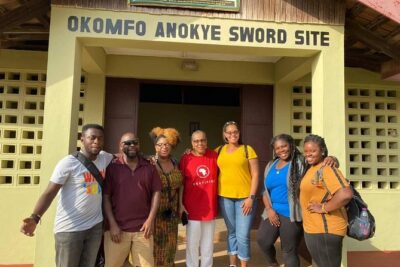
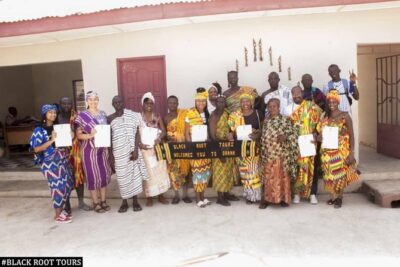
Traditional Naming Ceremony For African Americans In Kumasi
Read our review →Browse the lists this tour appears in