
Reviewed · KUMASI TOURS
One day tour at Kumasi
Kumasi rewards curious visitors. This private outing links Asante royal sites with working craft villages, so you get both museum context and living traditions. I like the mix of military objects, royal regalia, Adinkra printing, Kente weaving, and market shopping. I also like that the private format lets your group adjust the pace and, when possible, add a special request.
The main caution is time. Seven stops across Kumasi and nearby villages can make the day feel full, especially if you want to ask questions or shop carefully. The tour begins at 8:00 am, and lunch is not included, so plan for a long morning and afternoon.
In This Review
- Five things to know before booking
- Why this Kumasi tour works so well
- Manhyia Palace Museum and the royal beginning
- Kumasi Fort and the Ghana Armed Forces Museum
- Prempeh II Museum and royal daily life
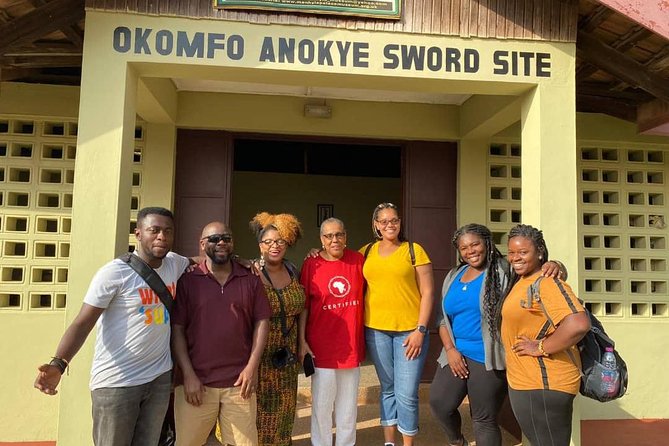
- The Okomfo Anokye Sword Site
- Ntonso and the making of Adinkra cloth
- Adanwomase and traditional Kente weaving
- Kejetia Market, the noisy final act
- What $130 per person really includes
- Who should book it
- My verdict on this full Kumasi day
- FAQ
- How long does the Kumasi tour last?
- What time does the tour begin?
- Where does the tour start?
- Where does the tour end?
- Is lunch included?
- Is this a private tour?
- What happens if I need to cancel?
Five things to know before booking
- Seven very different stops: You move from royal museums and sacred sites to cloth workshops and a huge city market.
- A private vehicle and guide: Only your group participates, with an air-conditioned vehicle included.
- Strong focus on Asante culture: Royal objects, war equipment, gold-weighing tools, symbols, and ceremonial cloth give the day real depth.
- Hands-on craft experiences: At Ntonso and Adanwomase, you can see how Adinkra and Kente are made, with the possibility of trying some of the work.
- Good value at $130 per person: Taxes, admission fees, transport, and guiding are included, but lunch and any Kejetia Market purchases are extra.
- A practical end point: The tour finishes at Kejetia New Market and Bus Terminal, useful if you want to continue exploring central Kumasi.
Why this Kumasi tour works so well
Kumasi is the cultural center of the Asante region, and this tour gives you several ways to understand it. A museum can explain royal power. A sword site can connect that power to legend and belief. A weaving village shows how symbols and status still appear in everyday life.
I especially like the order of the day. You begin with the palace area, move through military and royal collections, then visit the Okomfo Anokye Sword Site. After that, the focus shifts to handmade cloth before ending at Kejetia Market. It feels like a move from formal history to daily life.
The private setup matters here. A group tour might rush you through a display or leave little room for shopping. With your own vehicle and guide, you can ask for more time at a museum, spend longer at a cloth workshop, or make a reasonable adjustment if the day allows it.
The operator’s team includes guides and drivers such as Jones, Josephine, Godfrey, and owner Kofi. The strongest praise connected to this company centers on personal attention, clear communication, flexibility, and care with special requests. One booking even included an added visit connected with the Akwasidae festival, though you should ask in advance rather than expect that addition automatically.
More things to do in Kumasi:
- Bonwire Namimg Ceremony and Kente Tourist Center
★ 5.0 · 40 reviews - Tour Kumasi City Like a Local
★ 4.5 · 34 reviews - Traditional naming ceremony For African Diasporas in Kumasi
★ 5.0 · 10 reviews
Manhyia Palace Museum and the royal beginning
The Manhyia Palace Museum is the natural starting point for understanding the Asante Kingdom. The palace opened in 1995 during the Silver Jubilee celebrations connected with the accession of the Golden Stool.
The museum is small, but its scale is part of its appeal. You are not facing a giant modern institution with room after room of objects. Instead, the collection gives you a focused introduction to Asante royal life through artifacts, war amulets, and objects tied to the kingdom.
Allow about 45 minutes, with admission included. I would use this first stop to ask your guide for the basic timeline of Asante rulers, the importance of the Golden Stool, and the role of royal symbols. That context will make the later museums and craft traditions easier to understand.
The drawback is that the visit may feel brief if you want to study every object. Keep your questions ready, since a good guide can turn a short museum stop into a much more useful lesson.
Kumasi Fort and the Ghana Armed Forces Museum
Next comes the Ghana Armed Forces Museum at Kumasi Fort, with about an hour planned for the visit. This stop changes the mood. The palace museum focuses on royal authority and tradition, while the fort deals with armed conflict, colonial rule, and Ghana’s military development.
The collections include military equipment, weapons, medals, colors, armored cars, portraits, photographs, and other objects connected with the British-Asante wars and the Second World War. The displays also trace Ghana’s development from the colonial period to the present.
This is one of the more valuable stops for visitors who want political context, not only ceremonial objects. The Asante Kingdom did not exist apart from outside powers. The fort helps place Asante resistance and Ghana’s later national story within a wider timeline.
Give yourself time to listen. Military collections can become a blur of uniforms and hardware without explanation. Your guide’s commentary is important here, especially when connecting the objects to the Asante wars and colonial rule.
Prempeh II Museum and royal daily life
The Prempeh II Museum takes about 25 minutes, making it a compact but personal stop. It was built to resemble an Asante chief’s house, with a front courtyard and walls decorated with traditional carved symbols.
The collection relates to King Prempeh II. You can expect royal war clothing, ceremonial garments, jewelry, protective amulets, bathing and dining equipment, furniture, royal insignia, and brass weights once used to weigh gold.
I like this museum because it brings royalty down to human scale. A crown or ceremonial garment tells you about public power. Bathing tools, dining objects, and furniture suggest how a king’s private world was organized. The brass weights also point to the importance of gold and trade in Asante society.
The short visit is enough for an introduction, but not for a slow museum study. If you have a strong interest in material culture, ask your guide to point out the carved symbols and explain how the objects differ from ordinary household items.
A few more Kumasi trips worth weighing up
- One Day Tour To Cape Coast, Elmina Castle, Kakum National Park
★ 5.0 · 21 reviews - From Accra: Cape Coast and Elmina Castles Day Trip
★ 5.0 · 19 reviews - Accra: Shai Hills and Volta River Cruise Day Trip with Lunch
★ 4.8 · 11 reviews - 1 Day cocoa farm tour
★ 4.5 · 11 reviews
The Okomfo Anokye Sword Site
The Okomfo Anokye Sword Site is a brief stop, planned for about 15 minutes. The small museum protects the sword associated with Okomfo Anokye, the spiritual adviser credited with driving it into the ground. The key part of the story is that the sword is said to be immovable.
This is not a long museum visit. Its value comes from the meaning attached to the site. After seeing royal and military collections, you encounter a place where spiritual belief, political authority, and national memory meet.
Do not judge this stop by its size. The museum is small, and the visit is quick, but the sword carries symbolic weight in Asante tradition. It is best approached as a place for reflection and explanation, not as a large attraction with many exhibits.
Ntonso and the making of Adinkra cloth
At Ntonso Adinkra Cloth Village, the tour shifts from preserved objects to a working craft tradition. Ntonso is known as the homeland of Adinkra cloth and is described as the only place in Ghana where traditional Adinkra is made locally from scratch.
You have about 50 minutes here. The cloth is famous for its symbols and proverbial meanings. Those marks are not simply decoration. Each one can carry an idea, warning, value, or piece of cultural memory.
This is one of the most useful stops for shopping because you can see the work before deciding what to buy. A piece of cloth with a symbol you understand is more meaningful than a souvenir chosen only for color. Ask what the symbols mean, how the printing process works, and whether a design has a particular traditional use.
Past bookings with this operator have included Adinkra symbol printing, so you may have a chance to take part in the process. Confirm this with the company before departure if hands-on work is important to you, since the exact activity may depend on the day.
Allow time for browsing, but remember that purchases are not part of the tour price. If you want to buy cloth, compare designs and ask about the meaning before settling on one.
Adanwomase and traditional Kente weaving
The next craft stop is Adanwomase, where Kente cloth is still made in the traditional way. The planned visit lasts about an hour, and there is no separate admission fee.
Kente is closely tied to African royalty, but its meaning goes beyond eye-catching color. More than 300 patterns are associated with names and ideas drawn from proverbs, historical events, important chiefs, and valuable plants. The pattern you choose can therefore carry a message.
This is where a guide can add real value. Ask about the name and meaning of the pattern, rather than treating the cloth as a generic fabric. You may also see weaving in progress and, depending on the arrangement, have a chance to try Kente weaving. That possibility was a highlight for people who booked with the company, but it is wise to confirm what will be available on your date.
Kente can be expensive compared with ordinary fabric because of the time and skill involved. A private tour gives you a better chance to understand what you are buying, but you should still set a shopping budget before you arrive.
Kejetia Market, the noisy final act
The tour ends at Kejetia Market, also known as Kumasi Central Market, with about an hour planned. This open-air market is in the heart of Kumasi and is one of the best places to see the city’s commercial side after the quieter museum visits.
You can shop for locally made goods and souvenirs, but Kejetia is not arranged like a calm gallery. Expect a busy public market with many stalls, competing products, and plenty of movement. Keep your belongings secure, stay close to your group, and agree on a meeting point if you separate.
The market is also a useful place to finish because the tour ends at Kejetia New Market and Bus Terminal. You are not returned to the original starting point at Manhyia Palace, so check your onward plans before booking. If you need a ride back to your accommodation, ask the operator about it in advance.
There is no admission fee listed for Kejetia, but shopping is entirely at your own cost. One hour is enough for a first look, though you may wish to shorten an earlier stop if market time matters most to you.
What $130 per person really includes
At $130 per person, the price is easiest to assess as a private day package rather than as seven separate entrance tickets. You receive an air-conditioned vehicle, all listed taxes and fees, admission to the paid museums and sword site, and a private experience for your group.
That is useful in Kumasi because the itinerary covers several locations and includes craft villages outside the central museum area. You are paying for transport, coordination, and a guide who can connect the stops, not just for entry tickets.
Lunch is not included. Since the tour can last from roughly four to eight hours, bring money for food and drinks, or ask the operator how the day will be paced. The listed stop times add up to a little more than four hours before driving time, so the final duration depends on traffic, distances, shopping, and how much time your group spends at each place.
The best value comes when you care about context and convenience. If you only want to visit one museum and a market, the price may feel high. If you want royal sites, military history, sacred tradition, two craft centers, and a private vehicle in one day, it is a stronger deal.
Who should book it
I would recommend this tour to first-time visitors to Kumasi who want a broad introduction without arranging several separate trips. It suits couples, families, and small groups who value a private guide and want some control over the pace.
It is also a good match for anyone interested in textiles, African royal traditions, military history, or cultural symbols. The Adinkra and Kente stops give the day something hands-on and current, rather than limiting it to old buildings and display cases.
You may want a different plan if you dislike busy markets, prefer a slow single-subject tour, or want a long lunch and unhurried museum time. Seven stops is a lot. Tell the company your priorities when booking, especially if you want extra time for weaving, printing, shopping, or a festival visit.
Pickup is offered, but the stated meeting point is Manhyia Palace Museum at 8:00 am. The activity is private, service animals are allowed, public transportation is nearby, and most people can participate. Free cancellation is available up to 24 hours before the start time. Cancellations or changes made within 24 hours are not refunded, and poor weather may lead to a new date or full refund.
My verdict on this full Kumasi day
Book this tour if you want Kumasi explained through its royal past, spiritual traditions, craft skills, and present-day commerce. The strongest parts are the private format, the range of stops, and the chance to see Adinkra and Kente as working traditions rather than just finished souvenirs.
Just keep your expectations practical. Some museums are small, the schedule can be full, lunch is extra, and the final stop is at Kejetia rather than back at the palace. With those details in mind, $130 buys a useful and well-rounded day, especially for a first visit to Kumasi.
FAQ
How long does the Kumasi tour last?
The tour lasts approximately four to eight hours. The exact duration can vary with driving time, traffic, shopping, and the time your private group spends at each stop.
What time does the tour begin?
The stated start time is 8:00 am.
Where does the tour start?
The meeting point is Manhyia Palace Museum in Kumasi, Ghana.
Where does the tour end?
The tour ends at Kejetia New Market and Bus Terminal in Kumasi, at the Kejetia market.
Is lunch included?
No. Lunch is not included in the tour price.
Is this a private tour?
Yes. Only your group participates in the activity.
What happens if I need to cancel?
You can receive a full refund if you cancel at least 24 hours before the experience start time. Cancellations or changes made less than 24 hours before the start time are not refunded or accepted. If poor weather causes the tour to be canceled, you will be offered another date or a full refund.
Just added around Kumasi
- Kumasi: City Tour★ 5.0 · 3 reviews
- Discover kumasi Tours★ 5.0 · 3 reviews
- Kumasi City Tour★ 4.5 · 3 reviews
- Kumasi Culture and Heritage Tours★ 4.5 · 3 reviews
- Full Day Tour with Traditional Naming Ceremony in Kumasi★ 5.0 · 4 reviews
- Traditional Naming Ceremony For African Americans In Kumasi★ 5.0 · 5 reviews
- Lake Bosomtwe Boat Cruisely and Kumasi City Tours★ 4.5 · 6 reviews
- Kumasi City Tour★ 4.5 · 7 reviews
Kumasi Tours, compared.
Bonwire Namimg Ceremony and Kente Tourist Center
Read our review →
Traditional naming ceremony For African Diasporas in Kumasi
Read our review →

Lake Bosomtwe Boat Cruisely and Kumasi City Tours
Read our review →
Traditional Naming Ceremony For African Americans In Kumasi
Read our review →
Full Day Tour with Traditional Naming Ceremony in Kumasi
Read our review →Browse the lists this tour appears in