
Reviewed · TRADITIONAL NAMING CEREMONIES
Full Day Tour with Traditional Naming Ceremony in Kumasi
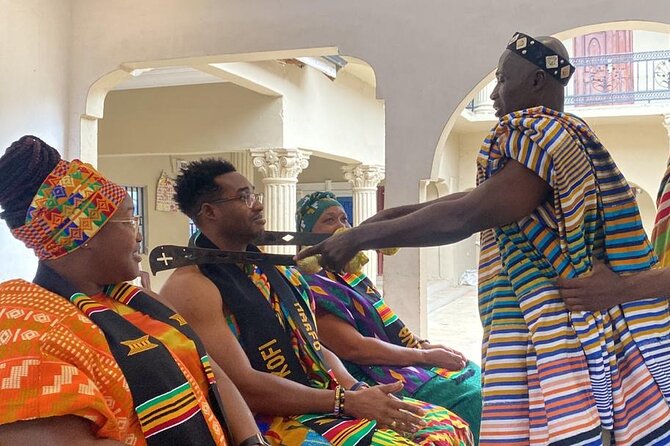
A new name can change a journey. This private Kumasi experience combines a traditional Asante naming ceremony with visits to Bonwire Kente and Ntonso Adinkra villages. I like the personal focus, since only your group takes part, and I like that the tour connects ceremony with living craft traditions. The hosts, Kwame and Priscilla, are praised for clear communication and thoughtful care.
The main consideration is the price: $180 per person is a serious spend for about six and a half hours. Personal shopping is extra, and the published timing leaves some uncertainty about how much time is devoted to the ceremony itself, so I would ask for a detailed schedule before booking.
In This Review
- Key points at a glance
- Why the Naming Ceremony Gives This Kumasi Day Its Meaning
- Bonwire Kente Weaving Centre and the Meaning of Cloth
- Ntonso Adinkra Village: From Making Cloth to Printing It
- A Private Vehicle Makes the Schedule Easier
- Is $180 Per Person a Fair Price?
- Who Will Get the Most From This Experience?
- What to Confirm Before Your 9:00 am Start
- My Take on the Kumasi Naming Ceremony Tour
- FAQ
- What time does the tour begin?
- How long does the experience last?
- Is pickup available?
- Is the tour private?
- What is included in the price?
- Are personal purchases included?
- Can I cancel for a full refund?
Key points at a glance
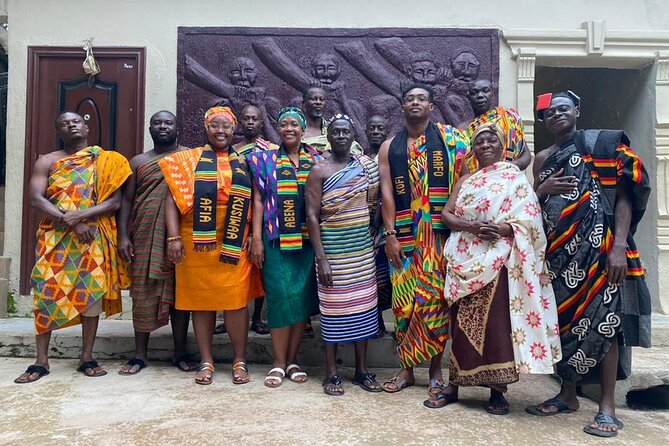
- Receive a new Asante name: The naming rite is the emotional center of the day and is intended to reconnect you with your ancestor through traditional practice.
- Visit Bonwire Kente Weaving Centre: You can see one of Ghana’s best-known textile traditions in the place associated with Kente weaving.
- Print Adinkra cloth at Ntonso: The visit covers the process from the beginning to the finished cloth, with a chance to print like a local.
- Enjoy a private outing: Only your own group participates, which gives the day a more personal feel than a large scheduled excursion.
- Travel in an air-conditioned vehicle: Transport and all fees and taxes are included, while purchases are not.
- Plan around a 9:00 am start: The experience lasts approximately 6 hours and 30 minutes and offers pickup.
Why the Naming Ceremony Gives This Kumasi Day Its Meaning
Kumasi has plenty of cultural stops, but this tour is built around something more personal than sightseeing. The naming ceremony gives you a new Asante name and connects the rite with your ancestor. That makes the day feel less like a checklist of attractions and more like a formal moment of recognition.
I would approach the ceremony with respect and an open mind. The experience is not presented as a quick photo stop. It is the central reason to choose this tour, especially if you have a family, heritage, or personal connection to Ghana. The supplied details do not spell out each stage of the rite, so you should ask the operator what the ceremony includes, who leads it, and how much time is set aside for it.
The private format matters here. A naming ceremony can feel awkward in a large mixed group, where the schedule and attention must be shared. With only your party taking part, you can expect a more focused setting, though the exact degree of participation will depend on the arrangements made by Selbeck Travel and Tours.
The strongest praise attached to this experience centers on the emotional impact of the ceremony. One person described it as enlightening, warm, and prideful, while another called the day a core memory shared with family. Those descriptions point to the tour’s real strength: it offers a meaningful personal occasion, not just an introduction to Kumasi’s crafts.
More traditional naming ceremonies:
- Bonwire Namimg Ceremony and Kente Tourist Center
★ 5.0 · 40 reviews - Traditional naming ceremony For African Diasporas in Kumasi
★ 5.0 · 10 reviews - Traditional Naming Ceremony For African Americans In Kumasi
★ 5.0 · 5 reviews
Bonwire Kente Weaving Centre and the Meaning of Cloth
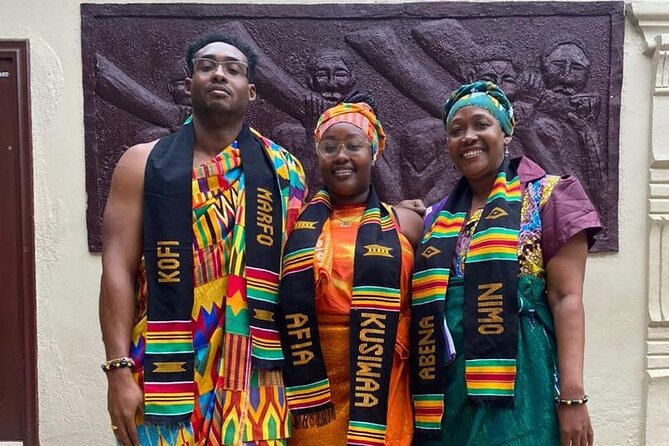
The first major cultural stop is the Bonwire Kente Weaving Centre. Kente is one of Ghana’s most recognizable forms of cloth, and seeing it in a weaving center gives you a useful setting for understanding the work behind the finished fabric.
The published schedule assigns five hours to this portion of the day, though it also identifies Ntonso as a separate stop. Since the total tour lasts about six and a half hours, I would not read the five-hour figure as five uninterrupted hours at Bonwire. It likely covers a large part of the outing, including travel and the naming ceremony, but the exact division is not supplied.
That uncertainty is worth clearing up before you go. Ask whether the five-hour block includes the ceremony, transport between villages, time at Bonwire, or all of these together. A clear answer will help you know if the day feels ceremony-led or craft-led.
At Bonwire, you can expect to see Kente weaving as part of a working craft tradition rather than as a display removed from daily life. The tour description does not promise a hands-on weaving session, so do not assume you will operate a loom. It does promise a visit to the weaving center, making this a good chance to observe the craft and ask questions through your guide.
I like the way this stop balances the naming rite. The ceremony speaks to identity and ancestry, while Kente gives you a physical expression of Ghanaian culture. The two belong together without being the same experience. One is personal and ceremonial; the other is visual, technical, and tied to cloth.
Shopping is not included. That is useful to know before you arrive, because a weaving center can make it tempting to buy fabric or other items. Set your own spending limit, and remember that the $180 price covers the tour elements listed, not personal purchases.
Ntonso Adinkra Village: From Making Cloth to Printing It
The visit to Ntonso Adinkra Craftsmen is shorter, listed at 30 minutes, but it offers a different kind of craft experience. You will see how Adinkra cloth is made from beginning to finish and have the chance to print like a local.
That final phrase is important. The stop is not limited to looking at finished cloth. It includes participation in the printing process, giving you a practical activity to remember after the tour. Since only 30 minutes is allocated, I would expect a compact introduction and hands-on moment rather than a long workshop.
The tour description does not provide details about the symbols, materials, or tools used, so I would ask your guide to explain the meanings behind the designs you see. That can turn a short stop into a more useful lesson. The value of Adinkra is not only in its appearance, but also in the ideas attached to its symbols and patterns.
The short timing may be the main drawback here. If you enjoy crafts and want time to browse, ask questions, and print slowly, 30 minutes could feel rushed. On the other hand, the brief visit keeps the full day from becoming an exhausting textile workshop and leaves room for the naming ceremony and Bonwire.
I see Ntonso as the hands-on counterpoint to Bonwire. At Bonwire, the emphasis is on Kente weaving. At Ntonso, you get a chance to take part in printing Adinkra cloth. Together, the stops give you two distinct views of Ghanaian textile traditions without asking you to spend the entire day in one workshop.
A Private Vehicle Makes the Schedule Easier
The tour begins at 9:00 am and lasts approximately 6 hours and 30 minutes. Pickup is offered, and transport is provided in an air-conditioned vehicle. All fees and taxes are included, which makes the quoted price easier to understand from the start.
A private vehicle is especially useful for a day that combines several stops. You do not have to coordinate public transport between Kumasi, Bonwire, and Ntonso, and you can stay with your own group throughout the outing. The information says the meeting area is near public transportation, but it does not specify exact pickup zones or hotel coverage. Confirm your pickup point and return arrangements when you book.
The air conditioning is a practical benefit in Ghana’s warm climate. It gives you a comfortable place to travel between visits, though it does not mean every part of the day will be indoors. Wear comfortable clothing and shoes suitable for moving around craft centers, and keep your schedule flexible.
Because the excursion is private, you can ask questions at your own pace. That is particularly helpful if the naming ceremony is important to you or if you want more explanation at the craft villages. The trade-off is that a private tour costs more than a shared group outing. At $180 per person, the value depends heavily on the size of your group and how much you care about the ceremony.
For one or two people, the price may feel high. For a family or a close group sharing a private vehicle and a personal ceremony, it may make more sense. The tour is also booked, on average, 23 days ahead, so advance planning is wise if you have a fixed Kumasi itinerary.
More things to do in Kumasi:
- Tour Kumasi City Like a Local
★ 4.5 · 34 reviews - Kumasi City Tour
★ 5.0 · 8 reviews - Kumasi City Tour
★ 4.5 · 7 reviews - Lake Bosomtwe Boat Cruisely and Kumasi City Tours
★ 4.5 · 6 reviews
Is $180 Per Person a Fair Price?
I would judge the price by the experience you want, not by the number of stops. You are paying for a private outing, an air-conditioned vehicle, included fees and taxes, visits to two craft villages, and a traditional naming ceremony. You are not paying only for transport to Bonwire and Ntonso.
The ceremony is what can make the price worthwhile. If you want a personal connection to Asante culture and value having the day arranged around your group, $180 may be reasonable. The positive feedback emphasizes the care of the hosts, especially Kwame and Priscilla, along with strong communication and a willingness to accommodate personal needs.
If your main interest is simply seeing Kente and Adinkra production, the price deserves closer comparison with other Kumasi sightseeing choices. The craft visits are valuable, but Ntonso is listed at only 30 minutes, and the exact amount of time spent at Bonwire is not fully clear. I would not book this solely for an extensive textile workshop.
The price excludes personal shopping. That is normal, but it can affect your final budget if you hope to buy Kente or Adinkra cloth. Ask whether purchases can be made during the scheduled stops and plan extra money only if you want souvenirs.
Who Will Get the Most From This Experience?
I would recommend this tour most strongly to:
- People seeking a personal cultural ceremony rather than a standard sightseeing route
- Families and close friends who want a shared occasion
- Anyone interested in Asante identity, Kente, and Adinkra craft
- First-time visitors who prefer private transport and a set plan
- People comfortable with a ceremony whose exact details should be confirmed in advance
The tour may be less suitable if you want a long, technical weaving workshop, a very loose schedule, or a low-cost group excursion. The ceremony is the main draw, and the craft visits support it.
It also suits people who care about personal service. The responses connected with this tour repeatedly praise communication, professionalism, and attention to individual needs. One party described the guides as going above and beyond to accommodate them. That kind of care can make a major difference when a ceremony carries emotional weight.
Still, I would keep expectations practical. The supplied details do not promise a full historical lecture, a meal, extended shopping time, or a detailed workshop at both villages. Ask direct questions before paying if any of those elements are essential to your day.
What to Confirm Before Your 9:00 am Start
The booking confirmation is sent at the time of reservation, and cancellation is free up to 24 hours before the start time for a full refund. Changes or cancellations made less than 24 hours before the 9:00 am start are not accepted for a refund, and the experience may be rescheduled or refunded if poor weather causes cancellation.
I would confirm four practical points:
- The exact pickup location and return plan
- The time reserved specifically for the naming ceremony
- Whether the five-hour Bonwire block includes transport and ceremony time
- Whether any special clothing, participation, or preparation is expected
The tour requires good weather. Since the day includes travel between sites and craft village visits, a weather-related change can affect the schedule. Keep the day flexible if possible, and avoid placing an important appointment immediately afterward.
Most people can participate, and the activity is private. No special accessibility details are provided, so anyone with mobility concerns should ask Selbeck Travel and Tours for current information before booking.
My Take on the Kumasi Naming Ceremony Tour
I like this experience because it gives Kumasi a personal center. Bonwire and Ntonso are not random add-ons. Kente and Adinkra provide a cultural setting for a day built around identity, family, and an Asante name.
The best parts are the private format, the included vehicle and fees, and the ceremony’s emotional purpose. The main weaknesses are the relatively high cost, the extra expense of shopping, and the lack of a precise breakdown showing how the six and a half hours are divided.
Book it if the naming ceremony is your priority, especially if you are traveling with family or close friends and want a private day led by attentive hosts. Think twice if you mainly want a long craft lesson or the cheapest way to visit Kumasi’s textile villages. Before confirming, ask for the ceremony schedule and pickup details. Those two answers will tell you whether this experience fits the kind of day you have in mind.
FAQ
What time does the tour begin?
The tour starts at 9:00 am.
How long does the experience last?
The tour lasts approximately 6 hours and 30 minutes.
Is pickup available?
Yes, pickup is offered. The exact pickup arrangements should be confirmed when booking.
Is the tour private?
Yes. Only your own group participates in this private activity.
What is included in the price?
The price includes all fees and taxes and transport in an air-conditioned vehicle.
Are personal purchases included?
No. Personal shopping is not included in the tour price.
Can I cancel for a full refund?
Yes, if you cancel at least 24 hours before the experience start time. Cancellations or changes made less than 24 hours before the start are not refunded. If poor weather causes the operator to cancel, you will be offered another date or a full refund.
More Full-Day in Kumasi
- Cape Coast ,Elmina Castle and Kakum Full-Day Tour
★ 5.0 · 62 reviews - Full-Day Accra Safari and Boat Cruise Private Tour
★ 5.0 · 32 reviews - Full-Day Private Culture and History Tour of Accra
★ 5.0 · 23 reviews - Private Full-Day Ghanaian Delicacy and Dessert Tour in Accra
★ 5.0 · 13 reviews
Just added around Kumasi
- Kumasi: City Tour★ 5.0 · 3 reviews
- Discover kumasi Tours★ 5.0 · 3 reviews
- Kumasi City Tour★ 4.5 · 3 reviews
- Kumasi Culture and Heritage Tours★ 4.5 · 3 reviews
- Traditional Naming Ceremony For African Americans In Kumasi★ 5.0 · 5 reviews
- Lake Bosomtwe Boat Cruisely and Kumasi City Tours★ 4.5 · 6 reviews
- One day tour at Kumasi★ 5.0 · 6 reviews
- Kumasi City Tour★ 4.5 · 7 reviews
Traditional Naming Ceremonies, compared.
Bonwire Namimg Ceremony and Kente Tourist Center
Read our review →
The Ancestral Naming Ceremony and Home Coming Experience
Read our review →
Naming Ceremony and Heritage Homecoming Experience for Diasporas
Read our review →
Traditional Naming Ceremony and Boat Cruise Experience
Read our review →
Kumasi Heritage Tours And Naming Ceremony In A Day
Read our review →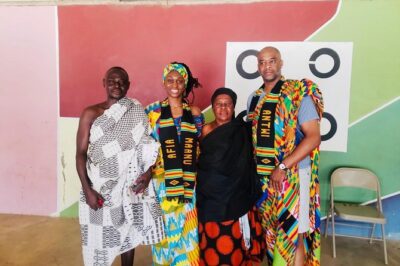
Traditional naming ceremony For African Diasporas in Kumasi
Read our review →
Naming Ceremony, Assin Manso Slave River and Cape Coast Castle
Read our review →
Cultural Village Tour: Traditional Naming Ceremony
Read our review →Browse the lists this tour appears in